1988 Edition
CIA World Factbook 1988 (Internet Archive)
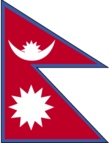
Geography
Budget
revenues, A$59.5 million (FY86/87 est.)
Climate
- varies from cool summers and severe winters in north to subtropical summers and mild winter in south
- temperate; marine; cool summers and mild winters
Coastline
451 km
Comparative area
- about the size of North Carolina
- about the size of Massachusetts, Connecticut, and Rhode Island combined
Contiguous zone
12 nm
Environment
- contains eight of world's ten highest peaks; deforestation; soil erosion; water pollution
- dikes protect 30% of land area that is below sea level from North Sea
Ethnic divisions
- Newars, Indians, Tibetans, Gurungs, Magars, Tamangs, Bhotias, Rais, Limbus, Sherpas, as well as many smaller groups
- 99% Dutch, 1% Indonesian and other
Exclusive fishing zone
200 nm
Fiscal year
1 July-30 June
Infant mortality rate
- 143/1,000 (1983)
- 8/1,000 (1984)
Labor force
- 4.1 million; 93% agriculture, 5% services, 2% industry; great lack of skilled labor
- 5.3 million (1984); 50.1% services, 27.8% manufacturing and construction, 16.1% government, 6.0% agriculture; unemployment rate 14.4% (1985 average)
Land boundaries
- 2,800 km total
- 1,022 km total
Land use
- 17% arable land; NEGL% permanent crops; 13% meadows and pastures; 33% forest and woodland; 37% other; includes 2% irrigated
- 25% arable land; 1% permanent crops; 34% meadows and pastures; 9% forest and woodland; 31% other; includes 15% irrigated
Language
- Nepali (official); 20 mutually unintelligible languages divided into numerous dialects
- Dutch
Life expectancy
- men 47, women 45
- 76
Literacy
- 20%
- 99%
Monetary conversion rate
1.50 Australian dollars=US$l (February 1987)
Nationality
- noun — Nepalese (sing, and pi.); adjective — Nepalese
- noun — Netherlander(s); adjective— Netherlands
Organized labor
29% of labor force
Population
- 17,814,294 (July 1987), average annual growth rate 2.43%
- 14,641,554 (July 1987), average annual growth rate 0.51%
Religion
- only official Hindu kingdom in world, although no sharp distinction between many Hindu (about 88%) and Buddhist groups; small groups of Muslims and Christians
- 40% Roman Catholic, 31% Protestant, 24% unaffiliated, 5% none
Special notes
- landlocked; strategic location between China and India
- located at mouths of three major European rivers (Rhine, Maas or Meuse, Schelde)
Terrain
- Tarai or flat river plain of the Ganges in south, central hill region, rugged Himalayas in north
- mostly coastal lowland and reclaimed land (polders); some hills in southeast
Territorial sea
12 nm
Total area
- 140,800 km2; land area: 136,800 km2
- 37,310 km2; land area: 33,940 km2
Government
Administrative divisions
- 75 districts, 14 zones
- 12 provinces and 4 special municipalities governed by centrally appointed commissioners of Queen
Branches
- Council of Ministers appointed by the King; Rastriya Panchayat (National Assembly; 112 directly elected, 28 appointed by King)
- executive (Queen and Cabinet of Ministers), which is responsible to bicameral parliament (States General) consisting of a First Chamber (75 indirectly elected members) and a Second Chamber (150 directly elected members); independent judiciary; coalition governments are usual
Capital
- Kathmandu
- Amsterdam, but government resides at The Hague
Communists
- Communist Party of Nepal (CPN); factions include V. B. Manandhar, Man Mohan Adhikari, Bharat Raj Joshi, Rai Majhi, Tulsi Lai, Krishna Raj Burma, Sahana Pradhan
- about 6,000
Dependent areas
Aruba, Netherlands Antilles
Elections
- village, town, and district councils (panchayats) elected by universal suffrage; a constitutional amendment in 1980 provided for direct elections to the National Panchayat, which consists of 140 members (including 28 appointed by the King), who serve five-year terms; Nepal's first general election in 22 years was held in May 1981; general elections successfully held in May 1986; local district elections scheduled for Spring 1987 Nepal (continued) Netherlands Political parties and leaders: all political parties outlawed but operate more or less openly; Nepali Congress Party (NCP), Ganesh Man Singh, K. P. Bhattarai, G. P. Koirala
- must be held at least every four years for lower house (last held in May 1986); following an amendment to the constitution that took effect in 1983, elections are held for the upper house every four years (most recent August 1983) Political parties and leaders: Christian Democratic Appeal (CDA) Willem van Velzen; Labor (PvdA), Marianne Sint; Liberal (VVD), Leendert Ginjaar; Democrats 66 (D'66), Saskia van der Loo; Communist (CPN), Henk Hoekstra; Pacifist Socialist (PSP), Marko Mazeland; Political Reformed (SGP), H. Slagboom; Reformed Political Union (GPV), J. Blokland; Radical Party (PPR), Janneke van der Plaat; Democratic Socialist 70 (DS'70), Z. Hartog; Rightist Peoples Party (RVP), Hendrik Koekoek; Reformed Political Federation (RPF), P. Lamgeler; Center Party (CP), H. Janmatt; Evangelical People's Party (EVP), J. Renes; Party for Better Housing (PVA), J. H. Borsboom; Roman Catholic Party of the Netherlands (RKPN), Klaas Beuker; Netherlands Christian Democrats (NCD), J. A. Tacx
Government leaders
- BIRENDRA Bir Bikram Shah Dev, King (since 1973); Marich Man SINGH (Shrestha), Prime Minister (since 1986)
- BEATRIX Wilhelmina Armgard, Queen (since April 1980); Ruud LUBBERS, Prime Minister (since November 1982)
Legal system
- based on Hindu legal concepts and English common law; has not accepted compulsory ICJ jurisdiction
- civil law system incorporating French penal theory; constitution of 1815 frequently amended, reissued 1947; judicial review in the Supreme Court of legislation of lower order rather than Acts of Parliament; accepts compulsory ICJ jurisdiction, with reservations
Member of
- ADB, Colombo Plan, ESCAP, FAO, G-77, IBRD, ICAO, IDA, IFAD, IFC, ILO, IMF, IMO, INTERPOL, IPU, IRC, ITU, NAM, SAARC, UN, UNESCO, UPU, WHO, WMO, WTO
- ADB, Benelux, Council of Europe, DAC, EC, ECE, EIB, ELDO, EMS, ESCAP, ESRO, FAO, GATT, IAEA, IBRD, ICAC, ICAO, ICES, ICO, IDA, IDE — Inter-American Development Bank, IEA, IFAD, IFC, IHO, ILO, IMF, IMO, INRO, INTELSAT, International Lead and Zinc Study Group, INTERPOL, IPU, IRC, ITC, ITU, IWC— International Wheat Council (with respect to interests of the Netherlands Antilles and Suriname), NATO, OAS (observer), OECD, UN, UNESCO, UPU, WEU, WHO, WIPO, WMO, WSG
National holiday
- Birthday of the King and National Day, 28 December
- Queen's Day, 30 April
Official name
- Kingdom of Nepal
- Kingdom of the Netherlands
Other political or pressure groups
- numerous small, left-leaning student groups in the capital; Indian merchants in Tarai and capital; several small, radical Nepalese antimonarchist groups operating from north India
- large multinational firms; Federation of Netherlands Trade Union Movement (comprising Socialist and Catholic trade unions) and a Protestant trade union; Federation of Catholic and Protestant Employers Associations; the nondenominational Federation of Netherlands Enterprises; and IKV — Interchurch Peace Council
Suffrage
- universal over age 21
- universal over age 18
Type
- nominally a constitutional monarchy; King Birendra exercises autocratic control over multitiered panchayat system of government
- constitutional monarchy
Voting strength
(May 1986 election) CDA 54 seats, PvdA 52 seats, VVD 27 seats, D'66 9 seats, SGP 3 seats, PPR 2 seats, PSP 1 seat, GPV 1 seat, RPF 1 seat; two members of the CDA were expelled from the party in 1984 and are now serving as independents
Economy
Agriculture
- over 90% of population engaged in agriculture; rice, corn, wheat, sugarcane, oilseeds; an illegal producer of cannabis for the international drug trade
- animal husbandry predominates; horticultural crops, grains, potatoes, sugar beets; food shortages — grains, fats, oils
Aid
donor — ODA and OOF economic aid commitments (1970-84), $12.0 billion
Budget
- domestic revenues, $300 million; expenditures, $536 million (FY84/85 est.)
- revenues, $40.6 billion; expenditures, $49.5 billion; deficit, $8.9 billion (1985 est); 3.3214 guilders=US$l (1985 average)
Crude steel
7.4 million metric ton capacity, 5.5 million metric tons produced, 380 kg per capita (1985)
Electric power
- 160,000 kW capacity; 395 million kWh produced, 25 kWh per capita (1986)
- 20,956,000 kW capacity; 63,090 million kWh produced, 4,340 kWh per capita (1986)
Exports
- $162 million (FY85/86 est.); rice and other food products, jute, timber, manufactured goods
- $67.9 billion (f.o.b., 1985); foodstuffs, machinery, chemicals, petroleum products, natural gas, textiles
Fiscal year
15 July-14 July
Fishing
catch 480,000 metric tons; exports of fish and fish products, $535.6 million; imports, $303.3 million (1985)
GDP
- $2.4 billion (FY85/86 current prices), $140 per capita; 3% real growth (FY84/85 est.)
- $124.2 billion, $8,570 per capita; 59.2% private consumption, 18.4% investment, 16.3% government consumption, 1.1% inventories, 5.1% net foreign demand, 2.0% real GNP growth (1985)
Imports
- $460 million (FY85/86); manufactured consumer goods, fuel, construction materials, fertilizers, food products
- $64.9 billion (c.i.f., 1985); machinery, transportation equipment, crude petroleum, foodstuffs, chemicals, raw cotton, base metals and ores, pulp
Major industries
- small rice, jute, sugar, and oilseed mills; match, cigarette, and brick factories
- food processing, metal and engineering products, electrical and electronic machinery and equipment, chemicals, petroleum products, natural gas
Major trade partner
India
Major trade partners
(1984) exports — 71.9% EC (29.8% FRG, 13.8% BelgiumLuxembourg, 10.5% France, 9.4% UK), 5.0% US, 1.9% Communist countries; imports— 53.3% EC (21.8% FRG, 11.4% Belgium-Luxembourg, 8.7% UK), 8.8% US, 5.3% Communist countries
Monetary conversion rate
21.8 Nepalese rupees=US$l (October 1986)
Natural resources
- quartz, water, timber, hydroelectric potential, scenic beauty
- natural gas, oil
Shortages
crude petroleum, raw cotton, base metals and ores, pulp, pulpwood, lumber, feedgrains, oilseeds
Communications
Airfields
- 1 total, 1 usable with permanent-surface runways 1,220-2,439 m
- 38 total, 38 usable; 5 with permanent-surface runways; 1 with runways 2,440-3,659 m, 8 with runways 1,220-2,439 m
Branches
Royal Nepalese Army, Royal Nepalese Army Air Service, Nepalese Police Force
Civil air
- 3 major transport aircraft, one on order
- 5 major and 11 minor transport aircraft
Highways
- about 27 km total; 21 km paved, 6 km improved earth
- 5,958 km total (1986); 2,645 km paved, 815 km gravel or crushed stone, 2,257 km improved and unimproved earth; additionally 241 km of seasonally motorable tracks
Inland waterways
none
Military budget
for fiscal year ending 15 July 1987, $32 million; 5% of central government budget 75 km Sec regional map V
Military manpower
- males 15-49, 2,300; fit for military service, 1,200; 100 reach military age (18) annually 200km . Birgan Set regional map VIII
- males 15-49, 4,171,000; 2,157,000 fit for military service; 197,000 reach military age (17) annually
Ports
1 minor
Railroads
- none
- 52 km (1985), all 0.762-meter narrow gauge; all in Tarai close to Indian border; 10 km from Raxaul to Blrganj is government owned
Telecommunications
- adequate intraisland and international radio communications provided via Australian facilities; 1,600 telephones (20.8 per 100 popl.); 4,000 radio receivers, 1 AM, no FM, no TV stations; 1 satellite ground station Defense Forces No formal defense structure and no regular armed forces
- poor telephone and telegraph service; fair radio communication and broadcast service; international radio communication service is poor; 18,400 telephones (0.1 per 100 popl.); 4 AM, 1 TV stations; 1 satellite ground station Defense Forces