1982 Edition
CIA World Factbook 1982 (Wikisource)
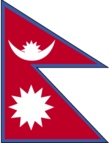
Geography
Area
141,400 km2; 16% agricultural area, 14% permanent meadows and pastures, 38% alpine land (unarable), waste, or urban; 32% forested
Land boundaries
2,800 km
People and Society
Ethnic divisions
two main categories, Indo-Nepalese (about 80%) and Tibeto-Nepalese (about 20%), representing considerable intermixture of Indo-Aryan and Mongolian racial strains; country divided among many quasi-tribal communities
Labor force
4.1 million; 95% agriculture, 5% industry; great lack of skilled labor
Language
20 mutually unintelligible languages divided into numerous dialects; Nepali official language and lingua franca for much of the country; same script as Hindi Literacy: about 12%
Nationality
noun—Nepalese (sing. and pl.); adjective—Nepalese
Population
15,715,000 (July 1982), average annual growth rate 2.4%
Religion
only official Hindu kingdom in world, although no sharp distinction between many Hindu (about 88%) and Buddhist groups; small groups of Muslims and Christians
Government
Capital
Kathmandu
Communists
the two wings of the Communist Party of Nepal (CPN)—pro-Soviet and pro-Chinese—are split into several lesser factions; the combined membership is about 6,500, with the majority (perhaps 5,000) in the pro-Chinese wing; the CPN continues to operate more or less openly; internal dissension, however, greatly hinders its effectiveness
Elections
village and town councils (panchayats) elected by universal suffrage; district panchayat members are indirectly elected; a constitutional amendment in 1980 provided for direct elections to the National Panchayat, which consists of 140 members (including 28 members appointed by the King), who serve five-year terms; Nepal's first general election in 22 years was held in May 1981 Political parties and leaders: all political parties outlawed
Government leaders
King BIRENDRA Bir Bikram Shah Dev; Prime Minister Surya Bahadur THAPA
Legal system
based on Hindu legal concepts and English common law; legal education at Nepal Law College in Kathmandu; has not accepted compulsory ICJ jurisdiction
Member of
ADB, Colombo Plan, FAO, G-77, IBRD, ICAO, IDA, IFAD, IFC, ILO, IMCO, IMF, IPU, ITU, NAM, UN, UNESCO, UPU, WHO, WMO, WTO
National holiday
Birthday of the King, 28 December Branches: Council of Ministers appointed by the King; directly elected National Panchayat (Assembly)
Official name
Kingdom of Nepal
Other political or pressure groups
proscribed Nepali Congress Party led by B. P. Koirala
Political subdivisions
75 districts, 14 zones
Suffrage
universal over age 21
Type
nominally a constitutional monarchy; King Birendra exercises autocratic control over multitiered panchayat system of government
Economy
Agriculture
over 90% of population engaged in agriculture; main crops—rice, corn, wheat, sugarcane, oilseeds
Budget
(FY81 revised est.) domestic revenue $147 million, expenditure $253 million
Electric power
86,600 kW capacity (1980); 210 million kWh produced (1980), 14 kWh per capita
Exports
$116 million est. (FY8I est.); rice and other food products, jute, timber
Fiscal year
15 July-14 July
GDP
$2.4 billion (FY81 current prices), $115 per capita; 5.5% real growth in FY81
Imports
$373 million est. (FY81 est.); manufactured consumer goods, fuel, construction materials, food products
Major industries
small rice, jute, sugar, and oilseed mills; match, cigarette, and brick factories
Major trade partner
over 80% India
Monetary conversion rate
12 Nepalese rupees=US$1
Communications
Airfields
47 total, 46 usable; 5 with permanent-surface runways; 1 with runways 2,440-3,659 m, 7 with runways 1,220-2,439 m
Civil air
5 major transport aircraft
Highways
4,136 km total; 1,751 km paved, 556 km gravel or crushed stone, 1,829 km improved and unimproved earth; additionally 322 km of seasonally motorable tracks
Railroads
63 km (1977), all narrow gauge (0.762 m); all in Terai close to Indian border; 10 km from Raxaul to Biranj is government owned
Telecommunications
poor telephone and telegraph service; fair radiocommunication and broadcast service; international radiocommunication service is poor; 10,000 telephones (less than 0.1 per 100 popl.); 3 AM, no FM, and no TV stations
Military and Security
Military budget
for fiscal year ending 14 July 1981, $22.1 million; 5.4% of central government budget
Military manpower
males 15-49, 3,704,000; 1,919,000 fit for military service; 176,000 reach military age (17) annually