1984 Edition
CIA World Factbook 1984 (Internet Archive)
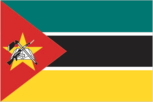
Geography
Agriculture
- principal crops are corn, sorghum, millet, cowpeas; livestock raised and exported; heavy dependence on imported food
- cash crops — raw cotton, cashew nuts, sugar, tea, copra, sisal; other crops — corn, wheat, peanuts, potatoes, beans, sorghum, and cassava; imports corn and wheat
- livestock raising (cattle and sheep) predominates, subsistence crops (millet, sorghum, corn, and some wheat) are raised but most food must be imported
Airfields
- 87 total, 79 usable; 9 with permanent-surface runways; 1 with runways 2,440-3,659 m, 17 with runways 1,220-2,439
- 263 total, 219 usable; 29 with permanent surface runways; 5 with runways 2,440-3,659 m; 34 with runways 1,2202,439 m
- 118 total, 105 usable; 20 with permanent-surface runways; 1 with runways over 3,659 m; 3 with runways 2,4403,659 m, 45 with runways 1,220-2,439 m
Area
- 600,372 km2; about 6% arable: less than 1% cultivated; mostly desert
- 789,800 km2; 56% wood and forest; 30% arable, of which 1% cultivated; 14% waste and inland water
Branch
unicameral legislature (People's Assembvernment leader: Samora Moi'ses MACHEL, President
Branches
- executive — President appoints and presides over the Cabinet, which is responsible to Legislative Assembly; bicameral legislature (National Assembly with 32 popularly elected members and four members elected by the 32 representatives; House of Chiefs with deliberative powers only); judicial— local courts administer customary law, High Court and subordinate courts have criminal jurisdiction over all residents, Court of Appeal has appellate jurisdiction
- Army, Air Wing, Botswana Police
- Mozambique Armed Forces (including Army, Border Guard, Naval Command, Air Force)
- since September 1977 Administrator General, appointed by South African Government, has exercised coordinative functions over zone of white settlement and tribal homelands, where traditional chiefs and representative bodies exercise limited autonomy; Namibian National Assembly terminated February 1983; no elections scheduled
Budget
- (FY82/83) revenues $287.0 million, expenditures $372.5 million
- (1981) current expenditures, $523 million; revenues, $488 million
Capital
- Gaborone
- Maputo
- Windhoek
Civil air
- 3 major transport aircraft
- 14 major transport aircraft
- 1 major transport aircraft
Coastline
- 2,470 km People
- 1,489 km People
Communists
- no known Communist organization; Koma of BNF has long history of Communist contacts
- FRELIMO is a Marxist organization and maintains close to the Soviet Union and its allies
- no Communist Party, SWAPO guerrilla force is supported by USSR, Cuba, and other Communist states as well as OAU
Elections
- general elections held 20 October 1979; next elections to be held by October Political parties and leaders: Botswana Democratic Party (BDP), Quett Masire; Botswana National Front (BNF), Kenneth Koma; Botswana People's Party (BPP); Botswana Independence Party (BIP), Motsamai Mpho
- information not available on future election schedule Political parties and leaders: the Mozambique Liberation Front (FRELIMO), led by Samora Machel, is only legal party
- election of Namibian National Assembly, December 1978 Political parties and leaders: approximately 45 political parties; the major white parties include Action Front for the Preservation of the Turnhalle Principles (AKTUR), also known as the National Party of South-West Africa, Kosie Pretorius; Federal Party, Bryan O'Linn; Republican Party, Dirk Mudge; many of the nonwhite parties belong to the Democratic Turnhalle Alliance (DTA), a Nauru multiethnic alliance of traditional tribal leaders and the white Republican Party, which is favored in South Africa; the other multiethnic alliance, the largely moribund Namibian National Front (NNF), consists of the white Federal Party and various nonwhite groups opposed to the homeland system, each of which operates independently; Christian Democratic Action Party, a primarily Ovambo party formed in early 1982 as a result of a split in the DTA, Peter Kalangula
Electric power
- 100,000 kW capacity (1983); 470 million kWh produced (1983), 470 kWh per capita
- 2,200,000 kW capacity (1983); 1 1.5 billion kWh produced (1983), 880 kWh per capita
- 500,000 kW capacity (1983); 910 million kWh produced (1983), 845 kWh per capita
Ethnic divisions
- 94% Tswana, 5% Bushmen, 1% European
- majority from indigenous tribal groups; approximately 10,000 Europeans, 35,000 Euro-Africans, 15,000 Indians
- 85.6% black, 7.5% white, 6.9% mixed; approximately half the Africans belong to Ovambo tribe
Exports
- $456.2 million (f.o.b. 1982); diamonds, cattle, animal products, copper, nickel
- (OECD only) $224.7 million (c.i.f., 1981); cashews, cotton, sugar, mineral products, timber products, tea, copra
Fiscal year
- 1 April-31 March Communications
- calendar year Communications
- 1 April-31 March Communications
Fishing
est. catch 202,000 metric tons (1982); down by more than a third since 1979; processed mostly in South African enclave of Walvis Bay
GDP
R1.5 billion (1983 est); annual real growth, -1.6% (1982)
GNP
$1.5 billion (1981 est), about $150 per capita; average annual growth rate — 1% (1971-81)
Government leader
- Dr. Quett K. J. MASIRE, President
- Willem VAN NIEKERK, Administrator General
Highways
- 1 1,214 km total; 1,300 km paved; 1,700 km crushed stone or gravel; 5,177 km improved earth and 3,037 km unimproved earth
- 26,498 km total; 4,593 km paved; 829 km gravel, crushed stone, stabilized soil; 21,076 km unimproved earth
- 54,500 km; 4,079 km paved, 2,540 gravel, remainder earth roads and tracks
Imports
- $580.0 million (f.o.b 1982); foodstuffs, vehicles, textiles, petroleum products
- (OECD only) $362.0 million (f.o.b., 1981); machinery and electrical equipment, vehicles, petroleum products, iron and steel
Inland waterways
approx. 3,750 km of navigable routes
Labor force
- about 400,000 total;103,600 formal sector employees (1980-81); most others are engaged in cattle raising and subsistence agriculture; 40,000 formal sector employees spend at least six to nine months per year as wage earners in South Africa (1980)
- about 500,000(1981); 60% agriculture, 19% industry and commerce, 8% services, 7% government, 6% mining
Land boundaries
- 3,774 km People
- 4,627 km Water
- 3,798 km Water
Language
- English (official), Setswana vernacular
- Portuguese (official); many indigenous dialects
- Afrikaans principal language of about 60% of white population, German of 33%, and English of 7% (all official); several indigenous languages
Legal system
- based on Roman-Dutch law and local customary law; constitution came into effect 1966; judicial review limited to matters of interpretation; legal education at University of Botswana and Swaziland (two and one-half years) and University of Edinburgh (two years); has not accepted compulsory ICJ jurisdiction
- based on Portuguese civil law system and customary law
- based on Roman-Dutch law and customary law
Limits of territorial waters (claimed)
- 12 nm (fishing 200 nm; exclusive economic zone 200 nm)
- 6 nm (fishing 12 nm)
Literacy
- about 24% in English; about 35% in Tswana; less than 1% secondary school graduates
- 14% Government
- 100% whites, 28% nonwhites
Major industries
- livestock processing, mining of diamonds, copper, nickel, coal, salt, soda ash, potash, tourism
- food processing (chiefly sugar, tea, wheat, flour, cashew kernels); chemicals (vegetable oil, oilcakes, soap, paints); petroleum products; beverages; textiles; nonmetallic mineral products (cement, glass, asbestos, cement products); tobacco
- (nearly all for export) meatpacking, fish processing, copper, lead, diamond, and uranium mining, dairy products
Major trade partners
- Switzerland, US, UK, other EC members of Southern African Customs Union
- Portugal, South Africa, US, UK, FRG
Member of
- Af DB, Commonwealth, FAO, G-77, GATT (de facto), IBRD, ICAO, IDA, IFAD, IFC, ILO, IMF, INTERPOL, ITU, NAM, OAU, SADCC, UN, UNESCO, UPU, WHO, WMO Economy GDP. $721.6 million (FY81/82); average annual real growth, 9.7% during 1976-82, 0% in FY81/82
- AfDB, FAO, G-77, GATT (de facto), ICAO, IFAD, ILO, IMO, ITU, NAM, OAU, SADCC, UN, UNESCO, UPU, WHO, WMO Economy
- FAO, ILO, UNESCO, WFTU, WHO Economy
Military budget
- for fiscal year ending 31 March 1982, $26.6 million; 5% of central government budget
- for fiscal year ending 31 December 1982, $177.4 million; 29.0% of central government budget At /antic Ocean SOUTH AFRICA SOUTH V/ Indian \ AFRICA / Octt/i Land 823,145 km2; mostly desert except for interior plateau and area along northern border
- for fiscal year ending 31 March 1983, $81.4; 8% of central government budget NAURU »x , SOLOMON «>. ISLANDS •»
Military manpower
- males 15-49, 196,000; 104,000 fit for military service; 12,000 reach military age (18) annually
- males 15-49, 2,951,000; 1,744,000 fit for military service
- males 15-49, about 248,000; about 148,000 fit for military
Monetary conversion rate
- 1.122 pula=US$l (31 October 1983)
- 41.743 meticais=US$l (February 1984)
- 1 South African rand=US$.82 (as of 30 December 1983); 1.22 SA rands=US$l
National holiday
- Independence Day, 30 September
- Independence Day, 25 June
Nationality
- noun — Motswana (sing.), Batswana (pi.); adjective — Botswana
- noun — Mozambican(s); adjective — Mozambican
- noun — Namibian(s); adjective — Namibian
Official name
- Republic of Botswana
- People's Republic of Mozambique
- Namibia
Organized labor
- 16 trade unions organized Government
- 6 trade unions, membership almost exclusively white and mulatto Government
Other political or pressure groups
SouthWest Africa People's Organization (SWAPO), led by Sam Nujoma, maintains a foreign-based guerrilla movement; is predominantly Ovambo but has some influence among other tribes; is the only Namibian group recognized by the UN General Assembly and the Organization of African Unity
Pipelines
crude oil, 306 km (not operating); refined products, 280 km
Political subdivisions
- 12 administrative districts
- 10 provinces subdivided into 112 districts; administrators are appointed by central government
- 10 tribal homelands, mostly in northern sector, and zone open to white settlement with administrative subdivisions similar to a province of South Africa
Population
- 1,038,000 (July 1984), average annual growth rate 3.6%
- 13,413,000 (July 1984), average annual growth rate 2.8%
- 1,1 11, 000 (July 1984), average annual growth rate 3.0%
Ports
- 3 major (Maputo, Beira, Nacala), 2 significant minor
- 2 major (Walvis Bay and Luderitz)
Railroads
- 726 km 1.067-meter gauge
- 3,436 km total; 3,288 km 1.067-meter gauge; 148 km 0.750-meter narrow gauge
- 2,340 km 1.067-meter gauge, single track
Religion
- 40% indigenous beliefs, 15% Christian
- 60% indigenous beliefs, 30% Christian, 10% Muslim
- whites predominantly Christian, nonwhites either Christian or indigenous beliefs
Suffrage
- universal adult at age 21
- universal adult
- universal adult
Supply
mostly from the USSR and China, and to a lesser extent from other Communist countries and Portugal
Telecommunications
- the small system is a combination of open-wire lines, radio-relay links, and a few radiocommunication stations; 11, 700 telephones (1.5 per 100popl.);3 AM, 2 FM, and 2 TV stations; 1 Indian Ocean satellite ground station Defense Forces
- fair system of troposcatter, open-wire lines, and radio relay; 51,600 telephones (0.5 per 100 popl.); 9 AM and 3 FM stations; 1 TV station; 1 Atlantic Ocean satellite station Mozambique (continued) Namibia (South-West Africa) Defense Forces
- good urban, fair rural services; radio relay connects major towns, wires extend to other population centers; 54,300 telephones (5.7 per 100 popl.); 2 AM, 13 FM, and 3 TV stations Defense Forces Defense is responsibility of Republic of South Africa; however, a Southwest African Territory Force was established 1 August 1980
Type
- parliamentary republic; independent member of Commonwealth
- people's republic
- former German colony of South-West Africa mandated to South Africa by League of Nations in 1920; UN formally ended South Africa's mandate on 27 October 1966, but South Africa has retained administrative control
Voting strength
- (October 1979 election) Legislative Assembly— BDP, 29 seats; BNF, 2 seats; BPP, 1 seat Botswana (continued) Brazil
- (1978 election) Namibian National Assembly — DTA, 41 seats; AKTUR, 6 seats; 3 minuscule parties, 1 seat each; NNF and SWAPO boycotted elections; 15 additional, appointed seats have not been filled; Assembly prorogued in January 1983