1982 Edition
CIA World Factbook 1982 (Wikisource)
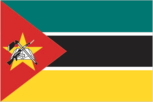
Geography
Area
786,762 km2; 30% arable, of which 1% cultivated, 56% woodland and forest, 14% wasteland and inland water
Coastline
2,470 km
Land boundaries
4,627 km WATER
Limits of territorial waters (claimed)
12 nm (fishing 200 nm; exclusive economic zone 200 nm)
People and Society
Ethnic divisions
over 99% native African, less than 1% European and Asian
Language
Portuguese (official); many tribal dialects
Literacy
15% (1974 est.)
Nationality
noun—Mozambican(s); adjective—Mozambican
Population
12,695,000 (July 1982), average annual growth rate 2.7%
Religion
65.6% animist, 21.5% Christian, 10.5% Muslim, 2.4% other
Government
Branches
none established
Capital
Maputo
Communists
none known
Elections
information not available on future election schedule Political parties and leaders: the Mozambique Liberation Front (FRELIMO), led by Samora Machel, is only legal party
Government leader
President Samora Moisés MACHEL
Legal system
based on Portuguese civil law system and customary law
Member of
FAO, G-77, GATT (de facto), ICAO, IFAD, IFC, ILO, IMCO, ITU, NAM, OAU, UN, UNESCO, UPU, WHO, WMO
National holiday
Independence Day, 25 June
Official name
People's Republic of Mozambique
Political subdivisions
10 provinces subdivided into about 94 districts; administrators are appointed by central government
Suffrage
not yet established
Type
"people's republic"; achieved independence from Portugal in June 1975
Economy
Agriculture
cash crops—raw cotton, cashew nuts, sugar, tea, copra, sisal; other crops—corn, wheat, peanuts, potatoes, beans, sorghum, and cassava; self-sufficient in food except for wheat which must be imported
Budget
(1978) expenditures, $309 million, revenues, $241 million
Electric power
2,166,000 kW capacity (1980); 11.3 billion kWh produced (1980), 1,080 kWh per capita
Fiscal year
calendar year
GNP
$2.8 billion (1980 est.), about $272 per capita; average annual growth rate —1% (1971-81)
Major industries
food processing (chiefly sugar, tea, wheat, flour, cashew kernels); chemicals (vegetable oil, oil-cakes, soap, paints); petroleum products; beverages; textiles; nonmetallic mineral products (cement, glass, asbestos, cement products); tobacco
Major trade partners
Portugal, South Africa, US, UK, West Germany
Monetary conversion rate
40.643 escudos=US$1 as of November 1977
Communications
Airfields
292 total, 247 usable; 29 with permanent-surface runways; 5 with runways 2,440-3,659 m; 37 with runways 1,220-2,439 m
Civil air
16 major transport aircraft, including 2 leased in
Highways
26,498 km total; 4,593 km paved; 829 km gravel, crushed stone, stabilized soil; 21,076 km unimproved earth
Inland waterways
approx. 3,750 km of navigable routes
Pipelines
crude oil, 306 km (not operating); refined products, 280 km
Ports
3 major (Maputo, Beira, Nacala), 2 significant minor
Railroads
3,436 km total; 3,288 km 1.067-meter gauge; 148 km narrow gauge (0.750 m)
Telecommunications
fair system of troposcatter, open-wire lines, and radio relay; 51,600 telephones (0.5 per 100 popl.); 10 AM, 2 FM, no TV stations; 1 Atlantic Ocean satellite station
Military and Security
Military budget
for fiscal year ending 31 December 1980, $157.8 million; 27.8% of central government budget
Military manpower
males 15-49, 2,763,000; 1,633,000 fit for military service
Supply
mostly from the USSR and PRC, and to a lesser extent from other Communist countries and Portugal