1986 Edition
CIA World Factbook 1986 (Internet Archive)
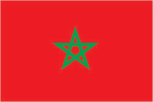
Geography
Agriculture
- main crops — cotton, limes, potatoes, tomatoes, hot peppers; livestock — cattle, pigs, sheep, goats, poultry
- cereal farming and livestock raising predominate; main products — wheat, barley, citrus fruit, wine, vegetables, olives; some fishing; an illegal producer of cannabis for the international drug trade
Airfields
1 with permanent-surface runway 1,036.32 m
Area
13.5% construction, 12.3% trade, restaurants, and hotels, 10.5% manufacturing, 8.8% agriculture, forestry, and fishing, 14.4% other; 7.0% unemployment (1984)
Branches
- Executive Council presided over by governor, consisting of two ex-officio members (attorney general and financial officer) and four unofficial members (chief minister and three other ministers); Legislative Council presided over by speaker chosen from outside the Council, seven elected, two official, and two nominated members
- constitution provides for Prime Minister and ministers named by and responsible to King; King has paramount executive powers; unicameral legislature (Chamber of Representatives), of which two-thirds of the members are directly elected and onethird are indirectly elected; judiciary independent of other branches
Budget
(1984 est.) revenue $10.6 million; expenditure $10.7 million
Capital
- Plymouth
- Rabat
Coastline
1,835 km People
Communists
- probably none Economy
- 2,000 est.
Elections
- at least once every five years; last election held February 1983 Political parties and leaders: People's Liberation Movement (PLM), John Osborne; Progressive Democratic Party (PDF), P. Austin Bramble; United National Front (UNF), Dr. George Irish; National Development Party (NDP), Bertram Osborne
- provincial elections held 10 June 1983; elections for National Assembly held 14 September 1984 Political parties and leaders: Morocco has 14 political parties; the major ones are Istiqlal Party, M'Hamed Boucetta; Socialist Union of Popular Forces (USFP), Abderrahim Bouabid; Popular Movement (MP), Mahjoubi Aherdan; National Assembly of Independents (RNI) formed in October 1978 is progovernment grouping of previously unaffiliated deputies in parliament, Ahmed Osman; National Democratic Party (PND), a splinter group from the RNI formed July 1981, Mohamed Arsalane El-Jadidi; Party for Progress and Socialism (PPS), legalized in August 1974, is front for Moroccan Communist Party (PCM), which was proscribed in 1959, Ali Yata; new promonarchy party — the Constitutional Union (UC), Maati Bouabid
Electric power
- 3,900 kW capacity (1985); 12 million kWh produced (1985), 1,000 per capita
- 1,930,100 kW capacity (1985); 6.763 billion kWh produced (1985), 290 kWh per capita
Ethnic divisions
99. 1 % ArabBerber, 0.7% non-Moroccan, 0.2% Jewish
Exports
- $1.6 million (1983); plastic bags, electronic parts, textiles; hot peppers, live plants; cattle
- $2.2 billion (f.o.b., 1984); 24% phosphates, 76% other
Fiscal year
1 April-31 March Communications
Fishing
- catch 150 metric tons (1983)
- catch 440,000 metric tons (1983); exports $165 million (1983)
GDP
- $32.4 million (1983); $2,760 per capita (1983); real GDP growth rate 2% (1984); 15% tourism
- $1 1.9 billion (1984 est.), about $500 per capita; average annual real growth 6-7% during 1973-77, 3-4% during 1978-80, 2.0% in 1984 (est.), 2.5% in 1985 (est.)
Government leader
A. C. WATSON, Governor (since 1984); Dr. J. A. OSBORNE, Chief Minister (since 1978)
Government leaders
HASSAN II, King (since March 1961); Mohamed KARIM LAMRANI, Prime Minister (since November 1983)
Highways
200 km total; approximately 200 km paved, 80 km gravel and earth
Imports
- $20 million (1983); machinery and transport equipment, foodstuffs, manufactured goods, fuels, lubricants, and related materials
- $3.6 billion (f.o.b., 1984); 25% petroleum products, 75% other
Infant mortality rate
117/1,000(1978)
Inland waterways
none
Labor force
7.5 million (1985); 50% agriculture, 26% services, 15% industry, 9% other; at least 20% of urban labor unemployed
Land boundaries
1,996 km Water
Language
Arabic (official); several Berber dialects; French is language of business, government, diplomacy, and postprimary education
Legal system
- English common law
- based on Islamic law and French and Spanish civil law system; judicial review of legislative acts in Constitutional Chamber of Supreme Court; modern legal education at branches of Mohamed V University in Rabat and Casablanca and Karaouine University in Fes
Life expectancy
54
Limits of territorial waters (claimed)
12 nm (200 nm exclusive economic zone)
Literacy
28%
Major industries
- tourism; light manufacturing— plastic bags, textiles, electronic appliances
- mining and mineral processing, food processing, textiles, construction and tourism
Major trade partners
- UK
- France, FRG, Italy,
Member of
Af DB, Arab League, EC (associate), FAO, G-77, GATT, IAEA, IBRD, ICAO, IDA, IDE— Islamic Development Bank, IFAD, IFC, ILO, International Lead and Zinc Study Group, IMF, IMO, INTELSAT, INTERPOL, IOOC, IPU, ITU, NAM, QIC, UN, UNESCO, UPU, WHO, WIPO, WMO, WTO Economy
Monetary conversion rate
$2.70 East Caribbean = US$1 (1985)
National holiday
Independence Day, 18 November
Nationality
noun — Moroccan(s); adjective— Moroccan
Natural resources
phosphates, iron, manganese, lead, zinc, fish
NOTE
Morocco acquired administrative control in 1976 over the northern two-thirds of the former Spanish Sahara under an agreement with Mauritania, but the legal question of sovereignty over the area has yet to be determined. Spain's role as coadministrator of the disputed territory ended in February 1976. Morocco moved to occupy and assert administrative control over the former Mauritanian-claimed (southern) sector of Western Sahara in August 1979, thereby establishing a fourth additional province in the Sahara.
Official name
- Montserrat
- Kingdom of Morocco
Organized labor
- 3 trade unions with 1 ,498 members; about 30% of work force (1984) Government
- about 5% of the labor force, mainly in the Union of Moroccan Workers (UMT) and the Democratic Confederation of Labor (CDT) Government
Political subdivisions
- 1 districts
- 36 provinces (does not include Western Sahara) and 2 prefectures (Rabat-Sale and Casablanca, which consists of 5 divisions)
Population
23,667,000 (July 1986), average annual growth rate 2.4%
Ports
1 major (Plymouth)
Railroads
none
Religion
98.7% Muslim, 1.1% Christian, 0.2% Jewish
Suffrage
- universal over age 18
- universal over age 20
Telecommunications
3,000 telephones, 26 telex (1984); 3 AM, 1 FM, 2 TV stations Defense Forces Defense is the responsibility of the United Kingdom 300km Mediterranean Sea uta |Sp.) l.(Sp) Art. See regional mip VII Land 446,550 km2; larger than California; 51% desert, waste, or urban; about 32% arable and grazing; 17% forest and esparto grass
Type
- British dependent territory
- constitutional monarchy (constitution adopted 1972)
Voting strength
- July 1984 elections— PLM, 4 seats; PDF, 3 seats
- progovernment parties hold absolute majority in Chamber of Representatives; with palace-oriented Popular Movement deputies, the King controls over two-thirds of the seats