1986 Edition
CIA World Factbook 1986 (Internet Archive)
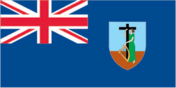
Geography
Agriculture
livestock raising predominates; main crops — wheat, oats, barley
Aid
heavily dependent on USSR
Branches
- executive — Council of Ministers; legislative — unicameral People's Great Hural; judicial — court system; Supreme Court elected by People's Great Hural
- Mongolian People's Army, Air Force
Capital
Ulaanbaatar
Coastline
40 km People
Communists
estimated MPRP membership, 81,000 (1984)
Elections
legislative election theoretically held every four years; last election held June Political party and leader: Mongolian People's Revolutionary Party (MPRP), Jambyn Batmonh, General Secretary (since August 1984)
Electric power
645,000 kW capacity (1985); 2.2 billion kWh produced (1985), 1,150 kWh per capita
Ethnic divisions
mostly black with a few Europeans
Exports
livestock, animal products, wool, hides, fluorspar, nonferrous metals, minerals
Fiscal year
calendar year Communications
Freight carried
rail — 10.7 million metric tons, 3,609 million metric ton/km (1981); highway — 27.8 million metric tons, 1,624 million metric ton/km (1981); waterway — 0.04 million metric tons, 4.7 million metric ton/km (1981) Defense Forces
GDP
$1.20 billion (1976 est.); average annual real growth, 1.6% (1970-77)
Government leaders
Jambyn BATMONH, Chairman of the Presidium of the People's Great Hural (since December 1984); Dumaagiyn SODNOM, Chairman of the Council of Ministers (since December 1984)
Highways
46,700 km total; 700 km hard surface; 46,000 km other surfaces (1981)
Imports
machinery and equipment, petroleum, clothing, building materials, sugar, tea, chemicals
Infant mortality rate
124/1,000(1983)
Inland waterways
397 km of principal routes (1981)
Labor force
5,100 (1983 prelim.); 40.5% community, social, and personal services,
Language
English
Legal system
blend of Russian, Chinese, and Turkish systems of law; new constitution adopted 1960; no constitutional provision for judicial review of legislative acts; legal education at Ulaanbaatar State University; has not accepted compulsory ICJ jurisdiction
Limits of territorial waters (claimed)
3 nm (200 nm fishing zone)
Literacy
77%
Major industries
processing of animal products; building materials; mining
Major trade partners
nearly all trade with Communist countries (approx. 80% with USSR); total turnover about $1.0 billion (1977)
Member of
CEMA, ESCAP, FAO, IAEA, ILO, IPU, ITU, UN, UNESCO, UPU, WFTU, WHO, WIPO, WMO Economy
Military budget
for fiscal year ending 31 December 1977, 405 million tugriks, 12% of total budget Caribbean Sea Land 102 km2; a little over half the size of Washington, D. C.; part of the Leeward Islands group of the Lesser Antilles in the Eastern Caribbean; entirely volcanic, consisting of three main mountain ranges; some arable land with 5,000 acres of forest Water
Military manpower
males 15-49, 454,000; 296,000 fit for military service; 21,000 reach military age (18) annually
Monetary conversion rate
3.3555 tugriks= US$1 (February 1984)
National holiday
People's Revolution Day, 11 July
Nationality
noun — Montserratian(s); adjective— Montserratian
Natural resources
coal, copper, molybdenum, tungsten, phosphates, tin, nickel, zinc, wolfram, fluorspar, gold
Political subdivisions
18 provinces and 3 autonomous municipalities (Ulaanbaatar, Darhan, and Erdenet)
Population
12,000 (July 1986), average annual growth rate 0.2%
Railroads
1,600 km (1981); all 1.524-meter broad gauge
Religion
Anglican, Methodist, Roman Catholic, Pentecostal, Seventh-Day Adventist, other Christian denominations
Suffrage
universal at age 18 and over
Supply
military equipment supplied by USSR