2022 Edition
CIA World Factbook 2022 (factbook.json @ 61dadec0c9c9)
Introduction
Background
The use of the name Crna Gora or Black Mountain (Montenegro) began in the 13th century in reference to a highland region in the Serbian province of Zeta. The later medieval state of Zeta maintained its existence until 1496 when Montenegro finally fell under Ottoman rule. Over subsequent centuries, Montenegro managed to maintain a level of autonomy within the Ottoman Empire. From the 16th to 19th centuries, Montenegro was a theocracy ruled by a series of bishop princes; in 1852, it transformed into a secular principality. Montenegro was recognized as an independent sovereign principality at the Congress of Berlin in 1878. After World War I, during which Montenegro fought on the side of the Allies, Montenegro was absorbed by the Kingdom of Serbs, Croats, and Slovenes, which became the Kingdom of Yugoslavia in 1929. At the conclusion of World War II, it became a constituent republic of the Socialist Federal Republic of Yugoslavia. When the latter dissolved in 1992, Montenegro joined with Serbia, creating the Federal Republic of Yugoslavia and, after 2003, shifting to a looser State Union of Serbia and Montenegro. In May 2006, Montenegro invoked its right under the Constitutional Charter of Serbia and Montenegro to hold a referendum on independence from the two-state union. The vote for severing ties with Serbia barely exceeded 55% - the threshold set by the EU - allowing Montenegro to formally restore its independence on 3 June 2006. In 2017, Montenegro joined NATO and is currently completing its EU accession process, having officially applied to join the EU in December 2008.
Geography
Area
- land
- 13,452 sq km
- total
- 13,812 sq km
- water
- 360 sq km
Area - comparative
slightly smaller than Connecticut; slightly larger than twice the size of Delaware
Climate
Mediterranean climate, hot dry summers and autumns and relatively cold winters with heavy snowfalls inland
Coastline
293.5 km
Elevation
- highest point
- Zia Kolata 2,534 m
- lowest point
- Adriatic Sea 0 m
- mean elevation
- 1,086 m
Geographic coordinates
42 30 N, 19 18 E
Geography - note
strategic location along the Adriatic coast
Irrigated land
24 sq km (2012)
Land boundaries
- border countries
- Albania 186 km; Bosnia and Herzegovina 242 km; Croatia 19 km; Kosovo 76 km; Serbia 157 km
- total
- 680 km
Land use
- agricultural land
- 38.2% (2018 est.)
- agricultural land: arable land
- arable land: 12.9% (2018 est.)
- agricultural land: permanent crops
- permanent crops: 1.2% (2018 est.)
- agricultural land: permanent pasture
- permanent pasture: 24.1% (2018 est.)
- forest
- 40.4% (2018 est.)
- other
- 21.4% (2018 est.)
Location
Southeastern Europe, between the Adriatic Sea and Serbia
Major lakes (area sq km)
- fresh water lake(s)
- Lake Scutari (shared with Albania) - 400 sq kmnote - largest lake in the Balkans
Major watersheds (area sq km)
Atlantic Ocean drainage: (Black Sea) Danube (795,656 sq km)
Map references
Europe
Maritime claims
- continental shelf
- defined by treaty
- territorial sea
- 12 nm
Natural hazards
destructive earthquakes
Natural resources
bauxite, hydroelectricity
Population distribution
highest population density is concentrated in the south, southwest; the extreme eastern border is the least populated area
Terrain
highly indented coastline with narrow coastal plain backed by rugged high limestone mountains and plateaus
People and Society
Age structure
- 0-14 years
- 18.14% (male 57,402/female 53,217)
- 15-24 years
- 12.78% (male 40,220/female 37,720)
- 25-54 years
- 39.65% (male 120,374/female 121,461)
- 55-64 years
- 13.41% (male 40,099/female 41,670)
- 65 years and over
- 16.02% (male 42,345/female 55,351) (2020 est.)
Alcohol consumption per capita
- beer
- 3.83 liters of pure alcohol (2019 est.)
- other alcohols
- 0.16 liters of pure alcohol (2019 est.)
- spirits
- 3.22 liters of pure alcohol (2019 est.)
- total
- 9.91 liters of pure alcohol (2019 est.)
- wine
- 2.68 liters of pure alcohol (2019 est.)
Birth rate
11.19 births/1,000 population (2022 est.)
Child marriage
- men married by age 18
- 3.2% (2018 est.)
- women married by age 15
- 1.9%
- women married by age 18
- 5.8%
Children under the age of 5 years underweight
3.7% (2018/19)
Contraceptive prevalence rate
20.7% (2018)
Current health expenditure
8.3% of GDP (2019)
Death rate
10.33 deaths/1,000 population (2022 est.)
Dependency ratios
- elderly dependency ratio
- 24.8
- potential support ratio
- 4 (2021 est.)
- total dependency ratio
- 52.5
- youth dependency ratio
- 27.7
Drinking water source
- improved: rural
- rural: 98.2% of population
- improved: total
- total: 99.4% of population
- improved: urban
- urban: 100% of population
- unimproved: rural
- rural: 1.8% of population
- unimproved: total
- total: 0.6% of population (2020 est.)
- unimproved: urban
- urban: 0% of population
Education expenditures
NA
Ethnic groups
Montenegrin 45%, Serbian 28.7%, Bosniak 8.7%, Albanian 4.9%, Muslim 3.3%, Romani 1%, Croat 1%, other 2.6%, unspecified 4.9% (2011 est.)
HIV/AIDS - adult prevalence rate
(2021 est.)
Hospital bed density
3.9 beds/1,000 population (2017)
Infant mortality rate
- female
- 3.79 deaths/1,000 live births (2022 est.)
- male
- 2.72 deaths/1,000 live births
- total
- 3.24 deaths/1,000 live births
Languages
- Languages
- Serbian 42.9%, Montenegrin (official) 37%, Bosnian 5.3%, Albanian 5.3%, Serbo-Croat 2%, other 3.5%, unspecified 4% (2011 est.)
- major-language sample(s)
- Knjiga svetskih činjenica, neophodan izvor osnovnih informacija. (Serbian) Knjiga svjetskih činjenica, neophodan izvor osnovnih informacija. (Montenegrin/Bosnian)The World Factbook, the indispensable source for basic information.
Life expectancy at birth
- female
- 80.27 years (2022 est.)
- male
- 75.32 years
- total population
- 77.75 years
Literacy
- definition
- age 15 and over can read and write
- female
- 98.3% (2018)
- male
- 99.5%
- total population
- 98.8%
Major infectious diseases
- degree of risk
- intermediate (2020)
- food or waterborne diseases
- bacterial diarrhea
- vectorborne diseases
- Crimean-Congo hemorrhagic fever
Major urban areas - population
177,000 PODGORICA (capital) (2018)
Maternal mortality ratio
6 deaths/100,000 live births (2017 est.)
Median age
- female
- 41.1 years (2020 est.)
- male
- 38.1 years
- total
- 39.6 years
Mother's mean age at first birth
26.3 years (2010 est.)
Nationality
- adjective
- Montenegrin
- noun
- Montenegrin(s)
Net migration rate
-4.97 migrant(s)/1,000 population (2022 est.)
Obesity - adult prevalence rate
23.3% (2016)
Physicians density
2.74 physicians/1,000 population (2020)
Population
604,966 (2022 est.)
Population distribution
highest population density is concentrated in the south, southwest; the extreme eastern border is the least populated area
Population growth rate
-0.41% (2022 est.)
Religions
Orthodox 72.1%, Muslim 19.1%, Catholic 3.4%, atheist 1.2%, other 1.5%, unspecified 2.6% (2011 est.)
Sanitation facility access
- improved: rural
- rural: 93.9% of population
- improved: total
- total: 98% of population
- improved: urban
- urban: 100% of population
- unimproved: rural
- rural: 6.1% of population
- unimproved: total
- total: 2% of population (2020 est.)
- unimproved: urban
- urban: 0% of population
School life expectancy (primary to tertiary education)
- female
- 16 years (2021)
- male
- 15 years
- total
- 15 years
Sex ratio
- 0-14 years
- 1.07 male(s)/female
- 15-24 years
- 1.07 male(s)/female
- 25-54 years
- 0.99 male(s)/female
- 55-64 years
- 0.96 male(s)/female
- 65 years and over
- 0.69 male(s)/female
- at birth
- 1.04 male(s)/female
- total population
- 0.97 male(s)/female (2022 est.)
Tobacco use
- female
- 31.1% (2020 est.)
- male
- 31.6% (2020 est.)
- total
- 31.4% (2020 est.)
Total fertility rate
1.81 children born/woman (2022 est.)
Urbanization
- rate of urbanization
- 0.45% annual rate of change (2020-25 est.)
- urban population
- 68.5% of total population (2023)
Youth unemployment rate (ages 15-24)
- female
- 39.7% (2020 est.)
- male
- 33.6%
- total
- 36%
Government
Administrative divisions
24 municipalities (opstine, singular - opstina); Andrijevica, Bar, Berane, Bijelo Polje, Budva, Cetinje, Danilovgrad, Gusinje, Herceg Novi, Kolasin, Kotor, Mojkovac, Niksic, Petnijica, Plav, Pljevlja, Pluzine, Podgorica, Rozaje, Savnik, Tivat, Tuzi, Ulcinj, Zabljak
Capital
- daylight saving time
- +1 hr, begins last Sunday in March; ends last Sunday in October
- etymology
- the name translates as "beneath Gorica"; the meaning of Gorica is "hillock"; the reference is to the small hill named Gorica that the city is built around
- geographic coordinates
- 42 26 N, 19 16 E
- name
- Podgorica; note - Cetinje retains the status of "Old Royal Capital"
- time difference
- UTC+1 (6 hours ahead of Washington, DC, during Standard Time)
Citizenship
- citizenship by birth
- no
- citizenship by descent only
- at least one parent must be a citizen of Montenegro
- dual citizenship recognized
- no
- residency requirement for naturalization
- 10 years
Constitution
- amendments
- proposed by the president of Montenegro, by the government, or by at least 25 members of the Assembly; passage of draft proposals requires two-thirds majority vote of the Assembly, followed by a public hearing; passage of draft amendments requires two-thirds majority vote of the Assembly; changes to certain constitutional articles, such as sovereignty, state symbols, citizenship, and constitutional change procedures, require three-fifths majority vote in a referendum; amended 2013
- history
- several previous; latest adopted 22 October 2007
Country name
- conventional long form
- none
- conventional short form
- Montenegro
- etymology
- the country's name locally as well as in most Western European languages means "black mountain" and refers to the dark coniferous forests on Mount Lovcen and the surrounding area
- former
- People's Republic of Montenegro, Socialist Republic of Montenegro, Republic of Montenegro
- local long form
- none
- local short form
- Crna Gora
Diplomatic representation from the US
- chief of mission
- Ambassador Judy Rising REINKE (since 20 December 2018)
- email address and website
- PodgoricaACS@state.govhttps://me.usembassy.gov/
- embassy
- Dzona Dzeksona 2, 81000 Podgorica
- FAX
- [382] (0)20-241-358
- mailing address
- 5570 Podgorica Place, Washington DC 20521-5570
- telephone
- +382 (0)20-410-500
Diplomatic representation in the US
- chancery
- 1610 New Hampshire Avenue NW, Washington, DC, 20009
- chief of mission
- Ambassador (vacant); Charge d'Affaires Marija STJEPCEVIC (since 4 February 2021)
- consulate(s) general
- New York
- email address and website
- usa@mfa.gov.me
- FAX
- [1] (202) 234-6109
- telephone
- [1] (202) 234-6108
Executive branch
- cabinet
- Ministers act as cabinet
- chief of state
- President Milo DJUKANOVIC (since 20 May 2018)
- election results
- 2018: Milo DJUKANOVIC elected president in the first round; percent of vote - Milo DJUKANOVIC (DPS) 53.9%, Mladen BOJANIC (independent) 33.4%, Draginja VUKSANOVIC (SDP) 8.2%, Marko MILACIC (PRAVA) 2.8%, other 1.7%2013: Filip VUJANOVIC reelected president; percent of vote Filip VUJANOVIC (DPS) 51.2%, Miodrag LEKIC (independent) 48.8%
- elections/appointments
- president directly elected by absolute majority popular vote in 2 rounds if needed for a 5-year term (eligible for a second term); election last held on 15 April 2018 (next to be held in 2023); prime minister nominated by the president, approved by the Assembly
- head of government
- Prime Minister Dritan ABAZOVIC (since 28 April 2022)
Flag description
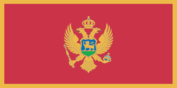
a red field bordered by a narrow golden-yellow stripe with the Montenegrin coat of arms centered; the arms consist of a double-headed golden eagle - symbolizing the unity of church and state - surmounted by a crown; the eagle holds a golden scepter in its right claw and a blue orb in its left; the breast shield over the eagle shows a golden lion passant on a green field in front of a blue sky; the lion is a symbol of episcopal authority and harkens back to the three and a half centuries when Montenegro was ruled as a theocracy
Government type
parliamentary republic
Independence
3 June 2006 (from the State Union of Serbia and Montenegro); notable earlier dates: 13 March 1852 (Principality of Montenegro established); 13 July 1878 (Congress of Berlin recognizes Montenegrin independence); 28 August 1910 (Kingdom of Montenegro established)
International law organization participation
has not submitted an ICJ jurisdiction declaration; accepts ICCt jurisdiction
International organization participation
- CE, CEI, EAPC, EBRD, FAO, IAEA, IBRD, ICAO, ICC (NGOs), ICCt, ICRM, IDA, IFC, IFRCS, IHO, ILO, IMF, IMO, IMSO, Interpol, IOC, IOM, IPU, ISO (correspondent), ITSO, ITU, ITUC (NGOs), MIGA, NATO, OAS (observer), OIF (observer), OPCW, OSCE, PCA, PFP, SELEC, UN, UNCTAD, UNESCO, UNHCR, UNHRC, UNIDO, UNWTO, UPU, WCO, WHO, WIPO, WMO, WTO
- note
- note: Montenegro is an EU candidate country whose satisfactory completion of accession criteria is required before being granted full EU membership
Judicial branch
- highest court(s)
- Supreme Court or Vrhovni Sud (consists of the court president, deputy president, and 15 judges); Constitutional Court or Ustavni Sud (consists of the court president and 7 judges)
- judge selection and term of office
- Supreme Court president proposed by general session of the Supreme Court and elected by the Judicial Council, a 9-member body consisting of judges, lawyers designated by the Assembly, and the minister of judicial affairs; Supreme Court president elected for a single renewable, 5-year term; other judges elected by the Judicial Council for life; Constitutional Court judges - 2 proposed by the president of Montenegro and 5 by the Assembly, and elected by the Assembly; court president elected from among the court members; court president elected for a 3-year term, other judges serve 9-year terms
- subordinate courts
- Administrative Courts; Appellate Court; Commercial Courts; High Courts; basic courts
Legal system
civil law
Legislative branch
- description
- unicameral Assembly or Skupstina (81 seats; members directly elected in a single nationwide constituency by proportional representation vote; members serve 4-year terms)
- election results
- percent of vote by party/coalition - DPS 35.1%, ZBCG 32.6%, MNIM 12.5%, URA 5.5%, SD 4.1%, BS 3.9%, SDP 3.1%, AL 1.6%, Albanian Coalition 1.1%, other 0.4%; seats by party/coalition - DPS 30, ZBCG 27, MNIM 10, URA 4, BS 3, SD 3, SDP 2, AL 1, Albanian Coalition 1.; composition as of July 2022 - men 59, women 22, percent of women 27.2%
- elections
- last held on 30 August 2020 (next to be held in 2024)
National anthem
- lyrics/music
- Sekula DRLJEVIC/unknown, arranged by Zarko MIKOVIC
- name
- "Oj, svijetla majska zoro" (Oh, Bright Dawn of May)
- note
- note: adopted 2004; music based on a Montenegrin folk song
National heritage
- selected World Heritage Site locales
- Natural and Culturo-Historical Region of Kotor (c); Durmitor National Park (n); Stećci Medieval Tombstones Graveyards (c); Fortified City of Kotor Venetian Defense Works (c)
- total World Heritage Sites
- 4 (3 cultural, 1 natural)
National holiday
Statehood Day, 13 July (1878, the day the Berlin Congress recognized Montenegro as the 27th independent state in the world, and 1941, the day the Montenegrins staged an uprising against fascist occupiers and sided with the partisan communist movement)
National symbol(s)
double-headed eagle; national colors: red, gold
Political parties and leaders
Albanian Alternative or AA [Nik DELJOSAJ]Albanian Coalition (includes DP, DSCG, DUA for 2020 election)Albanian Coalition Perspective or AKPAlbanian List or AL [Nik DELJOSAJ and Nazif CUNGU] (coalition includes AA, Forca, AKP, DSA)Bosniak Party or BS [Ervin IBRAHIMOVIC]Croatian Civic Initiative or HGI [Adrian VUKSANOVIC]Croatian Reform Party [Marija VUCINOVIC]Democratic Alliance or DEMOS [Miodrag LEKIC]Democratic Front or DF [collective leadership] (coalition includes NOVA, PZP, DNP, RP)Democratic League in Montenegro or DSCG [Mehmet BARDHI]Democratic League of Albanians or DSADemocratic Montenegro or DCG [Aleksa BECIC]Democratic Party or DP [Fatmir GJEKA]Democratic Party of Socialists or DPS [Milo DJUKANOVIC]Democratic Party of Unity or DSJ [Nebojsa JUSKOVIC]Democratic People's Party or DNP [Milan KNEZEVIC]Democratic Serb Party or DSS [Dragica PEROVIC]Democratic Union of Albanians or DUA [Mehmet ZENKA]For the Future of Montenegro or ZBCG [Zdravko KRIVOKAPIC] (electoral coalition includes SNP and 2 alliances - DF, NP)In Black and White [Dritan ABAZOVIC] (electoral list)Liberal Party or LP [Andrija POPOVIC]Movement for Changes or PZP [Nebojsa MEDOJEVIC]New Democratic Power or FORCA [Nazif CUNGU]New Serb Democracy or NSD or NOVA [Andrija MANDIC]Party of Pensioners, Disabled, and Restitution or PUPI [Momir JOKSIMOVIC]Peace is Our Nation or MNIM [Aleksa BECIC] (coalition includes Democrats, DEMOS, New Left, PUPI)Popular Movement or NP [Miodrag DAVIDOVIC] (coalition includes DEMOS, RP, UCG, and several minor parties)Social Democratic Party or SDP [Rasko KONJEVIC]Social Democrats or SD [Damir SEHOVIC]Socialist People's Party or SNP [Vladimir JOKOVIC]True Montenegro or PRAVA or PCG [Marko MILACIC]United Montenegro or UCG [Goran DANILOVIC] (split from DEMOS)United Reform Action or URA [Dritan ABAZOVIC]Workers' Party or RP [Maksim VUCINIC]
Suffrage
18 years of age; universal
Economy
Agricultural products
milk, potatoes, grapes, vegetables, tomatoes, watermelons, wheat, apples, cabbages, barley
Budget
- expenditures
- 2.05 billion (2017 est.)
- revenues
- 1.78 billion (2017 est.)
Budget surplus (+) or deficit (-)
-5.6% (of GDP) (2017 est.)
Credit ratings
- Moody's rating
- B1 (2016)
- note
- note: The year refers to the year in which the current credit rating was first obtained.
- Standard & Poors rating
- B+ (2014)
Current account balance
- Current account balance 2016
- -$710 million (2016 est.)
- Current account balance 2017
- -$780 million (2017 est.)
Debt - external
- Debt - external 31 December 2016
- $2.224 billion (31 December 2016 est.)
- Debt - external 31 December 2017
- $2.516 billion (31 December 2017 est.)
Economic overview
Montenegro's economy is transitioning to a market system. Around 90% of Montenegrin state-owned companies have been privatized, including 100% of banking, telecommunications, and oil distribution. Tourism, which accounts for more than 20% of Montenegro’s GDP, brings in three times as many visitors as Montenegro’s total population every year. Several new luxury tourism complexes are in various stages of development along the coast, and a number are being offered in connection with nearby boating and yachting facilities. In addition to tourism, energy and agriculture are considered two distinct pillars of the economy. Only 20% of Montenegro’s hydropower potential is utilized. Montenegro plans to become a net energy exporter, and the construction of an underwater cable to Italy, which will be completed by the end of 2018, will help meet its goal. Montenegro uses the euro as its domestic currency, though it is not an official member of the euro zone. In January 2007, Montenegro joined the World Bank and IMF, and in December 2011, the WTO. Montenegro began negotiations to join the EU in 2012, having met the conditions set down by the European Council, which called on Montenegro to take steps to fight corruption and organized crime. The government recognizes the need to remove impediments in order to remain competitive and open the economy to foreign investors. Net foreign direct investment in 2017 reached $848 million and investment per capita is one of the highest in Europe, due to a low corporate tax rate. The biggest foreign investors in Montenegro in 2017 were Norway, Russia, Italy, Azerbaijan and Hungary. Montenegro is currently planning major overhauls of its road and rail networks, and possible expansions of its air transportation system. In 2014, the Government of Montenegro selected two Chinese companies to construct a 41 km-long section of the country’s highway system, which will become part of China’s Belt and Road Initiative. Cheaper borrowing costs have stimulated Montenegro’s growing debt, which currently sits at 65.9% of GDP, with a forecast, absent fiscal consolidation, to increase to 80% once the repayment to China’s Ex/Im Bank of a €800 million highway loan begins in 2019. Montenegro first instituted a value-added tax (VAT) in April 2003, and introduced differentiated VAT rates of 17% and 7% (for tourism) in January 2006. The Montenegrin Government increased the non-tourism Value Added Tax (VAT) rate to 21% as of January 2018, with the goal of reducing its public debt.
Exchange rates
- Currency
- euros (EUR) per US dollar -
- Exchange rates 2013
- 0.7634 (2013 est.)
- Exchange rates 2014
- 0.885 (2014 est.)
- Exchange rates 2015
- 0.9214 (2015 est.)
- Exchange rates 2016
- 0.903 (2016 est.)
- Exchange rates 2017
- 0.885 (2017 est.)
Exports
- Exports 2018
- $2.35 billion (2018 est.) note: data are in current year dollars
- Exports 2019
- $2.42 billion (2019 est.) note: data are in current year dollars
- Exports 2020
- $1.24 billion (2020 est.) note: data are in current year dollars
Exports - commodities
aluminum, packaged medicines, cars, zinc, wine (2019)
Exports - partners
Serbia 17%, Hungary 15%, China 11%, Russia 7%, Bosnia and Herzegovina 6%, Germany 6%, Italy 5%, Poland 5% (2019)
Fiscal year
calendar year
GDP - composition, by end use
- exports of goods and services
- 40.5% (2016 est.)
- government consumption
- 19.6% (2016 est.)
- household consumption
- 76.8% (2016 est.)
- imports of goods and services
- -63% (2016 est.)
- investment in fixed capital
- 23.2% (2016 est.)
- investment in inventories
- 2.9% (2016 est.)
GDP - composition, by sector of origin
- agriculture
- 7.5% (2016 est.)
- industry
- 15.9% (2016 est.)
- services
- 76.6% (2016 est.)
GDP (official exchange rate)
$5.486 billion (2019 est.)
Gini Index coefficient - distribution of family income
- Gini Index coefficient - distribution of family income 2013
- 32.3 (2013 est.)
- Gini Index coefficient - distribution of family income 2015
- 39 (2015 est.)
Household income or consumption by percentage share
- highest 10%
- 25.7% (2014 est.)
- lowest 10%
- 3.5%
Imports
- Imports 2018
- $3.67 billion (2018 est.) note: data are in current year dollars
- Imports 2019
- $3.59 billion (2019 est.) note: data are in current year dollars
- Imports 2020
- $2.9 billion (2020 est.) note: data are in current year dollars
Imports - commodities
refined petroleum, cars, packaged medicines, recreational boats, cigarettes (2019)
Imports - partners
Serbia 30%, Bosnia and Herzegovina 8%, Croatia 8%, Italy 6%, Greece 6%, Germany 5% (2019)
Industrial production growth rate
-4.2% (2017 est.)
Industries
steelmaking, aluminum, agricultural processing, consumer goods, tourism
Inflation rate (consumer prices)
- Inflation rate (consumer prices) 2017
- 2.3% (2017 est.)
- Inflation rate (consumer prices) 2018
- 2.6% (2018 est.)
- Inflation rate (consumer prices) 2019
- 0.3% (2019 est.)
Labor force
167,000 (2020 est.)
Labor force - by occupation
- agriculture
- 7.9%
- industry
- 17.1%
- services
- 75% (2017 est.)
Population below poverty line
24.5% (2018 est.)
Public debt
- note
- note: data cover general government debt, and includes debt instruments issued (or owned) by government entities other than the treasury; the data include treasury debt held by foreign entities; the data include debt issued by subnational entities, as well as intragovernmental debt; intragovernmental debt consists of treasury borrowings from surpluses in the social funds, such as for retirement, medical care, and unemployment; debt instruments for the social funds are not sold at public auctions
- Public debt 2016
- 66.4% of GDP (2016 est.)
- Public debt 2017
- 67.2% of GDP (2017 est.)
Real GDP (purchasing power parity)
- note
- note: data are in 2017 dollars
- Real GDP (purchasing power parity) 2018
- $12.87 billion (2018 est.)
- Real GDP (purchasing power parity) 2019
- $13.39 billion (2019 est.)
- Real GDP (purchasing power parity) 2020
- $11.36 billion (2020 est.)
Real GDP growth rate
- Real GDP growth rate 2015
- 3.4% (2015 est.)
- Real GDP growth rate 2016
- 2.9% (2016 est.)
- Real GDP growth rate 2017
- 4.3% (2017 est.)
Real GDP per capita
- note
- note: data are in 2017 dollars
- Real GDP per capita 2018
- $20,700 (2018 est.)
- Real GDP per capita 2019
- $21,500 (2019 est.)
- Real GDP per capita 2020
- $18,300 (2020 est.)
Reserves of foreign exchange and gold
- Reserves of foreign exchange and gold 31 December 2016
- $846.5 million (31 December 2016 est.)
- Reserves of foreign exchange and gold 31 December 2017
- $1.077 billion (31 December 2017 est.)
Taxes and other revenues
37.2% (of GDP) (2017 est.)
Unemployment rate
- Unemployment rate 2018
- 18.8% (2018 est.)
- Unemployment rate 2019
- 15.82% (2019 est.)
Youth unemployment rate (ages 15-24)
- female
- 39.7% (2020 est.)
- male
- 33.6%
- total
- 36%
Energy
Carbon dioxide emissions
- from coal and metallurgical coke
- 1.333 million metric tonnes of CO2 (2019 est.)
- from consumed natural gas
- 0 metric tonnes of CO2 (2019 est.)
- from petroleum and other liquids
- 1.114 million metric tonnes of CO2 (2019 est.)
- total emissions
- 2.447 million metric tonnes of CO2 (2019 est.)
Coal
- consumption
- 1.351 million metric tons (2020 est.)
- exports
- 96,000 metric tons (2020 est.)
- imports
- 1,000 metric tons (2020 est.)
- production
- 1.456 million metric tons (2020 est.)
- proven reserves
- 142 million metric tons (2019 est.)
Electricity
- consumption
- 3,246,760,000 kWh (2019 est.)
- exports
- 943 million kWh (2019 est.)
- imports
- 1.196 billion kWh (2019 est.)
- installed generating capacity
- 1.007 million kW (2020 est.)
- transmission/distribution losses
- 493 million kWh (2019 est.)
Electricity access
- electrification - total population
- 100% (2020)
Electricity generation sources
- biomass and waste
- 0% of total installed capacity (2020 est.)
- fossil fuels
- 42.3% of total installed capacity (2020 est.)
- geothermal
- 0% of total installed capacity (2020 est.)
- hydroelectricity
- 47.2% of total installed capacity (2020 est.)
- nuclear
- 0% of total installed capacity (2020 est.)
- solar
- 0% of total installed capacity (2020 est.)
- tide and wave
- 0% of total installed capacity (2020 est.)
- wind
- 10.5% of total installed capacity (2020 est.)
Energy consumption per capita
- Total energy consumption per capita 2019
- 77.286 million Btu/person (2019 est.)
Natural gas
- consumption
- 0 cubic meters (2021 est.)
- exports
- 0 cubic meters (2021 est.)
- imports
- 0 cubic meters (2021 est.)
- production
- 0 cubic meters (2021 est.)
- proven reserves
- 0 cubic meters (2021 est.)
Petroleum
- crude oil and lease condensate exports
- 0 bbl/day (2018 est.)
- crude oil and lease condensate imports
- 0 bbl/day (2018 est.)
- crude oil estimated reserves
- 0 barrels (2021 est.)
- refined petroleum consumption
- 7,600 bbl/day (2019 est.)
- total petroleum production
- 0 bbl/day (2021 est.)
Refined petroleum products - exports
357 bbl/day (2015 est.)
Refined petroleum products - imports
6,448 bbl/day (2015 est.)
Refined petroleum products - production
0 bbl/day (2015 est.)
Communications
Broadband - fixed subscriptions
- subscriptions per 100 inhabitants
- 29 (2020 est.)
- total
- 184,176 (2020 est.)
Broadcast media
state-funded national radio-TV broadcaster operates 2 terrestrial TV networks, 1 satellite TV channel, and 2 radio networks; 4 local public TV stations and 14 private TV stations; 14 local public radio stations, 35 private radio stations, and several on-line media (2019)
Internet country code
.me
Internet users
- percent of population
- 78% (2020 est.)
- total
- 484,619 (2020 est.)
Telecommunication systems
- domestic
- GSM mobile-cellular service, available through multiple providers; fixed-line over 30 per 100 and mobile-cellular 172 per 100 persons (2020)
- general assessment
- a small telecom market supported by a population of only 623,000; fixed broadband services are available via a variety of technology platforms, though fiber is the dominant platform, accounting for almost 40% of connections; the growth of fiber has largely been at the expense of DSL as customers are migrated to fiber networks as these are built out progressively; mobile penetration is particularly high, though this is partly due to the significant number of tourists visiting the country seasonally, as also to the popularity of subscribers having multiple prepaid cards; in the wake of the pandemic and associated restrictions on travel, the number of mobile subscribers fell in 2020, as also in the first quarter of 2021, year-on-year; networks support a vibrant mobile broadband services sector, largely based on LTE; two of the MNOs began trialing 5G in May 2021, though commercial services will not gain traction until after the multi-spectrum auction is completed at the end of 2021; spectrum is available in the 694-790MHz and 3400-3800MHz ranges, as well as in the 26.5-27.5GHz range (2021)
- international
- country code - 382; 2 international switches connect the national system
- note
- note: the COVID-19 pandemic continues to have a significant impact on production and supply chains globally; since 2020, some aspects of the telecom sector have experienced a downturn, particularly in mobile device production; progress toward 5G implementation has resumed, as well as upgrades to infrastructure; consumer spending on telecom services has increased due to the surge in demand for capacity and bandwidth; the crucial nature of telecom services as a tool for work and school from home is still evident, and the spike in this area has seen growth opportunities for development of new tools and increased services
Telephones - fixed lines
- subscriptions per 100 inhabitants
- 31 (2020 est.)
- total subscriptions
- 191,768 (2020 est.)
Telephones - mobile cellular
- subscriptions per 100 inhabitants
- 172 (2020 est.)
- total subscriptions
- 1,080,089 (2020 est.)
Transportation
Airports
- total
- 5 (2021)
Airports - with paved runways
- 1,524 to 2,437 m
- 1
- 2,438 to 3,047 m
- 2
- 914 to 1,523 m
- 1
- total
- 5
- under 914 m
- 1 (2021)
Civil aircraft registration country code prefix
4O
Heliports
1 (2021)
Merchant marine
- by type
- bulk carrier 4, other 13 (2021)
- total
- 17
National air transport system
- annual freight traffic on registered air carriers
- 130,000 (2018) mt-km
- annual passenger traffic on registered air carriers
- 565,522 (2018)
- inventory of registered aircraft operated by air carriers
- 4
- number of registered air carriers
- 1 (2020)
Ports and terminals
- major seaport(s)
- Bar
Railways
- standard gauge
- 250 km (2017) 1.435-m gauge (224 km electrified)
- total
- 250 km (2017)
Roadways
- paved
- 7,141 km (2010)
- total
- 7,762 km (2010)
- unpaved
- 621 km (2010)
Military and Security
Military - note
Montenegro became a member of NATO in 2017; as of 2022, Greece and Italy provided NATO's air policing mission for Montenegro
Military and security forces
the Armed Forces of the Republic of Montenegro is a joint force with land, air, and naval elements (2022)
Military and security service personnel strengths
approximately 2,000 active duty troops (2022)
Military equipment inventories and acquisitions
the military's inventory is small and consists mostly of Soviet-era equipment inherited from the former Yugoslavia military, with a limited mix of other imported systems; since 2010, it has received small quantities of equipment from Austria, Turkey, and the US (2021)
Military expenditures
- Military Expenditures 2018
- 1.4% of GDP (2018) (approximately $120 million)
- Military Expenditures 2019
- 1.3% of GDP (2019) (approximately $130 million)
- Military Expenditures 2020
- 1.7% of GDP (2020)
- Military Expenditures 2021
- 1.6% of GDP (2021)
- Military Expenditures 2022
- 1.8% of GDP (2022 est.)
Military service age and obligation
- 18 is the legal minimum age for voluntary military service; conscription abolished in 2006 (2021)
- note
- note: as of 2019, women made up about 6% of the military's full-time personnel
Transnational Issues
Disputes - international
Montenegro-Albania: none identified Montenegro-Bosnia and Herzegovina: the two countries signed a border agreement in August 2015; sovereignty of the disputed Sutorina territory was given to Montenegro Montenegro-Croatia: the two countries in 2002 reached a temporary agreement designating the Prevlaka Peninsula as part of Croatia, in October 2020, a Montenegrin official resurrected the dormant dispute over the Prevlaka Peninsula by stating that Montenegro had a good chance of winning it through international arbitration Montenegro-Kosovo: a 2015 border agreement was ratified by Montenegro in 2015 and by Kosovo in 2018, but the actual demarcation has not been completed Montenegro-Serbia: The former republic boundary – when the two countries were one and called the Federal Republic of Yugoslavia – serves as the boundary until a line is formally delimited and demarcated
Illicit drugs
drug trafficking groups are major players in the procurement and transportation of large quantities of cocaine destined for European markets
Refugees and internally displaced persons
- note
- note: 28,589 estimated refugee and migrant arrivals (January 2015-December 2022)
- refugees (country of origin)
- 31,665 (Ukraine) (as of 20 December 2022)
- stateless persons
- 458 (mid-year 2021)
Environment
Air pollutants
- carbon dioxide emissions
- 2.02 megatons (2016 est.)
- methane emissions
- 0.75 megatons (2020 est.)
- particulate matter emissions
- 20.17 micrograms per cubic meter (2016 est.)
Climate
Mediterranean climate, hot dry summers and autumns and relatively cold winters with heavy snowfalls inland
Environment - current issues
pollution of coastal waters from sewage outlets, especially in tourist-related areas such as Kotor; serious air pollution in Podgorica, Pljevlja and Niksie; air pollution in Pljevlja is caused by the nearby lignite power plant and the domestic use of coal and wood for household heating
Environment - international agreements
- party to
- Air Pollution, Air Pollution-Heavy Metals, Air Pollution-Persistent Organic Pollutants, Biodiversity, Climate Change, Climate Change-Kyoto Protocol, Climate Change-Paris Agreement, Comprehensive Nuclear Test Ban, Desertification, Endangered Species, Hazardous Wastes, Law of the Sea, Marine Dumping-London Convention, Marine Life Conservation, Nuclear Test Ban, Ozone Layer Protection, Ship Pollution, Wetlands
- signed, but not ratified
- none of the selected agreements
Land use
- agricultural land
- 38.2% (2018 est.)
- agricultural land: arable land
- arable land: 12.9% (2018 est.)
- agricultural land: permanent crops
- permanent crops: 1.2% (2018 est.)
- agricultural land: permanent pasture
- permanent pasture: 24.1% (2018 est.)
- forest
- 40.4% (2018 est.)
- other
- 21.4% (2018 est.)
Major infectious diseases
- degree of risk
- intermediate (2020)
- food or waterborne diseases
- bacterial diarrhea
- vectorborne diseases
- Crimean-Congo hemorrhagic fever
Major lakes (area sq km)
- fresh water lake(s)
- Lake Scutari (shared with Albania) - 400 sq kmnote - largest lake in the Balkans
Major watersheds (area sq km)
Atlantic Ocean drainage: (Black Sea) Danube (795,656 sq km)
Revenue from coal
- coal revenues
- 0.12% of GDP (2018 est.)
Revenue from forest resources
- forest revenues
- 0.43% of GDP (2018 est.)
Total water withdrawal
- agricultural
- 1.7 million cubic meters (2017 est.)
- industrial
- 62.8 million cubic meters (2017 est.)
- municipal
- 96.4 million cubic meters (2017 est.)
Urbanization
- rate of urbanization
- 0.45% annual rate of change (2020-25 est.)
- urban population
- 68.5% of total population (2023)
Waste and recycling
- municipal solid waste generated annually
- 332,000 tons (2015 est.)
- municipal solid waste recycled annually
- 17,994 tons (2015 est.)
- percent of municipal solid waste recycled
- 5.4% (2015 est.)