2019 Edition
CIA World Factbook 2019 Archive (Wayback Machine)
Introduction
Background
A sultanate since the 12th century, the Maldives became a British protectorate in 1887. The islands became a republic in 1968, three years after independence. President Maumoon Abdul GAYOOM dominated Maldives' political scene for 30 years, elected to six successive terms by single-party referendums. Following political demonstrations in the capital Male in August 2003, GAYOOM and his government pledged to embark upon a process of liberalization and democratic reforms, including a more representative political system and expanded political freedoms. Political parties were legalized in 2005. In June 2008, a constituent assembly - termed the "Special Majlis" - finalized a new constitution ratified by GAYOOM in August 2008. The first-ever presidential elections under a multi-candidate, multi-party system were held in October 2008. GAYOOM was defeated in a runoff poll by Mohamed NASHEED, a political activist who had been jailed several years earlier by the GAYOOM regime. In early February 2012, after several weeks of street protests in response to his ordering the arrest of a top judge, NASHEED purportedly resigned the presidency and handed over power to Vice President Mohammed WAHEED Hassan Maniku. A government-appointed Commission of National Inquiry concluded there was no evidence of a coup, but NASHEED contends that police and military personnel forced him to resign. NASHEED, WAHEED, and Abdulla YAMEEN Abdul Gayoom ran in the 2013 elections with YAMEEN ultimately winning the presidency after three rounds of voting. As president, YAMEEN weakened democratic institutions, curtailed civil liberties, jailed his political opponents, restricted the press, and exerted control over the judiciary to strengthen his hold on power and limit dissent. In September 2018, YAMEEN lost his reelection bid to Ibrahim Mohamed SOLIH, a parliamentarian of the Maldivian Democratic Party (MDP), who had the support of a coalition of four parties that came together to defeat YAMEEN and restore democratic norms to Maldives. In April 2019, SOLIH's MDP won 65 of 87 seats in parliament.
Geography
Area
- Land
- 298 sq km
- Total
- 298 sq km
- Water
- 0 sq km
Area Comparative
about 1.7 times the size of Washington, DC
Climate
tropical; hot, humid; dry, northeast monsoon (November to March); rainy, southwest monsoon (June to August)
Coastline
644 km
Elevation
- Highest Point
- 8th tee, golf course, Villingi Island 5 m
- Lowest Point
- Indian Ocean 0 m
- Mean Elevation
- 2 m
Environment Current Issues
depletion of freshwater aquifers threatens water supplies; inadequate sewage treatment; coral reef bleaching
Environment International Agreements
- Party To
- Biodiversity, Climate Change, Climate Change-Kyoto Protocol, Desertification, Hazardous Wastes, Law of the Sea, Ozone Layer Protection, Ship Pollution
- Signed But Not Ratified
- none of the selected agreements
Geographic Coordinates
3 15 N, 73 00 E
Geography Note
smallest Asian country; archipelago of 1,190 coral islands grouped into 26 atolls (200 inhabited islands, plus 80 islands with tourist resorts); strategic location astride and along major sea lanes in Indian Ocean
Irrigated Land
0 sq km (2012)
Land Boundaries
0 km
Land Use
- Agricultural Land
- 23.3% (2011 est.)
- Agricultural Land Arable Land
- 10% (2011 est.)
- Agricultural Land Permanent Crops
- 10% (2011 est.)
- Agricultural Land Permanent Pasture
- 3.3% (2011 est.)
- Forest
- 3% (2011 est.)
- Other
- 73.7% (2011 est.)
Location
Southern Asia, group of atolls in the Indian Ocean, south-southwest of India
Map References
Asia
Maritime Claims
- Contiguous Zone
- 24 nm
- Exclusive Economic Zone
- 200 nm
- Territorial Sea
- 12 nm
Natural Hazards
tsunamis; low elevation of islands makes them sensitive to sea level rise
Natural Resources
fish
Population Distribution
about a third of the population lives in the centrally located capital city of Male and almost a tenth in southern Addu City; the remainder of the populace is spread over the 200 or so populated islands of the archipelago
Terrain
flat, with white sandy beaches
People and Society
Age Structure
- 0 14 Years
- 21.62% (male 43,293 /female 41,563)
- 15 24 Years
- 19.15% (male 42,849 /female 32,326)
- 25 54 Years
- 48.47% (male 106,083 /female 84,160)
- 55 64 Years
- 6.22% (male 11,888 /female 12,540)
- 65 Years And Over
- 4.53% (male 8,101 /female 9,670) (2018 est.)
Birth Rate
16.1 births/1,000 population (2018 est.)
Children Under The Age Of 5 Years Underweight
17.7% (2009)
Contraceptive Prevalence Rate
34.7% (2009)
Current Health Expenditure
10.6% (2016)
Death Rate
4 deaths/1,000 population (2018 est.)
Dependency Ratios
- Elderly Dependency Ratio
- 5.7 (2015 est.)
- Potential Support Ratio
- 17.7 (2015 est.)
- Total Dependency Ratio
- 38 (2015 est.)
- Youth Dependency Ratio
- 32.3 (2015 est.)
Drinking Water Source
- Improved Rural
- 97.9% of population
- Improved Total
- 98.6% of population
- Improved Urban
- 99.5% of population
- Unimproved Rural
- 2.1% of population
- Unimproved Total
- 1.4% of population (2015 est.)
- Unimproved Urban
- 0.5% of population
Education Expenditures
4.1% of GDP (2016)
Ethnic Groups
homogeneous mixture of Sinhalese, Dravidian, Arab, Australasian, and African resulting from historical changes in regional hegemony over marine trade routes
Hospital Bed Density
4.3 beds/1,000 population (2009)
Infant Mortality Rate
- Female
- 18.9 deaths/1,000 live births
- Male
- 23.6 deaths/1,000 live births
- Total
- 21.3 deaths/1,000 live births (2018 est.)
Languages
Dhivehi (official, dialect of Sinhala, script derived from Arabic), English (spoken by most government officials)
Life Expectancy at Birth
- Female
- 78.5 years
- Male
- 73.7 years
- Total Population
- 76 years (2018 est.)
Literacy
- Definition
- age 15 and over can read and write
- Female
- 98.8% (2015)
- Male
- 99.8%
- Total Population
- 99.3%
Major Urban Areas Population
177,000 MALE (capital) (2018)
Maternal Mortality Rate
53 deaths/100,000 live births (2017 est.)
Median Age
- Female
- 28.8 years
- Male
- 28.4 years
- Total
- 28.6 years (2018 est.)
Mother's Mean Age at First Birth
24.5 years (2009 est.)
Nationality
- Adjective
- Maldivian
- Noun
- Maldivian(s)
Net Migration Rate
-12.7 migrant(s)/1,000 population (2018 est.)
Obesity Adult Prevalence Rate
8.6% (2016)
Physicians Density
1.04 physicians/1,000 population (2016)
Population
392,473 (July 2018 est.)
Population Growth Rate
-0.06% (2018 est.)
Religions
Sunni Muslim (official)
Sanitation Facility Access
- Improved Rural
- 98.3% of population (2015 est.)
- Improved Total
- 97.9% of population (2015 est.)
- Improved Urban
- 97.5% of population (2015 est.)
- Unimproved Rural
- 1.7% of population (2015 est.)
- Unimproved Total
- 2.1% of population (2015 est.)
- Unimproved Urban
- 2.5% of population (2015 est.)
Sex Ratio
- 0 14 Years
- 1.04 male(s)/female
- 15 24 Years
- 1.33 male(s)/female
- 25 54 Years
- 1.26 male(s)/female
- 55 64 Years
- 0.95 male(s)/female
- 65 Years And Over
- 0.84 male(s)/female
- At Birth
- 1.05 male(s)/female
- Total Population
- 1.18 male(s)/female (2018 est.)
Total Fertility Rate
1.72 children born/woman (2018 est.)
Unemployment Youth Ages 15 24
- Female
- 12.1% (2016 est.)
- Male
- 19.1%
- Total
- 15.9%
Urbanization
- Rate Of Urbanization
- 2.93% annual rate of change (2015-20 est.)
- Urban Population
- 40.2% of total population (2019)
Government
Administrative Divisions
21 administrative atolls (atholhuthah, singular - atholhu); Addu (Addu City), Ariatholhu Dhekunuburi (South Ari Atoll), Ariatholhu Uthuruburi (North Ari Atoll), Faadhippolhu, Felidhuatholhu (Felidhu Atoll), Fuvammulah, Hahdhunmathi, Huvadhuatholhu Dhekunuburi (South Huvadhu Atoll), Huvadhuatholhu Uthuruburi (North Huvadhu Atoll), Kolhumadulu, Maale (Male), Maaleatholhu (Male Atoll), Maalhosmadulu Dhekunuburi (South Maalhosmadulu), Maalhosmadulu Uthuruburi (North Maalhosmadulu), Miladhunmadulu Dhekunuburi (South Miladhunmadulu), Miladhunmadulu Uthuruburi (North Miladhunmadulu), Mulakatholhu (Mulaku Atoll), Nilandheatholhu Dhekunuburi (South Nilandhe Atoll), Nilandheatholhu Uthuruburi (North Nilandhe Atoll), Thiladhunmathee Dhekunuburi (South Thiladhunmathi), Thiladhunmathee Uthuruburi (North Thiladhunmathi)
Capital
- Geographic Coordinates
- 4 10 N, 73 30 E
- Name
- Male
- Time Difference
- UTC+5 (10 hours ahead of Washington, DC, during Standard Time)
Citizenship
- Citizenship By Birth
- no
- Citizenship By Descent Only
- at least one parent must be a citizen of Maldives
- Dual Citizenship Recognized
- yes
- Residency Requirement For Naturalization
- unknown
Constitution
- Amendments
- proposed by Parliament; passage requires at least three-quarters majority vote by its membership and the signature of the president of the republic; passage of amendments to constitutional articles on rights and freedoms and the terms of office of Parliament and of the president also requires a majority vote in a referendum; amended 2015 (2018)
- History
- many previous; latest ratified 7 August 2008
Country Name
- Conventional Long Form
- Republic of Maldives
- Conventional Short Form
- Maldives
- Etymology
- archipelago apparently named after the main island (and capital) of Male; the word "Maldives" means "the islands (dives) of Male"; alternatively, the name may derive from the Sanskrit word "maladvipa" meaning "garland of islands"; Dhivehi Raajje in Dhivehi means "Kingdom of the Dhivehi people"
- Local Long Form
- Dhivehi Raajjeyge Jumhooriyyaa
- Local Short Form
- Dhivehi Raajje
Diplomatic Representation From The Us
the US does not have an embassy in Maldives; US Ambassador to Sri Lanka and Maldives, Alaina TEPLITZ (since 1 November 2018), is accredited to both countries
Diplomatic Representation In The Us
- Chancery
- 801 Second Avenue, Suite 400E, New York, NY 10017
- Chief Of Mission
- Ambassador THILMEEZA Hussain (since 8 July 2019)
- Fax
- [1] (212) 661-6405
- Telephone
- [1] (212) 599-6194 and 599-6195
Executive Branch
- Cabinet
- Cabinet of Ministers appointed by the president, approved by Parliament
- Chief Of State
- President Ibrahim "Ibu" Mohamed SOLIH (since 17 November 2018); Vice President Faisal NASEEM (since 17 November 2018); the president is both chief of state and head of government
- Election Results
- Ibrahim Mohamed SOLIH elected president (in 1 round); Ibrahim Mohamed SOLIH (MDP) 58.3%, Abdulla YAMEEN Abdul Gayoom (PPM) 41.7%
- Elections Appointments
- president directly elected by absolute majority popular vote in 2 rounds if needed for a 5-year term (eligible for a second term); election last held on 23 September 2018 (next to be held in 2023)
- Head Of Government
- President Ibrahim Mohamed SOLIH (since 17 November 2018); Vice President Faisal NASEEM (since 17 November 2018)
Flag Description
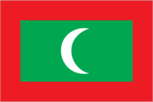
red with a large green rectangle in the center bearing a vertical white crescent moon; the closed side of the crescent is on the hoist side of the flag; red recalls those who have sacrificed their lives in defense of their country, the green rectangle represents peace and prosperity, and the white crescent signifies Islam
Government Type
presidential republic
Independence
26 July 1965 (from the UK)
International Law Organization Participation
has not submitted an ICJ jurisdiction declaration; accepts ICCt jurisdiction
International Organization Participation
ADB, AOSIS, C, CP, FAO, G-77, IBRD, ICAO, ICC (NGOs), ICCt, IDA, IDB, IFAD, IFC, IFRCS, ILO, IMF, IMO, Interpol, IOC, IOM, IPU, ITU, MIGA, NAM, OIC, OPCW, SAARC, SACEP, UN, UNCTAD, UNESCO, UNIDO, UNWTO, UPU, WCO, WHO, WIPO, WMO, WTO
Judicial Branch
- Highest Courts
- Supreme Court (consists of the chief justice and 4-6 justices; note - 3 justices as of late 2019)
- Judge Selection And Term Of Office
- Supreme Court judges appointed by the president in consultation with the Judicial Service Commission - a 10-member body of selected high government officials and the public - and upon confirmation by voting members of the People's Majlis; judges serve until mandatory retirement at age 70
- Subordinate Courts
- High Court; Criminal, Civil, Family, Juvenile, and Drug Courts; Magistrate Courts (on each of the inhabited islands)
Legal System
Islamic (sharia) legal system with English common law influences, primarily in commercial matters
Legislative Branch
- Description
- unicameral Parliament or People's Majlis (87 seats - includes 2 seats added by the Elections Commission in late 2018; members directly elected in single-seat constituencies by simple majority vote to serve 5-year terms)
- Election Results
- percent of vote - MDP 44.7%, JP 10.8%, PPM 8.7%, PNC 6.4%, MDA 2.8%, other 5.6%, independent 21%; seats by party - MDP 65, JP 5, PPM 5, PNC 3, MDA 2, independent 7; composition - men 83, women 4, percent of women 4.6%
- Elections
- last held on 6 April 2019 (next to be held in 2023)
National Anthem
- Lyrics Music
- Mohamed Jameel DIDI/Wannakuwattawaduge DON AMARADEVA
- Name
- "Gaumee Salaam" (National Salute)
National Holiday
Independence Day, 26 July (1965)
National Symbol S
coconut palm, yellowfin tuna; national colors: red, green, white
Political Parties And Leaders
Adhaalath (Justice) Party or AP [Sheikh Imran ABDULLA] Maldives Development Alliance or MDA [Ahmed Shiyam MOHAMED] Maldivian Democratic Party or MDP [Mohamed NASHEED] Maldives Labor and Social Democratic Party or MLSDP [Ahmed SHIHAM] Maldives Third Way Democrats or MTD [Ahmed ADEEB] Maldives Reform Movement or MRM [Maumoon Abdul GAYOOM] People's National Congress or PNC [Abdul Raheem ABDULLA] (formed in early 2019) Progressive Party of Maldives or PPM [Abdulla YAMEEN] Republican (Jumhooree) Party or JP [Qasim IBRAHIM] (2019)
Suffrage
18 years of age; universal
Economy
Agriculture Products
coconuts, corn, sweet potatoes; fish
Budget
- Expenditures
- 1.643 billion (2016 est.)
- Revenues
- 1.19 billion (2016 est.)
Budget Surplus Or Deficit
-10.1% (of GDP) (2016 est.)
Central Bank Discount Rate
- 30 September 2016
- 7%
- 30 September 2017
- 7%
Commercial Bank Prime Lending Rate
- 31 December 2011
- 10.2%
- 31 December 2012
- 10.5%
Current Account Balance
- 2016
- -$1.033 billion
- 2017
- -$876 million
Debt External
- 31 December 2015
- $696.2 million
- 31 December 2016
- $848.8 million
Distribution Of Family Income Gini Index
- 2004
- 37.4
- 2009
- 38.4
Economy Overview
Maldives has quickly become a middle-income country, driven by the rapid growth of its tourism and fisheries sectors, but the country still contends with a large and growing fiscal deficit. Infrastructure projects, largely funded by China, could add significantly to debt levels. Political turmoil and the declaration of a state of emergency in February 2018 led to the issuance of travel warnings by several countries whose citizens visit Maldives in significant numbers, but the overall impact on tourism revenue was unclear.In 2015, Maldives’ Parliament passed a constitutional amendment legalizing foreign ownership of land; foreign land-buyers must reclaim at least 70% of the desired land from the ocean and invest at least $1 billion in a construction project approved by Parliament.Diversifying the economy beyond tourism and fishing, reforming public finance, increasing employment opportunities, and combating corruption, cronyism, and a growing drug problem are near-term challenges facing the government. Over the longer term, Maldivian authorities worry about the impact of erosion and possible global warming on their low-lying country; 80% of the area is 1 meter or less above sea level.
Exchange Rates
- 2016
- 15.35
- 2017
- 15.42
- Currency
- rufiyaa (MVR) per US dollar -
Exports
- 2015
- $239.8 million
- 2016
- $256.2 million
Exports Commodities
fish
Exports Partners
Thailand 42.8%, Sri Lanka 8.7%, Bangladesh 6.4%, France 6.2%, US 6.1%, Germany 5%, Ireland 4.6% (2017)
Fiscal Year
calendar year
GDP Composition By End Use
- Exports Of Goods And Services
- 93.6% (2016 est.)
- Government Consumption
- NA (2016 est.)
- Household Consumption
- NA (2016 est.)
- Imports Of Goods And Services
- 89% (2016 est.)
- Investment In Fixed Capital
- NA (2016 est.)
- Investment In Inventories
- NA (2016 est.)
GDP Composition By Sector Of Origin
- Agriculture
- 3% (2015 est.)
- Industry
- 16% (2015 est.)
- Services
- 81% (2015 est.)
GDP Official Exchange Rate
$4.505 billion (2017 est.)
GDP Per Capita Ppp
- 2015
- $18,100
- 2016
- $18,600
- 2017
- $19,200
GDP Purchasing Power Parity
- 2015
- $6.3 billion
- 2016
- $6.583 billion
- 2017
- $6.901 billion
GDP Real Growth Rate
- 2015
- 2.2%
- 2016
- 4.5%
- 2017
- 4.8%
Gross National Saving
- 2015
- 12.6% of GDP
- 2016
- -4.5% of GDP
- 2017
- 0.5% of GDP
Household Income Or Consumption By Percentage Share
- Highest 10
- 33.3% (FY09/10)
- Lowest 10
- 1.2%
Imports
- 2015
- $1.896 billion
- 2016
- $2.125 billion
Imports Commodities
petroleum products, clothing, intermediate and capital goods
Imports Partners
UAE 17.1%, India 13.5%, Singapore 13.3%, China 10.8%, Sri Lanka 6.7%, Malaysia 6%, Thailand 4.5% (2017)
Industrial Production Growth Rate
14% (2012 est.)
Industries
tourism, fish processing, shipping, boat building, coconut processing, woven mats, rope, handicrafts, coral and sand mining
Inflation Rate Consumer Prices
- 2016
- 0.8%
- 2017
- 2.3%
Labor Force
222,200 (2017 est.)
Labor Force By Occupation
- Agriculture
- 7.7%
- Industry
- 22.8%
- Services
- 69.5% (2017 est.)
Market Value Of Publicly Traded Shares
- 31 December 2011
- $555 million
Population Below Poverty Line
15% (2009 est.)
Public Debt
- 2016
- 61.7% of GDP
- 2017
- 63.9% of GDP
Reserves Of Foreign Exchange And Gold
- 31 December 2015
- $575.8 million
- 31 December 2016
- $477.9 million
Stock Of Broad Money
- 31 October 2016
- $2.043 billion
- 31 October 2017
- $1.982 billion
Stock Of Direct Foreign Investment Abroad
- 31 December 2015
- $307.7 million
- 31 December 2016
- $448 million
Stock Of Direct Foreign Investment at Home
- 31 December 2013
- $256 million
- 31 December 2015
- $324 million
Stock Of Domestic Credit
- 31 December 2011
- $1.601 billion
- 31 December 2012
- $1.559 billion
Stock Of Narrow Money
- 31 October 2016
- $865.9 million
- 31 October 2017
- $908.6 million
Taxes And Other Revenues
26.4% (of GDP) (2016 est.)
Unemployment Rate
- 2016
- 3.2%
- 2017
- 2.9%
Energy
Carbon Dioxide Emissions From Consumption Of Energy
1.648 million Mt (2017 est.)
Crude Oil Exports
0 bbl/day (2015 est.)
Crude Oil Imports
0 bbl/day (2015 est.)
Crude Oil Production
0 bbl/day (2018 est.)
Crude Oil Proved Reserves
0 bbl (1 January 2018 est.)
Electricity Access
100% (2016)
Electricity Consumption
373.9 million kWh (2016 est.)
Electricity Exports
0 kWh (2016 est.)
Electricity From Fossil Fuels
96% of total installed capacity (2016 est.)
Electricity From Hydroelectric Plants
0% of total installed capacity (2017 est.)
Electricity From Nuclear Fuels
0% of total installed capacity (2017 est.)
Electricity From Other Renewable Sources
4% of total installed capacity (2017 est.)
Electricity Imports
0 kWh (2016 est.)
Electricity Installed Generating Capacity
278,000 kW (2016 est.)
Electricity Production
402 million kWh (2016 est.)
Natural Gas Consumption
0 cu m (2017 est.)
Natural Gas Exports
0 cu m (2017 est.)
Natural Gas Imports
0 cu m (2017 est.)
Natural Gas Production
0 cu m (2017 est.)
Natural Gas Proved Reserves
0 cu m (1 January 2016 est.)
Refined Petroleum Products Consumption
11,000 bbl/day (2016 est.)
Refined Petroleum Products Exports
0 bbl/day (2015 est.)
Refined Petroleum Products Imports
10,840 bbl/day (2015 est.)
Refined Petroleum Products Production
0 bbl/day (2015 est.)
Communications
Broadband Fixed Subscriptions
- Subscriptions Per 100 Inhabitants
- 9 (2017 est.)
- Total
- 36,001
Broadcast Media
state-owned radio and TV monopoly until recently; 4 state-operated and 7 privately owned TV stations and 4 state-operated and 7 privately owned radio stations (2019)
Internet Country Code
.mv
Internet Users
- Percent Of Population
- 59.1% (July 2016 est.)
- Total
- 232,210
Telephone System
- Domestic
- fixed-line is at 5 per 100 persons and high mobile-cellular subscriptions stands at 229 per 100 persons (2018)
- General Assessment
- all inhabited islands and resorts are connected with telephone and fax service; two mobile operators extend LTE coverage; tourism has strengthened the telecom market with investment; the unusually high mobile penetration rate is also helped by tourism; Internet bandwidth increased 37% in 2016; mobile penetration passes 250% (2018)
- International
- country code - 960; landing points for Dhiraagu Cable Network, NaSCOM, Dhiraagu-SLT Submarine Cable Networks and WARF submarine cables providing connections to 8 points in Maldives, India, and Sri Lanka; satellite earth station - 3 Intelsat (Indian Ocean) (2019)
Telephones Fixed Lines
- Subscriptions Per 100 Inhabitants
- 5 (2017 est.)
- Total Subscriptions
- 20,377
Telephones Mobile Cellular
- Subscriptions Per 100 Inhabitants
- 229 (2017 est.)
- Total Subscriptions
- 900,120
Transportation
Airports
9 (2013)
Airports With Paved Runways
- 1 524 To 2 437 M
- 1 (2017)
- 2 438 To 3 047 M
- 1 (2017)
- 914 To 1 523 M
- 4 (2017)
- Over 3 047 M
- 1 (2017)
- Total
- 7 (2017)
Airports With Unpaved Runways
- 914 To 1 523 M
- 2 (2013)
- Total
- 2 (2013)
Civil Aircraft Registration Country Code Prefix
8Q (2016)
Merchant Marine
- By Type
- bulk carrier 1, general cargo 27, oil tanker 15, other 24 (2018)
- Total
- 67
National Air Transport System
- Inventory Of Registered Aircraft Operated By Air Carriers
- 15 (2015)
- Number Of Registered Air Carriers
- 3 (2015)
Ports And Terminals
Male
Roadways
- Paved
- 93 km - 60 km in Male; 16 km on Addu Atolis; 17 km on Laamu (2018)
- Total
- 93 km (2018)
Military and Security
Military And Security Forces
Maldives National Defense Force (MNDF): Marine Corps, Special Protection Group, Coast Guard (2018)
Military Note
Maldives National Defense Force (MNDF), with its small size and with little serviceable equipment, is inadequate to prevent external aggression and is primarily tasked to reinforce Maldives Police Service (MPS) and ensure security in the exclusive economic zone (2015)
Military Service Age And Obligation
18-28 years of age for voluntary service; no conscription; 10th grade or equivalent education required; must not be a member of a political party
Transnational Issues
Disputes International
none
Trafficking In Persons
- Current Situation
- Maldives is a destination country for men, women, and children subjected to forced labor and sex trafficking and a source country for women and children subjected to labor and sex trafficking; primarily Bangladeshi and Indian migrants working both legally and illegally in the construction and service sectors face conditions of forced labor, including fraudulent recruitment, confiscation of identity and travel documents, nonpayment and withholding of wages, and debt bondage; a small number of women from Asia, Eastern Europe, and former Soviet states are trafficked to Maldives for sexual exploitation; Maldivian women may be subjected to sex trafficking domestically or in Sri Lanka; some Maldivian children are transported to the capital for domestic service, where they may also be victims of sexual abuse and forced labor
- Tier Rating
- Tier 2 Watch List – Maldives does not fully comply with the minimum standards for the elimination of trafficking; however, it is making significant efforts to do so; the government adopted a national action plan for 2015-19 and is continuing to develop victim identification, protection, and referral procedures, but overall its anti-trafficking efforts did not increase; only five trafficking investigations were conducted, no new prosecutions were initiated for the second consecutive year, and no convictions were made, down from one in 2013; some officials warned businesses in advance of planned raids for suspected trafficking offenses; victim protection deteriorated when the state-run shelter for female victims barred access to victims shortly after opening in January 2014, in part because of bureaucratic disputes, which dissuaded victims from pursuing charges against perpetrators; the government did not prosecute or hold accountable any employers or government officials for withholding passports (2015)