1981 Edition
CIA World Factbook 1981 (Internet Archive)
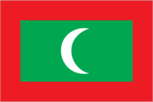
Geography
Area
1,204,350 km2; only about a fourth of area arable, forests negligible, rest sparse pasture or desert
Communists
negligible number
Government leader
President Maumoon Abdul GAYOOM
Land boundaries
7,459 km
Member of
Colombo Plan, FAO, G-77, GATT (de facto), IBRD, ICAO, IDA, IFAD, IMCO, IMF, ITU, NAM, UN, UPU, WHO, WMO
Suffrage
universal over age 21 Political parties and leaders: no organized political parties; country governed by the Didi clan for the past eight centuries
People and Society
Ethnic divisions
99% native African including tribes of both Berber and Negro descent
Labor force
2.8 million
Language
French official; several African languages, of which Mande group most widespread
Literacy
under 5%
Nationality
noun — Malian(s); adjective — Malian
Organized labor
National Union of Malian Workers (UNTM) is umbrella organization over 13 national unions
Population
7,015,000 (July 1982), average annual growth rate 2.7%
Religion
90% Muslim, 9% animist, 1% Christian
Government
Branches
executive authority exercised by Military Committee of National Liberation (MCNL) composed of 1 1 army MALI (Continued) officers; under MCNL functional Cabinet composed of civilians and army officers; judiciary
Capital
Bamako
Communists
a few Communists and some sympathizers
Elections
constitutional elections took place June 1979
Government leaders
Brig. Gen. Moussa TRAORE, President of MCNL, Chief of State, and head of government
Legal system
based on French civil law system and customary law; constitution adopted 1974, came into full effect in 1979; judicial review of legislative acts in Constitutional Section of Court of State; has not accepted compulsory ICJ jurisdiction
Member of
AFDB, APC, CEAO, ECA, ECOWAS, FAO, G-77. GATT (de facto), IAEA, IBRD, ICAO, IDA, IFAD, IFC, ILO, IMF, ISCON, ITU, Niger River Commission, NAM, OAU, OMVS (Organization for the Development of the Senegal River Valley), UN, UNESCO, UPU, WHO, WMO, WTO
National holiday
Independence Day, 22 September
Official name
Republic of Mali
Political subdivisions
7 administrative regions; 42 administrative districts (cercles), arrondissements, villages; all subordinate to central government
Suffrage
universal over age 21 Political parties and leaders: Democratic Union of Malian People (UDPM), is the sole political party under civilian leadership
Type
republic; military regime in power since November 1968; fulfilled its plans in June 1979 for a phased return to civilian rule
Economy
Agriculture
- crops — coconut and millet; shortages — rice, sugar, flour
- main crops — millet, sorghum, rice, corn, peanuts; cash crops — peanuts, cotton, and livestock
Budget
- (1980 est.) revenue $5.6 million; expenditure $7.1 million
- (1980) revenues $181.4 million, current expenditures $187.5 million
Electric power
- 4,500 kW capacity (1981); 9 million kWh produced (1981), 57 kWh per capita
- 50,000 kW capacity (1980); 115 million kWh produced (1980), 17 kWh per capita
Exports
- $10.7 million (1980 prov.); fish
- $175.4 million (f.o.b., 1980); livestock, peanuts, dried fish, cotton, and skins
Fiscal year
- calendar year
- calendar year
Fishing
- catch 27,700 metric tons (1979)
- catch 95,000 tons (1980)
GDP
$1.15 billion (1980), $163 per capita; annual real growth rate 5.7% (1980)
GNP
$23 million (1978), $160 per capita
Imports
- $26.9 million (1980 prov.); rice, sugar
- $300.9 million (f.o.b., 1980); textiles, vehicles, petroleum products, machinery, and sugar
Major industries
- fishing; some coconut processing; tourism
- small local consumer goods and processing
Major trade partners
- Japan, Sri Lanka, Singapore
- mostly with franc zone and Western Europe; also with USSR, China
Monetary conversion rate
- 3.93 Maldivian rupees=US$l, official rate; 7.55 rupees=US$l, market rate (average 1980)
- 422.6 Mali francs=US$l (1980)
Communications
Airfields
- 2 total, 2 usable; 2 with permanent-surface runways; 1 with runways 2,440-3,659 m, 1 with runways 1,220-2,439 m
- 44 total, 39 usable; 8 with permanent-surface runways; 5 with runways 2,440-3,659 m, 10 with runways 1,220-2,439 m
Civil air
- 1 major transport aircraft, leased in
- 3 major transport aircraft
Highways
- none
- approximately 15,700 km total; 1,670 km bituminous, 3,670 km gravel and improved earth, 10,360 km unimproved earth
Inland waterways
1,815 km navigable
Military manpower
males 15-49, 1,521,000; 767,000 fit for military service; no conscription
Ports
2 minor (Male, Gan)
Railroads
- none
- 642 km meter gauge (1.00 m)
Telecommunications
- minimal domestic and international telecommunication facilities; 550 telephones (0.4 per 100 pop!.); 2 AM stations, 1 TV station; 1 Indian Ocean INTELSAT station CSee reference map VII)
- domestic system poor and provides only minimal service; radio-relay, wire, and radiocommunications stations in use; expansion of radio relay in progress; 8,000 telephones; 2 AM, no FM, and no TV stations; 2 antennas for Atlantic and Indian Ocean INTELSAT satellites DEFENSE FORCES