2025 Edition Primary
Edition Builder
Introduction
Background
<p>Malaysia’s location has long made it an important cultural, economic, historical, social, and trade link between the islands of Southeast Asia and the mainland. Through the Strait of Malacca, which separates the Malay Peninsula from the archipelago, flowed maritime trade and with it influences from China, India, the Middle East, and the east coast of Africa. Prior to the 14th century, several powerful maritime empires existed in what is modern-day Malaysia, including the Srivijayan, which controlled much of the southern part of the peninsula between the 7th and 13th centuries, and the Majapahit Empire, which took control over most of the peninsula and the Malay Archipelago between the 13th and 14th centuries. The adoption of Islam between the 13th and 17th centuries also saw the rise of a number of powerful maritime states and sultanates on the Malay Peninsula and the island of Borneo, such as the port city of Malacca (Melaka), which at its height in the 15th century had a navy and hosted thousands of Chinese, Arab, Persian, and Indian merchants.<br><br>The Portuguese in the 16th century and the Dutch in the 17th century were the first European colonial powers to establish themselves on the Malay Peninsula and in Southeast Asia. However, it was the British who ultimately secured hegemony across the territory and during the late 18th and 19th centuries established colonies and protectorates in the area that is now Malaysia. Japan occupied these holdings from 1942 to 1945. In 1948, the British-ruled territories on the Malay Peninsula (except Singapore) formed the Federation of Malaya, which became independent in 1957. Malaysia was formed in 1963 when the former British colonies of Singapore, as well as Sabah and Sarawak on the northern coast of Borneo, joined the Federation. <br><br>A communist insurgency, confrontations with Indonesia, Philippine claims to Sabah, and Singapore's expulsion in 1965 marred the first several years of the country's independence. During the 22-year term of Prime Minister MAHATHIR Mohamad (1981-2003), Malaysia was successful in diversifying its economy from dependence on exports of raw materials to the development of manufacturing, services, and tourism. Former Prime Minister MAHATHIR and a newly formed coalition of opposition parties defeated Prime Minister Mohamed NAJIB bin Abdul Razak's United Malays National Organization (UMNO) in 2018, ending over 60 years of uninterrupted UMNO rule. From 2018-2022, Malaysia underwent considerable political upheaval, with a succession of coalition governments holding power. Following legislative elections in 2022, ANWAR Ibrahim was appointed prime minister after more than 20 years in opposition. His political coalition, Pakatan Harapan (PH), joined its longtime UNMO rival to form a government, but the two groups have remained deeply divided on many issues. </p>
Geography
Area
- Land
- 328,657 sq km
- Total
- 329,847 sq km
- Water
- 1,190 sq km
Area - comparative
slightly larger than New Mexico
Climate
tropical; annual southwest (April to October) and northeast (October to February) monsoons
Coastline
4,675 km (Peninsular Malaysia 2,068 km; East Malaysia 2,607 km)
Continent
Asia
Elevation
- Highest point
- Gunung Kinabalu 4,095 m
- Lowest point
- Indian Ocean 0 m
- Mean elevation
- 419 m
Geographic coordinates
2 30 N, 112 30 E
Geography - note
strategic location along Strait of Malacca and southern South China Sea
Irrigated land
4,420 sq km (2022)
Land boundaries
- Border countries
- Brunei 266 km; Indonesia 1,881 km; Thailand 595 km
- number of neighbors
- 3
- Total
- 2,742 km
Land use
- Agricultural land
- 26.1% (2023 est.)
- Agricultural land: arable land
- arable land: 2.4% (2023 est.)
- Agricultural land: permanent crops
- permanent crops: 22.7% (2023 est.)
- Agricultural land: permanent pasture
- permanent pasture: 0.9% (2023 est.)
- arable land
- 2.39%
- Forest
- 57.8% (2023 est.)
- Other
- 16% (2023 est.)
- permanent crops
- 22.71%
Landlocked
No
Location
Southeastern Asia, peninsula bordering Thailand and northern one-third of the island of Borneo, bordering Indonesia, Brunei, and the South China Sea, south of Vietnam
Map links
- Google Maps
- https://goo.gl/maps/qrY1PNeUXGyXDcPy6
- OpenStreetMap
- https://www.openstreetmap.org/relation/2108121
Map references
Southeast Asia
Maritime claims
- Continental shelf
- 200-m depth or to the depth of exploitation; specified boundary in the South China Sea
- Exclusive economic zone
- 200 nm
- Territorial sea
- 12 nm
Natural hazards
flooding; landslides; forest fires
Natural resources
tin, petroleum, timber, copper, iron ore, natural gas, bauxite
Population distribution
a highly uneven distribution, with over 80% of the population residing on the Malay Peninsula
Subregion
South-Eastern Asia
Terrain
coastal plains rising to hills and mountains
Time zone
- UTC+08:00
- number of time zones
- 1
People and Society
Age structure
- 0-14 years
- 22.2% (male 3,947,914/female 3,730,319)
- 15-64 years
- 69.4% (male 12,308,938/female 11,666,947)
- 65 years and over
- 8.4% (2024 est.) (male 1,409,360/female 1,501,332)
Alcohol consumption per capita
- Beer
- 0.48 liters of pure alcohol (2019 est.)
- Other alcohols
- 0.01 liters of pure alcohol (2019 est.)
- Spirits
- 0.11 liters of pure alcohol (2019 est.)
- Total
- 0.64 liters of pure alcohol (2019 est.)
- Wine
- 0.04 liters of pure alcohol (2019 est.)
Birth rate
14.05 births/1,000 population (2025 est.)
Children under 5 years underweight
21.2%
Children under the age of 5 years underweight
15.3% (2022 est.)
Death rate
- 5.8 deaths/1,000 population (2025 est.)
- adult female
- 84 per 1,000
- adult male
- 152 per 1,000
Dependency ratios
- Elderly dependency ratio
- 12.6 (2025 est.)
- Potential support ratio
- 7.9 (2025 est.)
- Total dependency ratio
- 44.3 (2025 est.)
- Youth dependency ratio
- 31.7 (2025 est.)
Drinking water source
- improved total
- 94.7%
- Improved: rural
- rural: 90.1% of population (2022 est.)
- Improved: total
- total: 97.2% of population (2022 est.)
- Improved: urban
- urban: 99.1% of population (2022 est.)
- Unimproved: rural
- rural: 9.9% of population (2022 est.)
- Unimproved: total
- total: 2.8% of population (2022 est.)
- Unimproved: urban
- urban: 0.9% of population (2022 est.)
Education expenditure
- Education expenditure (% GDP)
- 3.5% of GDP (2023 est.)
- Education expenditure (% national budget)
- 14.1% national budget (2023 est.)
Education expenditures
4 % of GDP
Ethnic groups
Bumiputera 63.8% (Malay 52.8% and indigenous peoples, including Orang Asli, Dayak, Anak Negeri, 11%), Chinese 20.6%, Indian 6%, other 0.6%, non-citizens 9% (2023 est.)
Gross reproduction rate
0.83 (2025 est.)
Health expenditure
- 4 % of GDP
- Health expenditure (as % of GDP)
- 4.4% of GDP (2021)
- Health expenditure (as % of national budget)
- 8% of national budget (2022 est.)
HIV/AIDS - adult prevalence rate
0.13%
Hospital bed density
2 beds/1,000 population (2021 est.)
Infant mortality rate
- Female
- 6 deaths/1,000 live births
- Male
- 6.8 deaths/1,000 live births
- neonatal
- 4 deaths/1,000 live births
- Total
- 6.3 deaths/1,000 live births (2025 est.)
Languages
- Languages
- Bahasa Malaysia (official), English, Chinese (Cantonese, Mandarin, Hokkien, Hakka, Hainan, Foochow), Tamil, Telugu, Malayalam, Panjabi, Thai
- Major-language sample(s)
- <br>Buku Fakta Dunia, sumber yang diperlukan untuk maklumat asas. (Bahasa Malaysia)<br><br>The World Factbook, the indispensable source for basic information.
- Note
- <strong>note:</strong> Malaysia has 134 languages (112 indigenous and 22 non-indigenous); in East Malaysia, there are several indigenous languages, and the most widely spoken are Iban and Kadazan
- number of languages
- 2
Life expectancy at birth
- Female
- 78.4 years
- Male
- 75 years
- Total population
- 76.6 years (2024 est.)
Literacy
- Female
- 94.7% (2022 est.)
- Male
- 96.8% (2022 est.)
- Total population
- 95.8% (2022 est.)
Major urban areas - population
8.622 million KUALA LUMPUR (capital), 1.086 million Johor Bahru, 857,000 Ipoh (2023)
Maternal mortality ratio
26 deaths/100,000 live births (2023 est.)
Median age
- Female
- 31.9 years
- Male
- 31.7 years
- Total
- 32.2 years (2025 est.)
Mother's mean age at first birth
6 births/1,000 women 15-19
Nationality
- Adjective
- Malaysian
- Noun
- Malaysian(s)
Net migration rate
1.43 migrant(s)/1,000 population (2025 est.)
Obesity - adult prevalence rate
15.6% (2016)
Physician density
2.34 physicians/1,000 population (2023)
Population
- Female
- 17,072,201
- Male
- 17,833,074
- Total
- 34,905,275 (2025 est.)
Population growth rate
0.97% (2025 est.)
Religions
Muslim (official) 63.5%, Buddhist 18.7%, Christian 9.1%, Hindu 6.1%, other (Confucianism, Taoism, other traditional Chinese religions) 0.9%, none/unspecified 1.8% (2020 est.)
Sanitation facility access
- improved total
- 85.79%
- Improved: rural
- rural: 99.9% of population (2022 est.)
- Improved: total
- total: 100% of population (2022 est.)
- Improved: urban
- urban: 100% of population (2022 est.)
- Unimproved: rural
- rural: 0.1% of population (2022 est.)
- Unimproved: total
- total: 0% of population (2022 est.)
- Unimproved: urban
- urban: 0% of population (2022 est.)
School life expectancy (primary to tertiary education)
- Female
- 12 years (2023 est.)
- Male
- 11 years (2023 est.)
- Total
- 12 years (2023 est.)
Sex ratio
- 0-14 years
- 1.06 male(s)/female
- 15-64 years
- 1.06 male(s)/female
- 65 years and over
- 0.94 male(s)/female
- At birth
- 1.07 male(s)/female
- Total population
- 1.05 male(s)/female (2024 est.)
Tobacco use
- Female
- 0.6% (2025 est.)
- Male
- 41.8% (2025 est.)
- Total
- 21.5% (2025 est.)
Total fertility rate
1.73 children born/woman (2025 est.)
Urbanization
- Rate of urbanization
- 1.87% annual rate of change (2020-25 est.)
- Urban population
- 78.7% of total population (2023)
Vaccination rate
- measles
- 96%
Government
Administrative divisions
13 states (<em>negeri-negeri</em>, singular - <em>negeri</em>); Johor, Kedah, Kelantan, Melaka, Negeri Sembilan, Pahang, Perak, Perlis, Pulau Pinang, Sabah, Sarawak, Selangor, Terengganu; and 1 federal territory (Wilayah Persekutuan) with 3 components, Kuala Lumpur, Labuan, and Putrajaya
Capital
- Etymology
- the name means "muddy river junction," referring to the city's location on the confluence of the Kelang and Gombak rivers; it comes from the Malay words <em>kuala </em>(river junction or estuary) and <em>lumpur</em> (mud)
- Geographic coordinates
- 3 10 N, 101 42 E
- Name
- Kuala Lumpur
- Note
- <strong>note:</strong> nearby Putrajaya is referred to as a federal government administrative center but not as the capital; the legislature meets in Kuala Lumpur
- Time difference
- UTC+8 (13 hours ahead of Washington, DC, during Standard Time)
Citizenship
- Citizenship by birth
- no
- Citizenship by descent only
- at least one parent must be a citizen of Malaysia
- Dual citizenship recognized
- no
- Residency requirement for naturalization
- 10 out 12 years preceding application
Coat of arms
- svg
- https://mainfacts.com/media/images/coats_of_arms/my.svg
Constitution
- Amendment process
- proposed as a bill by Parliament; passage requires at least two-thirds majority vote by the Parliament membership in the bill’s second and third readings; a number of constitutional sections are excluded from amendment or repeal
- History
- previous 1948; latest drafted 21 February 1957, effective 27 August 1957
Country name
- alternative spellings
- MY
- Conventional long form
- none
- Conventional short form
- Malaysia
- Etymology
- devised in the early 19th century by British geographers; the suffix -<em>sia</em> was added to the name of the Malay people to form a classical-style name; the name Malay may come from the Tamil word <em>malai</em>, meaning "mountain"
- FIFA code
- MAS
- Former
- British Malaya, Malayan Union, Federation of Malaya
- Local long form
- none
- local long form (eng)
- Malaysia
- Local short form
- Malaysia
Diplomatic representation from the US
- Chief of mission
- Ambassador Edgard D. KAGAN (since 20 March 2024)
- Email address and website
- <br>KLACS@state.gov<br><br>https://my.usembassy.gov/
- Embassy
- 376 Jalan Tun Razak, 50400 Kuala Lumpur
- FAX
- [60] (3) 2142-2207
- Mailing address
- 4210 Kuala Lumpur, Washington DC 20521-4210
- Telephone
- [60] (3) 2168-5000
Diplomatic representation in the US
- Chancery
- 3516 International Court NW, Washington, DC 20008
- Chief of mission
- Ambassador Tan Sri Muhammad SHAHRUL Ikram bin Yaakob (since 24 July 2025)
- Consulate(s) general
- Los Angeles, New York
- Email address and website
- <br>mwwashington@kln.gov.my<br><br>https://www.kln.gov.my/web/usa_washington/home
- FAX
- [1] (202) 572-9882
- Telephone
- [1] (202) 572-9700
Executive branch
- Cabinet
- Cabinet appointed by the prime minister from among members of Parliament with the consent of the king
- Chief of state
- King Sultan IBRAHIM ibni al-Marhum Sultan Iskandar (since 31 January 2024)
- Election/appointment process
- king elected by and from the hereditary rulers of 9 states for a 5-year term; election is on a rotational basis among rulers of the 9 states; prime minister designated from among members of the House of Representatives; following legislative elections, the leader who has support of the majority of members in the House becomes prime minister
- Expected date of next election
- October 2028, with inauguration in January 2029
- Head of government
- Prime Minister ANWAR Ibrahim (since 24 November 2022)
- Most recent election date
- 24 October 2023
- Note
- <strong>note: </strong>the position of the king is primarily ceremonial, but he is the final arbiter on the appointment of the prime minister
Flag
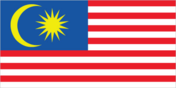
- <strong>description:</strong> 14 equal horizontal stripes of red alternating with white; a dark blue rectangle in the upper-left corner has a yellow crescent and a 14-pointed yellow star <br><br><strong>meaning:</strong> the flag is often called Jalur Gemilang (Stripes of Glory); the 14 stripes stand for the equal status of the 13 member states and the federal government; the points on the star represent the unity among these entities; the crescent is a traditional symbol of Islam; blue symbolizes the unity of the Malay people, and yellow is the royal color
- note
- <strong>note:</strong> the design is based on the US flag
Flag description
The flag of Malaysia is composed of fourteen equal horizontal bands of red alternating with white. A blue rectangle, bearing a fly-side facing yellow crescent and a fourteen-pointed yellow star placed just outside the crescent opening, is superimposed in the canton.
Flag image
- svg
- https://flagcdn.com/my.svg
Government type
- federal parliamentary constitutional monarchy
- note
- <strong>note:</strong> all Peninsular Malaysian states have hereditary rulers (commonly referred to as sultans) except Melaka (Malacca) and Pulau Pinang (Penang); those two states along with Sabah and Sarawak in East Malaysia have governors appointed by government; powers of state governments are limited by the federal constitution; under terms of federation, Sabah and Sarawak retain certain constitutional prerogatives (e.g., right to maintain their own immigration controls)
Independence
31 August 1957 (from the UK)
International law organization participation
has not submitted an ICJ jurisdiction declaration; non-party state to the ICCt
International organization participation
ADB, APEC, ARF, ASEAN, BIS, C, CICA (observer), CP, D-8, EAS, FAO, G-15, G-77, IAEA, IBRD, ICAO, ICC (national committees), ICRM, IDA, IDB, IFAD, IFC, IFRCS, IHO, ILO, IMF, IMO, IMSO, Interpol, IOC, IPU, ISO, ITSO, ITU, ITUC (NGOs), MIGA, MINURSO, MONUSCO, NAM, OIC, OPCW, PCA, PIF (partner), UN, UNAMID, UNCTAD, UNESCO, UNHRC, UNIDO, UNIFIL, UNISFA, UNMIL, UNOOSA, UNWTO, UPU, WCO, WFTU (NGOs), WHO, WIPO, WMO, WTO
Judicial branch
- Highest court(s)
- Federal Court (consists of the chief justice, president of the Court of Appeal, chief justice of the High Court of Malaya, chief judge of the High Court of Sabah and Sarawak, 8 judges, and 1 "additional" judge)
- Judge selection and term of office
- Federal Court justices appointed by the monarch on advice of the prime minister; judges serve until mandatory retirement at age 66 with the possibility of a single 6-month extension
- Note
- <strong>note:</strong> Malaysia has a dual judicial hierarchy of civil and religious (sharia) courts
- Subordinate courts
- Court of Appeal; High Court; Sessions Court; Magistrates' Court
Legal system
mixed system of English common law, Islamic law (sharia), and customary law; the Federal Court can review legislative acts at the request of the supreme head of the federation
Legislative branch
- Legislative structure
- bicameral
- Legislature name
- Parliament (Parlimen)
Legislative branch - lower chamber
- Chamber name
- House of Representatives (Dewan Rakyat)
- Electoral system
- plurality/majority
- Expected date of next election
- November 2027
- Most recent election date
- 11/19/2022
- Number of seats
- 223 (all directly elected)
- Parties elected and seats per party
- Pakatan Harapan (PH) (76); National Alliance (PN) (52); National Front (BN) (30); Sarawak Parties Alliance (GPS) (23); Pan-Malaysian Islamic Party (PAS) (22); Other (19)
- Percentage of women in chamber
- 13.5%
- Scope of elections
- full renewal
- Term in office
- 5 years
Legislative branch - upper chamber
- Chamber name
- Senate (Dewan Negara)
- Number of seats
- 70 (26 indirectly elected; 44 appointed)
- Percentage of women in chamber
- 16.1%
National color(s)
gold, black
National heritage
- Selected World Heritage Site locales
- Gunung Mulu National Park (n); Kinabalu Park (n); Melaka and George Town, Historic Cities of the Straits of Melaka (c); Archaeological Heritage of the Lenggong Valley (c); The Archaeological Heritage of Niah National Park’s Caves Complex (c); Forest Research Institute Malaysia Forest Park Selangor (c)
- Total World Heritage Sites
- 6 (4 cultural, 2 natural)
National holiday
Independence Day (or Merdeka Day), 31 August (1957) (independence of Malaya); Malaysia Day, 16 September (1963) (formation of Malaysia)
National symbol(s)
tiger, hibiscus
Political parties
<strong>National Front (Barisan Nasional) or BN:<br></strong>Malaysian Chinese Association (Persatuan Cina Malaysia) or MCA <br>Malaysian Indian Congress (Kongres India Malaysia) or MIC <br>United Malays National Organization (Pertubuhan Kebansaan Melayu Bersatu) or UMNO <br>United Sabah People's Party (Parti Bersatu Rakyat Sabah) or PBRS <br><br><strong>Alliance of Hope (Pakatan Harapan) or PH:</strong><br>Democratic Action Party (Parti Tindakan Demokratik) or DAP <br>National Trust Party (Parti Amanah Negara) or AMANAH <br>People's Justice Party (Parti Keadilan Rakyat) or PKR <br>United Progressive Kinabalu Organization (Pertubuhan Kinabalu Progresif Bersatu) or UPKO <br><br><strong>National Alliance (Perikatan Nasional) or PN:</strong><br>Malaysian People's Movement Party (Parti Gerakan Rakyat Malaysia) or GERAKAN or PGRM <br>Malaysian United Indigenous Party (Parti Pribumi Bersatu Malaysia) or PPBM or BERSATU <br>Pan-Malaysian Islamic Party (Parti Islam Se-Malaysia) or PAS <br><br><strong>Sabah People's Alliance (Gabungan Rakya Sabah) or GRS:<br></strong>Homeland Solidarity Party (Parti Solidariti Tanah Airku) or STAR <br>Love Sabah Party (Parti Cinta Sabah) or PCS<br>Sabah People's Ideas Party (Parti Gagasan Rakyat Sabah) or GAGASAN or PGRS <br><br><strong>Sarawak Parties Alliance (Gabungan Parti Sarawak) or GPS:</strong><br>Progressive Democratic Party (Parti Demokratik Progresif) or PDP <br>Sarawak People's Party (Parti Rakyat Sarawak) or PRS <br>Sarawak United People's Party (Parti Rakyat Bersatu Sarawak) or SUPP <br>United Bumiputera Heritage Party (Parti Pesaka Bumiputera Bersata) or PBB <br><br><strong>Homeland Movement/Party (Gerakan Tanah Air) or GTA</strong><br>Homeland Fighter's Party (Parti Pejuang Tanah Air) or PEJUANG <br>Perkasa Bumiputera Party of Malaysia (Parti Bumiputera Perkasa Malaysia)<br>All-Malaysian Jemaah Islamiah Front (Barisan Jemaah Islamiah Se-Malaysia)<br>National All India Muslim Alliance Party (Parti Perikatan India Muslim Nasional)<br><strong><br>others: </strong><strong><br></strong>Malaysian Nation Party (Parti Bangsa Malaysia) or PBM<br>Heritage Party (Parti Warisan) or WARISAN <br>Malaysian United Democratic Alliance (Ikatan Demokratik Malaysia) or MUDA <br>United Sarawak Party (PSB)
Start of week
Sunday
Suffrage
18 years of age; universal
UN Member
Yes
Economy
Agricultural products
- oil palm fruit, rice, chicken, eggs, tropical fruits, coconuts, vegetables, pineapples, rubber, bananas (2023)
- note
- <b>note:</b> top ten agricultural products based on tonnage
Average household expenditures
- On alcohol and tobacco
- 1.6% of household expenditures (2023 est.)
- On food
- 26.4% of household expenditures (2023 est.)
Budget
- Expenditures
- $89.046 billion (2023 est.)
- Note
- <b>note:</b> central government revenues and expenses (excluding grants/extrabudgetary units/social security funds) converted to US dollars at average official exchange rate for year indicated
- Revenues
- $69.055 billion (2023 est.)
Currency
- code
- MYR
- name
- Malaysian ringgit (MYR) [RM]
Current account balance
- $7.15 billion
- Current account balance 2022
- $12.738 billion (2022 est.)
- Current account balance 2023
- $6.257 billion (2023 est.)
- Current account balance 2024
- $7.15 billion (2024 est.)
- Note
- <b>note:</b> balance of payments - net trade and primary/secondary income in current dollars
Economic overview
upper middle-income Southeast Asian economy; implementing key anticorruption policies; major electronics, oil, and chemicals exporter; trade sector employs over 40% of jobs; key economic equity initiative; high labor productivity
Exchange rates
- Currency
- ringgits (MYR) per US dollar -
- Exchange rates 2020
- 4.203 (2020 est.)
- Exchange rates 2021
- 4.143 (2021 est.)
- Exchange rates 2022
- 4.401 (2022 est.)
- Exchange rates 2023
- 4.561 (2023 est.)
- Exchange rates 2024
- 4.576 (2024 est.)
Exports
- $301.22 billion
- Exports 2022
- $312.88 billion (2022 est.)
- Exports 2023
- $274.1 billion (2023 est.)
- Exports 2024
- $301.789 billion (2024 est.)
- Note
- <b>note:</b> balance of payments - exports of goods and services in current dollars
Exports - commodities
- integrated circuits, refined petroleum, crude petroleum, natural gas, palm oil (2023)
- note
- <b>note:</b> top five export commodities based on value in dollars
Exports - partners
- China 21%, Singapore 12%, USA 12%, Japan 5%, Hong Kong 5% (2023)
- note
- <b>note:</b> top five export partners based on percentage share of exports
Foreign direct investment
- net inflows
- $15.59 billion
GDP - composition, by end use
- Exports of goods and services
- 71.4% (2024 est.)
- Government consumption
- 12% (2024 est.)
- Household consumption
- 60.8% (2024 est.)
- Imports of goods and services
- -66% (2024 est.)
- Investment in fixed capital
- 20.6% (2024 est.)
- Investment in inventories
- 1.3% (2024 est.)
- Note
- <b>note:</b> figures may not total 100% due to rounding or gaps in data collection
GDP - composition, by sector of origin
- Agriculture
- 8.2% (2024 est.)
- Industry
- 37.1% (2024 est.)
- Note
- <b>note:</b> figures may not total 100% due to non-allocated consumption not captured in sector-reported data
- Services
- 53.6% (2024 est.)
GDP (official exchange rate)
- $421.972 billion (2024 est.)
- note
- <b>note:</b> data in current dollars at official exchange rate
GDP per capita (nominal)
$11,874
Gini Index coefficient - distribution of family income
- 41.1 (2015)
- Gini Index coefficient - distribution of family income 2021
- 40.7 (2021 est.)
- Note
- <b>note:</b> index (0-100) of income distribution; higher values represent greater inequality
GNI (gross national income)
$407.78 billion
GNI per capita
$11,650
Gross domestic investment
22 % of GDP
Household income or consumption by percentage share
- Highest 10%
- 30.9% (2021 est.)
- Lowest 10%
- 2.3% (2021 est.)
- Note
- <b>note:</b> % share of income accruing to lowest and highest 10% of population
Imports
- $278.76 billion
- Imports 2022
- $283.758 billion (2022 est.)
- Imports 2023
- $253.665 billion (2023 est.)
- Imports 2024
- $279.09 billion (2024 est.)
- Note
- <b>note:</b> balance of payments - imports of goods and services in current dollars
Imports - commodities
- integrated circuits, refined petroleum, crude petroleum, coal, broadcasting equipment (2023)
- note
- <b>note:</b> top five import commodities based on value in dollars
Imports - partners
- China 24%, Singapore 11%, USA 7%, Japan 5%, Taiwan 5% (2023)
- note
- <b>note:</b> top five import partners based on percentage share of imports
Industrial production growth rate
- 4.9% (2024 est.)
- note
- <b>note:</b> annual % change in industrial value added based on constant local currency
Industries
Peninsular Malaysia - rubber and oil palm processing and manufacturing, petroleum and natural gas, light manufacturing, pharmaceuticals, medical technology, electronics and semiconductors, timber processing; Sabah - logging, petroleum and natural gas production; Sarawak - agriculture processing, petroleum and natural gas production, logging
Inflation rate (consumer prices)
- 1.83%
- Inflation rate (consumer prices) 2022
- 3.4% (2022 est.)
- Inflation rate (consumer prices) 2023
- 2.5% (2023 est.)
- Inflation rate (consumer prices) 2024
- 1.8% (2024 est.)
- Note
- <b>note:</b> annual % change based on consumer prices
Labor force
- 18.264 million (2024 est.)
- note
- <b>note:</b> number of people ages 15 or older who are employed or seeking work
- total
- 18.72 million persons
Labor force - by occupation
- agriculture
- 9.18%
- industry
- 25.96%
- services
- 64.86%
Population below poverty line
- 6.2% (2021 est.)
- note
- <b>note:</b> % of population with income below national poverty line
Public debt
- 64 % of GDP
- Note
- <b>note:</b> central government debt as a % of GDP
- Public debt 2023
- 64.3% of GDP (2023 est.)
Real GDP (purchasing power parity)
- $1.38 trillion
- Note
- <b>note:</b> data in 2021 dollars
- Real GDP (purchasing power parity) 2022
- $1.113 trillion (2022 est.)
- Real GDP (purchasing power parity) 2023
- $1.153 trillion (2023 est.)
- Real GDP (purchasing power parity) 2024
- $1.212 trillion (2024 est.)
Real GDP growth rate
- 5.11%
- Note
- <b>note:</b> annual GDP % growth based on constant local currency
- Real GDP growth rate 2022
- 8.9% (2022 est.)
- Real GDP growth rate 2023
- 3.6% (2023 est.)
- Real GDP growth rate 2024
- 5.1% (2024 est.)
Real GDP per capita
- $38,779
- Note
- <b>note:</b> data in 2021 dollars
- Real GDP per capita 2022
- $32,100 (2022 est.)
- Real GDP per capita 2023
- $32,800 (2023 est.)
- Real GDP per capita 2024
- $34,100 (2024 est.)
Remittances
- $1.61 billion
- Note
- <b>note:</b> personal transfers and compensation between resident and non-resident individuals/households/entities
- Remittances 2022
- 0.4% of GDP (2022 est.)
- Remittances 2023
- 0.4% of GDP (2023 est.)
- Remittances 2024
- 0.4% of GDP (2024 est.)
Reserves of foreign exchange and gold
- $116.23 billion
- Note
- <b>note:</b> holdings of gold (year-end prices)/foreign exchange/special drawing rights in current dollars
- Reserves of foreign exchange and gold 2022
- $114.659 billion (2022 est.)
- Reserves of foreign exchange and gold 2023
- $113.463 billion (2023 est.)
- Reserves of foreign exchange and gold 2024
- $116.229 billion (2024 est.)
Revenue (excl grants)
17 % of GDP
Tax revenue
13 % of GDP
Taxes and other revenues
- 12.6% (of GDP) (2023 est.)
- note
- <b>note:</b> central government tax revenue as a % of GDP
Unemployment rate
- 3.76%
- Note
- <b>note:</b> % of labor force seeking employment
- Unemployment rate 2022
- 4% (2022 est.)
- Unemployment rate 2023
- 3.9% (2023 est.)
- Unemployment rate 2024
- 3.9% (2024 est.)
Youth unemployment rate (ages 15-24)
- Female
- 13.8% (2024 est.)
- Male
- 11.3% (2024 est.)
- Note
- <b>note:</b> % of labor force ages 15-24 seeking employment
- Total
- 12.3% (2024 est.)
Energy
Coal
- Consumption
- 35.741 million metric tons (2023 est.)
- Exports
- 462,000 metric tons (2023 est.)
- Imports
- 31.706 million metric tons (2023 est.)
- Production
- 4.476 million metric tons (2023 est.)
- Proven reserves
- 226 million metric tons (2023 est.)
Electricity
- Consumption
- 178.653 billion kWh (2023 est.)
- consumption per capita
- 4,986 kWh
- Exports
- 1.2 billion kWh (2023 est.)
- Imports
- 61.678 million kWh (2023 est.)
- Installed generating capacity
- 37.22 million kW (2023 est.)
- Transmission/distribution losses
- 13.188 billion kWh (2023 est.)
Electricity access
- Electrification - total population
- 100% (2022 est.)
Electricity generation sources
- Biomass and waste
- 0.6% of total installed capacity (2023 est.)
- Fossil fuels
- 81.9% of total installed capacity (2023 est.)
- hydroelectric
- 16.61%
- Hydroelectricity
- 16.3% of total installed capacity (2023 est.)
- nuclear
- 0%
- renewable
- 17%
- Solar
- 1.1% of total installed capacity (2023 est.)
Energy consumption per capita
- 2,867 kg of oil equivalent
- Total energy consumption per capita 2023
- 113.163 million Btu/person (2023 est.)
Natural gas
- Consumption
- 47.112 billion cubic meters (2023 est.)
- Exports
- 37.451 billion cubic meters (2023 est.)
- Imports
- 3.359 billion cubic meters (2023 est.)
- Production
- 74.32 billion cubic meters (2023 est.)
- Proven reserves
- 1.189 trillion cubic meters (2021 est.)
Petroleum
- Crude oil estimated reserves
- 3.6 billion barrels (2021 est.)
- Refined petroleum consumption
- 672,000 bbl/day (2023 est.)
- Total petroleum production
- 582,000 bbl/day (2023 est.)
Renewable energy consumption
7.5%
Communications
Broadband - fixed subscriptions
- per 100 inhabitants
- 13 per 100
- Subscriptions per 100 inhabitants
- 13 (2023 est.)
- Total
- 4.58 million (2023 est.)
Broadcast media
state-owned TV broadcaster operates 2 TV networks with relays; the leading private commercial media group operates 4 TV stations with numerous relays; satellite TV subscription service is available; state-owned radio broadcaster operates multiple national networks, as well as regional and local stations; many private commercial radio broadcasters and some subscription satellite radio services are available; about 55 radio stations overall (2019)
Internet country code
.my
Internet users
- Percent of population
- 98% (2023 est.)
Postal code format
#####
Telephone calling code
+60
Telephones - fixed lines
- Subscriptions per 100 inhabitants
- 24 (2023 est.)
- Total subscriptions
- 8.402 million (2023 est.)
Telephones - mobile cellular
- subscriptions per 100
- 143 per 100
- Subscriptions per 100 inhabitants
- 140 (2024 est.)
- Total subscriptions
- 49.7 million (2024 est.)
Transportation
Air transport
- passengers carried
- 46.7 million passengers
- registered carrier departures
- 359,378 departures
Airports
100 (2025)
Civil aircraft registration country code prefix
9M
Driving side
Left
Heliports
24 (2025)
Merchant marine
- By type
- bulk carrier 14, container ship 35, general cargo 169, oil tanker 148, other 1,384
- Total
- 1,750 (2023)
Ports
- Key ports
- Johor, Kota Kinabalu, Port Dickson, Port Klang, Pulau Pinang, Tanjung Pelepas, Tapis Marine Terminal A
- Large
- 3
- Medium
- 4
- Ports with oil terminals
- 24
- Small
- 10
- Total ports
- 35 (2024)
- Very small
- 18
Railways
- Narrow gauge
- 1,792 km (2014) 1.000-m gauge (339 km electrified)
- Standard gauge
- 59 km (2014) 1.435-m gauge (59 km electrified)
- Total
- 1,851 km (2014)
Vehicle registration code
MAL
Military and Security
Land forces
- armored vehicles
- tanks
Military - note
the Malaysian military is responsible for defense of the country's national interests, sovereignty, and territorial integrity; it also has some domestic responsibilities, such as responding to natural disasters; key areas of focus for the military include cyber defense, crime and piracy in the Strait of Malacca, and tensions in the South China Sea; the Army has traditionally been the dominant service, but air and maritime security have received increased emphasis in recent years; Malaysia has undertaken efforts to procure more modern aircraft and ships, improve air and maritime surveillance, expand the Navy’s support infrastructure (particularly bases/ports) and domestic ship-building capacities, and increase cooperation with regional and international partners such as Australia, Indonesia, the Philippines, Singapore, and the US<br><br>Malaysia is a member of the Five Powers Defense Arrangements (FPDA), a series of mutual assistance agreements reached in 1971 embracing Australia, Malaysia, New Zealand, Singapore, and the UK; the FPDA commits the members to consult with one another in the event or threat of an armed attack on any of the members and to mutually decide what measures should be taken, jointly or separately; there is no specific obligation to intervene militarily (2025)
Military and security forces
- Malaysian Armed Forces (Angkatan Tentera Malaysia, ATM): Malaysian Army, Royal Malaysian Navy, Royal Malaysian Air Force<br><br>Ministry of Home Affairs: Royal Malaysia Police (RMP or Polis Diraja Malaysia, PDRM), Malaysian Maritime Enforcement Agency (MMEA; aka Malaysian Coast Guard) (2025)
- active duty personnel
- 136,000
- note
- <strong>note: </strong>the Royal Malaysia Police includes the General Operations Force, a paramilitary force with a variety of roles, including patrolling borders, counterterrorism, maritime security, and counterinsurgency
- percent of total labor force
- 0.81 %
Military and security service personnel strengths
approximately 110,000 active Malaysian Armed Forces (2025)
Military deployments
825 Lebanon (UNIFIL) (2025)
Military equipment inventories and acquisitions
the military fields a diverse array of mostly older but growing quantities of more modern weapons and equipment; its inventory originates from a variety of suppliers across Europe, Asia, and the US; Malaysia has a domestic defense industry that has some co-production agreements with countries such as France, Germany, and Türkiye in areas such as armored vehicles and naval vessels (2025)
Military expenditures
- 1 % of GDP
- current USD
- $4,312,858,467
- Military Expenditures 2020
- 1.1% of GDP (2020 est.)
- Military Expenditures 2021
- 1% of GDP (2021 est.)
- Military Expenditures 2022
- 1.1% of GDP (2022 est.)
- Military Expenditures 2023
- 0.9% of GDP (2023 est.)
- Military Expenditures 2024
- 1% of GDP (2024 est.)
- percent of central government expenditure
- 4.52 %
- percent of GDP
- 0.99 % of GDP
Military service age and obligation
17 years 6 months of age for voluntary military service for men and women (younger with parental consent and proof of age); mandatory retirement age 60; no conscription (2025)
Military strength ranking
- PowerIndex score
- 0.7379
Transnational Issues
Refugees and internally displaced persons
- Refugees
- 191,343 (2024 est.)
- Stateless persons
- 120,857 (2024 est.)
Space
Key space-program milestones
1996 - first of a series of domestically produced commercial communications satellites (MEASAT) launched on European rocket<br><br>2000 - first multipurpose (remote sensing/RS, communications, scientific) microsatellite (TiungSat-1) produced with technology and training from the UK and launched by Russia<br><br>2007 - first Malaysian astronaut (trained in Russia) to space on International Space Station<br><br>2009 - first RS satellite (RazakSat) built with assistance from South Korea and launched by US<br><br>2011 - completed construction of a satellite assembly, integration, and testing facility<br><br>2025 - first commercial high-resolution RS satellite (UzmaSat-1) launched by US; signed US-led Artemis Accords
Space agency/agencies
- Malaysian Space Agency (MYSA; established 2019) (2025)
- note
- <strong>note:</strong> MYSA was established through the merging of the National Space Agency (ANGKASA; established 2002) and the Malaysian Remote Sensing Agency (MRSA; established 1998)
Space launch site(s)
has launched feasibility studies for potential space launch sites in Pahang, Sabah, and Sarawak (2025)
Space program overview
has a national space policy and program focused on the areas of remote sensing (RS), navigational services, and telecommunications to support domestic economic sectors; seeks to promote a domestic space industry; acquires, manufactures, and operates satellites; conducts research in RS capabilities and space sciences such as astronomy, atmospherics, space environment, and weather; has an astronaut training exchange program with Russia and works with a variety of foreign space agencies and industries, including those of the ESA, individual ESA member states, India, Japan, Russia, South Korea, the UK, and the US (2025)
Terrorism
Terrorist group(s)
- Abu Sayyaf Group, al-Qa'ida, Islamic State of Iraq and ash-Sham (ISIS)
- note
- <strong>note:</strong> details about the history, aims, leadership, organization, areas of operation, tactics, targets, weapons, size, and sources of support of the group(s) appear(s) in the Terrorism reference guide
Environment
Carbon dioxide emissions
- From coal and metallurgical coke
- 76.78 million metric tonnes of CO2 (2023 est.)
- From consumed natural gas
- 92.951 million metric tonnes of CO2 (2023 est.)
- From petroleum and other liquids
- 90.273 million metric tonnes of CO2 (2023 est.)
- Total emissions
- 260.005 million metric tonnes of CO2 (2023 est.)
Environmental issues
air pollution from industrial and vehicular emissions; water pollution from raw sewage; deforestation; smoke/haze from Indonesian forest fires; endangered species; coastal reclamation damaging mangroves and turtle nesting sites
Geoparks
- Global geoparks and regional networks
- Kinabalu; Langkawi (2023)
- Total global geoparks and regional networks
- 2
International environmental agreements
- Party to
- Antarctic-Environmental Protection, Antarctic Treaty, Biodiversity, Climate Change, Climate Change-Kyoto Protocol, Climate Change-Paris Agreement, Comprehensive Nuclear Test Ban, Desertification, Endangered Species, Hazardous Wastes, Law of the Sea, Marine Life Conservation, Nuclear Test Ban, Ozone Layer Protection, Ship Pollution, Tropical Timber 2006, Wetlands
- Signed, but not ratified
- none of the selected agreements
Methane emissions
- Agriculture
- 182.2 kt (2019-2021 est.)
- Energy
- 818.9 kt (2022-2024 est.)
- Other
- 15.3 kt (2019-2021 est.)
- Waste
- 847.9 kt (2019-2021 est.)
Particulate matter emissions
23.7 micrograms per cubic meter (2019 est.)
Protected areas
8 % of total land area
Renewable electricity output
0 % of total
Total renewable water resources
580 billion cubic meters (2022 est.)
Total water withdrawal
- 1 % of internal resources
- Agricultural
- 2.505 billion cubic meters (2022 est.)
- Industrial
- 1.641 billion cubic meters (2022 est.)
- Municipal
- 1.342 billion cubic meters (2022 est.)
Waste and recycling
- Municipal solid waste generated annually
- 12.983 million tons (2024 est.)
- Percent of municipal solid waste recycled
- 22.1% (2022 est.)