1986 Edition
CIA World Factbook 1986 (Internet Archive)
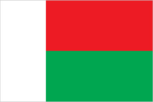
Geography
Agriculture
- main crops — rice, vegetables; food shortages — rice, vegetables, meat; depends mostly on imports for food requirements
- cash crops — coffee, vanilla, cloves, sugar, tobacco, sisal, raffia; pepper; cocoa; food crops — rice, cassava, cereals, potatoes, corn, beans, bananas, coconuts, and peanuts; animal husbandry widespread; imports some rice, milk, and cereal
Airfields
none; 1 seaplane station
Branches
- 18member Legislative Assembly, with Governor and 5 appointed, 6 nominated, and 6 elected representatives
- executive — a 19-member Supreme Revolutionary Council (made up of military and political leaders); assisted by cabinet called Council of Ministers; unicameral legislative — Popular National Assembly; Military Committee for Development; regular courts are patterned after French system, and a High Council of Institutions reviews all legislation to determine its constitutional validity
Budget
1984 overall government operations (1984) — total revenues, $420 million; current expenditures, $300 million; capital expenditures, $150 million; other expenditures, $90 million
Capital
- Lisbon (Portugal)
- Antananarivo
Civil air
no major transport aircraft
Coastline
4,828 km People
Communists
Communist party of virtually no importance; small and vocal group of Communists has gained strong position in leadership of AKFM, the rank and file of which is non-Communist
Elections
- conducted every four years Political parties and leaders: Association to Defend the Interests of Macau; Macau Democratic Center; Group to Study the Development of Macau; Macau Independent Group
- referendum held in December 1975 gave overwhelming approval to government and new constitution; elections for Popular National Assembly held in June 1977 and in August 1983; only one political group allowed to take part in the election, The National Front for the Defense of the Revolution, which presented a single list of candidates; a presidential election in November 1982 returned President Ratsiraka with an 80% majority; the challenger, Monja Jaona, received 20% and was later arrested after leading demonstrations to protest election fraud Political parties and leaders: seven parties are now allowed limited political activity under the national front and are represented on the Supreme Revolutionary Council: Advance Guard of the Malagasy Revolution (AREMA), Didier Ratsiraka; Congress Party for Malagasy Independence (AKFM), Pastor Richard Andriamanjato; Movement for National Unity (VONJY), Dr. Marojama Razanabahiny; Malagasy Christian Demcratic Union (UDECMA), Norbert Andriamorasata; Militants for the Establishment of a Proletarian Regime (MFM), Manandafy Rakotonirina; National Movement for the Independence of Madagascar (MONIMA), Monja Jaona; Socialist Organization MONIMA (VS MONIMA), Remanindry Jaona
Electric power
- 123,000 kW capacity (1985); 335 million kWh produced (1985), 852 kWh per capita
- 1 14,000 kW capacity (1985); 402 million kWh produced (1985), 40 kWh per capita
Ethnic divisions
basic split between highlanders of predominantly MalayoIndonesian origin, consisting of Merina (1,643,000) and related Betsileo (760,000) on the one hand and coastal tribes — collectively termed the Coders — with mixed Negroid, Malayo-Indonesian, and Arab ancestry on the other; coastal tribes include Betsimisaraka 941,000, Tsimihety 442,000, Antaisaka 415,000, Sakalava 375,000; there are also 10,000-12,000 European French, 5,000 Indians of French nationality, and 5,000 Creoles
Exports
- $755.9 million (f.o.b., 1983); textiles and clothing
- $350 million (f.o.b., 1985 est); coffee, vanilla, sugar, cloves; agricultural and livestock products account for about 85% of export earnings
External debt
(1984) $2.2 billion disbursed; debt service payment 33% of exports after rescheduling
Fiscal year
calendar year Communications
Fishing
catch 54,500 (1983); marketed output—22,150 metric tons fish (1984 prov.); 6,695 metric tons shellfish (1984 prov.)
GDP
$2.4 billion (1984), about $250 per capita; real growth rate 2.1% (1984)
GNP
$640 million (1980 est.)
Government leader
- vacant since resignation of former Governor, Rear Adm. Vasco Fernando Lecte da Almeida e COSTA, on 7 January 1986
- Adm. Didier RATSIRAKA, President (since June 1975); Lt. Col. Desire RAKOTOARIJAONA, Prime Minister (since 1977)
Highways
42 km paved
Imports
- $722.4 million (c.i.f., 1983); foodstuffs
- $353 million (f.o.b., 1985 est.); raw materials, intermediate goods, foodstuffs
Infant mortality rate
177/1,000(1984)
Labor force
about 4.8 million (1984), of which 90% are nonsalaried family workers engaged in subsistence agriculture; of 175,000 wage and salary earners, 26% agriculture, 17% domestic service, 15% industry, 14% commerce, 11% construction, 9% services, 6% transportation, 2% miscellaneous
Language
French and Malagasy official Madagascar (continued)
Legal system
- Portuguese civil law system
- based on French civil law system and traditional Malagasy law; constitution of 1959 modified in October 1972 by law establishing provisional government institutions; new constitution accepted by referendum in December 1975; legal education at National School of Law, University of Madagascar; has not accepted compulsory ICJ jurisdiction
Life expectancy
46
Limits of territorial waters (claimed)
12 nm (200 nm exclusive economic zone)
Literacy
53%
Major industries
- textiles, toys, plastic products, furniture
- agricultural processing (meat canneries, soap factories, brewery, tanneries, sugar refining), light consumer goods industries (textiles, glassware), cement plant, auto assembly plant, paper mill, oil refinery
Major trade partners
- exports — 27% US, 22% Hong Kong, 12% FRG, 10% France; imports — 39% Hong Kong, 28% China (1983) : (1982) expenditures, $140.4 million
- France, other EC, US, Saudi Arabia; trade with Communist countries remains a minute part of total trade
Member of
- Multifiber Agreement Economy
- Af DB, EAMA, FAO, G-77, GATT, IAEA, IBRD, ICAO, ICO, IDA, IFAD, IFC, ILO, IMF, IMO, INTELSAT, INTERPOL, IRC, ISO, ITU, NAM, OAU, OCAM, UN, UNESCO, UPU, WFTU, WHO, WMO, WTO Economy
Military manpower
males 15-49, 109,000; 63,000 fit for military service ToemMinaj Indian ANTANANARIVO / Ocean See rtfionil map VII Faradofay Land 592,900 km2; slightly smaller than Texas; 58% pasture, 21% forest, 8% waste, 5% cultivated, 2% rivers and lakes, 6% other Water
Monetary conversion rate
8 patacas=US$l (June 1985)
National holiday
Independence Day, 26 June
Nationality
noun — Malagasy (sing, and pi.); adjective — Malagasy
Natural resources
graphite, chrome, coal, bauxite, ilmenite, tar sands, semiprecious stones
Official name
Democratic Republic of
Organized labor
4% of labor force Government
Other political or pressure groups
wealthy Macanese and Chinese representing local interests, wealthy pro-Communist merchants representing China's interests; in January 1967 Macau Government acceded to Chinese demands that gave Chinese veto power over administration of the enclave
Political subdivisions
- municipality of Macau and two islands (Taipa and Coloane)
- 6 provinces
Population
10,227,000 (July 1986), average annual growth rate 2.8%
Ports
1 major
Religion
more than half indigenous beliefs; about 41% Christian, 7% Muslim
Suffrage
- Portuguese, Chinese, and foreign residents over 18
- universal over age 18
Telecommunications
fairly modern communication facilities maintained for domestic and international services; 13,000 telephones; 4 AM and 3 FM radio broadcast transmitters; est. 75,000 radio receivers; in international high frequency radio communication facility; access to international communications carriers provided via Hong Kong and China Defense Forces Defense is responsibility of Portugal
Type
real authority in hands of the President, although Supreme Revolutionary Council is theoretically ultimate executive authority
Voting strength
4.8 million registered voters (1982); in 1977 local elections, President Ratsiraka 's AREMA captured approximately 89.5% of the 73,000 available positions on 1 1,400 local executive committees; AKFM won about 7.3% of the seats, MONIMA 1.7%, and VONJY 1.4%; UDECMA won only about 45 seats; in the 1983 legislative election AREMA won 117 out of the 137 seats in the Popular National Assembly