1996 Edition
CIA World Factbook 1996 (Project Gutenberg)
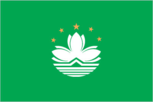
Introduction
Description
the flag of Portugal is used
Location
22 10 N, 113 33 E -- Eastern Asia, bordering the South China Sea and China Flag ----
Geography
Area
- comparative area
- about 0.1 times the size of Washington, DC
- land area
- 16 sq km
- total area
- 16 sq km
Climate
subtropical; marine with cool winters, warm summers
Coastline
40 km
Environment
- current issues
- NA
- international agreements
- party to - Ozone Layer Protection (extended from Portugal)
- natural hazards
- NA
Geographic coordinates
22 10 N, 113 33 E
Geographic note
essentially urban; one causeway and one bridge connect the two islands to the peninsula on mainland
International disputes
none
Irrigated land
NA sq km
Land boundaries
- border country
- China 0.34 km
- total
- 0.34 km
Land use
- arable land
- 0%
- forest and woodland
- 0%
- meadows and pastures
- 0%
- other
- 100%
- permanent crops
- 0%
Location
Eastern Asia, bordering the South China Sea and China
Map references
Southeast Asia
Maritime claims
not specified
Natural resources
NEGL
Terrain
- generally flat
- highest point
- Coloane Alto 174 m
- lowest point
- South China Sea 0 m
People and Society
Age structure
0-14 years: 24% (male 60,709; female 57,004) 15-64 years: 68% (male 167,466; female 169,486) 65 years and over: 8% (male 17,569; female 24,603) (July 1996 est.)
Birth rate
14.16 births/1,000 population (1996 est.)
Death rate
4.31 deaths/1,000 population (1996 est.)
Ethnic divisions
Chinese 95%, Portuguese 3%, other 2%
Infant mortality rate
5.3 deaths/1,000 live births (1996 est.)
Languages
Portuguese (official) 4%, Chinese (Cantonese) is the language of commerce
Life expectancy at birth
- female
- 82.54 years (1996 est.)
- male
- 77.49 years
- total population
- 79.95 years
Literacy
- age 15 and over can read and write (1981 est.)
- female
- 86%
- male
- 93%
- total population
- 90%
Nationality
- adjective
- Macau
- noun
- Macanese (singular and plural)
Net migration rate
1.66 migrant(s)/1,000 population (1996 est.)
Population
496,837 (July 1996 est.)
Population growth rate
1.15% (1996 est.)
Religions
Buddhist 45%, Roman Catholic 7%, Protestant 1%, none 45.8%, other 1.2% (1981)
Sex ratio
- all ages
- 0.98 male(s)/female (1996 est.)
- at birth
- 1.05 male(s)/female
- under 15 years
- 1.06 male(s)/female 15-64 years: 0.99 male(s)/female 65 years and over: 0.71 male(s)/female
Total fertility rate
1.51 children born/woman (1996 est.)
Government
Administrative divisions
2 districts (concelhos, singular - concelho); Ilhas, Macau
Capital
Macau
Constitution
17 February 1976, Organic Law of Macau; basic law drafted primarily by Beijing promulgated 31 March 1993
Data code
MC
Diplomatic representation in US
none (Chinese territory under Portuguese administration)
Executive branch
- cabinet
- Consultative Council consists of a total of 15 members - five appointed by the governor, two nominated by the governor, five elected for a four-year term (two represent administrative bodies, one represents moral, cultural, and welfare interests, and two represent economic interests), and three statutory members
- chief of state
- President (of Portugal) Mario Alberto SOARES (since 9 March 1986)
- head of government
- Governor Gen. Vasco Joachim Rocha VIEIRA (since 20 March 1991) was appointed by the President of Portugal after consultation with the Legislative Assembly
Flag
the flag of Portugal is used
Independence
none (territory of Portugal; Portugal signed an agreement with China on 13 April 1987 to return Macau to China on 20 December 1999; in the joint declaration, China promises to respect Macau's existing social and economic systems and lifestyle for 50 years after transition)
International organization participation
CCC, ESCAP (associate), IMO (associate), Interpol (subbureau), UNESCO (associate), WToO (associate), WTrO
Judicial branch
Supreme Court, consisting of five magistrates including the president; lower court judges appointed for three years by governor
Legal system
Portuguese civil law system
Legislative Assembly
elections last held 10 March 1991 (next to be held NA); results - percent of vote by party NA; seats - (23 total, 8 elected by direct vote, 8 by indirect vote, and 7 appointed by the governor) number of seats by party NA
Legislative branch
unicameral
Name of country
- conventional long form
- none
- conventional short form
- Macau
- local long form
- none
- local short form
- Ilha de Macau
National holiday
Day of Portugal, 10 June (1580)
Other political or pressure groups
wealthy Macanese and Chinese representing local interests, wealthy procommunist merchants representing China's interests; in January 1967 the Macau Government acceded to Chinese demands that gave China veto power over administration
Political parties and leaders
Association to Defend the Interests of Macau; Macau Democratic Center; Group to Study the Development of Macau; Macau Independent Group
Suffrage
18 years of age; universal
Type of government
overseas territory of Portugal scheduled to revert to China in 1999
US diplomatic representation
the US has no offices in Macau, and US interests are monitored by the US Consulate General in Hong Kong
Economy
Agriculture
rice, vegetables
Budget
- expenditures
- $298 million, including capital expenditures of $NA (1989 est.)
- revenues
- $305 million
Currency
1 pataca (P) = 100 avos
Economic aid
- recipient
- ODA, $NA
Economic overview
The economy is based largely on tourism (including gambling) and textile and fireworks manufacturing. Efforts to diversify have spawned other small industries - toys, artificial flowers, and electronics. The tourist sector has accounted for roughly 25% of GDP, and the clothing industry has provided about two-thirds of export earnings; the gambling industry probably represents over 40% of GDP. Macau depends on China for most of its food, fresh water, and energy imports. Japan and Hong Kong are the main suppliers of raw materials and capital goods.
Electricity
- capacity
- 258,000 kW
- consumption per capita
- 2,093 kWh (1993)
- production
- 950 million kWh
Exchange rates
patacas (P) per US$1 - 8.034 (1991-95), 8.024 (1990), 8.030 (1989); note - linked to the Hong Kong dollar at the rate of 1.03 patacas per Hong Kong dollar
Exports
- $1.9 billion (1995 est.)
- commodities
- textiles, clothing, toys
- partners
- US 35%, Hong Kong 12.5%, Germany 12%, China 9.9%, France 8% (1992 est.)
External debt
$0 (1995)
Fiscal year
calendar year
GDP
purchasing power parity - $6.4 billion (1995 est.)
GDP composition by sector
- agriculture
- NA%
- industry
- NA%
- services
- NA%
GDP per capita
$13,000 (1995 est.)
GDP real growth rate
4% (1995 est.)
Imports
- $2 billion (1992 est.)
- commodities
- raw materials, foodstuffs, capital goods
- partners
- Hong Kong 33%, China 20%, Japan 18% (1992 est.)
Industrial production growth rate
NA%
Industries
clothing, textiles, toys, plastic products, furniture, tourism
Inflation rate (consumer prices)
8.6% (1995 est.)
Labor force
- 180,000 (1986)
- by occupation
- NA
Unemployment rate
2% (1992 est.)
Communications
Branches
NA
Defense note
defense is the responsibility of Portugal
Manpower availability
- males age 15-49
- 142,704
- males fit for military service
- 79,225 (1996 est.)
Radio broadcast stations
AM 4, FM 3, shortwave 0
Radios
135,000 (1992 est.)
Telephone system
- fairly modern communication facilities maintained for domestic and international services
- domestic
- NA
- international
- HF radiotelephone communication facility; access to international communications carriers provided via Hong Kong and China; satellite earth station - 1 Intelsat (Indian Ocean)
Telephones
170,021 (1994 est.)
Television broadcast stations
- note
- TV programs received from Hong Kong
Televisions
34,000 (1992 est.) Defense
Transportation
Airports
new international airport completed in 1995; 1 seaplane station
Highways
- paved
- 42 km
- total
- 90 km
- unpaved
- 48 km (1987 est.)
Merchant marine
none
Ports
Macau
Railways
0 km