1989 Edition
CIA World Factbook 1989 (Internet Archive)
Geography
Climate
subtropical; marine with cool winters, warm summers
Coastline
40 km
Comparative area
about 0.1 times the size of Washington, DC
Disputes
scheduled to become a Special Administrative Region of China in 1999
Environment
essentially urban; one causeway and one bridge connect the two islands to the peninsula on mainland
Exclusive fishing zone
1 2 nm
Land boundary
0.34 km with China
Land use
0% arable land; 0% permanent crops; 0% meadows and pastures; 0% forest and woodland; 100% other
Natural resources
negligible
Note
27 km west southwest of Hong Kong on the southeast coast of China
Terrain
generally flat
Territorial sea
6 nm
Total area
16 km2; land area: 16 km2
People and Society
Birth rate
16 births/ 1,000 population (1990)
Death rate
5 deaths/ 1 ,000 population (1990)
Ethnic divisions
95% Chinese, 3% Portuguese, 2% other
Infant mortality rate
7 deaths/ 1,000 live births (1990)
Labor force
180,000(1986)
Language
Portuguese (official); Cantonese is the language of commerce
Life expectancy at birth
75 years male, 79 years female (1990)
Literacy
almost 100% among Portuguese and Macanese; no data on Chinese population
Nationality
noun — Macanese (sing, and pi.); adjective — Macau
Net migration rate
0 migrants/ 1 ,000 population (1990)
Organized labor
none
Population
441,691 (July 1990), growth rate 1.1% (1990)
Religion
mainly Buddhist; 17,000 Roman Catholics, of whom about half are Chinese
Total fertility rate
2.2 children born/ woman (1990)
Government
Administrative divisions
2 districts (concelhos, singular — concelho); llhas, Macau
Capital
Macau
Constitution
17 February 1976, Organic Law of Macau
Diplomatic representation
as Chinese territory under Portuguese administration, Macanese interests in the US are represented by Portugal; US — the US has no offices in Macau and US interests are monitored by the US Consulate General in Hong Kong
Elections
Legislative Assembly — last held on 9 November 1988 (next to be held November 1991); results — percent of vote by party NA; seats — (17 total; 6 elected by universal suffrage, 6 by indirect suffrage) number of seats by party NA
Executive branch
president of Portugal, governor, Consultative Council, (cabinet)
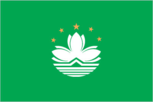
Flag
the flag of Portugal is used
Independence
none (territory of Portugal); Portugal signed an agreement with China on 13 April 1987 to return Macau to China on 20 December 1999; in the joint declaration, China promises to respect Macau's existing social and economic systems and lifestyle for 50 years after transition
Judicial branch
Supreme Court
Leaders
Chief of State — President (of Portugal) Mario Alberto SCARES (since 9 March 1986); Head of Government — Governor Carlos MELANCIA (since 3 July 1987) Political parties and leaders: Association to Defend the Interests of Macau; Macau Democratic Center; Group to Study the Development of Macau; Macau Independent Group
Legal system
Portuguese civil law system
Legislative branch
Legislative Assembly
Long-form name
none
Member of
Multifiber Agreement
National holiday
Day of Portugal, 10 June
Other political or pressure groups
wealthy Macanese and Chinese representing local interests, wealthy pro-Communist merchants representing China's interests; in January 1967 the Macau Government acceded to Chinese demands that gave China veto power over administration
Suffrage
universal at age 18
Type
overseas territory of Portugal; scheduled to revert to China in 1999
Economy
Agriculture
rice, vegetables; food shortages— rice, vegetables, meat; depends mostly on imports for food requirements
Aid
none
Budget
revenues $305 million; expenditures $298 million, including capital expenditures of SNA (1989)
Currency
pataca (plural — patacas); 1 pataca (P) = 100 avos
Electricity
179,000 kW capacity; 485 million kWh produced, 1,110 kWh per capita (1989)
Exchange rates
patacas (P) per US$1 — 8.03 (1989), 8.044 (1988), 7.993 (1987), 8.029 (1986), 8.045 (1985); note— linked to the Hong Kong dollar at the rate of 1.03 patacas per Hong Kong dollar
Exports
$1.7 billion (1989 est.); commodities— textiles, clothing, toys; partners — US 33%, Hong Kong 15%, FRG 12%, France 10% (1987)
External debt
$91 million (1985)
Fiscal year
calendar year
GDP
$2.7 billion, per capita $6,300; real growth rate 5% (1989 est.)
Imports
$1.6 billion (1989 est.); commodities— raw materials, foodstuffs, capital goods; partners — Hong Kong 39%, China 21%, Japan 10% (1987)
Industrial production
NA
Industries
clothing, textiles, toys, plastic products, furniture, tourism
Inflation rate (consumer prices)
9.5% (1989)
Overview
The economy is based largely on tourism (including gambling), and textile and fireworks manufacturing. Efforts to diversify have spawned other small industries— toys, artificial flowers, and electronics. The tourist sector has accounted for roughly 25% of GDP, and the clothing industry has provided about two-thirds of export earnings. Macau depends on China for most of its food, fresh water, and energy imports. Japan and Hong Kong are the main suppliers of raw materials and capital goods.
Unemployment rate
2% (1989 est.)
Communications
Airports
none; 1 seaplane station
Civil air
no major transport aircraft
Highways
42 km paved
Ports
Macau
Telecommunications
fairly modern communication facilities maintained for domestic and international services; 52,000 telephones; stations — 4 AM, 3 FM, no Macau (continued)