1988 Edition
CIA World Factbook 1988 (Internet Archive)
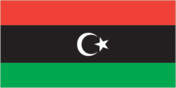
Geography
Boundary disputes
none; claims Aozou Strip in northern Chad; occupies northern Chad; maritime dispute with Tunisia
Climate
Mediterranean along coast; dry, extreme desert interior
Coastline
1,770 km
Comparative area
larger than Alaska
Environment
hot, dry, dust-laden ghibli is a southern wind lasting 1-4 days in spring and fall; desertification; sparse natural water resources
Ethnic divisions
97% Berber and Arab; some Greeks, Maltese, Italians, Egyptians, Pakistanis, Turks, Indians, and Tunisians
Gulf of Sidra closing line
32° 30' N
Infant mortality rate
84/1,000 (1985)
Labor force
1 million, of which about 280,000 are resident foreigners; 31% industry, 27% services, 24% government, 18% agriculture
Land boundaries
4,345 km total
Land use
1% arable land; 0% permanent crops; 8% meadows and pastures; 0% forest and woodland; 91% other; includes NEGL% irrigated
Language
Arabic; Italian and English widely understood in major cities
Life expectancy
men 56, women 59
Literacy
50-60%
Nationality
noun — Libyan(s); adjective — Libyan
Population
3,306,825 (July 1987), average annual growth rate 3.39%
Religion
97% Sunni Muslim
Special notes
largest water development scheme in world being built to bring water from deep wells under Sahara Desert to coast
Terrain
mostly barren, flat to undulating plains, plateaus, depressions
Territorial sea
12 nm
Total area
1,759,540 km2; land area: 1,759,540 km2
Government
Administrative divisions
46 municipalities closely controlled by central government
Branches
officially, paramount political power and authority rests with the General People's Congress, which theoretically functions as a parliament with a cabinet called the General People's Committee
Capital
Tripoli
Communists
no organized party, negligible membership Libya (continued)
Elections
representatives to the General People's Congress are drawn from popularly elected municipal committees
Government leaders
Col. Mu'ammar Abu Minyar al-QADHAFI (no official title; runs country and is treated as chief of state); Miftah al-Ista 'UMAR, Secretary of the General People's Congress (chief of state in theory but not treated as such)
Legal system
based on Italian civil law system and Islamic law; separate religious courts; no constitutional provision for judicial review of legislative acts; has not accepted compulsory ICJ jurisdiction
National holiday
Revolution Day, 1 September
Official name
Socialist People's Libyan Arab Jamahiriya
Political parties
none
Suffrage
mandatory universal adult
Type
republic
Communications
Airfields
80 total, 75 usable; 2 with permanent-surface runways; 1 with runways 2,440-3,659 m, 5 with runways 1,220-2,439 m
Branches
Armed Forces of Liberia, Liberia National Coast Guard
Civil air
2 major transport aircraft
Highways
10,087 km total; 603 km bituminous treated, 2,848 km all-weather, 4,313 km dry-weather
Inland waterways
none
Military manpower
males 15-49, 569,000; 304,000 fit for military service; no conscription Mediterranean Sea
Ports
3 major (Monrovia, Buchanan, Greenville), 4 minor
Railroads
480 km total; 328 km 1.435meter standard gauge, 152 km 1.067-meter narrow gauge; all lines single track; rail systems owned and operated by foreign steel and financial interests in conjunction with Liberian Government
Telecommunications
telephone and telegraph service via radio-relay network; main center is Monrovia; 8,500 telephones (0.4 per 100 popl.); 3 AM, 4 FM, 5 TV stations; 1 Atlantic Ocean satellite station Defense Forces