1987 Edition
CIA World Factbook 1987 (Internet Archive)
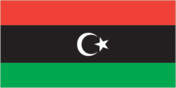
Geography
Boundary disputes
none; claims Aozou Strip in northern Chad; occupies northern Chad; maritime dispute with Tunisia
Climate
Mediterranean along coast; dry, extreme desert interior
Coastline
1,770 km
Comparative area
larger than Alaska
Environment
hot, dry, dust-laden ghibli is a southern wind lasting 1-4 days in spring and fall; desertification; sparse natural water resources
Gulf of Sidra closing line
32° 30'N
Land boundaries
4,345 km total
Land use
1% arable land; 0% permanent crops; 8% meadows and pastures; 0% forest and woodland; 91% other; includes NEGL% irrigated
Member of
AfDB, Arab League, FAO, G-77, IAEA, IBRD, ICAO, IDA, IDB— Islamic Development Bank, IFAD, IFC, ILO, IMF, IMO, INTELSAT, INTERPOL, IOOC, ITU, NAM, OAPEC, OAU, OIC, OPEC, UN, UNESCO, UPU, WHO, W1PO, WMO, WSG
Other political or pressure groups
various Arab nationalist movements and the Arab Socialist Resurrection (Ba'th) party with almost negligible memberships may be functioning clandestinely, as well as some Islamic elements
Special notes
largest water development scheme in world being built to bring water from deep wells under Sahara Desert to coast
Terrain
mostly barren, flat to undulating plains, plateaus, depressions
Territorial sea
12 nm
Total area
- 6 Tobruk Misratah \ Guif of Sidra\ Banghazt 400 km
- 1,759,540 km?; land area: 1,759,540 km?
People and Society
Ethnic divisions
97% Berber and Arab; some Greeks, Maltese, Italians, Egyptians, Pakistanis, Turks, Indians, and Tunisians
Infant mortality rate
84/1,000 (1985)
Labor force
1 million, of which about 280,000 are resident foreigners; 31% industry, 27% services, 24% government, 18% agriculture
Language
Arabic; Italian and English widely understood in major cities
Life expectancy
men 56, women 59
Literacy
50-60%
Nationality
noun—Libyan(s); adjective— Libyan
Population
3,306,825 (July 1987), average annual growth rate 3.39%
Religion
97% Sunni Muslim
Government
Administrative divisions
46 municipalities closely controlled by central government
Branches
officially, paramount political power and authority rests with the General People’s Congress, which theoretically functions as a parliament with a cabinet called the General People’s Committee
Capital
Tripoli
Communists
no organized party, negligible membership
Elections
representatives to the General People’s Congress are drawn from popularly elected municipal committees Politica] parties: none
Government leaders
Col. Mu‘ammar Abu Minyar al-QADHAFI (no official title; runs country and is treated as chief of state); Miftah al-Ista ‘UMAR, Secretary of the General People’s Congress (chief of state in theory but not treated as such)
Legal system
based on Italian civil law system and Islamic law; separate religious courts; no constitutional provision for judicial review of legislative acts; has not accepted compulsory ICJ jurisdiction
National holiday
Revolution Day, 1 September
Official name
Socialist People’s Libyan Arab Jamahiriya
Suffrage
mandatory universal adult
Type
republic
Economy
Agriculture
wheat, barley, olives, dates, citrus fruits, peanuts; 65% of food is imported
Budget
revenues, $10 billion; expenditures, $9.9 billion, including development expenditure of $5.7 billion (1985 est.)
Electric power
4,110,000 kW capacity; 12,600 million kWh produced, 3,250 kWh per capita (1986)
Exports
$5.0 billion (f.0.b., 1986); petroleum
Fiscal year
calendar year
GDP
roughly $20 billion (1986 est.), $6,260 per capita; inflation rate 15% (1986)
Imports
$5.0 billion (f.0.b., 1986); manufactures, food
Major industries
petroleum, food processing, textiles, handicrafts
Major trade partners
imports—lItaly, FRG; exports—Italy, FRG, Spain, France, Japan, UK
Monetary conversion rate
.317 dinars=US$1 (November 1986)
Natural resources
petroleum, natural gas, gypsum
Communications
Airfields
127 total, 115 usable; 45 with permanent-surface runways, 8 with runways over 3,659 m, 25 with runways 2,440-3,659 m, 88 with runways 1,220-2,489 m
Civil air
75 major transport aircraft
Highways
19,300 km total; 10,800 km bituminous and bituminous treated, 8,500 km gravel, crushed stone and earth
Pipelines
crude oil 4,383 km; natural gas 1,947 km; refined products 443 km (includes 256 km liquid petroleum gas)
Ports
4 major (Tobruk, Tripoli, Banghazi, Misratah), 2 secondary, 15 minor, and 6 petroleum terminals
Railroads
none
Telecommunications
16 AM, 3 FM, 12 TV stations; 175,000 TV sets; 167,000 receiver sets; ] satellite ground station
Military and Security
Branches
Armed Forces of the Libyan Arab Jamahariya (including Army, Arab Air Force, Air Defense Command, Arab Navy)
Military manpower
males 15-49, 905,000; 532,000 fit for military service; 44,000 reach military age (17) annually; conscription now being implemented