1986 Edition
CIA World Factbook 1986 (Internet Archive)
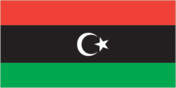
Geography
Agriculture
- rubber, rice, oil palm, cassava, coffee, cocoa; imports of rice, wheat, and live cattle and beef are necessary for basic diet
- main crops — wheat, barley, olives, dates, citrus fruits, peanuts; 65% of food is imported
- corn, beans
Aid
economic commitments — Western (non-US), ODA and OOF (1970-83), $560 million; US authorizations (including Ex-Im) (FY70-84), $443 million; Communist (1970-84), $73.0 million; military commitments US (FY70-84), $57 million
Airfields
- 80 total, 75 usable; 2 with permanent-surface runways; 1 with runways 2,440-3,659 m, 5 with runways 1, 220-2,439 m
- 118 total, 107 usable; 37 with permanent-surface runways, 8 with runways over 3,659 m, 24 with runways 2,440-3,659 m, 36 with runways 1,2202,439 m Defense Forces
- 120 total, 104 usable; 62 with permanent-surface runways; 3 with runways over 3,660 m, 27 with runways 2,440-3,659 m, 26 with runways 1,2202,439m
- 8 total, 7 usable; 4 with permanent-surface runways; 4 with runways 1,220-2,439 m
Branches
- Armed Forces of Liberia, Liberia National Coast Guard
- officially, paramount political power and authority rests with the General People's Congress, which theoretically functions as a parliament with a cabinet called the General People's Committee
- Armed Forces of the Libyan Arab Jamahariya (including Army, Arab Air Force, Air Defense Command, Arab Navy)
- Land Forces, Navy, Air Force, Gendarmerie
- executive, bicameral legislature (Executive Council, 14-member Legislative Council), judicial (Supreme Court)
- police
Budget
- (FY84-85) revenues, $192 million; current expenditures, $238 million; development and nonbudgetary expenditures, $151 million
- (1985 est.) revenues, $10 billion; expenditures, $9.9 billion, including development expenditure of $5.7 billion
- (FY84) revenues, $7.55 billion; expenditures, $10.1 billion; deficit, $2.5 billion
- revenues, $5.9 million; expenditures, $7.2 million (1981/82)
Capital
- Tripoli
- Grand Turk (Cockburn Town)
Civil air
- 2 major transport aircraft
- 76 major transport aircraft
- 30 major transport aircraft
- Air Turks and Caicos (passenger service) and Turks Air Ltd. (cargo service)
Coastline
1,770 km People
Communist
none known Economy
Elections
- representatives to the General People's Congress are drawn from popularly elected municipal committees
- last 1984 for 1 1 Legislative Council seats Political parties and leaders: People's Democratic Movement (PMD), Oswald Skippings; Progressive National Party (PNP), Nathaniel Francis
Electric power
- 374,200 kW capacity (1985); 491 million kWh produced (1985), 219 kWh per capita
- 4,070,100 kW capacity (1985); 12.478 billion kWh produced (1985), 3,325 kWh per capita
Ethnic division
majority of African descent
Ethnic divisions
97% Berber and Arab with some black stock; some Greeks, Maltese, Jews, Italians, Egyptians, Pakistanis, Turks, Indians, and Tunisians
Exports
- $432 million (f.o.b., 1984); iron ore, rubber, diamonds, lumber and logs, coffee,
- $10.0 billion (f.o.b., 1985); petroleum
- $2.5 million (1982); crawfish, dried and fresh conch, conch shells
Fiscal year
- 1 July-30 June Communications
- calendar year Communications
- calendar year Communications
- probably calendar Communications
Fishing
- catch 13,553 metric tons (1982)
- catch 1,050 metric tons (1983)
GDP
- $1.14 billion (1984), $490 per capita; 2% real annual growth rate (1984)
- roughly $26 billion (1985 est), $7,180 per capita
- $15 million, per capita GDP $2,020 (1980)
Government leader
Nathaniel FRANCIS, Chief Minister (since March 1985); Christopher J. TURNER, Governor (since 1982)
Government leaders
Col. Mu'ammar Abu Minyar al-QADHAFI (no official title; runs country and is treated as chief of state); Miftah al-Ista 'UMAR, Secretary of the General People's Congress (chief of state in theory but not treated as such)
Highways
- 10,087 km total; 603 km bituminous treated, 2,848 km all-weather, 4,313 km dry-weather
- 19,300 km total; 10,800 km bituminous and bituminous treated, 8,500 km gravel, crushed stone and earth
- 49,615 km total; 26,915 km bituminous; 16,500 km gravel or crushed stone; 4,000 km improved earth; 2,200 km unimproved earth
- 121 km, including 24 km tarmac
Imports
- $366 million (c.i.f., 1984); machinery, transportation equipment, petroleum products, manufactured goods, foodstuffs
- $7.0 billion (f.o.b., 1985); manufactures, food
- $20.9 million (1982); foodstuffs, drink, tobacco, clothing
Infant mortality rate
- 84/1,000(1985)
- 24.4/1,000 (1981/82)
Inland waterways
- no significant waterways
- approx. 1,200km
Labor force
- 1 million, of which about 280,000 are resident foreigners; 31 % industry, 27% services, 24% government, 18% agriculture Government
- some subsistence agriculture; majority engaged in fishing and tourist industries
Land boundaries
4,345 km Water
Language
- Arabic; Italian and English widely understood in major cities
- English (official)
Legal system
- based on Italian civil law system and Islamic law; separate religious courts; no constitutional provision for judicial review of legislative acts; legal education at Law School at University of Libya at BanghazI; has not accepted compulsory ICJ jurisdiction
- probably based on English common law
Life expectancy
men 56, women 59
Limits of territorial waters (claimed)
- 12 nm (except for Gulf of Sidra where sovereignty is claimed and northern limit of jurisdiction fixed at 32°30'N)
- 3 nm (200 nm fishing zone) People
Literacy
- 50-60%
- about 99%
Major industries
- rubber processing, food processing, construction materials, furniture, palm oil processing, mining (iron ore, diamonds)
- petroleum, food processing, textiles, handicrafts
- fishing, tourism; formerly produced salt by solar evaporation
Major trade partners
- US, FRG, Netherlands, Italy, Belgium
- imports — Italy, FRG; exports — Italy, FRG, Spain, France, Japan, UK
- US (lobster, conch, tourism) and UK
Member of
- AfDB, ECA, ECOWAS, FAO, G-77, IAEA, IBRD, ICAO, ICO, IDA, IFAD, IFC, ILO, IMF, IMO, INTERPOL, IPU, IRC, ITU, Mano River Union, NAM, OAU, UN, UNESCO, UPU, WHO, WMO Economy
- AfDB, Arab League, FAO, G-77, IAEA, IBRD, ICAO, IDA, IDE— Islamic Development Bank, IFAD, IFC, ILO, IMF, IMO, INTELSAT, INTERPOL, IOOC, ITU, NAM, OAPEC, OAU, QIC, OPEC, UN, UNESCO, UPU, WHO, WIPO, WMO, WSG Economy
Military budget
for fiscal year ending 31 December 1984, $2.3 billion; 17% of central government budget Turks and Caicos Islands North Atlantic Ocean Caicos Islands CockburrvJ GRAND TURK* Harbour* (Cockburnflx' Town | J, ""' ri. Turks Islands North Atlantic Ocean Land 430 km2; about two-thirds the size of New York City; more than 30 islands, including 8 inhabited; largest island is Grand Caicos Water
Military manpower
- males 15-49, 498,000; 269,000 fit for military service; no conscription JRIPOLI Mediterranean Sea S*t regional mip VII Land 1,759,540 km2; larger than Alaska; 93% desert, waste, or urban; 6% agricultural; 1% forest
- males 15-49, 936,000; 551,000 fit for military service; about 39,000 reach military age (17) annually; conscription now being implemented
- males 15-49, 12,685,000; 7,507,000 fit for military service; about 533,000 reach military age (20) annually
Monetary conversion rate
- uses the US dollar and the Liberian dollar, which trades officially at par
- .2961 Libyan dinar=US$l (February 1984)
- 551.55 Turkish liras=US$l (October 1985)
- uses the US dollar
National holiday
- Independence Day, 1 September
- Commonwealth Day, 31 May
Nationality
noun — Libyan(s); adjective — Libyan
Natural resources
- iron ore, rubber, timber, diamonds, gold
- petroleum, natural gas, gypsum
- spiny lobster, conch
Official name
- Socialist People's Libyan Arab Jamahiriya
- Turks and Caicos Islands
Organized labor
St. George's Industrial Trade Union (Cockburn Harbor), 250 members Government
Other political or pressure groups
various Arab nationalist movements and the Arab Socialist Resurrection (Ba'th) party with almost negligible memberships may be functioning clandestinely
Pipelines
- crude oil 3,893 km; natural gas 938 km; refined products 443 km (includes 217 km liquid petroleum gas)
- 1,288 km crude oil; 2,145 km refined products
Political parties
none Communists.- no organized party, negligible membership
Political subdivisions
- 46 municipalities closely controlled by central government
- 3 districts
Population
- 3,876, 000 (July 1986), average annual growth rate 3.2%
- 7,436 (1980)
Ports
- 1 major (Monrovia), 4 minor
- 4 major (Tobruk, Tripoli, BanghazI, Misratah), 2 secondary, 15 minor, and 6 petroleum terminals
- 4 major, 8 secondary, 16 minor
- 4 major (Grand Turk, Salt Cay, Providenciales, Cockburn Harbor)
Railroads
- 487 km total; 342 km 1.435-meter standard gauge, 145 km 1.067-meter narrow gauge; all lines single track; rail systems owned and operated by foreign steel and financial interests in conjunction with Liberian Government
- none
- 8,193 km 1.435-meter standard gauge; 204 km double track; 109 km electrified
- none
Religion
- 97% Sunni Muslim
- Anglican, Roman Catholic, Baptist, Methodist, Church of God, Seventh-day Adventist
Suffrage
- mandatory universal adult
- universal adult at age 18
Telecommunications
- telephone and telegraph service via radiorelay network; main center is Monrovia; 7,700 telephones (0.5 per 100 popl.); 3 AM, 4 FM, 5 TV stations; 1 Atlantic Ocean satellite station Defense Forces
- fair domestic and international systems; trunk radio-relay network; 2.66 million telephones (5.5 per 100 popl.); 16 AM, 27 FM, 252 TV stations; 2 satellite ground station antennas, 1 submarine telephone cable Defense Forces
- fair cable and radio services; 1,400 telephones (16.9 per 100 popl.); 1 AM station; 2 submarine cables, 1 satellite ground station Defense Forces Defense is the responsibility of the United Kingdom
Type
- republic; major overhaul of the constitution and government structure in March 1977 established a system of popular congresses, which theoretically controls the General People's Committee, or cabinet
- British dependent territory; constitution introduced in 1976
Voting strength
PDM, 3 seats, PNP, 8 seats