1985 Edition
CIA World Factbook 1985 (Internet Archive)
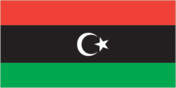
Geography
Airfields
79 total, 75 usable; 2 with permanent-surface runways; 1 with runways 2,4403,659 m, 5 with runways 1,220-2,439 m
Branches
- Army, Navy, Air Force, Air Defense Command
- Armed Forces of Liberia, Liberia National Coast Guard
- paramount political power and authority rests with the Secretariat of the General People's Congress, which theoretically functions as a parliament with a cabinet called the General People's Committee
Capital
Tripoli
Civil air
2 major transport aircraft
Coastline
- 307 km People
- 1,770 km People
Communists
no organized party, negligible membership
Elections
representatives to the General People's Congress are drawn from popularly elected municipal committees
Ethnic divisions
- 89% mestizo, 10% Indian, 1% white
- 97% Berber and Arab with some black stock; some Greeks, Maltese, Jews, Italians, Egyptians, Pakistanis, Turks, Indians, and Tunisians
Government leaders
Col. Mu'ammar Abu Minyar al-QADHAFI (no official title; runs country and is treated as chief of state; Mif tah al-Ista 'UMAR, Secretary of the General People's Congress (chief of state in theory but not treated as such)
Highways
10,087 km total; 603 km bituminous treated, 2,848 km all-weather, 4,313 km dry-weather
Inland waterways
no significant waterways
Labor force
- 1.7 million (est. 1982); 25% agriculture, 16% manufacturing, 16% commerce, 13% government, 9% financial
- 1.5 million, of which about 550,000 are resident foreigners Government
Land boundaries
- 515 km Water
- 4,345 km Water
Language
- Spanish, Nahua (among some Indians)
- Arabic; Italian and English widely understood in major cities
Legal system
based on Italian civil law system and Islamic law; separate religious courts; no constitutional provision for judicial review of legislative acts; legal education at Law School at University of Libya at Benghazi; has not accepted compulsory ICJ jurisdiction
Limits of territorial waters (claimed)
- 200 nm
- 12 nm (except for Gulf of Sidra where sovereignty is claimed and northern limit of jurisdiction fixed at 32°30'N and the unilaterally proclaimed 100 nm zone around Tripoli)
Literacy
- 65%
- 50%
Military budget
for fiscal year ending 30 June 1984, $22.4 million; 5.8% of central government budget Mediterranean TRIPOLI Set Stcr«|loiulntipVII Land 1,759,540 km8; larger than Alaska; 93% desert, waste, or urban; 6% agricultural; 1% forest
Military manpower
- males 15-49, 12,035,000; 7,848,000 fit for military service; about 495,000 reach military age (20) annually not necessarily authontativ 60km North Pacific Ocean Land 21,041 km2; the size of Massachusetts; 32% crop (9% corn, 7% coffee, 5% cotton, 11% other), 31% nonagricultural, 26% meadow and pasture, 1 1 % forest
- males 15-49, 482,000; 260,000 fit for military service; no conscription
National holiday
Independence Day, 1 September
Nationality
- noun — Salvadoran(s); adjective— Salvadoran
- noun — Libyan(s); adjective — Libyan
Official name
Socialist People's Libyan Arab Jamahiriya
Political parties
none
Political subdivisions
10 administrative provinces closely controlled by central government
Population
- 5,072,000 (July 1985), average annual growth rate 2.8%
- 4,003,000 (July 1985), average annual growth rate 6.5%
Ports
1 major (Monrovia), 4 minor
Railroads
487 km total; 342 km 1.435-meter standard gauge, 145 km 1.067-meter narrow gauge; all lines single track; rail systems owned and operated by foreign steel and financial interests in conjunction with Liberian Government
Religion
- predominantly Roman Catholic (probably 97-98%), with activity by Protestant groups throughout the country
- 97% Sunni Muslim
Suffrage
universal adult
Telecommunications
telephone and telegraph service via radio-relay network; main center is Monrovia; 7,700 telephones (0.5 per 100 popl.); 3 AM, 4 FM, 5 TV stations; 1 Atlantic Ocean satellite station Defense Forces
Type
republic; major overhaul of the constitution and government structure in March 1977 established a system of popular congresses, which theoretically controls the ruling General Secretariat