1987 Edition
CIA World Factbook 1987 (Internet Archive)
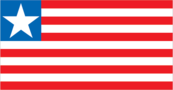
Geography
Climate
tropical; hot, humid; dry winters with hot days and cool to cold nights; wet, cloudy summers with frequent heavy showers
Coastline
579 km
Comparative area
slightly smaller than Pennsylvania
Continental shelf
200 meters or to depth of exploitation
Environment
West Africa’s largest tropical rainforest subject to deforestation
Land boundaries
1,336 km total
Land use
1% arable land; 3% permanent crops; 2% meadows and pastures; 39% forest and woodland; 55% other; includes NEGL% irrigated
Special notes
none
Terrain
mostly flat to rolling coastal plains rising to rolling plateau and low mountains in northeast
Territorial sea
200 nm
Total area
111,370 km?; land area: 96,320 km?
People and Society
Ethnic divisions
95% indigenous African tribes, including Kpelle, Bassa, Gio, Kru, Grebo, Mano, Krahn, Gola, Gbandi, Loma, Kissi, Vai, and Bella; 5% descendants of repatriated slaves known as AmericoLiberians
Infant mortality rate
153/1,000 (1984)
Labor force
510,000, of which 220,000 are in monetary economy; non-African foreigners hold about 95% of the top-level management and engineering jobs; 70.5% agriculture, 10.8% services, 4.5% industry and commerce, 14.2% other
Language
English (official); more than 20 local languages of the Niger-Congo language group; English used by about 20%
Life expectancy
54
Literacy
24%
Nationality
noun—Liberian(s); adjective—Liberian
Organized labor
2% of labor force
Population
2,384,189 (July 1987), average annual growth rate 3.27%
Religion
70% traditional, 20% Muslim, 10% Christian
Government
Administrative divisions
13 counties
Branches
executive powers held by President, assisted by appointed Cabinet; legislative powers held by bicameral legislature; independent judiciary
Capital
Monrovia
Communists
no Communist Party and only a few sympathizers
Elections
presidential and legislative elections held October 1985; Doe was proclaimed winner of presidential election and took office in January 1986 Political parties and leaders: National Democratic Party of Liberia, Miatta Sherman, Chairman; Liberian Action Party, Jackson Doe, Chairman; Liberian Unity Party, Gabriel Kpolleh, Chairman; Unity Party, Edward Kesselly, Chairman; United Peoples Party, Gabriel Baccus Matthews, Chairman
Government leader
Gen. Samuel Kanyon DOE, President and Commander in Chief of the Armed Forces (since April 1980)
Legal system
new constitution approved by nationwide referendum in July 1984 and implemented in January 1986; judicial powers invested in People’s Supreme Court and lower courts
Member of
AfDB, ECA, ECOWAS, FAO, G-77, IAEA, IBRD, ICAO, ICO, IDA, IFAD, IFC, ILO, IMF, IMO, INTERPOL, IPU, IRC, ITU, Mano River Union, NAM, OAU, UN, UNESCO, UPU, WHO, WMO
National holiday
National Redemption Day, 12 April; Independence Day, 26 July
Official name
Republic of Liberia
Suffrage
universal at age 18
Type
republic
Economy
Agriculture
rubber, rice, oil palm, cassava, coffee, cocoa; imports of rice, wheat, and livestock are necessary for basic diet
Budget
revenues, $192 million; current expenditures, $238 million; development and nonbudgetary expenditures, $151 million (FY84-85)
Electric power
374,000 kW capacity; 655 million kWh produced, 280 kWh per capita (1986)
Exports
$432 million (f.0.b., 1984); iron ore, rubber, diamonds, lumber and logs, coffee, cocoa
Fiscal year
1 July-30 June
Fishing
catch 18,553 metric tons (1982)
GDP
$1.14 billion, $490 per capita; 2% real annual growth rate (1984)
Imports
$366 million (c.i.f., 1984); machinery, transportation equipment, petroleum products, manufactured goods, foodstuffs
Major industries
rubber processing, food processing, construction materials, furniture, palm oil processing, mining (iron ore, diamonds)
Major trade partners
US, FRG, Netherlands, Italy, Belgium Aid; Western (non-US), ODA and OOF (1970-84), $587 million; US authorizations (including Ex-Im) (FY70-85), $512 million; Communist (1970-85), $73.0 million
Military transfers
US (FY70-85), $70 million
Monetary conversion rate
uses the US dollar and the Liberian dollar, which trade officially at par
Natural resources
iron ore, rubber, timber, diamonds, gold
Communications
Airfields
80 total, 75 usable; 2 with permanent-surface runways; 1 with runways 2,440-3,659 m, 5 with runways 1,220-2,439 m
Civil air
2 major transport aircraft
Highways
10,087 km total; 603 km bituminous treated, 2,848 km all-weather, 4,313 km dry-weather
Inland waterways
none
Ports
3 major (Monrovia, Buchanan, Greenville), 4 minor
Railroads
480 km total; 328 km 1.435meter standard gange, 152 km 1.067-meter narrow gauge; all lines single track; rail systems owned and operated by foreign steel and financial interests in conjunction with Liberian Government
Telecommunications
telephone and telegraph service via radio-relay network; main center is Monrovia; 8,500 telephones (0.4 per 100 popl.); 3 AM, 4 FM, 5 TV stations; ] Atlantic Ocean satellite station
Military and Security
Branches
Armed Forces of Liberia, Liberia National Coast Guard
Military manpower
males 15-49, 569,000; 304,000 fit for military service; no conscription