1982 Edition
CIA World Factbook 1982 (Wikisource)
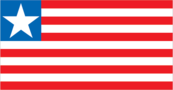
Geography
Area
111,370 km²; 20% agricultural, 30% jungle and swamps, 40% forested, 10% unclassified
Coastline
579 km
Land boundaries
1,336 km WATER
Limits of territorial waters (claimed)
200 nm
People and Society
Ethnic divisions
97% indigenous Negroid African tribes, including Kpelle, Bassa, Kru, Grebo, Gola, Kissi, Krahn, and Mandingo; 3% descendants of repatriated slaves known as Americo-Liberians
Labor force
510,000, of which 160,000 are in monetary economy; non-African foreigners hold about 95% of the top-level management and engineering jobs
Language
English official; 28 tribal languages or dialects, pidgin English used by about 20%
Literacy
about 24% over age 5
Nationality
noun—Liberian(s); adjective—Liberian
Organized labor
2% of labor force
Population
2,024,000 (July 1982), average annual growth rate 3.2%
Religion
probably more Muslims than Christians; 70%-80% animist
Government
Branches
executive and legislative powers held by military People's Redemption Council, assisted by military
Cabinet
judicial powers vested in People's Supreme Tribunal and lower courts
Capital
Monrovia
Communists
no Communist Party and only a few sympathizers
Elections
military has set 12 April 1985 as the date for return to civilian rule Political parties and leaders: political activities suspended; before coup True Whig Party dominated; African Socialist-oriented Progressive People's Party headed by B. Gabriel Matthews had recently been legalized; unauthorized Marxist-oriented Movement for Justice in Africa, led by Togba Nah Tipoteh and Amos Sawyer
Government leader
Gen. Samuel Kanyon DOE (replaced President William R. Tolbert)
Legal system
constitution suspended; martial law imposed; laws previously in force remain until repealed or amended by decrees issued by People's Redemption Council
Member of
AFDB, ECA, ECOWAS, FAO, G-77, IAEA, IBRD, ICAO, ICO, IDA, IFAD, IFC, ILO, IMCO, IMF, IPU, ITU, NAM, OAU, UN, UNESCO, UPU, WHO, WMO
National holiday
National Redemption Day, 12 April
Official name
Republic of Liberia
Political subdivisions
country divided into 9 counties
Suffrage
universal 18 years and over
Type
highly centralized military rule following coup on 12 April 1980
Economy
Agriculture
rubber, rice, oil palm, cassava, coffee, cocoa; imports of rice, wheat, and live cattle and beef are necessary for basic diet
Aid
economic commitments—Western (non-US), ODA and OOF (1970-79), $324.0 million; US authorizations (including Ex-Im) (FY70-80), $182.7 million; Communist (1970-79), $23.0 million; military— US (FY70-80), $13.1 million
Budget
(FY81) revenues $251.8 million, current expenditures $204.3 million, development expenditures $126.0 million
Electric power
355,000 kW capacity (1980); 1.0 billion kWh produced (1980), 534 kWh per capita
Exports
$600.4 million (f.o.b., 1980 est.); iron ore, rubber, diamonds, lumber and logs, coffee, cocoa
Fiscal year
1 July-30 June
Fishing
catch 13,484 metric tons (1979 est.)
GDP
$1.04 billion (1980), $660 per capita; -3.1% real annual growth rate (1980)
Imports
$550.7 million (c.i.f., 1980 est.); machinery, transportation equipment, petroleum products, manufactured goods, foodstuffs
Industry
rubber processing, food processing, construction materials, furniture, palm oil processing, mining (iron ore, diamonds), 15,000 b/d oil refinery
Major trade partners
US, West Germany, Netherlands, Italy, Belgium
Monetary conversion rate
Liberia uses US currency
Communications
Airfields
82 total, 81 usable; 2 with permanent-surface runways; 1 with runways 2,440-3,659 m, 5 with runways 1,220-2,439 m
Civil air
2 major transport aircraft
Highways
8,524 km total; 804 km bituminous treated, 2,055 km gravel, 4,731 km improved earth, and remainder unimproved earth
Inland waterways
370 km, for shallow-draft craft
Ports
1 major (Monrovia), 4 minor
Railroads
499 km total; 354 km standard gauge (1.435 m), 145 km narrow gauge (1.067 m); all lines single track; rail systems owned and operated by foreign steel and financial interests in conjunction with Liberian Government
Telecommunications
telephone and telegraph service via radio-relay network; main center is Monrovia; 7,700 telephones (0.5 per 100 popl.); 4 AM, 3 FM, and 3 TV stations; 1 Atlantic Ocean satellite station
Military and Security
Military budget
for fiscal year ending 30 June 1982, $60.1 million; 13.9% of central government budget
Military manpower
males 15-49, 430,000; 233,000 fit for military service; no conscription