2023 Edition
CIA World Factbook 2023 (factbook.json @ 0d4fa4984ecb)
Introduction
Background
A Central Asian country of incredible natural beauty and proud nomadic traditions, most of the territory of present-day Kyrgyzstan was formally annexed by the Russian Empire in 1876. The Kyrgyz staged a major revolt against the Tsarist Empire in 1916 in which almost one-sixth of the Kyrgyz population was killed. Kyrgyzstan became a Soviet republic in 1926 and achieved independence in 1991 when the USSR dissolved. Nationwide demonstrations in 2005 and 2010 resulted in the ouster of the country’s first two presidents, Askar AKAEV and Kurmanbek BAKIEV. Interim President Roza OTUNBAEVA led a transitional government and following a nation-wide election, President Almazbek ATAMBAEV was sworn in as president in 2011. In 2017, ATAMBAEV became the first Kyrgyzstani president to step down after serving one full six-year term as required at the time in the country’s constitution. Former prime minister and ruling Social-Democratic Party of Kyrgyzstan member, Sooronbay JEENBEKOV, replaced him after winning the 2017 presidential election, which was the most competitive in the country’s history, although international and local election observers noted cases of vote buying and abuse of public resources. In October 2020, protests against parliamentary election results spread across Kyrgyzstan, leading to JEENBEKOV’s resignation from the presidency, and catapulting previously imprisoned Sadyr JAPAROV to acting president. In January 2021, Kyrgyzstanis formally elected JAPAROV as president and approved a referendum to move Kyrgyzstan from a parliamentary to a presidential system. In April 2021, Kyrgyzstanis voted in favor of draft constitutional changes that consolidated power in the presidency. Pro-government parties won a majority in the Jogorku Kenesh (Kyrgyzstan’s legislature) in November 2021 elections. Continuing concerns for Kyrgyzstan include the trajectory of democratization, endemic corruption, tense regional relations, vulnerabilities due to climate change, border security vulnerabilities, and potential terrorist threats.
Geography
Area
- land
- 191,801 sq km
- total
- 199,951 sq km
- water
- 8,150 sq km
Area - comparative
slightly smaller than South Dakota
Climate
dry continental to polar in high Tien Shan Mountains; subtropical in southwest (Fergana Valley); temperate in northern foothill zone
Coastline
0 km (landlocked)
Elevation
- highest point
- Jengish Chokusu (Pik Pobedy) 7,439 m
- lowest point
- Kara-Daryya (Karadar'ya) 132 m
- mean elevation
- 2,988 m
Geographic coordinates
41 00 N, 75 00 E
Geography - note
landlocked; entirely mountainous, dominated by the Tien Shan range; 94% of the country is 1,000 m above sea level with an average elevation of 2,750 m; many tall peaks, glaciers, and high-altitude lakes
Irrigated land
10,043 sq km (2020)
Land boundaries
- border countries
- China 1,063 km; Kazakhstan 1,212 km; Tajikistan 984 km; Uzbekistan 1,314 km
- total
- 4,573 km
Land use
- agricultural land
- 55.4% (2018 est.)
- agricultural land: arable land
- arable land: 6.7% (2018 est.)
- agricultural land: permanent crops
- permanent crops: 0.4% (2018 est.)
- agricultural land: permanent pasture
- permanent pasture: 48.3% (2018 est.)
- forest
- 5.1% (2018 est.)
- other
- 39.5% (2018 est.)
Location
Central Asia, west of China, south of Kazakhstan
Major lakes (area sq km)
- salt water lake(s)
- Ozero Issyk-Kul 6,240 sq kmnote - second largest saline lake after the Caspian Sea; second highest mountain lake after Lake Titicaca; it is an endorheic mountain basin; although surrounded by snow capped mountains it never freezes
Major rivers (by length in km)
Syr Darya river source (shared with Tajikistan, Uzbekistan, and Kazakhstan [m] ) - 3,078 kmnote – [s] after country name indicates river source; [m] after country name indicates river mouth
Major watersheds (area sq km)
Internal (endorheic basin) drainage: Tarim Basin (1,152,448 sq km), (Aral Sea basin) Amu Darya (534,739 sq km), Syr Darya (782,617 sq km)
Map references
Asia
Maritime claims
none (landlocked)
Natural hazards
major flooding during snow melt; prone to earthquakes
Natural resources
abundant hydropower; gold, rare earth metals; locally exploitable coal, oil, and natural gas; other deposits of nepheline, mercury, bismuth, lead, and zinc
Population distribution
the vast majority of Kyrgyzstanis live in rural areas; densest population settlement is to the north in and around the capital, Bishkek, followed by Osh in the west; the least densely populated area is the east, southeast in the Tien Shan mountains
Terrain
peaks of the Tien Shan mountain range and associated valleys and basins encompass the entire country
People and Society
Age structure
- 0-14 years
- 29.54% (male 928,876/female 879,729)
- 15-64 years
- 63.86% (male 1,914,277/female 1,995,500)
- 65 years and over
- 6.6% (2023 est.) (male 154,684/female 249,715)
Alcohol consumption per capita
- beer
- 0.43 liters of pure alcohol (2019 est.)
- other alcohols
- 0 liters of pure alcohol (2019 est.)
- spirits
- 3.35 liters of pure alcohol (2019 est.)
- total
- 4.02 liters of pure alcohol (2019 est.)
- wine
- 0.23 liters of pure alcohol (2019 est.)
Birth rate
19.1 births/1,000 population (2023 est.)
Child marriage
- women married by age 15
- 0.3%
- women married by age 18
- 12.9% (2018 est.)
Children under the age of 5 years underweight
1.8% (2018)
Contraceptive prevalence rate
39.4% (2018)
Current health expenditure
5.3% of GDP (2020)
Currently married women (ages 15-49)
66.2% (2023 est.)
Death rate
6.1 deaths/1,000 population (2023 est.)
Demographic profile
Kyrgyzstan is a sparsely populated country whose population is unevenly distributed. More than 50% of the population lives in or around the two cities of Bishkek and Osh and their surrounding districts, which together account for about 12% of the country’s area. Kyrgyzstan’s population continues to grow rapidly owing to its high fertility rate and the traditional preference for larger families, a low mortality rate, a growing share of women of reproductive age, and measures to support families with children. The country has a youthful age structure; over 45% of the population is under the age of 25 as of 2022. Nevertheless, Kyrgyzstan is transitioning from an agricultural society with high fertility and mortality rates to an industrial society with lower fertility and mortality rates. As part of the USSR, Kyrgyzstan’s rapid population growth was not problematic because its needs were redistributed among the Soviet States. As an independent state, however, population growth became burdensome. International labor migration continues to serve as a safety valve that decreases pressure on the labor market and resources (healthcare, education, and pensions), while also reducing poverty through much-needed remittances. The main destinations for labor migrants are Russia and Kazakhstan, where wages are higher; almost a third of Kyrgyzstan’s working-age population migrates to Russia alone. Outmigration was most pronounced in the 1990s, after the collapse of the USSR, when ethnic Russians, Ukrainians, and Germans left Kyrgyzstan, changing the proportion of ethnic Kyrgyz in the country from barely 50% in 1992 to almost three-quarters today. While Kyrgyzstan is a net emigration country, it does receive immigrants. The majority of immigrants are from the Commonwealth of Independent States – particularly Kazakhstan, Russia, and Uzbekistan – but more recent arrivals also include persons from China, Turkey, and Turkmenistan. Chinese immigrants work primarily in construction and gold mining, while Turkish immigrants mainly work in construction, trade, education, and services. Border areas between Kyrgyzstan, Tajikistan, and Uzbekistan experience irregular migration, but many of these migrants plan to move on to Europe.
Dependency ratios
- elderly dependency ratio
- 7.2
- potential support ratio
- 13.9 (2021 est.)
- total dependency ratio
- 63.5
- youth dependency ratio
- 56.4
Drinking water source
- improved: rural
- rural: 89.9% of population
- improved: total
- total: 93.6% of population
- improved: urban
- urban: 100% of population
- unimproved: rural
- rural: 10.1% of population
- unimproved: total
- total: 6.4% of population (2020 est.)
- unimproved: urban
- urban: 0% of population
Education expenditures
6.2% of GDP (2020 est.)
Ethnic groups
Kyrgyz 73.8%, Uzbek 14.8%, Russian 5.1%, Dungan 1.1%, other 5.2% (includes Uyghur, Tajik, Turk, Kazakh, Tatar, Ukrainian, Korean, German) (2021 est.)
Gross reproduction rate
1.2 (2023 est.)
Hospital bed density
4.4 beds/1,000 population (2014)
Infant mortality rate
- female
- 20.7 deaths/1,000 live births
- male
- 29.2 deaths/1,000 live births
- total
- 25.1 deaths/1,000 live births (2023 est.)
Languages
- Languages
- Kyrgyz (state language) 71.4%, Uzbek 14.4%, Russian (official language) 9%, other 5.2% (2009 est.)
- major-language sample(s)
- Дүйнөлүк фактылар китеби, негизги маалыматтын маанилүү булагы. (Kyrgyz)The World Factbook, the indispensable source for basic information.
Life expectancy at birth
- female
- 77 years
- male
- 68.6 years
- total population
- 72.6 years (2023 est.)
Literacy
- definition
- age 15 and over can read and write
- female
- 99.5% (2018)
- male
- 99.7%
- total population
- 99.6%
Major urban areas - population
1.105 million BISHKEK (capital) (2023)
Maternal mortality ratio
50 deaths/100,000 live births (2020 est.)
Median age
- female
- 29.5 years
- male
- 26.7 years
- total
- 28.1 years (2023 est.)
Mother's mean age at first birth
22.6 years (2019 est.)
Nationality
- adjective
- Kyrgyzstani
- noun
- Kyrgyzstani(s)
Net migration rate
-4.8 migrant(s)/1,000 population (2023 est.)
Obesity - adult prevalence rate
16.6% (2016)
Physicians density
2.21 physicians/1,000 population (2014)
Population
6,122,781 (2023 est.)
Population distribution
the vast majority of Kyrgyzstanis live in rural areas; densest population settlement is to the north in and around the capital, Bishkek, followed by Osh in the west; the least densely populated area is the east, southeast in the Tien Shan mountains
Population growth rate
0.82% (2023 est.)
Religions
Muslim 90% (majority Sunni), Christian 7% (Russian Orthodox 3%), other 3% (includes Jewish, Buddhist, Baha'i) (2017 est.)
Sanitation facility access
- improved: rural
- rural: 100% of population
- improved: total
- total: 100% of population
- improved: urban
- urban: 100% of population
- unimproved: rural
- rural: 0% of population
- unimproved: total
- total: 0% of population (2020 est.)
- unimproved: urban
- urban: 0% of population
School life expectancy (primary to tertiary education)
- female
- 14 years (2021)
- male
- 13 years
- total
- 14 years
Sex ratio
- 0-14 years
- 1.06 male(s)/female
- 15-64 years
- 0.96 male(s)/female
- 65 years and over
- 0.62 male(s)/female
- at birth
- 1.07 male(s)/female
- total population
- 0.96 male(s)/female (2023 est.)
Tobacco use
- female
- 2.8% (2020 est.)
- male
- 48% (2020 est.)
- total
- 25.4% (2020 est.)
Total fertility rate
2.47 children born/woman (2023 est.)
Urbanization
- rate of urbanization
- 2.05% annual rate of change (2020-25 est.)
- urban population
- 37.8% of total population (2023)
Government
Administrative divisions
- 7 provinces (oblustar, singular - oblus) and 2 cities* (shaarlar, singular - shaar); Batken Oblusu, Bishkek Shaary*, Chuy Oblusu (Bishkek), Jalal-Abad Oblusu, Naryn Oblusu, Osh Oblusu, Osh Shaary*, Talas Oblusu, Ysyk-Kol Oblusu (Karakol)
- note
- note: administrative divisions have the same names as their administrative centers (exceptions have the administrative center name following in parentheses)
Capital
- etymology
- founded in 1868 as a Russian settlement on the site of a previously destroyed fortress named "Pishpek"; the name was retained and overtime became "Bishkek"
- geographic coordinates
- 42 52 N, 74 36 E
- name
- Bishkek
- time difference
- UTC+6 (11 hours ahead of Washington, DC, during Standard Time)
Citizenship
- citizenship by birth
- no
- citizenship by descent only
- at least one parent must be a citizen of Kyrgyzstan
- dual citizenship recognized
- yes, but only if a mutual treaty on dual citizenship is in force
- residency requirement for naturalization
- 5 years
Constitution
- amendments
- proposed as a draft law by the majority of the Supreme Council membership or by petition of 300,000 voters; passage requires at least two-thirds majority vote of the Council membership in each of at least three readings of the draft two months apart; the draft may be submitted to a referendum if approved by two thirds of the Council membership; adoption requires the signature of the president
- history
- previous 1993, 2007, 2010; latest approved by referendum in April 2021 that transitioned Kyrgyzstan from a parliamentary to a presidential system, and implemented changes that allow the president to serve for two 5-year terms rather than one 6-year term, reduced the number of seats in Kyrgyzstan's legislature from 120 to 90, and established a Kurultay - a public advisory council
Country name
- conventional long form
- Kyrgyz Republic
- conventional short form
- Kyrgyzstan
- etymology
- a combination of the Turkic words "kyrg" (forty) and "-yz" (tribes) with the Persian suffix "-stan" (country) creating the meaning "Land of the Forty Tribes"; the name refers to the 40 clans united by the mythic Kyrgyz hero, MANAS
- local long form
- Kyrgyz Respublikasy
- local short form
- Kyrgyzstan
Diplomatic representation from the US
- chief of mission
- Ambassador Lesslie VIGUERIE (since 29 December 2022)
- email address and website
- ConsularBishkek@state.govhttps://kg.usembassy.gov/
- embassy
- 171 Prospect Mira, Bishkek 720016
- FAX
- [996] (312) 597-744
- mailing address
- 7040 Bishkek Place, Washington DC 20521-7040
- telephone
- [996] (312) 597-000
Diplomatic representation in the US
- chancery
- 2360 Massachusetts Avenue NW, Washington, DC 20008
- chief of mission
- Ambassador Baktybek AMANBAEV (since 7 July 2021)
- email address and website
- kgembassy.usa@mfa.gov.kgEmbassy of the Kyrgyz Republic in the USA and Canada (mfa.gov.kg)
- FAX
- [1] (202) 449-8275
- telephone
- [1] (202) 449-9822
Executive branch
- cabinet
- Cabinet of Ministers appointed by the president
- chief of state
- President Sadyr JAPAROV (since 28 January 2021); note - the president is both chief of state and head of government
- election results
- 2021: Sadyr JAPAROV elected president in first round; percent of vote - Sadyr JAPAROV (Mekenchil) 79.2%, Adakhan MADUMAROV (United Kyrgyzstan) 6.8%, other 14%2017: Sooronbay JEENBEKOV elected president; Sooronbay JEENBEKOV (Social Democratic Party of Kyrgyzstan) 54.7%, Omurbek BABANOV (independent) 33.8%, Adakhan MADUMAROV (United Kyrgyzstan) 6.6%, other 4.9%
- elections/appointments
- president directly elected by absolute majority popular vote in 2 rounds if needed for a five-year term (eligible for a second term); election last held on 10 January 2021 (next to be held in 2027)
- head of government
- President Sadyr JAPAROV (since 28 January 2021)
- note
- note: the President is both Chief of State and Head of Government.
Flag description
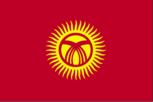
red field with a yellow sun in the center having 40 rays representing the 40 Kyrgyz tribes; on the obverse side the rays run counterclockwise, on the reverse, clockwise; in the center of the sun is a red ring crossed by two sets of three lines, a stylized representation of a "tunduk" - the crown of a traditional Kyrgyz yurt; red symbolizes bravery and valor, the sun evinces peace and wealth
Government type
parliamentary republic
Independence
31 August 1991 (from the Soviet Union)
International law organization participation
has not submitted an ICJ jurisdiction declaration; non-party state to the ICCt
International organization participation
ADB, CICA, CIS, CSTO, EAEU, EAPC, EBRD, ECO, EITI (compliant country), FAO, GCTU, IAEA, IBRD, ICAO, ICC (NGOs), ICRM, IDA, IDB, IFAD, IFC, IFRCS, ILO, IMF, Interpol, IOC, IOM, IPU, ISO (correspondent), ITSO, ITU, MIGA, NAM (observer), OIC, OPCW, OSCE, PCA, PFP, SCO, UN, UNAMID, UNCTAD, UNESCO, UNIDO, UNISFA, UNMIL, UNMISS, UNWTO, UPU, WCO, WFTU (NGOs), WHO, WIPO, WMO, WTO
Judicial branch
- highest court(s)
- Supreme Court (consists of 25 judges); Constitutional Chamber of the Supreme Court (consists of the chairperson, deputy chairperson, and 9 judges)
- judge selection and term of office
- Supreme Court and Constitutional Court judges appointed by the Supreme Council on the recommendation of the president; Supreme Court judges serve for 10 years, Constitutional Court judges serve for 15 years; mandatory retirement at age 70 for judges of both courts
- subordinate courts
- Higher Court of Arbitration; oblast (provincial) and city courts
Legal system
civil law system, which includes features of French civil law and Russian Federation laws
Legislative branch
- description
- unicameral Supreme Council or Jogorku Kenesh (90 seats statutory, current 88; 54 seats allocated for proportional division among political party lists from the national vote and 36 seats allocated for candidates running in single-seat constituencies; members serve 5-year terms; parties must receive 5% of the vote to win seats in the Council)
- election results
- percent of vote by party - Ata-Jurt Kyrgyzstan or AJK 17.3%, Ishenim 15%, Yntymak 12.1%, Alyans 9.2%, Butun Kyrgyzstan 7.8%, Yiman Nuru 6.8%, other 30%; seats by party - AJK 15, Ishenim 12, Yntymak 9, Alyns 7, Butun Kyrgyzstan 6, Yiman Nuru 5, other 36; composition - men 70, women 18, percent of women 20%
- elections
- last held on 28 November 2021 (next to be held in 2026)
National anthem
- lyrics/music
- Djamil SADYKOV and Eshmambet KULUEV/Nasyr DAVLESOV and Kalyi MOLDOBASANOV
- name
- "Kyrgyz Respublikasynyn Mamlekettik Gimni" (National Anthem of the Kyrgyz Republic)
- note
- note: adopted 1992
National heritage
- selected World Heritage Site locales
- Sulaiman-Too Sacred Mountain (c); Silk Roads: the Chang'an-Tianshan Corridor (c); Western Tien Shan (n)
- total World Heritage Sites
- 3 (2 cultural, 1 natural)
National holiday
Independence Day, 31 August (1991)
National symbol(s)
white falcon; national colors: red, yellow
Political parties and leaders
Alyans (Alliance) [Mirlan JEENCHOROEV]Ata-Jurt Kyrgyzstan (Homeland) or AJK [Aybek MATKERIMOV]Butun Kyrgyzstan (United Kyrgyzstan) [Adakhan MADUMAROV]Ishenim (Trust) [Rysbat AMATOV and Azamat DOROYEV]Social Democrats or SDK [Temirlan SULTANBEKOV]Yntymak (Unity) [Marlen MAMATALIEV]Yiman Nuru (Light of Faith) [Nurjigit KADYRBEKOV]
Suffrage
18 years of age; universal
Economy
Agricultural products
milk, potatoes, sugar beets, maize, wheat, barley, tomatoes, watermelons, onions, carrots/turnips
Budget
- expenditures
- $2.89 billion (2019 est.)
- revenues
- $2.878 billion (2019 est.)
Budget surplus (+) or deficit (-)
-3.2% (of GDP) (2017 est.)
Credit ratings
- Moody's rating
- B2 (2015)
- note
- note: The year refers to the year in which the current credit rating was first obtained.
- Standard & Poors rating
- NR (2016)
Current account balance
- Current account balance 2019
- -$1.067 billion (2019 est.)
- Current account balance 2020
- $374.257 million (2020 est.)
- Current account balance 2021
- -$743.363 million (2021 est.)
Debt - external
- Debt - external 2018
- $8.066 billion (2018 est.)
- Debt - external 2019
- $8.372 billion (2019 est.)
Economic overview
landlocked, lower-middle-income Central Asian economy; natural resource rich; growing hydroelectricity and tourism; high remittances; corruption limits investment; COVID-19 and political turmoil hurt GDP, limited public revenues, and increased spending
Exchange rates
- Currency
- soms (KGS) per US dollar -
- Exchange rates 2017
- 68.867 (2017 est.)
- Exchange rates 2018
- 68.84 (2018 est.)
- Exchange rates 2019
- 69.789 (2019 est.)
- Exchange rates 2020
- 77.346 (2020 est.)
- Exchange rates 2021
- 84.641 (2021 est.)
Exports
- Exports 2019
- $3.108 billion (2019 est.)
- Exports 2020
- $2.435 billion (2020 est.) note: data are in current year dollars
- Exports 2021
- $3.35 billion (2021 est.) note: data are in current year dollars
Exports - commodities
gold, float glass, precious metals, kidney beans, refined petroleum, scrap copper, dried fruits (2021)
Exports - partners
United Kingdom 56%, Kazakhstan 13%, Russia 13%, Uzbekistan 5% (2019)
Fiscal year
calendar year
GDP - composition, by end use
- exports of goods and services
- 39.7% (2017 est.)
- government consumption
- 18.9% (2017 est.)
- household consumption
- 85.4% (2017 est.)
- imports of goods and services
- -79% (2017 est.)
- investment in fixed capital
- 33.2% (2017 est.)
- investment in inventories
- 1.8% (2017 est.)
GDP - composition, by sector of origin
- agriculture
- 14.6% (2017 est.)
- industry
- 31.2% (2017 est.)
- services
- 54.2% (2017 est.)
GDP (official exchange rate)
$8.442 billion (2019 est.)
Gini Index coefficient - distribution of family income
- Gini Index coefficient - distribution of family income 2020
- 29 (2020 est.)
Household income or consumption by percentage share
- highest 10%
- 22.9% (2014 est.)
- lowest 10%
- 4.4%
Imports
- Imports 2019
- $5.67 billion (2019 est.)
- Imports 2020
- $4.051 billion (2020 est.) note: data are in current year dollars
- Imports 2021
- $5.919 billion (2021 est.) note: data are in current year dollars
Imports - commodities
refined petroleum, footwear, clothing and apparel, broadcasting equipment, walnuts (2019)
Imports - partners
China 53%, Russia 17%, Kazakhstan 7%, Uzbekistan 7%, Turkey 5% (2019)
Industrial production growth rate
3.1% (2021 est.)
Industries
small machinery, textiles, food processing, cement, shoes, lumber, refrigerators, furniture, electric motors, gold, rare earth metals
Inflation rate (consumer prices)
- Inflation rate (consumer prices) 2019
- 1.13% (2019 est.)
- Inflation rate (consumer prices) 2020
- 6.33% (2020 est.)
- Inflation rate (consumer prices) 2021
- 11.91% (2021 est.)
Labor force
2.478 million (2021 est.)
Population below poverty line
20.1% (2019 est.)
Public debt
- Public debt 2018
- 51.66% of GDP (2018 est.)
- Public debt 2019
- 54.23% of GDP (2019 est.)
- Public debt 2020
- 72.23% of GDP (2020 est.)
Real GDP (purchasing power parity)
- note
- note: data are in 2017 dollars
- Real GDP (purchasing power parity) 2019
- $33.949 billion (2019 est.)
- Real GDP (purchasing power parity) 2020
- $31.098 billion (2020 est.)
- Real GDP (purchasing power parity) 2021
- $32.221 billion (2021 est.)
Real GDP growth rate
- Real GDP growth rate 2019
- 4.6% (2019 est.)
- Real GDP growth rate 2020
- -8.4% (2020 est.)
- Real GDP growth rate 2021
- 3.61% (2021 est.)
Real GDP per capita
- note
- note: data are in 2017 dollars
- Real GDP per capita 2019
- $5,300 (2019 est.)
- Real GDP per capita 2020
- $4,700 (2020 est.)
- Real GDP per capita 2021
- $4,800 (2021 est.)
Reserves of foreign exchange and gold
- Reserves of foreign exchange and gold 31 December 2019
- $2.429 billion (31 December 2019 est.)
- Reserves of foreign exchange and gold 31 December 2020
- $2.812 billion (31 December 2020 est.)
- Reserves of foreign exchange and gold 31 December 2021
- $2.983 billion (31 December 2021 est.)
Taxes and other revenues
14.92% (of GDP) (2020 est.)
Unemployment rate
- Unemployment rate 2019
- 6.92% (2019 est.)
- Unemployment rate 2020
- 8.71% (2020 est.)
- Unemployment rate 2021
- 9.1% (2021 est.)
Youth unemployment rate (ages 15-24)
- female
- 27.3%
- male
- 15.6%
- total
- 19.3% (2021 est.)
Energy
Carbon dioxide emissions
- from coal and metallurgical coke
- 2.967 million metric tonnes of CO2 (2019 est.)
- from consumed natural gas
- 408,000 metric tonnes of CO2 (2019 est.)
- from petroleum and other liquids
- 4.505 million metric tonnes of CO2 (2019 est.)
- total emissions
- 7.88 million metric tonnes of CO2 (2019 est.)
Coal
- consumption
- 1.717 million metric tons (2020 est.)
- exports
- 984,000 metric tons (2020 est.)
- imports
- 481,000 metric tons (2020 est.)
- production
- 2.287 million metric tons (2020 est.)
- proven reserves
- 971 million metric tons (2019 est.)
Electricity
- consumption
- 12,324,140,000 kWh (2019 est.)
- exports
- 271 million kWh (2019 est.)
- imports
- 269 million kWh (2019 est.)
- installed generating capacity
- 4.626 million kW (2020 est.)
- transmission/distribution losses
- 2.514 billion kWh (2019 est.)
Electricity access
- electrification - rural areas
- 99.5% (2021)
- electrification - total population
- 99.6% (2021)
- electrification - urban areas
- 99.8% (2021)
Electricity generation sources
- biomass and waste
- 0% of total installed capacity (2020 est.)
- fossil fuels
- 8.5% of total installed capacity (2020 est.)
- geothermal
- 0% of total installed capacity (2020 est.)
- hydroelectricity
- 91.5% of total installed capacity (2020 est.)
- nuclear
- 0% of total installed capacity (2020 est.)
- solar
- 0% of total installed capacity (2020 est.)
- tide and wave
- 0% of total installed capacity (2020 est.)
- wind
- 0% of total installed capacity (2020 est.)
Energy consumption per capita
- Total energy consumption per capita 2019
- 35.059 million Btu/person (2019 est.)
Natural gas
- consumption
- 207.845 million cubic meters (2019 est.)
- exports
- 0 cubic meters (2021 est.)
- imports
- 191.478 million cubic meters (2019 est.)
- production
- 25.542 million cubic meters (2019 est.)
- proven reserves
- 5.663 billion cubic meters (2021 est.)
Petroleum
- crude oil and lease condensate exports
- 1,400 bbl/day (2018 est.)
- crude oil and lease condensate imports
- 8,200 bbl/day (2018 est.)
- crude oil estimated reserves
- 40 million barrels (2021 est.)
- refined petroleum consumption
- 32,100 bbl/day (2019 est.)
- total petroleum production
- 700 bbl/day (2021 est.)
Refined petroleum products - exports
2,290 bbl/day (2015 est.)
Refined petroleum products - imports
34,280 bbl/day (2015 est.)
Refined petroleum products - production
6,996 bbl/day (2015 est.)
Communications
Broadband - fixed subscriptions
- subscriptions per 100 inhabitants
- 4 (2020 est.)
- total
- 289,000 (2020 est.)
Broadcast media
state-funded public TV broadcaster NTRK has nationwide coverage; also operates Ala-Too 24 news channel which broadcasts 24/7 and 4 other educational, cultural, and sports channels; ELTR is a state-owned TV station with national reach; the switchover to digital TV in 2017 resulted in private TV station growth; approximately 20 stations are struggling to increase their own Kyrgyz-language content up to 60% of airtime, as required by law, instead of rebroadcasting primarily programs from Russian channels or airing unlicensed movies and music; several Russian TV stations also broadcast; state-funded radio stations and about 10 significant private radio stations also exist (2023)
Internet country code
.kg
Internet users
- percent of population
- 78% (2021 est.)
- total
- 5.07 million (2021 est.)
Telecommunication systems
- domestic
- fixed-line subscriptions 5 per 100; mobile-cellular subscribership up to over 130 per 100 persons (2021)
- general assessment
- the country’s telecom sector (specifically the mobile segment) has been able to prosper; Kyrgyzstan has opened up its telecom market to competition; the mobile market has achieved high levels of penetration (140% in 2021) along with a fairly competitive operating environment with four major players; mobile broadband has come along strongly, reaching over 125% penetration in 2019 before falling back slightly during the COVID-19 crisis; slow-to-moderate growth is expected for both segments in coming years, supported by the anticipated rollout of 5G services which began testing in 2022 with a pilot service to follow some time in 2023 (2022)
- international
- country code - 996; connections with other CIS (Commonwealth of Independent States, 9 members post-Soviet Republics in EU) countries by landline or microwave radio relay and with other countries by leased connections with Moscow international gateway switch and by satellite; satellite earth stations - 2 (1 Intersputnik, 1 Intelsat) (2019)
Telephones - fixed lines
- subscriptions per 100 inhabitants
- 5 (2021 est.)
- total subscriptions
- 300,000 (2021 est.)
Telephones - mobile cellular
- subscriptions per 100 inhabitants
- 130 (2021 est.)
- total subscriptions
- 8.5 million (2021 est.)
Transportation
Airports
28 (2021)
Airports - with paved runways
- 18
- note
- note: paved runways have a concrete or asphalt surface but not all have facilities for refueling, maintenance, or air traffic control; the length of a runway required for aircraft to safely operate depends on a number of factors including the type of aircraft, the takeoff weight (including passengers, cargo, and fuel), engine types, flap settings, landing speed, elevation of the airport, and average maximum daily air temperature; paved runways can reach a length of 5,000 m (16,000 ft.), but the “typical” length of a commercial airline runway is between 2,500-4,000 m (8,000-13,000 ft.)
Airports - with unpaved runways
- 10
- note
- note: unpaved runways have a surface composition such as grass or packed earth and are most suited to the operation of light aircraft; unpaved runways are usually short, often less than 1,000 m (3,280 ft.) in length; airports with unpaved runways often lack facilities for refueling, maintenance, or air traffic control
Civil aircraft registration country code prefix
EX
National air transport system
- annual passenger traffic on registered air carriers
- 709,198 (2018)
- inventory of registered aircraft operated by air carriers
- 17
- number of registered air carriers
- 5 (2020)
Pipelines
4,195 km gas (2022), 16 km oil (2022) (2022)
Ports and terminals
- lake port(s)
- Balykchy (Ysyk-Kol or Rybach'ye)(Lake Ysyk-Kol)
Railways
- broad gauge
- 424 km (2018) 1.520-m gauge
- total
- 424 km (2022)
Roadways
- total
- 34,000 km (2022)
Waterways
576 km (2022)
Military and Security
Military - note
Kyrgyzstan has been a member of the Collective Security Treaty Organization (CSTO) since 1994 and contributes troops to CSTO's rapid reaction force; it also started a relationship with NATO in 1992 and joined NATO's Partnership for Peace program in 1994the Kyrgyz military’s primary responsibility is defense of the country’s sovereignty and territory, although it also has some internal security duties; elements of the military were called out in 2020 to respond to post-election demonstrations for example, and the National Guard’s missions include counterterrorism, responding to emergencies, and the protection of government facilities; the military also participates in UN and CSTO peacekeeping missions; border disputes with Tajikistan and Uzbekistan, as well as the threat posed by militant Islamic groups, have been particular areas of concern for both the military and internal security forces; the military’s closest security partner is Russia, which provides training and material assistance, and maintains a presence in the country, including an airbase; the military also conducts training with other regional countries such as India, traditionally with a focus on counterterrorismthe Kyrgyz military was formed in 1992 from Soviet Army units then based in Kyrgyzstan following the dissolution of the USSR; while the current organization continues to be based on those former Soviet formations, specific information is limited and varied; the Army’s principal combat units are reportedly a few small Soviet-style “motor rifle” (mechanized) infantry brigades, plus brigades of mountain infantry, special forces, and artillery; the National Guard has some rapid reaction and special forces units; the Air Defense Forces reportedly have only a few operational combat helicopters (2023)
Military and security forces
Armed Forces of the Kyrgyz Republic: Land Forces, Air Defense Forces, National Guard; Internal Troops; State Committee for National Security (GKNB): State Border Service (2023)
Military and security service personnel strengths
approximately 15,000 active-duty troops (9,000 Land Forces; 3,000 Air Force/Air Defense; 3,000 National Guard) (2023)
Military equipment inventories and acquisitions
the Kyrgyz military inventory is comprised of mostly older Russian and Soviet-era equipment; Russia continues to be the leading supplier of armaments, although in recent years Kyrgyzstan has procured weapons systems from several other countries, including Belarus, Germany, and Turkey (2023)
Military expenditures
- Military Expenditures 2018
- 2.3% of GDP (2018 est.)
- Military Expenditures 2019
- 2.3% of GDP (2019 est.)
- Military Expenditures 2020
- 1.8% of GDP (2020 est.)
- Military Expenditures 2021
- 1.7% of GDP (2021 est.)
- Military Expenditures 2022
- 1.5% of GDP (2022 est.)
Military service age and obligation
18-27 years of age for compulsory or voluntary service for men in the Armed Forces or Interior Ministry; 12-month service obligation (9 months for university graduates), with optional fee-based 3-year service in the call-up mobilization reserve; women may volunteer at age 19; 16-17 years of age for military cadets, who cannot take part in military operations (2023)
Transnational Issues
Disputes - international
Kyrgyzstan-China: a 2009 treaty settled a border dispute, with Kyrgyzstan receiving the Khan Tengri Peak and Kyrgyzstan ceding to China the Uzengi-Kush area Kyrgyzstan-Kazakhstan: in January 2019, Kyrgyzstan ratified the 2017 agreement on the demarcation of the Kyrgyzstan-Kazakhstan border Kyrgyzstan-Tajikistan: as the last major Central Asian boundary dispute with lengthy undelimited sections, agreement on the lowland (NE part) of the Kyrgz-Tajik line remains highly sensitive despite recent Kyrgyz-Uzbek agreements on delimiting short sections of their shared border Kyrgyzstan-Uzbekistan: in January 2023, the presidents of Kyrgyzstan and Uzbekistan exchanged instruments of ratification for the treaty delineating their shared border
Illicit drugs
a prime transit route and transshipment route for illegal drugs transiting north from Afghanistan to Russia and Europe; illicit drugs are primarily smuggled into the country from Tajikistan
Refugees and internally displaced persons
- stateless persons
- 482 (2022)
Terrorism
Terrorist group(s)
US-designated foreign terrorist groups such as the Islamic Jihad Union, the Islamic Movement of Uzbekistan, and the Islamic State of Iraq and ash-Sham-Khorasan Province have operated in the area where the Uzbek, Kyrgyz, and Tajik borders converge and ill-defined and porous borders allow for the relatively free movement of people and illicit goods
Environment
Air pollutants
- carbon dioxide emissions
- 9.79 megatons (2016 est.)
- methane emissions
- 4.47 megatons (2020 est.)
- particulate matter emissions
- 37.58 micrograms per cubic meter (2019 est.)
Climate
dry continental to polar in high Tien Shan Mountains; subtropical in southwest (Fergana Valley); temperate in northern foothill zone
Environment - current issues
water pollution; many people get their water directly from contaminated streams and wells; as a result, water-borne diseases are prevalent; increasing soil salinity from faulty irrigation practices; air pollution due to rapid increase of traffic
Environment - international agreements
- party to
- Air Pollution, Biodiversity, Climate Change, Climate Change-Kyoto Protocol, Climate Change-Paris Agreement, Comprehensive Nuclear Test Ban, Desertification, Endangered Species, Environmental Modification, Hazardous Wastes, Ozone Layer Protection, Wetlands
- signed, but not ratified
- none of the selected agreements
Land use
- agricultural land
- 55.4% (2018 est.)
- agricultural land: arable land
- arable land: 6.7% (2018 est.)
- agricultural land: permanent crops
- permanent crops: 0.4% (2018 est.)
- agricultural land: permanent pasture
- permanent pasture: 48.3% (2018 est.)
- forest
- 5.1% (2018 est.)
- other
- 39.5% (2018 est.)
Major lakes (area sq km)
- salt water lake(s)
- Ozero Issyk-Kul 6,240 sq kmnote - second largest saline lake after the Caspian Sea; second highest mountain lake after Lake Titicaca; it is an endorheic mountain basin; although surrounded by snow capped mountains it never freezes
Major rivers (by length in km)
Syr Darya river source (shared with Tajikistan, Uzbekistan, and Kazakhstan [m] ) - 3,078 kmnote – [s] after country name indicates river source; [m] after country name indicates river mouth
Major watersheds (area sq km)
Internal (endorheic basin) drainage: Tarim Basin (1,152,448 sq km), (Aral Sea basin) Amu Darya (534,739 sq km), Syr Darya (782,617 sq km)
Revenue from coal
0.21% of GDP (2018 est.)
Revenue from forest resources
0.01% of GDP (2018 est.)
Total renewable water resources
23.62 billion cubic meters (2020 est.)
Total water withdrawal
- agricultural
- 7.1 billion cubic meters (2020 est.)
- industrial
- 340 million cubic meters (2020 est.)
- municipal
- 220 million cubic meters (2020 est.)
Urbanization
- rate of urbanization
- 2.05% annual rate of change (2020-25 est.)
- urban population
- 37.8% of total population (2023)
Waste and recycling
- municipal solid waste generated annually
- 1,113,300 tons (2015 est.)