1992 Edition
CIA World Factbook 1992 (Project Gutenberg)
Geography
Climate
dry continental to polar in high Tien Shan; subtropical in south (Fergana Valley)
Coastline
none - landlocked
Comparative area
slightly smaller than South Dakota
Disputes
territorial dispute with Tajikistan on southern boundary in Isfara Valley area
Environment
NA
Land area
191,300 km2
Land boundaries
3,878 km; China 858 km, Kazakhstan 1,051 km, Tajikistan 870 km, Uzbekistan 1,099 km
Land use
NA% arable land; NA% permanent crops; NA% meadows and pastures; NA% forest and woodland; NA% other; includes NA% irrigated
Maritime claims
none - landlocked
Natural resources
small amounts of coal, natural gas, oil; also nepheline, rare earth metals, mercury, bismuth, gold, uranium, lead, zinc, hydroelectric power
Terrain
peaks of Tien Shan rise to 7,000 meters, and associated valleys and basins encompass entire nation
Total area
198,500 km2
People and Society
Birth rate
31 births/1,000 population (1992)
Death rate
8 deaths/1,000 population (1992)
Ethnic divisions
Kirghiz 52%, Russian 21%, Uzbek 13%, other 14%
Infant mortality rate
56 deaths/1,000 live births (1991)
Labor force
1,894,000 (1989); agriculture 33%, other 49%, industry 18%, other NA% (1988)
Languages
Kirghiz (Kyrgyz)
Life expectancy at birth
62 years male, 71 years female (1992)
Literacy
NA% (male NA%, female NA%) age 15 and over can read and write
Nationality
noun - Kirghiz(s); adjective - Kirghiz
Net migration rate
- 8.5 migrants/1,000 population (1992)
Organized labor
NA
Population
4,567,875 (July 1992), growth rate 1.9% (1992)
Religions
Muslim 70%, Russian Orthodox NA%
Total fertility rate
4.0 children born/woman (1992)
Government
Administrative divisions
6 oblasts (oblastey, singular - oblast'); Chu, Dzhalal-Abad, Issyk-Kul', Naryn, Osh, Talas; note - an oblast has the same name as its administrative center
Capital
Bishkek (formerly Frunze)
Chief of State
President Askar AKAYEV (since 28 October 1990), Vice President Felix KULOV (since 2 March 1992)
Constitution
adopted NA, effective 20 April 1978, amended 23 September 1989; note - new constitution is being drafted
Diplomatic representation
Ambassador NA; Chancery at NW, Washington, DC 200__; telephone (202) NA; there are Consulates General in NA; US: Charge Ralph Bresler; Interim Chancery at #66 Derzhinskiy Prospekt;
Executive branch
president, Cabinet of Ministers
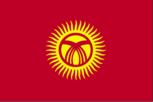
Flag
red-orange field with yellow sun in center with folk motif medallion inscribed
Head of Government
Prime Minister Tursenbek CHYNGYSHEV (since 2 March 1992)
Independence
31 August 1991 (from Soviet Union; formerly Kirghiz Soviet Socialist Republic)
Judicial branch
Supreme Court
Leaders
President Askar AKAYEV; Vice President Felix KULOV; Chairman, Supreme Soviet, Medetkav SHERIMKULOV; Spiritual leader of Kyrgyz Muslims, Sadykzhav KAMALOV
Legal system
NA
Legislative branch
unicameral body or bicameral
Long-form name
Republic of Kyrgyzstan
Member of
CIS, CSCE, IMF, UN, UNCTAD
National holiday
NA
Other political or pressure groups
National Unity Democratic Movement; Peasant Party; Council of Free Trade Union; Union of Entrepreneurs
Political parties and leaders
Kyrgyzstan Democratic Movement, Zhypur ZHEKSHEYEV, Kazat AKMAKOV, and Toshubek TURGANALIEV, co-chairmen of popular front coalition of 40 informal groups for Democratic Renewal and Civic Accord, 117-man pro-Akayev parliamentary faction; Civic Accord, Coalition representing nonnative minority groups; National Revived Asaba (Banner) Party, Asan ORMUSHEV, chairman; Communist Party now banned
President
last held 12 October 1991 (next to be held NA 1996); results - AKAYEV won in uncontested election with 95% of vote with 90% of electorate voting; note - Republic Supreme Soviet elections held 25 February 1990; presidential elections held first by Supreme Soviet 28 October 1990, then by popular vote 12 October 1991
Residence
Hotel Pishpek (mailing address is APO AE 09862); telephone 8-011-7-3312-22-22-70
Suffrage
universal at age 18
Supreme Soviet
note - last held 25 February 1990 (next to be held no later than November 1994); results - Commnunists (310) 90%, seats - (350 total)
Type
republic
Economy
Agriculture
wool, tobacco, cotton, livestock (sheep and goats) and cattle, vegetables, meat, grapes, fruits and berries, eggs, milk, potatoes
Budget
revenues $NA million; expenditures $NA million
Currency
as of May 1992, retaining ruble as currency
Economic aid
US commitments, including Ex-Im (FY70-87), $NA billion; Western (non-US) countries, ODA and OOF bilateral commitments (1970-86), $NA million; Communist countries (1971-86), $NA million
Electricity
NA kW capacity; 13,900 million kWh produced, 3,232 kWh per capita (1991)
Exports
$115 million (1990) commodities: wool, chemicals, cotton, ferrous and nonferrous metals, shoes, machinery, tobacco partners: Russia 70%, Ukraine, Uzbekistan, Kazakhstan, and others
External debt
$650 million (1991)
Fiscal year
calendar year
GDP
purchasing power equivalent - $NA billion, per capita $NA; real growth rate -5% (1991)
Illicit drugs
poppy cultivation legal
Imports
$1.5 million (c.i.f., 1990) commodities: lumber, industrial products, ferrous metals, fuel, machinery, textiles, footwear
Industrial production
growth rate 0.1% (1991)
Industries
small machinery, textiles, food-processing industries, cement, shoes, sawn logs, steel, refrigerators, furniture, electric motors, gold, and rare earth metals
Inflation rate (consumer prices)
88% (1991)
Overview
Kyrgyzstan's small economy (less than 1% of the total for the former Soviet Union) is oriented toward agriculture, producing mainly livestock such as goats and sheep, as well as cotton, grain, and tobacco. Industry, concentrated around Bishkek, produces small quantities of electric motors, livestock feeding equipment, washing machines, furniture, cement, paper, and bricks. Mineral extraction is small, the most important minerals being rare earth metals and gold. Kyrgyzstan is a net importer of most types of food and fuel but is a net exporter of electricity. By early 1991, the Kirghiz leadership had accelerated reform, primarily by privatizing business and granting life-long tenure to farmers. In 1991 overall industrial and livestock output declined substantially.
Unemployment rate
NA%
Communications
Airports
NA
Civil air
NA
Highways
30,300 km total; 22,600 km paved or graveled, 7,700 km earth(1990)
Inland waterways
NA km perennially navigable
Pipelines
NA
Ports
none - landlocked
Railroads
370 km; does not include industrial lines (1990)
Telecommunications
poorly developed; connections with other CIS countries by landline or microwave and with other countries by leased connections with Moscow international gateway switch; satellite earth stations - Orbita and INTELSAT (TV receive only)
Military and Security
Branches
Republic Security Forces (internal and border troops); National Guard, Civil Defense; CIS Forces (Ground, Air, and Air Defense)
Defense expenditures
$NA, NA% of GDP
Manpower availability
males 15-49, NA fit for military service; NA reach military age (18) annually