1987 Edition
CIA World Factbook 1987 (Internet Archive)
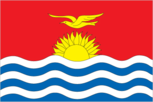
Geography
Climate
tropical; marine, hot and humid, moderated by trade winds
Coastline
1,143 km
Comparative area
about four times the size of Washington, D. C.
Environment
typhoons can occur any time, but usually November to March
Exclusive fishing zone
200 nm
Land use
0% arable land; 51% permanent crops; 0% meadows and pastures; 3% forest and woodland; 46% other
Special notes
Banaba or Ocean Island is one of three great phosphate rock islands in the Pacific (others are Makatea in French Polynesia and Nauru)
Terrain
mostly low lying coral atolls surrounded by extensive reefs
Territorial sea
12 nm
Total area
- —1200 km North Pacific Ocean ee Ei ° ee {>—* TARAWA Kiritimati © As faba tae , (Christmas) wa Kiribati . cone (Gilbert Rawaki ‘ o islands) (Phoenix » tsfands} South Pacific Ocean
- 710 km; land area: 710 km?
People and Society
Ethnic divisions
Micronesian
Labor force
7,870 economically active (1985 est.)
Language
English (official), Gilbertese
Literacy
90%
Nationality
noun—Kiribatian(s), adjective—Kiribati
Organized labor
Kiribati Trades Union Congress—2,500 members
Population
66,441 (July 1987), average annual growth rate 1.82%
Religion
48% Roman Catholic, 45% Protestant (Congregational), some SeventhDay Adventist and Baha’i
Government
Administrative divisions
20 constituencies
Branches
unicameral legislature—National Assembly (comprised of 36 elected members and one nominated representative of the Banaban community); nationally elected President
Elections
every four years Political parties and leaders: Gilbertese National Party, Christian Democratic Party
Government leader
leremia T. TABAI, President (since July 1979)
Member of
ADB, Commonwealth, ESCAP (associate member), GATT (de facto), ICAO, IMF, SPF, WHO
Official name
Republic of Kiribati
Type
republic Capital; Tarawa
Economy
Agriculture
coconuts, copra; subsistence crops of roots and tubers, vegetables, melons, bananas; pigs, chickens; domestic fishing
Aid
Western (non-US) commitments ODA and OOF (1970-84), $205 million; Australia (1970-84), $28 million
Budget
A29.7 million (1986 est.)
Electric power
2,750 kW capacity; 8 million kWh produced, 125 kWh per capita
Exports
A$4.10 (1986 est.); 54% copra, 18% fish; phosphate, formerly 80% of exports, exhausted in 198)
Fishing
catch 24,212 metric tons (1983)
GDP
A$25.839 million (1985 est.), $410 per capita
Imports
A$32.64 million (1986 est.); foodstuffs, fuel, transportation equipment
Industry
formerly phosphate production (supply exhausted by mid-1981)
Major trade partners
Australia, New Zealand, UK, Japan, US, Papua New Guinea, Fiji
Monetary conversion rate
$1.50 Australian=US$1 (February 1987); Australian dollar is the official currency
Communications
Airfields
21 total; 18 usable; 4 with permanent-surface runways, 4 with runways 1,220-2,489 m
Civil air
2 Trislanders; no major transport aircraft
Highways
640 km of motorable roads
Inland waterways
small network of canals, totaling 5 km, in Line Islands
Ports
main ports are at Banaba and Betio (Tarawa)
Railroads
none
Telecommunications
1,400 telephones (2.83 per 100 popl.); 1 AM station; 1 satellite ground station