1988 Edition
CIA World Factbook 1988 (Internet Archive)
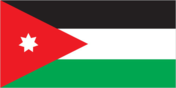
Geography
Administrative divisions
eight governorates under centrally appointed officials
Boundary disputes
- separated from Israel by 1949 Armistice Line; West Bank and Gaza Strip are Israeli occupied with status to be determined
- none; international boundary and Administrative Boundary with Sudan; possible claim by Somalia based on unification of ethnic Somalis
Branches
King holds balance of power; Prime Minister exercises executive authority in name of King; Cabinet appointed by Jordan (continued) Kenya King and responsible to parliament; bicameral parliament with House of Representatives, dissolved by King in February 1976, and reconvened in January 1984, following national elections; Senate last appointed by King in January 1984; secular court system based on differing legal systems of the former Transjordan and Palestine; law Western in concept and structure; Sharia (religious) courts for Muslims, and religious community council courts for non-Muslim communities; desert police carry out quasi-judicial functions in desert areas
Budget
revenues, 143,680 million pounds; expenditures, 115,902 million pounds (1983)
Capital
Amman
Climate
- mostly arid desert; rainy season in west (November to March)
- varies from tropical along coast to arid in interior
- tropical; marine, hot and humid, moderated by trade winds
Coastline
- 26 km
- 536 km
- 1,143 km
Communists
party actively repressed, membership estimated at less than 500
Comparative area
- about the size of Minnesota
- slightly smaller than Texas
- about four times the size of Washington, D. C.
Environment
- lack of natural water resources; deforestation; overgrazing; soil erosion; desertification
- unique physiography supports abundant and varied wildlife of immense scientific and economic value; deforestation; soil erosion; desertification
- typhoons can occur any time, but usually November to March
Ethnic divisions
21% Kikuyu, 14% Luhya, 13% Luo, 11% Kalenjin, 11% Kamba, 6% Kisii, 6% Meru, 1% Asian, European, and Arab
Exclusive fishing zone
200 nm
Extended economic zone
200 nm
Fiscal year
31 April1 May
Government leaders
HUSSEIN I, King (since August 1952); Zayd al-RIFA'I, Prime Minister (since April 1985)
Infant mortality rate
59/1,000 (1985)
Labor force
7.4 million; about 1.1 million wage earners; 50% public sector, 18% industry and commerce, 17% agriculture, 13% services
Land boundaries
- 1,770 km total (before 1967 war)
- 3,368 km total
Land use
- 4% arable land; .5% permanent crops; 1% meadows and pastures; .5% forest and woodland; 94% other; includes .5% irrigated
- 3% arable land; 1% permanent crops; 7% meadows and pastures; 4% forest and woodland; 85% other; includes NEGL% irrigated
- 0% arable land; 51% permanent crops; 0% meadows and pastures; 3% forest and woodland; 46% other
Language
English and Swahili (official); numerous indigenous languages
Legal system
based on Islamic law and French codes; constitution adopted 1952; judicial review of legislative acts in a specially provided High Tribunal; has not accepted compulsory ICJ jurisdiction
Life expectancy
men 53, women 58. 1
Literacy
47%
Member of
Arab League, FAO, G-77, IAEA, IBRD, ICAO, IDA, IDE— Islamic Development Bank, IFAD, IFC, ILO, IMF, IMO, INTELSAT, INTERPOL, IPU, ITU, NAM, QIC, UN, UNESCO, UPU, WFTU, WHO, WIPO, WMO, WTO
Monetary conversion rate
.70 Jersey pound=.70 pound sterling=US$l (November 1986)
National holiday
Independence Day, 25 May
Nationality
noun— Kenyan(s); adjectiveKenyan
Organized labor
about 390,000
Population
22,377,802 (July 1987), average annual growth rate 4.22%
Religion
38% Protestant, 28% Catholic, 26% indigenous beliefs, 6% Muslim
Special notes
- none
- none
- Banaba or Ocean Island is one of three great phosphate rock islands in the Pacific (others are Makatea in French Polynesia and Nauru)
Suffrage
universal adult at age 20 Political parties and leaders: political party activity illegal since 1957
Terrain
- mostly high desert plateau in east; Great Rift Valley separates East and West Banks of Jordan River
- low plains rise to central highlands bisected by Great Rift Valley; fertile plateau in west
- mostly low lying coral atolls surrounded by extensive reefs
Territorial sea
- 3 nm
- 12 nm
- 12 nm
Total area
- 97,740 km2; land area: 97,180 km2
- 582,650 km2; land area: 569,250 km2
- 710 km2; land area: 710 km2
Total area
on page 276)
Type
constitutional monarchy
People and Society
Ethnic divisions
- 98% Arab, 1% Circassian, 1% Armenian
- Micronesian
Infant mortality rate
62/1,000 (1983)
Labor force
- 580,000 (1983 est); 20% agriculture, 20% manufacturing and mining
- 7,870 economically active (1985 est.)
Language
- Arabic (official); English widely understood among upper and middle classes
- English (official), Gilbertese
Life expectancy
61.7
Literacy
about 71%
Nationality
- noun — Jordanian(s); adjective—Jordanian
- noun — Kiribatian(s); adjective— Kiribati
Organized labor
- about 10% of labor force
- Kiribati Trades Union Congress — 2,500 members
Population
- 2,761,695 (July 1987), average annual growth rate 3.65%
- 66,441 (July 1987), average annual growth rate 1.82%
Religion
- 95% Sunni Muslim, 5% Christian
- 48% Roman Catholic, 45% Protestant (Congregational), some SeventhDay Adventist and Baha'i
Government
Administrative divisions
- seven provinces plus Nairobi area
- 20 constituencies
Branches
- President and Cabinet responsible to unicameral legislature (National Assembly) of 200 seats, 188 directly elected by constituencies and 12 appointed by the President; High Court, with Chief Justice and at least 1 1 justices, has unlimited original jurisdiction to hear and determine any civil or criminal proceeding; provision for system of courts of appeal
- unicameral legislature — National Assembly (comprised of 36 elected members and one nominated representative of the Banaban community); nationally elected President
Capital
- Nairobi
- Tarawa
Communists
may be a few Communists and sympathizers
Elections
- Assembly at least every five years; present National Assembly and President elected September 1983 Political party and leader: Kenya African National Union (KANU), Kenya's sole legal political party, Daniel T. arap Moi, President
- every four years Political parties and leaders: Gilbertese National Party, Christian Democratic Party
Government leader
- Daniel T. arap MOI, President (since 1978)
- leremia T. TABAI, President (since July 1979)
Legal system
based on English common law, tribal law, and Islamic law; constitution enacted 1963; judicial review in High Court; accepts compulsory ICJ jurisdiction, with reservations; constitutional amendment in 1982 made Kenya a de jure oneparty state
Member of
- AfDB, Commonwealth, FAO, G-77, GATT, IAEA, IBRD, ICAO, ICO, IDA, IFAD, IFC, ILO, IMF, IMO, INTELSAT, INTERPOL, IRC, ISO, ITU, IWC— International Wheat Council, NAM, OAU, UN, UNDP, UNESCO, UPU, WHO, WIPO, WMO, WTO
- ADB, Commonwealth, ESCAP (associate member), GATT (de facto), ICAO, IMF, SPF, WHO
National holiday
Jamhuri Day, 12 December
Official name
- Hashemite Kingdom of
- Republic of Kenya
- Republic of Kiribati
Other political or pressure groups
labor unions
Suffrage
universal over age 21
Type
- republic within Commonwealth
- republic
Voting strength
KANU holds all seats in the National Assembly
Economy
Agriculture
- vegetables, fruits, olive oil, wheat; self-sufficient in few foodstuffs
- main cash crops — coffee, tea, sisal, pyrethrum, cotton, livestock; food crops — corn, wheat, sugarcane, rice, cassava; largely self-sufficient in food
- coconuts, copra; subsistence crops of roots and tubers, vegetables, melons, bananas; pigs, chickens; domestic fishing
Aid
- US, including Ex-Im (1970-84), $1.3 billion; Western (non-US) countries, ODA and OOF (1970-84), $938 million; Communist countries (1970-85), $71 million
- Western (non-US) commitments ODA and OOF (1970-84), $205 million; Australia (1970-84), $28 million
Budget
- total revenues, $1,836 million; current expenditures, $1,267 million; capital expenditures, $675 million (1984)
- as percent of GDP— revenues and grants 24%; total expenditures and net lending - 28% (1985/86 est.)
- A29.7 million (1986 est.)
Electric power
- 972,000 kW capacity; 2,840 million kWh produced, 1,030 kWh per capita (1986)
- 556,000 kW capacity; 1,950 million kWh produced, 90 kWh per capita (1986)
- 2,750 kW capacity; 8 million kWh produced, 125 kWh per capita
Exports
- $789 million (f.o.b., 1985); fruits and vegetables, phosphates, fertilizers
- $942 million (f.o.b., 1985); reexporting of petroleum products, coffee, tea, sisal, livestock products, pyrethrum, soda ash, wattle-bark tanning extract
- A$4.10 (1986 est.); 54% copra, 18% fish; phosphate, formerly 80% of exports, exhausted in 1981
External debt
$3.7 billion, debt service ratio 36% (1985 est.)
Fiscal year
- calendar year
- 1 July-30 June
Fishing
catch 24,212 metric tons (1983)
GDP
- $4.8 billion (1985), $230 per capita; real growth rate, 4.1% (1985 est.)
- A$25.839 million (1985 est.), $410 per capita
GNP
$4.9 billion, $1,900 per capita; 2.0% real growth rate (1984)
Imports
- $2,733 million (c.i.f., 1985); crude oil, petroleum, textiles, capital goods, motor vehicles, foodstuffs
- $1,289 million (f.o.b., 1985); machinery, transport equipment, crude oil, paper and paper products, iron and steel products, and textiles
- A$32.64 million (1986 est.); foodstuffs, fuel, transportation equipment
Industry
formerly phosphate production (supply exhausted by mid1981)
Major industries
- phosphate mining, petroleum refining, cement production, light manufacturing
- small-scale consumer goods (plastic, furniture, batteries, textiles, soap, cigarettes, flour), agricultural processing, oil refining, cement, tourism
Major trade partners
- EC, Japan, Middle East, US, Rwanda, Uganda
- Australia, New Zealand, UK, Japan, US, Papua New Guinea, Fiji
Military transfers
US (FY70-85), $2.2 billion
Monetary conversion rate
- .35 Jordanian dinar=US$l (November 1986)
- 16.15 Kenyan shillings=US$l (October 1986)
- $1.50 Australian=US$l (February 1987); Australian dollar is the official currency
Natural resources
- phosphates, potash, shale oil
- gold, limestone, diotomite, salt barytes, magnesite, feldspar, sapphires, fluorspar, garnets, wildlife, land
Communications
Airfields
- 1 total, 1 usable with permanentsurface runways 1,220-2,439 m (St. Peter)
- 21 total, 19 usable; 14 with permanent-surface runways; 2 with runways over 3,659 m, 14 with runways 2,440-3,659 m, 1 with runways 1,2202,439 m
- 225 total, 205 usable; 10 with permanent-surface runways; 2 with runways over 3,659 m, 4 with runways 2,440-3,659 m, 47 with runways 1,220-2,439 m
- 21 total; 18 usable; 4 with permanent-surface runways, 4 with runways 1,220-2,439 m
Branches
- Jordan Arab Army, Royal Jordanian Air Force, Royal Jordanian Coast Guard
- Kenya Army, Kenya Navy, Air Force; paramilitary General Service Unit
Civil air
- 28 major transport aircraft
- 10 major transport aircraft
- 2 Trislanders; no major transport aircraft
Highways
- 6,332 total; 4,837 paved, 1,495 gravel and crushed stone
- 64,590 km total; 7,000 km paved, 4,150 km gravel, remainder improved earth
- 640 km of motorable roads
Inland waterways
- part of Lake Victoria system is within boundaries of Kenya; principal inland port is at Kisumu
- small network of canals, totaling 5 km, in Line Islands
Military manpower
- males 15-49, 639,000; 456,000 fit for military service; 36,000 reach military age (18) annually Victoria 2OOkm Sec regional mip VII , Indian Ocean
- males 15-49, 4,554,000; 2,811,000 fit for military service; no conscription Kiribati North Pacific Ocean Banaba r— * TARAWA v., Kiribati (Gilbert Islands) Kiritimati (Christmas) Rawaki (Phoeni* Islands) South Pacific Ocean See region*) mftp X
Note
the war between Israel and the Arab states in June 1967 ended with Israel in control of the West Bank; as stated in the 1978 Camp David Accords and reaffirmed by the President's 1 September 1982 peace initiative, the final status of the West Bank and Gaza Strip, their relationship with their neighbors, and a peace treaty between Israel and Jordan are to be negotiated among the concerned parties; Camp David further specifies that these negotiations will resolve the location of the respective boundaries; pending the completion of this process, it is US policy that the final status of the West Bank and Gaza Strip has yet to be determined
Pipelines
- crude oil, 209 km
- refined products, 483 km
Ports
- Saint Helier, Gorey, St. Aubin
- 1 major (Al 'Aqabah)
- 1 major (Mombasa)
- main ports are at Banaba and Betio (Tarawa)
Railroads
- none
- 817 km 1.050-meter gauge, single track
- 2,040 km 1.000-meter gauge
- none
Telecommunications
- telephones in service, 61,400 (80.9 per 100 popl.); 1 radio station, 1 TV station with 4 channels Defense Forces Defense is the responsibility of the United Kingdom
- adequate system of radio-relay, cable, and radio; 81,500 telephones (3 per 100 popl.); 3 AM, 2 FM, 24 TV stations; 1 Atlantic Ocean INTELSAT station, 1 Indian Ocean INTELSAT station; 1 ARABSAT station; coaxial cable and radio-relay to Iraq, Saudi Arabia, and Syria; radio-relay to Lebanon inactive Defense Forces
- in top group of African systems; consists of radio-relay links, open-wire lines, and radiocommunication stations; 231,000 telephones (1.1 per 100 popl.); 11 AM, 4 FM, 4 TV stations; 1 Atlantic and 1 Indian Ocean satellite station Defense Forces
- 1,400 telephones (2.33 per 100 popl.); 1 AM station; 1 satellite ground station