2010 Edition
CIA World Factbook 2010 (Project Gutenberg)
Introduction
Background
In 1603, after decades of civil warfare, the Tokugawa shogunate (a military-led, dynastic government) ushered in a long period of relative political stability and isolation from foreign influence. For more than two centuries this policy enabled Japan to enjoy a flowering of its indigenous culture. Japan opened its ports after signing the Treaty of Kanagawa with the US in 1854 and began to intensively modernize and industrialize. During the late 19th and early 20th centuries, Japan became a regional power that was able to defeat the forces of both China and Russia. It occupied Korea, Formosa (Taiwan), and southern Sakhalin Island. In 1931-32 Japan occupied Manchuria, and in 1937 it launched a full-scale invasion of China. Japan attacked US forces in 1941 - triggering America's entry into World War II - and soon occupied much of East and Southeast Asia. After its defeat in World War II, Japan recovered to become an economic power and an ally of the US. While the emperor retains his throne as a symbol of national unity, elected politicians hold actual decision-making power. Following three decades of unprecedented growth, Japan's economy experienced a major slowdown starting in the 1990s, but the country remains a major economic power.
Geography
Area
- land
- 364,485 sq km
- total
- 377,915 sq km
- water
- 13,430 sq km note: includes Bonin Islands (Ogasawara-gunto), Daito-shoto, Minami-jima, Okino-tori-shima, Ryukyu Islands (Nansei-shoto), and Volcano Islands (Kazan-retto)
Area - comparative
slightly smaller than California
Climate
varies from tropical in south to cool temperate in north
Coastline
29,751 km
Elevation extremes
- highest point
- Fujiyama 3,776 m
- lowest point
- Hachiro-gata -4 m
Environment - current issues
air pollution from power plant emissions results in acid rain; acidification of lakes and reservoirs degrading water quality and threatening aquatic life; Japan is one of the largest consumers of fish and tropical timber, contributing to the depletion of these resources in Asia and elsewhere
Environment - international agreements
- party to
- Antarctic-Environmental Protocol, Antarctic-Marine Living Resources, Antarctic Seals, Antarctic Treaty, Biodiversity, Climate Change, Climate Change-Kyoto Protocol, Desertification, Endangered Species, Environmental Modification, Hazardous Wastes, Law of the Sea, Marine Dumping, Ozone Layer Protection, Ship Pollution, Tropical Timber 83, Tropical Timber 94, Wetlands, Whaling signed, but not ratified: none of the selected agreements
Freshwater withdrawal (domestic/industrial/agricultural)
- per capita
- 690 cu m/yr (2000)
- total
- 88.43 cu km/yr (20%/18%/62%)
Geographic coordinates
36 00 N, 138 00 E
Geography - note
strategic location in northeast Asia
Irrigated land
25,920 sq km (2003)
Land boundaries
0 km
Land use
- arable land
- 11.64%
- other
- 87.46% (2005)
- permanent crops
- 0.9%
Location
Eastern Asia, island chain between the North Pacific Ocean and the Sea of Japan, east of the Korean Peninsula
Map references
Asia
Maritime claims
- contiguous zone
- 24 nm
- exclusive economic zone
- 200 nm
- territorial sea
- 12 nm; between 3 nm and 12 nm in the international straits - La Perouse or Soya, Tsugaru, Osumi, and Eastern and Western Channels of the Korea or Tsushima Strait
Natural hazards
- many dormant and some active volcanoes; about 1,500 seismic occurrences (mostly tremors) every year; tsunamis; typhoons
- volcanism
- both Unzen (elev. 1,500 m, 4,621 ft) and Sakura-jima (elev. 1,117 m, 3,665 ft), which lies near the densely populated city of Kagoshima, have been deemed "Decade Volcanoes" by the International Association of Volcanology and Chemistry of the Earth's Interior, worthy of study due to their explosive history and close proximity to human populations; other notable historically active volcanoes include Asama, Honshu Island's most active volcano, Aso, Bandai, Fuji, Iwo-Jima, Kikai, Kirishima, Komaga-take, Oshima, Suwanosejima, Tokachi, Yake-dake, and Usu
Natural resources
negligible mineral resources, fish note: with virtually no energy natural resources, Japan is the world's largest importer of coal and liquefied natural gas, as well as the second largest importer of oil
Terrain
mostly rugged and mountainous
Total renewable water resources
430 cu km (1999)
People and Society
Age structure
0-14 years: 13.5% (male 8,804,465/female 8,344,800) 15-64 years: 64.3% (male 41,187,425/female 40,533,876) 65 years and over: 22.2% (male 11,964,694/female 16,243,419) (2010 est.)
Birth rate
7.41 births/1,000 population (2010 est.)
Death rate
9.83 deaths/1,000 population (July 2010 est.)
Education expenditures
3.7% of GDP (2007)
Ethnic groups
Japanese 98.5%, Koreans 0.5%, Chinese 0.4%, other 0.6% note: up to 230,000 Brazilians of Japanese origin migrated to Japan in the 1990s to work in industries; some have returned to Brazil (2004)
HIV/AIDS - adult prevalence rate
less than 0.1% (2003 est.)
HIV/AIDS - deaths
fewer than 100 (2007 est.)
HIV/AIDS - people living with HIV/AIDS
9,600 (2007 est.)
Infant mortality rate
- female
- 2.58 deaths/1,000 live births (2010 est.)
- male
- 2.98 deaths/1,000 live births
- total
- 2.79 deaths/1,000 live births
Languages
Japanese
Life expectancy at birth
- female
- 85.66 years (2010 est.)
- male
- 78.87 years
- total population
- 82.17 years
Literacy
- definition: age 15 and over can read and write
- female
- 99% (2002)
- male
- 99%
- total population
- 99%
Median age
- female
- 46.5 years (2010 est.)
- male
- 42.9 years
- total
- 44.6 years
Nationality
- adjective
- Japanese
- noun
- Japanese (singular and plural)
Net migration rate
0 migrant(s)/1,000 population
Population
126,804,433 (July 2010 est.)
Population growth rate
-0.242% (2010 est.)
Religions
Shintoism 83.9%, Buddhism 71.4%, Christianity 2%, other 7.8% note: total adherents exceeds 100% because many people belong to both Shintoism and Buddhism (2005)
School life expectancy (primary to tertiary education)
- female
- 15 years (2008)
- male
- 15 years
- total
- 15 years
Sex ratio
- at birth
- 1.056 male(s)/female under 15 years: 1.06 male(s)/female 15-64 years: 1.02 male(s)/female 65 years and over: 0.74 male(s)/female
- total population
- 0.95 male(s)/female (2010 est.)
Total fertility rate
1.2 children born/woman (2010 est.)
Urbanization
- rate of urbanization
- 0.2% annual rate of change (2005-10 est.)
- urban population
- 66% of total population (2008)
Government
Administrative divisions
47 prefectures; Aichi, Akita, Aomori, Chiba, Ehime, Fukui, Fukuoka, Fukushima, Gifu, Gunma, Hiroshima, Hokkaido, Hyogo, Ibaraki, Ishikawa, Iwate, Kagawa, Kagoshima, Kanagawa, Kochi, Kumamoto, Kyoto, Mie, Miyagi, Miyazaki, Nagano, Nagasaki, Nara, Niigata, Oita, Okayama, Okinawa, Osaka, Saga, Saitama, Shiga, Shimane, Shizuoka, Tochigi, Tokushima, Tokyo, Tottori, Toyama, Wakayama, Yamagata, Yamaguchi, Yamanashi
Capital
- geographic coordinates
- 35 41 N, 139 45 E
- name
- Tokyo
- time difference
- UTC+9 (14 hours ahead of Washington, DC during Standard Time)
Constitution
3 May 1947
Country name
- conventional long form
- none
- conventional short form
- Japan
- local long form
- Nihon-koku/Nippon-koku
- local short form
- Nihon/Nippon
Diplomatic representation from the US
- chief of mission
- Ambassador John V. ROOS
- consulate(s)
- Fukuoka, Nagoya
- consulate(s) general
- Naha (Okinawa), Osaka-Kobe, Sapporo
- embassy
- 1-10-5 Akasaka, Minato-ku, Tokyo 107-8420
- FAX
- [81] (03) 3505-1862
- mailing address
- Unit 9800, Box 300, APO AP 96303-0300
- telephone
- [81] (03) 3224-5000
Diplomatic representation in the US
- chancery
- 2520 Massachusetts Avenue NW, Washington, DC 20008
- chief of mission
- Ambassador Ichiro FUJISAKI
- consulate(s)
- Anchorage, Nashville
- consulate(s) general
- Atlanta, Boston, Chicago, Denver, Detroit, Agana (Guam), Honolulu, Houston, Los Angeles, Miami, New York, Portland (Oregon), San Francisco, Seattle
- FAX
- [1] (202) 328-2187
- telephone
- [1] (202) 238-6700
Executive branch
- cabinet
- Cabinet is appointed by the prime minister (For more information visit the World Leaders website )
- chief of state
- Emperor AKIHITO (since 7 January 1989)
- elections
- Diet designates the prime minister; constitution requires that the prime minister commands parliamentary majority; following legislative elections, the leader of majority party or leader of majority coalition in House of Representatives usually becomes prime minister; the monarchy is hereditary
- head of government
- Prime Minister Naoto KAN (since 8 June 2010)
Flag description
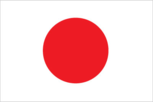
white with a large red disk (representing the sun without rays) in the center
Government type
a parliamentary government with a constitutional monarchy
Independence
3 May 1947 (current constitution adopted as amendment to Meiji Constitution); notable earlier dates: 660 B.C. (traditional date of the founding of the nation by Emperor JIMMU); 29 November 1890 (Meiji Constitution provides for constitutional monarchy)
International organization participation
ADB, AfDB (nonregional member), APEC, ARF, ASEAN (dialogue partner), Australia Group, BIS, CERN (observer), CICA (observer), CP, EAS, EBRD, FAO, FATF, G-20, G-5, G-7, G-8, G-10, IADB, IAEA, IBRD, ICAO, ICC, ICCt, ICRM, IDA, IEA, IFAD, IFC, IFRCS, IHO, ILO, IMF, IMO, IMSO, Interpol, IOC, IOM, IPU, ISO, ITSO, ITU, ITUC, LAIA (observer), MIGA, NEA, NSG, OAS (observer), OECD, OPCW, OSCE (partner), Paris Club, PCA, PIF (partner), SAARC (observer), SECI (observer), UN, UNCTAD, UNDOF, UNESCO, UNHCR, UNIDO, UNMIS, UNRWA, UNWTO, UPU, WCO, WFTU, WHO, WIPO, WMO, WTO, ZC
Judicial branch
Supreme Court (chief justice is appointed by the monarch after designation by the cabinet; all other justices are appointed by the cabinet)
Legal system
modeled after European civil law systems with English-American influence; judicial review of legislative acts in the Supreme Court; accepts compulsory ICJ jurisdiction with reservations
Legislative branch
- bicameral Diet or Kokkai consists of the House of Councillors or Sangi-in (242 seats - members elected for fixed six-year terms; half reelected every three years; 146 members in multi-seat constituencies and 96 by proportional representation) and the House of Representatives or Shugi-in (480 seats - members elected for maximum four-year terms; 300 in single-seat constituencies; 180 members by proportional representation in 11 regional blocs); the prime minister has the right to dissolve the House of Representatives at any time with the concurrence of the cabinet
- election results
- House of Councillors - percent of vote by party - DPJ 31.6%, LDP 24.1%, YP 13.6%, NK 13.1%, JCP 6.1%, SDP 3.8%, others 7.7%; seats by party - DPJ 106, LDP 84, NK 19, YP 11, JCP 6, SDP 4, others 12 House of Representatives - percent of vote by party (by proportional representation) - DPJ 42.4%, LDP 26.7%, NK 11.5%, JCP 7.0%, SDP 4.3%, others 8.1%; seats by party - DPJ 308, LDP 119, NK 21, JCP 9, SDP 7, others 16 (2009)
- elections
- House of Councillors - last held on 11 July 2010 (next to be held in July 2013); House of Representatives - last held on 30 August 2009 (next to be held by August 2013)
National anthem
- lyrics/music
- unknown/Hiromori HAYASHI note: adopted 1999; in use as unofficial national anthem since 1883; oldest anthem lyrics in the world, dating to the 10th century or earlier; there is some opposition to the anthem because of its association with militarism and worship of the emperor
- name
- "Kimigayo" (The Emperor"s Reign)
National holiday
Birthday of Emperor AKIHITO, 23 December (1933)
Political parties and leaders
Democratic Party of Japan or DPJ [Naoto KAN]; Japan Communist Party or JCP [Kazuo SHII]; Liberal Democratic Party or LDP [Sadakazu TANIGAKI]; New Komeito or NK [Natsuo YAMAGUCHI]; People's New Party or PNP [Shizuka KAMEI]; Social Democratic Party or SDP [Mizuho FUKUSHIMA]; Your Party or YP [Yoshimi WATANABE]
Political pressure groups and leaders
- other
- business groups; trade unions
Suffrage
20 years of age; universal
Economy
Agriculture - products
rice, sugar beets, vegetables, fruit; pork, poultry, dairy products, eggs; fish
Central bank discount rate
0.3% (31 December 2009) 0.3% (31 December 2008)
Commercial bank prime lending rate
1.72% (31 December 2009 est.) 1.91% (31 December 2008 est.)
Current account balance
$182.3 billion (2010 est.) $142.2 billion (2009 est.)
Debt - external
$2.246 trillion (30 June 2010) $2.231 trillion (31 December 2008)
Distribution of family income - Gini index
38.1 (2002) 24.9 (1993)
Economy - overview
In the years following World War II, government-industry cooperation, a strong work ethic, mastery of high technology, and a comparatively small defense allocation (1% of GDP) helped Japan develop a technologically advanced economy. Two notable characteristics of the post-war economy were the close interlocking structures of manufacturers, suppliers, and distributors, known as keiretsu, and the guarantee of lifetime employment for a substantial portion of the urban labor force. Both features are now eroding under the dual pressures of global competition and domestic demographic change. Japan's industrial sector is heavily dependent on imported raw materials and fuels. A tiny agricultural sector is highly subsidized and protected, with crop yields among the highest in the world. Usually self sufficient in rice, Japan imports about 60% of its food on a caloric basis. Japan maintains one of the world's largest fishing fleets and accounts for nearly 15% of the global catch. For three decades, overall real economic growth had been spectacular - a 10% average in the 1960s, a 5% average in the 1970s, and a 4% average in the 1980s. Growth slowed markedly in the 1990s, averaging just 1.7%, largely because of the after effects of inefficient investment and an asset price bubble in the late 1980s that required a protracted period of time for firms to reduce excess debt, capital, and labor. The Japanese financial sector was not heavily exposed to sub-prime mortgages or their derivative instruments and weathered the initial effect of the recent global credit crunch, but a sharp downturn in business investment and global demand for Japan's exports in late 2008 pushed Japan further into recession. Government stimulus spending helped the economy recover in late 2009 and 2010, but Tokyo is warning that GDP growth will slow in 2011. Prime Minister Kan's government has proposed opening the agricultural and services sectors to greater foreign competition and boosting exports through free-trade agreements, but debate continues on restructuring the economy and funding new stimulus programs in the face of a tight fiscal situation. Japan's huge government debt, which is approaching 200 percent of GDP, persistent deflation, and an aging and shrinking population are major complications for the economy.
Electricity - consumption
925.5 billion kWh (2008 est.)
Electricity - exports
0 kWh (2008 est.)
Electricity - imports
0 kWh (2008 est.)
Electricity - production
957.9 billion kWh (2008 est.)
Exchange rates
yen (JPY) per US dollar - 88.67 (2010), 93.57 (2009), 103.58 (2008), 117.99 (2007), 116.18 (2006)
Exports
$735.8 billion (2010 est.) $545.3 billion (2009 est.)
Exports - commodities
transport equipment, motor vehicles, semiconductors, electrical machinery, chemicals
Exports - partners
China 18.88%, US 16.42%, South Korea 8.13%, Taiwan 6.27%, Hong Kong 5.49% (2009)
GDP - composition by sector
- agriculture
- 1.5%
- industry
- 22.8%
- services
- 75.7% (2010 est.)
GDP - per capita (PPP)
$34,200 (2010 est.) $33,100 (2009 est.) $34,900 (2008 est.) note: data are in 2010 US dollars
GDP - real growth rate
3% (2010 est.) -5.2% (2009 est.) -1.2% (2008 est.)
GDP (official exchange rate)
$5.391 trillion (2010 est.)
GDP (purchasing power parity)
$4.338 trillion (2010 est.) $4.211 trillion (2009 est.) $4.442 trillion (2008 est.) note: data are in 2010 US dollars
Household income or consumption by percentage share
lowest 10%: 4.8% highest 10%: 21.7% (1993)
Imports
$636.8 billion (2010 est.) $501.6 billion (2009 est.)
Imports - commodities
machinery and equipment, fuels, foodstuffs, chemicals, textiles, raw materials
Imports - partners
China 22.2%, US 10.96%, Australia 6.29%, Saudi Arabia 5.29%, UAE 4.12%, South Korea 3.98%, Indonesia 3.95% (2009)
Industrial production growth rate
7.5% (2010 est.)
Industries
among world's largest and technologically advanced producers of motor vehicles, electronic equipment, machine tools, steel and nonferrous metals, ships, chemicals, textiles, processed foods
Inflation rate (consumer prices)
-0.9% (2010 est.) -1.4% (2009 est.)
Investment (gross fixed)
20.3% of GDP (2010 est.)
Labor force
65.64 million (2010 est.)
Labor force - by occupation
- agriculture
- 4%
- industry
- 28%
- services
- 68% (2009 est.)
Market value of publicly traded shares
$3.378 trillion (31 December 2009) $3.22 trillion (31 December 2008) $4.453 trillion (31 December 2007)
Natural gas - consumption
94.67 billion cu m (2009 est.)
Natural gas - exports
0 cu m (2008 est.)
Natural gas - imports
90.29 billion cu m (2009 est.)
Natural gas - production
3.539 billion cu m (2009 est.)
Natural gas - proved reserves
20.9 billion cu m (1 January 2010 est.)
Oil - consumption
4.363 million bbl/day (2009 est.)
Oil - exports
380,900 bbl/day (2008 est.)
Oil - imports
5.033 million bbl/day (2008 est.)
Oil - production
132,700 bbl/day (2009 est.)
Oil - proved reserves
44.12 million bbl (1 January 2010 est.)
Population below poverty line
NA%
Public debt
196.4% of GDP (2010 est.) 192.9% of GDP (2009 est.)
Reserves of foreign exchange and gold
$NA (31 December 2010 est.) $1.024 trillion (31 December 2009 est.)
Stock of broad money
$18.3 trillion (31 December 2009) $14.56 trillion (31 December 2008)
Stock of direct foreign investment - abroad
$831.1 billion (31 December 2010 est.) $738.5 billion (31 December 2009 est.)
Stock of direct foreign investment - at home
$161.4 billion (31 December 2010 est.) $147.2 billion (31 December 2009 est.)
Stock of domestic credit
$16.39 trillion (31 December 2008 est.) $13.32 trillion (31 December 2007 est.)
Stock of narrow money
$5.541 trillion (31 December 2010 est) $5.162 trillion (31 December 2009 est)
Unemployment rate
5.2% (2010 est.) 5.1% (2009 est.)
Communications
Broadcast media
a mixture of public and commercial broadcast TV and radio stations; 5 national terrestrial television networks including 1 public broadcaster; the large number of radio and TV stations available provide a wide range of choices; satellite and cable services provide access to international channels (2008)
Internet country code
.jp
Internet hosts
54.846 million (2010)
Internet users
99.182 million (2009)
Telephone system
- domestic
- high level of modern technology and excellent service of every kind
- general assessment
- excellent domestic and international service
- international
- country code - 81; numerous submarine cables provide links throughout Asia, Australia, the Middle East, Europe, and US; satellite earth stations - 7 Intelsat (Pacific and Indian Oceans), 1 Intersputnik (Indian Ocean region), 3 Inmarsat (Pacific and Indian Ocean regions), and 8 SkyPerfect JSAT (2008)
Telephones - main lines in use
44.364 million (2009)
Telephones - mobile cellular
114.917 million (2009)
Transportation
Airports
176 (2010)
Airports - with paved runways
- total
- 144 over 3,047 m: 7 2,438 to 3,047 m: 44 1,524 to 2,437 m: 38 914 to 1,523 m: 28 under 914 m: 27 (2010)
Airports - with unpaved runways
- total
- 32 914 to 1,523 m: 4 under 914 m: 28 (2010)
Heliports
15 (2010)
Merchant marine
- by type
- bulk carrier 152, cargo 31, carrier 3, chemical tanker 28, container 2, liquefied gas 63, passenger 12, passenger/cargo 120, petroleum tanker 152, refrigerated cargo 4, roll on/roll off 52, vehicle carrier 54
- foreign-owned
- 1 (Norway 1)
- registered in other countries
- 3,064 (Bahamas 93, Belize 1, Bermuda 2, Burma 1, Cambodia 2, Cayman Islands 19, China 2, Cyprus 19, Honduras 4, Hong Kong 84, Indonesia 7, Isle of Man 15, Liberia 102, Malaysia 4, Malta 5, Marshall Islands 41, Netherlands 1, Panama 2347, Philippines 82, Portugal 9, Saint Kitts and Nevis 3, Saint Vincent and the Grenadines 3, Sierra Leone 3, Singapore 146, South Korea 15, Thailand 2, UK 4, Vanuatu 44, unknown 4) (2010)
- total
- 673
Pipelines
gas 3,879 km; oil 167 km; oil/gas/water 53 km (2009)
Ports and terminals
Chiba, Kawasaki, Kobe, Mizushima, Moji, Nagoya, Osaka, Tokyo, Tomakomai, Yokohama
Railways
- narrow gauge
- 96 km 1.372-m gauge (96 km electrified); 22,313 km 1.067-m gauge (15,235 km electrified); 48 km 0.762-m gauge (48 km electrified) (2009)
- standard gauge
- 3,978 km 1.435-m gauge (3,978 km electrified)
- total
- 26,435 km
Roadways
- paved
- 961,366 km (includes 7,560 km of expressways)
- total
- 1,203,777 km
- unpaved
- 242,411 km (2008)
Waterways
1,770 km (seagoing vessels use inland seas) (2010)
Military and Security
Manpower available for military service
males age 16-49: 27,461,338 females age 16-49: 26,478,466 (2010 est.)
Manpower fit for military service
males age 16-49: 22,564,075 females age 16-49: 21,720,375 (2010 est.)
Manpower reaching militarily significant age annually
- female
- 593,905 (2010 est.)
- male
- 626,115
Military branches
- Japanese Ministry of Defense (MOD)
- Ground Self-Defense Force (Rikujou Jietai, GSDF), Maritime Self-Defense Force (Kaijou Jietai, MSDF), Air Self-Defense Force (Koku Jieitai, ASDF) (2009)
Military expenditures
0.8% of GDP (2006)
Military service age and obligation
18 years of age for voluntary military service (2001)
Transnational Issues
Disputes - international
the sovereignty dispute over the islands of Etorofu, Kunashiri, and Shikotan, and the Habomai group, known in Japan as the "Northern Territories" and in Russia as the "Southern Kuril Islands," occupied by the Soviet Union in 1945, now administered by Russia and claimed by Japan, remains the primary sticking point to signing a peace treaty formally ending World War II hostilities; Japan and South Korea claim Liancourt Rocks (Take-shima/Tok-do) occupied by South Korea since 1954; China and Taiwan dispute both Japan's claims to the uninhabited islands of the Senkaku-shoto (Diaoyu Tai) and Japan's unilaterally declared exclusive economic zone in the East China Sea, the site of intensive hydrocarbon prospecting page last updated on January 20, 2011 ======================================================================