1990 Edition
CIA World Factbook 1990 (Project Gutenberg)
Geography
Climate
varies from tropical in south to cool temperate in north
Coastline
29,751 km
Comparative area
slightly smaller than California
Disputes
Habomai Islands, Etorofu, Kunashiri, and Shikotan Islands occupied by Soviet Union since 1945, claimed by Japan; Kuril Islands administered by Soviet Union; Liancourt Rocks disputed with South Korea; Senkaku-shoto (Senkaku Islands) claimed by China and Taiwan
Environment
many dormant and some active volcanoes; about 1,500 seismic occurrences (mostly tremors) every year; subject to tsunamis
Exclusive fishing zone
200 nm;
Land boundaries
none
Land use
13% arable land; 1% permanent crops; 1% meadows and pastures; 67% forest and woodland; 18% other; includes 9% irrigated
Natural resources
negligible mineral resources, fish
Note
strategic location in northeast Asia
Terrain
mostly rugged and mountainous
Territorial sea
12 nm (3 nm in international straits--La Perouse or Soya, Tsugaru, Osumi, and Eastern and Western channels of the Korea or Tsushima Strait)
Total area
377,835 km2; land area: 374,744 km2; includes Bonin Islands (Ogasawara-gunto), Daito-shoto, Minami-jima, Okinotori-shima, Ryukyu Islands (Nansei-shoto), and Volcano Islands (Kazan-retto)
People and Society
Birth rate
11 births/1,000 population (1990)
Death rate
7 deaths/1,000 population (1990)
Ethnic divisions
99.4% Japanese, 0.6% other (mostly Korean)
Infant mortality rate
5 deaths/1,000 live births (1990)
Labor force
63,330,000; 54% trade and services; 33% manufacturing, mining, and construction; 7% agriculture, forestry, and fishing; 3% government
Language
Japanese
Life expectancy at birth
76 years male, 82 years female (1990)
Literacy
99%
Nationality
noun--Japanese (sing., pl.); adjective--Japanese
Net migration rate
0 migrants/1,000 population (1990)
Organized labor
about 29% of employed workers; 76.4% public service, 57.9% transportation and telecommunications, 48.7% mining, 33.7% manufacturing, 18.2% services, 9.3% wholesale, retail, and restaurant
Population
123,642,461 (July 1990), growth rate 0.4% (1990)
Religion
most Japanese observe both Shinto and Buddhist rites; about 16% belong to other faiths, including 0.8% Christian
Total fertility rate
1.6 children born/woman (1990)
Government
Administrative divisions
47 prefectures (fuken, singular and plural); Aichi, Akita, Aomori, Chiba, Ehime, Fukui, Fukuoka, Fukushima, Gifu, Gumma, Hiroshima, Hokkaido, Hyogo, Ibaraki, Ishikawa, Iwate, Kagawa, Kagoshima, Kanagawa, Kochi, Kumamoto, Kyoto, Mie, Miyagi, Miyazaki, Nagano, Nagasaki, Nara, Niigata, Oita, Okayama, Okinawa, Osaka, Saga, Saitama, Shiga, Shimane, Shizuoka, Tochigi, Tokushima, Tokyo, Tottori, Toyama, Wakayama, Yamagata, Yamaguchi, Yamanashi
Capital
Tokyo
Communists
about 470,000 registered Communist party members
Constitution
3 May 1947
Diplomatic representation
Ambassador Nobuo MATSUNAGA; Chancery at 2520 Massachusetts Avenue NW, Washington DC 20008; telephone (202) 939-6700; there are Japanese Consulates General in Agana (Guam), Anchorage, Atlanta, Boston, Chicago, Honolulu, Houston, Kansas City (Missouri), Los Angeles, New Orleans, New York, San Francisco, Seattle, and Portland (Oregon), and a Consulate in Saipan (Northern Mariana Islands); US--Ambassador Michael H. ARMACOST; Embassy at 10-1, Akasaka 1-chome, Minato-ku (107), Tokyo (mailing address is APO San Francisco 96503); telephone [81] (3) 224-5000; there are US Consulates General in Naha, Osaka-Kobe, and Sapporo and a Consulate in Fukuoka
Elections
House of Councillors--last held on 23 July 1989 (next to be held 23 July 1992); results--percent of vote by party NA; seats--(252 total, 100 elected) LDP 109, JSP 67, CGP 21, JCP 14, others 33; House of Representatives--last held on 18 February 1990 (next to be held by February 1993); results--percent of vote by party NA; seats--(512 total) LDP 275, JSP 136, CGP 45, JCP 16, JDSP 14, other parties 5, independents 21; note--nine independents are expected to join the LDP, five the JSP
Executive branch
emperor, prime minister, Cabinet
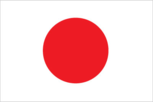
Flag
white with a large red disk (representing the sun without rays) in the center
Independence
660 BC, traditional founding by Emperor Jimmu; 3 May 1947, constitutional monarchy established
Judicial branch
Supreme Court
Leaders
Chief of State--Emperor AKIHITO (since 7 January 1989); Head of Government--Prime Minister Toshiki KAIFU (since 9 August 1989)
Legal system
civil law system with English-American influence; judicial review of legislative acts in the Supreme Court; accepts compulsory ICJ jurisdiction, with reservations
Legislative branch
bicameral Diet (Kokkai) consists of an upper house or House of Councillors (Sangi-in) and a lower house or House of Representatives
Long-form name
none
Member of
ADB, ASPAC, CCC, Colombo Plan, DAC, ESCAP, FAO, GATT, IAEA, IBRD, ICAC, ICAO, ICO, IDA, IDB--Inter-American Development Bank, IEA, IFAD, IFC, IHO, ILO, ILZSG, IMF, IMO, INTELSAT, INTERPOL, IPU, IRC, ISO, ITC, ITU, IWC--International Whaling Commission, IWC--International Wheat Council, OECD, UN, UNESCO, UPU, WFTU, WHO, WIPO, WMO, WSG
National holiday
Birthday of the Emperor, 23 December (1933)
Political parties and leaders
Liberal Democratic Party (LDP), Toshiki Kaifu, president; Japan Socialist Party (JSP), T. Doi, chairman; Democratic Socialist Party (DSP), Keigo Ouchi, chairman; Japan Communist Party (JCP), K. Miyamoto, Presidium chairman; Komeito (Clean Government Party, CGP), Koshiro Ishida, chairman
Suffrage
universal at age 20
Type
constitutional monarchy
Economy
Agriculture
accounts for 3% of GNP; highly subsidized and protected sector, with crop yields among highest in world; principal crops--rice, sugar beets, vegetables, fruit; animal products include pork, poultry, dairy and eggs; about 50% self-sufficient in food production; shortages of wheat, corn, soybeans; world's largest fish catch of 11.8 million metric tons in 1987
Aid
donor--ODA and OOF commitments (1970-87), $57.5 billion
Budget
revenues $392 billion; expenditures $464 billion, including capital expenditures of $NA (FY89)
Currency
yen (plural--yen); 1 yen (Y) = 100 sen
Electricity
191,000,000 kW capacity; 700,000 million kWh produced, 5,680 kWh per capita (1989)
Exchange rates
yen (Y) per US$1--145.09 (January 1990), 137.96 (1989), 128.15 (1988), 144.64 (1987), 168.52 (1986), 238.54 (1985)
Exports
$270 billion (f.o.b., 1989); commodities--manufactures 97% (including machinery 38%, motor vehicles 17%, consumer electronics 10%); partners--US 34%, Southeast Asia 22%, Western Europe 21%, Communist countries 5%, Middle East 5%
External debt
$NA
Fiscal year
1 April-31 March
GNP
$1,914.1 billion, per capita $15,600; real growth rate 4.8%
Imports
$210 billion (c.i.f., 1989); commodities--manufactures 42%, fossil fuels 30%, foodstuffs 15%, nonfuel raw materials 13%; partners--Southeast Asia 23%, US 23%, Middle East 15%, Western Europe 16%, Communist countries 7%
Industrial production
growth rate 9.0% (1989)
Industries
metallurgy, engineering, electrical and electronic, textiles, chemicals, automobiles, fishing
Inflation rate (consumer prices)
2.1% (1989)
Overview
Although Japan has few natural resources, since 1971 it has become the world's third-largest industrial economy, ranking behind only the US and the USSR. Government-industry cooperation, a strong work ethic, and a comparatively small defense allocation have helped Japan advance rapidly, notably in high-technology fields. Industry, the most important sector of the economy, is heavily dependent on imported raw materials and fuels. Self-sufficent in rice, Japan must import 50% of its requirements for other grain and fodder crops. Japan maintains one of the world's largest fishing fleets and accounts for nearly 15% of the total global catch. Overall economic growth has been spectacular: a 10% average in the 1960s, a 5% average in the 1970s and 1980s. In 1989 strong investment and consumption spending helped maintain growth at nearly 5%. Inflation remains low at 2.1% despite high oil prices and a somewhat weaker yen. Japan continues to run a huge trade surplus, $60 billion in 1989, which supports extensive investment in foreign properties.
Unemployment rate
2.3% (1989)
Communications
Airports
165 total, 156 usable; 128 with permanent-surface runways; 2 with runways over 3,659 m; 27 with runways 2,440-3,659 m; 55 with runways 1,220-2,439 m
Civil air
341 major transport aircraft
Highways
1,098,900 km total; 718,700 km paved, 380,200 km gravel, crushed stone, or unpaved; 3,900 km national expressways, 46,544 km national highways, 43,907 km principal local roads, 86,930 km prefectural roads, and 917,619 other (1987)
Inland waterways
about 1,770 km; seagoing craft ply all coastal inland seas
Merchant marine
1,088 ships (1,000 GRT or over) totaling 23,597,688 GRT/36,655,266 DWT; includes 7 passenger, 57 short-sea passenger, 4 passenger cargo, 108 cargo, 44 container, 27 roll-on/roll-off cargo, 135 refrigerated cargo, 117 vehicle carrier, 237 petroleum, oils, and lubricants (POL) tanker, 21 chemical tanker, 42 liquefied gas, 12 combination ore/oil, 3 specialized tanker, 272 bulk, 1 combination bulk, 1 multifunction large-load carrier
Pipelines
crude oil, 84 km; refined products, 322 km; natural gas, 1,800 km
Ports
Chiba, Muroran, Kitakyushu, Kobe, Tomakomai, Nagoya, Osaka, Tokyo, Yokkaichi, Yokohama, Kawasaki, Niigata, Fushiki-Toyama, Shimizu, Himeji, Wakayama-Shimozu, Shimonoseki, Tokuyama-Shimomatsu
Railroads
27,327 km total; 2,012 km 1.435-meter standard gauge and 25,315 km predominantly 1.067-meter narrow gauge; 5,724 km doubletrack and multitrack sections, 9,038 km 1.067-meter narrow-gauge electrified, 2,012 km 1.435-meter standard-gauge electrified (1987)
Telecommunications
excellent domestic and international service; 64,000,000 telephones; stations--318 AM, 58 FM, 12,350 TV (196 major--1 kw or greater); satellite earth stations--4 Pacific Ocean INTELSAT and 1 Indian Ocean INTELSAT; submarine cables to US (via Guam), Philippines, China, and USSR
Military and Security
Branches
Japan Ground Self-Defense Force (army), Japan Maritime Self-Defense Force (navy), Japan Air Self-Defense Force (air force), Maritime Safety Agency (coast guard)
Defense expenditures
1.0% of GNP at market prices (1989 est.)
Military manpower
males 15-49, 32,181,866; 27,695,890 fit for military service; 1,004,052 reach military age (18) annually