1989 Edition
CIA World Factbook 1989 (Internet Archive)
Geography
Climate
- arctic maritime with frequent storms and persistent fog
- varies from tropical in south to cool temperate in north
- tropical; scant rainfall, constant wind, burning sun
- temperate with rainfall concentrated in summer
- temperate, with rainfall heavier in summer than winter
- dry desert; intensely hot summers; short, cool winters
- tropical monsoon; rainy season (May to November); dry season (December to April)
Coastline
- 124.1 km
- 29,751 km
- 8 km
- 2,495 km
- 2,413 km
- 499 km
- none — landlocked
Comparative area
- slightly more than twice the size of Washington, DC
- slightly smaller than California
- about 7.5 times the size of The Mall in Washington, DC
- slightly smaller than Mississippi
- slightly larger than Indiana
- slightly smaller than New Jersey
- slightly larger than Utah
Contiguous zone
- 10 nm
- 1 2 nm
Continental shelf
- 200 meters or to depth of exploitation
- 200 m
- not specific
Disputes
- Denmark has challenged Norway's maritime claims beween Greenland and Jan Mayen
- Habomai Islands, Etorofu, Kunashiri, and Shikotan Islands occupied by Soviet Union since 1945, claimed by Japan; Kuril Islands administered by Soviet Union; Liancourt Rocks disputed with South Korea; Senkaku-shoto (Senkaku Islands) claimed by China and Taiwan
- short section of boundary with China is indefinite; Demarcation Line with South Korea
- Demarcation Line with North Korea; Liancourt Rocks claimed by Japan
- ownership of Warbah and Bubiyan islands disputed by Iraq; ownership of Qaruh and LJmm al Maradim Islands disputed by Saudi Arabia
- boundary dispute with Thailand
Environment
- barren volcanic island with some moss and grass; volcanic activity resumed in 1970
- many dormant and some active volcanoes; about 1,500 seismic occurrences (mostly tremors) every year; subject to tsunamis
- sparse bunch grass, prostrate vines, and low-growing shrubs; lacks fresh water; primarily a nesting, roosting, and foraging habitat for seabirds, shorebirds, and marine wildlife; feral cats
- mountainous interior is isolated, nearly inaccessible, and sparsely populated; late spring droughts often followed by severe flooding
- occasional typhoons bring high winds and floods; earthquakes in southwest; air pollution in large cities
- some of world's largest and most sophisticated desalination facilities provide most of water; air and water pollution; desertification
- deforestation; soil erosion; subject to floods
Exclusive fishing zone
- 200 nm Territorial sea: 4 nm
- 200 nm
Extended economic zone
- 200 nm
- 200 nm
Land boundaries
- none
- none
- none
- 1,671 km total; China 1,416 km, South Korea 238 km, USSR 17 km
- 462 km total; Iraq 240 km, Saudi Arabia 222 km
- 5,083 km total; Burma 235 km, Cambodia 541 km, China 423 km, Thailand 1,754 km, Vietnam 2,130 km
Land boundary
238 km with North Korea
Land use
- 0% arable land; 0% permanent crops; 0% meadows and pastures; 0% forest and woodland; 100% other
- 13% arable land; 1% permanent crops; 1% meadows and pastures; 67% forest and woodland; 18% other; includes 9% irrigated
- 0% arable land; 0% permanent crops; 0% meadows and pastures; 0% forest and woodland; 100% other
- 18% arable land; 1% permanent crops; NEGL% meadows and pastures; 74% forest and woodland; 7% other; includes 9% irrigated
- 21% arable land; 1% permanent crops; 1% meadows and pastures; 67% forest and woodland; 10% other; includes 1 2% irrigated
- NEGL% arable land; 0% permanent crops; 8% meadows and pastures; NEGL% forest and woodland; 92% other; includes NEGL% irrigated
- 4% arable land; NEGL% permanent crops; 3% meadows and pastures; 58% forest and woodland; 35% other; includes 1% irrigated
Maritime claims
none — landlocked
Military boundary line
50 nm (all foreign vessels and aircraft without permission are banned)
Natural resources
- none
- negligible mineral resources, fish
- guano (deposits worked until late 1800s)
- coal, lead, tungsten, zinc, graphite, magnesite, iron ore, copper, gold, pyrites, salt, fluorspar, hydropower
- coal, tungsten, graphite, molybdenum, lead, hydropower
- petroleum, fish, shrimp, natural gas
- timber, hydropower, gypsum, tin, gold, gemstones
Note
- located 590 km north-northwest of Iceland between the Greenland Sea and the Norwegian Sea north of the Arctic Circle
- strategic location in northeast Asia
- 2,090 km south of Honolulu in the South Pacific Ocean, just south of the Equator, about halfway between Hawaii and the Cook Islands
- strategic location bordering China, South Korea, and USSR
- strategic location at head of Persian Gulf
- landlocked
Notes
strategic location along the Korea Strait, Sea of Japan, and Yellow Sea
Terrain
- volcanic island, partly covered by glaciers; Beerenberg is the highest peak, with an elevation of 2,277 meters
- mostly rugged and mountainous
- sandy, coral island surrounded by a narrow fringing reef
- mostly hills and mountains separated by deep, narrow valleys; coastal plains wide in west, discontinuous in east
- mostly hills and mountains; wide coastal plains in west and south
- flat to slightly undulating desert plain
- mostly rugged mountains; some plains and plateaus
Territorial sea
- 12 nm (3 nm in international straits — La Perouse or Soya, Tsugaru, Osumi, and Eastern and Western channels of the Korea or Tsushima Strait)
- 1 2 nm
- 1 2 nm
- 12 nm (3 nm in the Korea Strait)
- 1 2 nm
Total area
- 373 km2; land area: 373 km2
- 377,835 km2; land area: 374,744 km2; includes Bonin Islands (Ogasawara-gunto), DaitO-shotO, Minamijima, Okinotori-shima, Ryukyu Islands (Nansei-shotO), and Volcano Islands (Kazan-retto)
- 4.5 km2; land area: 4.5 km2
- 120,540 km2; land area: 120,410km2
- 98,480 km2; land area: 98,190 km2
- 17,820 km2; land area: 17,820 km2
- 236,800 km2; land area: 230,800 km2
People and Society
Birth rate
- 1 1 births/ 1,000 population (1990)
- 22 births/ 1,000 population (1990)
- 20 births/ 1,000 population (1990)
- 29 births/ 1,000 population (1990)
- 37 births/ 1,000 population (1990)
Death rate
- 7 deaths/ 1 ,000 population (1990)
- 5 deaths/ 1 ,000 population (1990)
- 6 deaths/ 1 ,000 population (1990)
- 2 deaths/ 1 ,000 population (1990)
- 15 deaths/ 1,000 population (1990)
Ethnic divisions
- 99.4% Japanese, 0.6% other (mostly Korean)
- racially homogeneous
- homogeneous; small Chinese minority (about 20,000)
- 27.9% Kuwaiti, 39% other Arab, 9% South Asian, 4% Iranian, 20.1% other
- 50% Lao, 1 5% Phoutheung (Kha), 20% tribal Thai, 1 5% Meo, Hmong, Yao, and other
Infant mortality rate
- 5 deaths/ 1,000 live births (1990)
- 27 deaths/ 1,000 live births (1990)
- 23 deaths/ 1,000 live births (1990)
- 15 deaths/ 1,000 live births (1990)
- 126 deaths/ 1,000 live births (1990)
Labor force
- 63,330,000; 54% trade and services; 33% manufacturing, mining, and construction; 7% agriculture, forestry, and fishing; 3% government (1988)
- 9,615,000; 36% agricultural, 64% nonagricultural; shortage of skilled and unskilled labor (mid1987 est.)
- 16,900,000; 52% services and other; 27% mining and manufacturing; 21% agriculture, fishing, forestry (1987)
- 566,000 (1986); 45.0% services, 20.0% construction, 1 2.0% trade, 8.6% manufacturing, 2.6% finance and real estate, 1.9% agriculture, 1.7% power and water, 1.4% mining and quarrying; 70% of labor force is non-Kuwaiti
- 1-1.5 million; 85-90% in agriculture (est.) Organized labor Lao Federation of Trade Unions is subordinate to the Communist party
Language
- Japanese
- Korean
- Korean; English widely taught in high school
- Arabic (official); English widely spoken
- Lao (official), French, and English
Life expectancy at birth
- 76 years male, 82 years female (1990)
- 69 years male, 75 years female (1990)
- 66 years male, 73 years female (1990)
- 72 years male, 76 years female (1990)
- 48 years male, 51 years female (1990)
Literacy
- 99%
- 95% (est.)
- over '
- 71% (est.)
- 85%
Nationality
- noun — Japanese (sing., pi.); adjective — Japanese
- noun — Korean(s); adjective — Korean
- noun — Korean(s); adjective — Korean
- noun — Kuwaiti(s); adjective — Kuwaiti
- noun — Lao (sing., Lao or Laotian); adjective — Lao or Laotian Laos (continued)
Net migration rate
- 0 migrants/ 1 ,000 population (1990)
- 0 migrants/ 1 ,000 population (1990)
- — 1 migrants/ 1 ,000 population (1990)
- 1 1 migrants/ 1 ,000 population (1990)
- 0 migrants/ 1 ,000 population (1990)
Note
Millersville settlement on western side of island occasionally used as a weather station from 1935 until World War II, when it was abandoned; reoccupied in 1957 during the International Geophysical Year by scientists who left in 1958; public entry is by special-use permit only and generally restricted to scientists and educators
Organized labor
- about 29% of employed workers; 76.4% public service, 57.9% transportation and telecommunications, 48.7% mining, 33.7% manufacturing, 18.2% services, 9.3% wholesale, retail, and restaurant
- 1 ,600,000 members; single-trade union system coordinated by the General Federation of Trade Unions of Korea under the Central Committee
- about 10% of nonagricultural labor force in government-sanctioned unions
- labor unions exist in oil industry and among government personnel
Population
- no permanent inhabitants
- 123,642,461 (July 1990), growth rate 0.4% (1990)
- uninhabited
- 21,292,649 (July 1990), growth rate 1.7% (1990)
- 43,045,098 (July 1990), growth rate 0.8% (1990)
- 2,123,711 (July 1990), growth rate 3.8% (1990)
- 4,023,726 (July 1990), growth rate 2.2% (1990)
Religion
- most Japanese observe both Shinto and Buddhist rites; about 16% belong to other faiths, including 0.8% Christian
- Buddhism and Confucianism; religious activities now almost nonexistent
- strong Confucian tradition; vigorous Christian minority (28% of the total population); Buddhism; pervasive folk religion (Shamanism); Chondokyo (religion of the heavenly way), eclectic religion with nationalist overtones founded in 19th century, claims about 1.5 million adherents
- 85% Muslim (30% Shi'a, 45% Sunni, 10% other), 15% Christian, Hindu, Parsi, and other
- 85% Buddhist, 15% animist and other
Total fertility rate
- 1 .6 children born/ woman (1990)
- 2.1 children born/ woman (1990)
- 1 .6 children born/ woman (1990)
- 3.7 children born/ woman (1990)
- 5.1 children born/ woman (1990)
Government
Administrative divisions
- 47 prefectures (fuken, singular and plural); Aichi, Akita, Aomori, Chiba, Ehime, Fukui, Fukuoka, Fukushima, Gifu, Gumma, Hiroshima, Hokkaido, HyOgo, Ibaraki, Ishikawa, Iwate, Kagawa, Kagoshima, Kanagawa, KOchi, Kumamoto, KyOto, Mie, Miyagi, Miyazaki, Nagano, Nagasaki, Nara, Niigata, Oita, Okayama, Okinawa, Osaka, Saga, Saitama, Shiga, Shimane, Shizuoka, Tochigi, Tokushima, TOkyO, Tottori, Toyama, Wakayama, Yamagata, Yamaguchi, Yamanashi
- 9 provinces (do, singular and plural) and 3 special cities* (jikhalsi, singular and plural); Chagangdo, Hamgydng-namdo, Hamgyong-bukto, Hwanghae-namdo, Hwanghae-bukto, Kaesong-si*, Kangwon-do, Namp'o-si*, P'yongan-bukto, P'yongan-namdo, P'yongyang-si*, Yanggang-do
- 9 provinces (do, singular and plural) and 6 special cities* (jikhalsi, singular and plural); Cheju-do, Chdlla-bukto, Cholla-namdo, Ch'ungch'ong-bukto, Ch'ungch'ong-namdo, Inch'on-jikhalsi*, Kangwon-do, Kwangju-jikhalsi*, Kyonggido, Kyongsang-bukto, Kyongsang-namdo, Pusan-jikhalsi*, Soul-t'ukpydlsi*, Taegujikhalsi*, Taej6n-jikhalsi*
- 4 governorates (muhafazat, singular — muhafa/.ah); Al AhmadT, Al Jahrah, Al Kuwayt, Hawaii!; note— there may be a new governorate of Farwaniyyah
- 1 6 provinces (khoueng, singular and plural) and 1 municipality* (kampheng nakhon, singular and plural); Attapu, Bokeo, Bolikhamsai, Champasak, Houaphan, Khammouan, Louang Namtha, Louangphrabang, Oudomxai, Phongsali, Saravan, Savannakhet, Sekong, Vientiane, Vientiane*, Xaignabouri, Xiangkhoang
Capital
- Tokyo
- P'ydngyang
- Seoul
- Kuwait
- Vientiane
Communists
- about 470,000 registered Communist party members
- KWP claims membership of about 2 million, or about one-tenth of population
- Communist party activity banned by government
- insignificant
Constitution
- 3 May 1947
- adopted 1948, revised 27 December 1972
- 25 February 1988
- 16 November 1962 (some provisions suspended since 29 August 1962)
- draft constitution under discussion since 1976
Diplomatic representation
- Ambassador Nobuo MATSUNAGA; Chancery at 2520 Massachusetts Avenue NW, Washington DC 20008; telephone (202) 9396700; there are Japanese Consulates General in Agana (Guam), Anchorage, Atlanta, Boston, Chicago, Honolulu, Houston, Kansas City (Missouri), Los Angeles, New Orleans, New York, San Francisco, Seattle, and Portland (Oregon), and a Consulate in Saipan (Northern Mariana Islands); US — Ambassador Michael H. ARMACOST; Embassy at 10-1, Akasaka 1-chome, Minato-ku (107), Tokyo (mailing address is APO San Francisco 96503); telephone [81] (3) 224-5000; there are US Consulates General in Naha, Osaka-Kobe, and Sapporo and a Consulate in Fukuoka
- none
- Ambassador Tong-Jin PARK; Chancery at 2320 Massachusetts Avenue NW, Washington DC 20008; telephone (202) 939-5600; there are Korean Consulates General in Agana (Guam), Anchorage, Atlanta, Chicago, Honolulu, Houston, Los Angeles, New York, San Francisco, and Seattle; US — Ambassador Donald GREGG; Embassy at 82 Sejong-Ro, Chongro-ku, Seoul (mailing address is APO San Francisco 96301); telephone [82] (2) 732-2601 through 2618; there is a US Consulate in Pusan
- Ambassador Shaikh Saud Nasir AL-SABAH; Chancery at 2940 Tilden Street NW, Washington DC 20008; telephone (202) 966-0702; US — Ambassador W. Nathaniel HOWELL; Embassy at Bneid al-Gar (opposite the Hilton Hotel), Kuwait City (mailing address is P. O. Box 77 Safat, 13001 Safat, Kuwait City); telephone [965] 242-4151 through 4159
- First Secretary, Charge d'Affaires ad interim DONE SOMVORACHIT; Chancery at 2222 S Street NW, Washington DC 20008; telephone (202) 332-6416 or 6417; US— Charge d'Affaires Charles B. SALMON; Embassy at Rue Bartholonie, Vientiane (mailing address is B. P. 114, Vientiane, or Box V, APO San Francisco 96346); telephone 2220, 2357, 2384
Elections
- House of Councillors — last held on 23 July 1989 (next to be held 23 July 1992); results — percent of vote by party NA; seats— (252 total, 100 elected) LDP 109, JSP 67, CGP 21, JCP 14, others 33; House of Representatives — last held on 1 8 February 1990 (next to be held by February 1993); results — percent of vote by party NA; seats— (512 total) LDP 275, JSP 136, CGP 45, JCP 16, JDSP 14, other parties 5, independents 21; note — nine independents are expected to join the LDP, five the JSP
- President — last held 29 December 1986 (next to be held December 1990); results— President Kim II S6ng was reelected without opposition; Supreme People's Assembly — last held on 2 November 1986 (next to be held November 1990, but the constitutional provision for elections every four years is not always followed); results — KWP is the only party; seats — (655 total) KWP 655; the KWP approves a single list of candidates who are elected without opposition
- President — last held on 16 December 1987 (next to be held December 1992); results— Roh Tae Woo (DJP) 35.9%, Kim Young Sam (RDP) 27.5%, Kim Dae Jung (PPD) 26.5%, other 10.1%; National Assembly — last held on 26 April 1988 (next to be held April 1992); results— DJP 34%, RPD 24%, PPD 19%, NDRP 15%, others 8%; seats— (299 total) DJP 125, PPD 71, RPD 59, NDRP 35, others 9
- National Assembly — dissolved 3 July 1986 and no elections are planned
- Supreme People's Assembly — last held on 26 March 1989 (next to be held NA); results — percent of vote by party NA; seats — (79 total) number of seats by party NA
Executive branch
- emperor, prime minister, Cabinet
- president, two vice presidents, premier, nine vice premiers, State Administration Council (cabinet)
- president, prime minister, deputy prime minister, State Council (cabinet)
- amir, prime minister, deputy prime minister. Council of Ministers (cabinet)
- president, chairman and five vice chairmen of the Council of Ministers, Council of Ministers (cabinet)
Flag
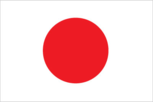
- white with a large red disk (representing the sun without rays) in the center
- three horizontal bands of blue (top), red (triple width), and blue; the red band is edged in white; on the hoist side of the red band is a white disk with a red fivepointed star
- white with a red (top) and blue yinyang symbol in the center; there is a different black trigram from the ancient / Ching (Book of Changes) in each corner of the white field
- three equal horizontal bands of green (top), white, and red with a black trapezoid based on the hoist side
- three horizontal bands of red (top), blue (double width), and red with a large white disk centered in the blue band
Independence
- 660 BC, traditional founding by Emperor Jimmu; 3 May 1947, constitutional monarchy established
- 9 September 1948
- 15 August 1948
- 19 June 1961 (from UK)
- 19 July 1949 (from France)
Judicial branch
- Supreme Court
- Central Court
- Supreme Court
- High Court of Appeal
- Central Supreme Court
Leaders
- Chief of State — Emperor AKIHITO (since 7 January 1989); Head of Government — Prime Minister Toshiki KAIFU (since 9 August 1989) Political parties and leaders: Liberal Democratic Party (LDP), Toshiki Kaifu, president; Japan Socialist Party (JSP), T. Doi, chairman; Democratic Socialist Party (DSP), Eiichi Nagasue, chairman; Japan Communist Party (JCP), K. Miyamoto, Presidium chairman; Komeito (Clean Government Party, CGP), Koshiro Ishida, chairman
- Chief of State— President KIM Il-sdng (since 28 December 1972); Designated Successor KIM Chong-Il (son of President, born 16 February 1942); Head of Government — Premier YON Hyong-muk (since NA December 1988) Political parties and leaders: only party — Korean Workers' Party (KWP); Kim Ilsdng, General Secretary, and his son, Kim Chong-Il, Secretary, Central Committee
- Chief of State— President ROM Tae Woo (since 25 February 1988); Head of Government — Prime Minister KANG Young Hoon (since 5 December 1988); Deputy Prime Minister CHO Soon (since 5 December 1988) Political parties and leaders: major party is government's Democratic Justice Party (DJP), Roh Tae Woo, president, and Park Tae Chun, chairman; opposition parties are Peace and Democracy Party (PPD), Kim Dae Jung; Korea Reunification Democratic Party (RPD), Kim Young Sam; New Democratic Republican Party (NDRP), Kim Jong Pil; several smaller parties
- Chief of State — Amir Sheikh Jabir al-Ahmad al-Jabir Al SABAH (since 31 December 1977); Head of Government — Prime Minister and Crown Prince Sa'd Abdallah al-Salim Al SABAH (since 8 February 1978) Political parties and leaders: none
- Chief of State — Acting President PHOUMI VONGVICHIT (since 29 October 1986); Head of Government — Chairman of the Council of Ministers General KAYSONE PHOMVIHAN (since 2 December 1975) Political parties and leaders: Lao People's Revolutionary Party (LPRP), Kaysone Phomvihan, party chairman; includes Lao Patriotic Front and Alliance Committee of Patriotic Neutralist Forces; other parties moribund
Legal system
- civil law system with English-American influence; judicial review of legislative acts in the Supreme Court; accepts compulsory ICJ jurisdiction, with reservations
- based on German civil law system with Japanese influences and Communist legal theory; no judicial review of legislative acts; has not accepted compulsory ICJ jurisdiction
- combines elements of continental European civil law systems, AngloAmerican law, and Chinese classical thought; has not accepted compulsory ICJ jurisdiction
- civil law system with Islamic law significant in personal matters; has not accepted compulsory ICJ jurisdiction
- based on civil law system; has not accepted compulsory ICJ jurisdiction
Legislative branch
- bicameral Diet (Kokkai) consists of an upper house or House of Councillors (Sangi-in) and a lower house or House of Representatives (Shugi-in)
- unicameral Supreme People's Assembly (Choe Ko In Min Hoe Ui)
- unicameral National Assembly
- National Assembly (Majlis al 'Umma) dissolved 3 July 1986
- Supreme People's Assembly
Long-form name
- none
- none
- Democratic People's Republic of Korea; abbreviated DPRK
- Republic of Korea; abbreviated ROK
- State of Kuwait
- Lao People's Democratic Republic
Member of
- ADB, ASPAC, CCC, Colombo Plan, DAC, ESCAP, FAO, GATT, IAEA, IBRD, ICAC, ICAO, ICO, IDA, IDB — Inter-American Development Bank, IEA, IFAD, IFC, IHO, ILO, ILZSG, IMF, IMO, INTELSAT, INTERPOL, IPU, IRC, ISO, ITC, ITU, IWC— International Whaling Commission, IWC — International Wheat Council, OECD, UN, UNESCO, UPU, WFTU, WHO, WIPO, WMO, WSG
- ESCAP, FAO, G-77, IAEA, ICAO, IMO, IPU, ITU, NAM, UNCTAD, UNESCO, UPU, WFTU, WHO, WIPO, WTO, UNIDO, WMO; official observer status at UN
- ADB, AfDB, ASPAC, CCC, Colombo Plan, ESCAP, FAO, G-77, GATT, IAEA, IBRD, ICAC, ICAO, IDA, IFAD, IFC, IHO, IMF, IMO, INTELSAT, INTERPOL, IPU, IRC, ITU, IWC— International Whaling Commission, IWC — International Wheat Council, UNCTAD, UNDP, UNESCO, UNICEF, UNIDO, UN Special Fund, UPU, WHO, WIPO, WMO, WTO; official observer status at UN
- Arab League, FAO, G-77, GATT, GCC, IAEA, IBRD, ICAO, IDA, IDB — Islamic Development Bank, IFAD, IFC, ILO, IMF, IMO, INTELSAT, INTERPOL, IPU, ITU, NAM, OAPEC, QIC, OPEC, UN, UNESCO, UPU, WFTU, WHO, WMO, WTO
- ADB, Colombo Plan, ESCAP, FAO, G-77, IBRD, ICAO, IDA, IFAD, ILO, IMF, INTERPOL, IPU, IRC, ITU, Mekong Committee, NAM, UN, UNCTAD, UNESCO, UPU, WFTU, WHO, WMO, WTO
National holiday
- Birthday of the Emperor, 23 December (1933)
- Independence Day, 9 September (1948)
- Independence Day, 15 August (1948)
- National Day, 25 February
- National Day (proclamation of the Lao People's Democratic Republic), 2 December (1975)
Note
administered by a governor (sysselmann I resident in Longyearbyen (Svalbard)
Other political or pressure groups
- Korean National Council of Churches; large, potentially volatile student population concentrated in Seoul; Federation of Korean Trade Unions; Korean Veterans' Association; Federation of Korean Industries; Korean Traders Association
- large (350,000) Palestinian community; several Laos small, clandestine leftist and Shi'a fundamentalist groups are active
- nonCommunist political groups moribund; most leaders have fled the country
Suffrage
- universal at age 20
- universal at age 17
- universal at age 20
- adult males who resided in Kuwait before 1920 and their male descendants at age 21; note — out of all citizens, only 8.3% are eligible to vote and only 3.5% actually vote
- universal at age 18
Type
- territory of Norway
- constitutional monarchy
- Communist state; one-man rule
- republic
- nominal constitutional monarchy
- Communist state
Economy
Agriculture
- accounts for 3% of GNP; highly subsidized and protected sector, with crop yields among highest in world; principal crops — rice, sugar beets, vegetables, fruit; animal products include pork, poultry, dairy and eggs; about 50% selfsufficient in food production; shortages of Japan (continued) wheat, corn, soybeans; world's largest fish catch of 11.8 million metric tons in 1987
- accounts for about 25% of GNP and 36% of work force; principal crops — rice, corn, potatoes, soybeans, pulses; livestock and livestock products — cattle, hogs, pork, eggs; not self-sufficient in grain; fish catch estimated at 1.7 million metric tons in 1987
- accounts for 11% of GNP and employs 21% of work force (including fishing and forestry); principal crops — rice, root crops, barley, vegetables, fruit; livestock and livestock products — cattle, hogs, chickens, milk, eggs; self-sufficient in food, except for wheat; fish catch of 2.9 million metric tons, seventh-largest in world
- virtually none; dependent on imports for food; about 75% of potable water must be distilled or imported
- accounts for 60% of GDP and employs most of the work force; subsistence farming predominates; normally self-sufficient; principal crops — rice (80% of cultivated land), potatoes, vegetables, coffee, sugarcane, cotton
Aid
- donor— ODA and OOF commitments (1970-87), $57.5 billion
- Communist countries (1970-88), $1.3 billion
- US commitments, including Ex-Im (FY70-85), $3.9 billion
- donor — pledged $18.3 billion in bilateral aid to less developed countries (197989)
- US commitments, including Ex-lm (FY70-79), $276 million; Western (nonUS) countries, ODA and OOF bilateral commitments (1970-87), $468 million; Communist countries (1970-88), $895 million
Budget
- revenues $392 billion; expenditures $464 billion, including capital expenditures of $NA (FY89)
- revenues $15.6 billion; expenditures $15.6 billion, including capital expenditures of $NA (1989)
- revenues $33.6 billion; expenditures $33.6 billion, including capital expenditures of N A (1990)
- revenues $7.1 billion; expenditures $10.5 billion, including capital expenditures of $3.1 billion (FY88)
- revenues $71 million; expenditures $198 million, including capital expenditures of $132 million (1988 est.)
Currency
- yen (plural— yen); 1 yen (¥) = 100 sen
- North Korean won (plural — won); 1 North Korean won (Wn) = 100 chdn
- South Korean won (plural — won); 1 South Korean won (W) = 100 chon (theoretical)
- Kuwaiti dinar (plural — dinars); 1 Kuwaiti dinar (KD) = 1,000 fils
- new kip (plural — kips); 1 new kip(NK) = 100 at
Electricity
- 15,000 kW capacity; 40 million kWh produced, NA kWh per capita (1989)
- 191,000,000 kW capacity; 700,000 million kWh produced, 5,680 kWh per capita (1989)
- 6,440,000 kW capacity; 40,250 million kWh produced, 1 ,740 kWh per capita (1989)
- 20,500,000 kW capacity; 80,000 million kWh produced, 1,850 kWh per capita (1989)
- 8,287,000 kW capacity; 21,500 million kWh produced, 10,710 kWh per capita (1989)
- 176,000 kW capacity; 900 million kWh produced, 225 kWh per capita (1989)
Exchange rates
- yen (¥) per US$1— 145.09 (January 1990), 137.96(1989), 128.15(1988), 144.64(1987), 168.52 (1986), 238.54 (1985) Fiscal yean 1 April-31 March
- North Korean won (Wn) per US$1— 2.3 (December 1989), 2.13 (December 1988), 0.94 (March 1987), NA (1986), NA (1985)
- South Korean won (W) per US$1— 683.43 (January 1990), 671.46 (1989), 731.47 (1988), 822.57 (1987), 881.45(1986), 870.02(1985)
- Kuwaiti dinars (KD) per US$1— 0.2915 (January 1990), 0.2937 (1989), 0.2790 (1988), 0.2786 (1987), 0.2919(1986), 0.3007(1985)
- new kips (NK) per US$1— 700 (December 1989), 725 (1989), 350 (1988), 200 (1987), 108 (1986), 95 (1985) Fiscal yean 1 July-30 June
Exports
- $270 billion (f.o.b., 1989); commodities— manufactures 97% (including machinery 38%, motor vehicles 1 7%, consumer electronics 10%); partners — US 34%, Southeast Asia 22%, Western Europe 21%, Communist countries 5%, Middle East 5%
- $2.4 billion (f.o.b., 1988); commodities— minerals, metallurgical products, agricultural products, manufactures; partners— USSR, China, Japan, FRG, Hong Kong, Singapore Korea, North (continued) Korea, South
- $62.3 billion (f.o.b., 1989); commodities— textiles, clothing, electronic and electrical equipment, footwear, machinery, steel, automobiles, ships, fish; partners — US 33%, Japan 21%
- $7.1 billion (f.o.b., 1988); commodities— oil 90%; partners — Japan, Italy, FRG, US
- $57.5 million (f.o.b., 1989 est.); commodities — electricity, wood products, coffee, tin; partners — Thailand, Malaysia, Vietnam, USSR, US
External debt
- $NA
- $2.5 billion hard currency (1989)
- $30.5 billion (September 1989)
- $7.2 billion (December 1989 est.)
- $964 million (1989 est.)
Fiscal year
- calendar year
- calendar year
- 1 July-30 June
GDP
- $20.5 billion, per capita $10,500; real growth rate 5.0% (1988)
- $585 million, per capita $150; real growth rate 3% (1989 est.)
GNP
- $1,914.1 billion, per capita $15,600; real growth rate 4.8% (1989 est.)
- $28 billion, per capita $1,240; real growth rate 3% (1989)
- $200 billion, per capita $4,600; real growth rate 6.5% (1989)
Illicit drugs
illicit producer of cannabis and opium poppy for the international drug trade; production of cannabis increased in 1989; marijuana and heroin are shipped to Western countries, including the US
Imports
- $210 billion (c.i.f., 1989); commodities— manufactures 42%, fossil fuels 30%, foodstuffs 15%, nonfuel raw materials 1 3%; partners — Southeast Asia 23%, US 23%, Middle East 15%, Western Europe 16%, Communist countries 7%
- $3.1 billion (f.o.b., 1988); commodities— petroleum, machinery and equipment, coking coal, grain; partners — USSR, Japan, China, FRG, Hong Kong, Singapore
- $61.3 billion (c.i.f., 1989); commodities— machinery, electronics and electronic equipment, oil, steel, transport equipment, textiles, organic chemicals, grains; partners — Japan 28%, US 25% (1990)
- $5.2 billion (f.o.b., 1988); commodities— food, construction material, vehicles and parts, clothing; partners — Japan, US, FRG, UK
- $219 million (c.i.f., 1989 est.); commodities — food, fuel oil, consumer goods, manufactures; partners — Thailand, USSR, Japan, France, Vietnam
Industrial production
- growth rate 9.0% (1989)
- growth rate NA%
- growth rate 3.5% (1989)
- growth rate 3% (1988)
- growth rate 8% (1989 est.)
Industries
- metallurgy, engineering, electrical and electronic, textiles, chemicals, automobiles, fishing
- machine building, military products, electric power, chemicals, mining, metallurgy, textiles, food processing
- textiles, clothing, footwear, food processing, chemicals, steel, electronics, automobile production, ship building
- petroleum, petrochemicals, desalination, food processing, salt, construction
- tin mining, timber, electric power, agricultural processing
Inflation rate (consumer prices)
- 2.1% (1989)
- NA%
- 5% (1989)
- 1 .5% (1988)
- 35% (1989 est.)
Overview
- Jan Mayen is a volcanic island with no exploitable natural resources. Economic activity is limited to providing services for employees of Norway's radio and meteorological stations located on the island.
- Although Japan has few natural resources, since 1971 it has become the world's third-largest industrial economy, ranking behind only the US and the USSR. Government-industry cooperation, a strong work ethic, and a comparatively small defense allocation have helped Japan advance rapidly, notably in high-technology fields. Industry, the most important sector of the economy, is heavily dependent on imported raw materials and fuels. Self-sufficent in rice, Japan must import 50% of its requirements for other grain and fodder crops. Japan maintains one of the world's largest fishing fleets and accounts for nearly 1 5% of the total global catch. Overall economic growth has been spectacular: a 10% average in the 1960s, a 5% average in the 1970s and 1980s. In 1989 strong investment and consumption spending helped maintain growth at nearly 5%. Inflation remains low at 2.1% despite high oil prices and a somewhat weaker yen. Japan continues to run a huge trade surplus, $60 billion in 1989, which supports extensive investment in foreign properties.
- More than 90% of this command economy is socialized; agricultural land is collectivized; and state-owned industry produces 95% of manufactured goods. State control of economic affairs is unusually tight even for a Communist country because of the small size and homogeneity of the society and the strict one-man rule of Kim. Economic growth during the period 1984-89 has averaged approximately 3%. Abundant natural resources and hydropower form the basis of industrial development. Output of the extractive industries includes coal, iron ore, magnesite, graphite, copper, zinc, lead, and precious metals. Manufacturing emphasis is centered on heavy industry, with light industry lagging far behind. The use of high-yielding seed varieties, expansion of irrigation, and the heavy use of fertilizers have enabled North Korea to become largely self-sufficient in food production. North Korea, however, is far behind South Korea in economic development and living standards.
- The driving force behind the economy's dynamic growth has been the planned development of an export-oriented economy in a vigorously entrepreneurial society. GNP increased almost 13% in both 1986 and 1987 and 12% in 1988 before slowing to 6.5% in 1989. Such a rapid rate of growth was achieved with an inflation rate of only 3% in the period 1986-87, rising to 7% in 1988 and 5% in 1989. Unemployment is also low, and some labor bottlenecks have appeared in several processing industries. While the South Korean economy is expected to grow at more than 5% annually during the 1 990s, labor unrest — which led to substantial wage hikes in 1987-89 — threatens to undermine noninflationary growth.
- The oil sector dominates the economy. Of the countries in the Middle East, Kuwait has oil reserves second only to those of Saudi Arabia. Earnings from hydrocarbons generate over 90% of both export and government revenues and contribute about 40% to GDP. Most of the nonoil sector is dependent upon oil-derived government revenues to provide infrastructure development and to promote limited industrial diversification. The economy is heavily dependent upon foreign labor — Kuwaitis account for less than 20% of the labor force. The early years of the Iran-Iraq war pushed Kuwait's GDP well below its 1980 peak; however, during the period 1986-88, GDP increased each year, rising to 5% in 1988.
- One of the world's poorest nations, Laos has had a Communist centrally planned economy with government' ownership and control of productive enterprises of any size. Recently, however, the government has been decentralizing control and encouraging private enterprise. Laos is a landlocked country with a primitive infrastructure, that is, it has no railroads, a rudimentary road system, limited external and internal telecommunications, and electricity available in only a limited area. Subsistence agriculture is the main occupation, accounting for over 60% of GDP and providing about 85-90% of total employment. The predominant crop is rice. For the foreseeable future the economy will continue to depend for its survival on foreign aid — from CEMA, IMF, and other international sources.
Unemployment rate
- 2.3% (1989)
- officially none
- 3% (1989)
- 0%
- 15% (1989 est.)
Communications
Airports
- 1 with runway 1,220 to 2,439 m
- 165 total, 156 usable; 128 with permanent-surface runways; 2 with runways over 3,659 m; 27 with runways 2,440-3,659 m; 55 with runways 1,2202,439 m
- 50 total, 50 usable; about 30 with permanent-surface runways; fewer than 5 with runways over 3,659 m; 20 with runways 2,440-3,659 m; 30 with runways 1,220-2,439 m
- 112 total, 105 usable; 61 with permanent-surface runways; none with runways over 3,659 m; with runways 2,440-3,659 m; 17 with runways 1,2202,439 m
- 8 total, 4 usable; 4 with permanent-surface runways; none with runways over 3,659 m; 4 with runways 2,440-3,659 m; none with runways 1,2202,439 m
- 64 total, 50 usable; 9 with permanent-surface runways; none with runways over 3,659 m; 2 with runways 2,440-3,659 m; 12 with runways 1,2202,439 m
Branches
- Japan Ground Self-Defense Force (army), Japan Maritime Self-Defense Force (navy), Japan Air SelfDefense Force (air force), Maritime Safety Agency (coast guard)
- Ministry of People's Armed Forces (consists of the army, navy, and air force)
- Army, Navy, Air Force, Marine Corps Military manpower males 15-49, 12,792,426; 8,260,886 fit for military service; 445,320 reach military age (18) annually
- Army, Navy, Air Force, National Police Force, National Guard
- Lao People's Army (LPA, which consists of an army with naval, aviation, and militia elements). Air Force, National Police Department Military manpower males 15-49, 967,047; 517,666 fit for military service; 44,176 reach military age (18) annually; conscription age NA
Civil air
93 major transport aircraft
Defense expenditures
- 1% of GNP (1989 est.) South Pacific Ocean Sec regional map X
- 22% of GNP (1987) Kangnunq Ullung-do Set of
- 5% of GNP, or $10 billion (1 989 est.)
- 5.8% of GDP, or $ 1.2 billion (FY89) See refionil map IX
- 3.8% of GDP (1987)
Highways
- 1,098,900 km total; 718,700 km paved, 380,200 km gravel, crushed stone, or unpaved; 3,900 km national expressways, 46,544 km national highways, 43,907 km principal local roads, 86,930 km prefectural roads, and 917,619 other (1987)
- about 20,280 km (1980); 98.5% gravel, crushed stone, or earth surface; 1.5% concrete or bituminous
- 62,936 km total (1982); 13,476 km national highway, 49,460 km provincial and local roads
- 3,000 km total; 2,500 km bituminous; 500 km earth, sand, light gravel
- about 27,527 km total; 1 ,856 km bituminous or bituminous treated; 7,45 1 km gravel, crushed stone, or improved earth; 18,220 km unimproved earth and often impassable during rainy season mid-May to mid-September
Inland waterways
- about 1 ,770 km; seagoing craft ply all coastal inland seas
- 2,253 km; mostly navigable by small craft only
- 1,609 km; use restricted to small native craft
- about 4,587 km, primarily Mekong and tributaries; 2,897 additional kilometers are sectionally navigable by craft drawing less than 0.5 m
Merchant marine
- 1,088 ships (1,000 CRT or over) totaling 23,597,688 GRT/ 36,655,266 DWT; includes 7 passenger, 57 short-sea passenger, 4 passenger cargo, 108 cargo, 44 container, 27 roll-on/roll-off cargo, 135 refrigerated cargo, 117 vehicle carrier, 237 petroleum, oils, and lubricants (POL) tanker, 21 chemical tanker, 42 liquefied gas, 1 2 combination ore/oil, 3 specialized tanker, 272 bulk, 1 combination bulk, 1 multifunction large-load carrier Civil air 341 major transport aircraft
- 65 ships (1,000 CRT and over) totaling 437,103 GRT/663,835 DWT; includes 1 passenger, 1 short-sea passenger, 1 passenger-cargo, 56 cargo, 2 petroleum, oils, and lubricants (POL) tanker, 3 bulk, 1 combination bulk
- 423 ships (1,000 CRT or over) totaling 7,006,481 CRT/ 1 1,658,104 DWT; includes 2 short-sea passenger, 130 cargo, 41 container, 11 refrigerated cargo, 1 1 vehicle carrier, 49 petroleum, oils, and lubricants (POL) tanker, 8 chemical tanker, 10 liquefied gas, 10 combination ore/oil, 143 bulk, 7 combination bulk, 1 multifunction largeload carrier
- 51 ships (1,000 GRT or over), totaling 1,862,010 GRT/2,935,007 DWT; includes 18 cargo, 5 container, 5 livestock carrier, 18 petroleum, oils, and lubricants (POL) tanker, 5 liquefied gas Civil air 19 major transport aircraft
Military manpower
- males 15-49, 32,181,866; 27,695,890 fit for military service; 1,004,052 reach military age (18) annually
- males 15-49, 6,054,774; 3,699,088 fit for military service; 223,087 reach military age (18) annually
- males 15-49, about 688,516; about 411,742 fit for military service; 18,836 reach military age (18) annually
Note
defense is the responsibility of Norway North Pacific Ocean Philippine Sea ? Okinawa
Pipelines
- crude oil, 84 km; refined products, 322 km; natural gas, 1,800 km
- crude oil, 37 km
- 294 km refined products Korea, South (continued} Kuwait
- crude oil, 877 km; refined products, 40 km; natural gas, 165 km
- 136 km, refined products
Ports
- none; offshore anchorage only
- Chiba, Muroran, Kitakyushu, Kobe, Tomakomai, Nagoya, Osaka, Tokyo, Yokkaichi, Yokohama, Kawasaki, Niigata, Fushiki-Toyama, Shimizu, Himeji, Wakayama-Shimozu, Shimonoseki, Tokuyama-Shimomatsu
- Ch'dngjin, Haeju, Hungnam, Namp'o, Wonsan, Songnim, Najin
- Pusan, Inchon, Kunsan, Mokpo, Ulsan
- Ash Shuwaykh, Ash Shuaybah, Mina al Ahmadi
- none
Railroads
- 27,327 km total; 2,012 km 1.435-meter standard gauge and 25,315 km predominantly 1 .067-meter narrow gauge; 5,724 km doubletrack and multitrack sections, 9,038 km 1.067-meter narrow-gauge electrified, 2,012 km 1.435meter standard-gauge electrified (1987)
- 4,535 km total operating in 1980; 3,870 km 1.435-meter standard gauge, 665 km 0.762-meter narrow gauge, 159 km double track; 3,175 km electrified; government owned
- 3,106 km operating in 1983; 3,059 km 1.435-meter standard gauge, 47 km 0.610-meter narrow gauge, 712 km double track, 418 km electrified; government owned
Telecommunications
- radio and meteorological station Defense Forces
- excellent domestic and international service; 64,000,000 telephones; stations— 318 AM, 58 FM, 12,350 TV (196 major— 1 kw or greater); satellite earth stations — 4 Pacific Ocean INTELSAT and 1 Indian Ocean INTELSAT; submarine cables to US (via Guam), Philippines, China, and USSR Jarvis Island (territory of the US) Defense Forces
- stations — 18 AM, no FM, 1 1 TV; 200,000 TV sets; 3,500,000 radio receivers; 1 Indian Ocean INTELSAT earth station Defense Forces
- adequate domestic and international services; 4,800,000 telephones; stations— 79 AM, 46 FM, 256 TV (57 of 1 kW or greater); satellite earth stations— 2 Pacific Ocean INTELSAT and 1 Indian Ocean INTELSAT Defense Forces
- excellent international, adequate domestic facilities; 258,000 telephones; stations — 3 AM, 2 FM, 3 TV; satellite earth stations— 1 Indian Ocean INTELSAT, and 2 Atlantic Ocean INTELSAT; 1 INMARSAT, 1 ARABSAT; coaxial cable and radio relay to Iraq and Saudi Arabia Defense Forces
- service to general public considered poor; radio network provides generally erratic service to government users; 7,390 telephones (1986); stations—10 AM, no FM, 1 TV; 1 satellite earth station Defense Forces