2023 Edition
CIA World Factbook 2023 (factbook.json @ 0d4fa4984ecb)
Introduction
Background
Italy became a nation-state in 1861 when the regional states of the peninsula, along with Sardinia and Sicily, were united under King Victor EMMANUEL II. An era of parliamentary government came to a close in the early 1920s when Benito MUSSOLINI established a Fascist dictatorship. His alliance with Nazi Germany led to Italy's defeat in World War II. A democratic republic replaced the monarchy in 1946 and economic revival followed. Italy is a charter member of NATO and the European Economic Community (EEC) and its subsequent successors the EC and the EU. It has been at the forefront of European economic and political unification, joining the Economic and Monetary Union in 1999. Persistent problems include sluggish economic growth, high youth and female unemployment, organized crime, corruption, and economic disparities between southern Italy and the more prosperous north.
Geography
Area
- land
- 294,140 sq km
- note
- note: includes Sardinia and Sicily
- total
- 301,340 sq km
- water
- 7,200 sq km
Area - comparative
almost twice the size of Georgia; slightly larger than Arizona
Climate
predominantly Mediterranean; alpine in far north; hot, dry in south
Coastline
7,600 km
Elevation
- highest point
- Mont Blanc (Monte Bianco) de Courmayeur (a secondary peak of Mont Blanc) 4,748 m
- lowest point
- Mediterranean Sea 0 m
- mean elevation
- 538 m
Geographic coordinates
42 50 N, 12 50 E
Geography - note
strategic location dominating central Mediterranean as well as southern sea and air approaches to Western Europe
Irrigated land
26,010 sq km (2013)
Land boundaries
- border countries
- Austria 404 km; France 476 km; Holy See (Vatican City) 3.4 km; San Marino 37 km; Slovenia 218 km; Switzerland 698 km
- total
- 1,836.4 km
Land use
- agricultural land
- 47.1% (2018 est.)
- agricultural land: arable land
- arable land: 22.8% (2018 est.)
- agricultural land: permanent crops
- permanent crops: 8.6% (2018 est.)
- agricultural land: permanent pasture
- permanent pasture: 15.7% (2018 est.)
- forest
- 31.4% (2018 est.)
- other
- 21.5% (2018 est.)
Location
Southern Europe, a peninsula extending into the central Mediterranean Sea, northeast of Tunisia
Major watersheds (area sq km)
Atlantic Ocean drainage: Rhine-Maas (198,735 sq km), (Black Sea) Danube (795,656 sq km), (Adriatic Sea) Po (76,997 sq km), (Mediterranean Sea) Rhone (100,543 sq km)
Map references
Europe
Maritime claims
- continental shelf
- 200-m depth or to the depth of exploitation
- territorial sea
- 12 nm
Natural hazards
regional risks include landslides, mudflows, avalanches, earthquakes, volcanic eruptions, flooding; land subsidence in Venice volcanism: significant volcanic activity; Etna (3,330 m), which is in eruption as of 2013, is Europe's most active volcano; flank eruptions pose a threat to nearby Sicilian villages; Etna, along with the famous Vesuvius, which remains a threat to the millions of nearby residents in the Bay of Naples area, have both been deemed Decade Volcanoes by the International Association of Volcanology and Chemistry of the Earth's Interior, worthy of study due to their explosive history and close proximity to human populations; Stromboli, on its namesake island, has also been continuously active with moderate volcanic activity; other historically active volcanoes include Campi Flegrei, Ischia, Larderello, Pantelleria, Vulcano, and Vulsini
Natural resources
coal, antimony, mercury, zinc, potash, marble, barite, asbestos, pumice, fluorspar, feldspar, pyrite (sulfur), natural gas and crude oil reserves, fish, arable land
Population distribution
despite a distinctive pattern with an industrial north and an agrarian south, a fairly even population distribution exists throughout most of the country, with coastal areas, the Po River Valley, and urban centers (particularly Milan, Rome, and Naples), attracting larger and denser populations
Terrain
mostly rugged and mountainous; some plains, coastal lowlands
People and Society
Age structure
- 0-14 years
- 12.08% (male 3,772,041/female 3,600,946)
- 15-64 years
- 64.61% (male 19,430,217/female 19,997,042)
- 65 years and over
- 23.31% (2023 est.) (male 6,248,663/female 7,972,946)
Alcohol consumption per capita
- beer
- 1.99 liters of pure alcohol (2019 est.)
- other alcohols
- 0 liters of pure alcohol (2019 est.)
- spirits
- 0.83 liters of pure alcohol (2019 est.)
- total
- 7.65 liters of pure alcohol (2019 est.)
- wine
- 4.83 liters of pure alcohol (2019 est.)
Birth rate
7 births/1,000 population (2023 est.)
Children under the age of 5 years underweight
NA
Contraceptive prevalence rate
- 65.1% (2013)
- note
- note: percent of women aged 18-49
Current health expenditure
9.6% of GDP (2020)
Currently married women (ages 15-49)
52.5% (2023 est.)
Death rate
11.3 deaths/1,000 population (2023 est.)
Dependency ratios
- elderly dependency ratio
- 37.2
- potential support ratio
- 2.7 (2021 est.)
- total dependency ratio
- 57.1
- youth dependency ratio
- 19.9
Drinking water source
- improved: rural
- rural: NA
- improved: total
- total: 99.9% of population
- improved: urban
- urban: NA
- unimproved: rural
- rural: NA
- unimproved: total
- total: 0.1% of population (2020 est.)
- unimproved: urban
- urban: NA
Education expenditures
4.3% of GDP (2020 est.)
Ethnic groups
Italian (includes small clusters of German-, French-, and Slovene-Italians in the north and Albanian-Italians and Greek-Italians in the south)
Gross reproduction rate
0.6 (2023 est.)
Hospital bed density
3.1 beds/1,000 population (2018)
Infant mortality rate
- female
- 2.9 deaths/1,000 live births
- male
- 3.3 deaths/1,000 live births
- total
- 3.1 deaths/1,000 live births (2023 est.)
Languages
- Languages
- Italian (official), German (parts of Trentino-Alto Adige region are predominantly German-speaking), French (small French-speaking minority in Valle d'Aosta region), Slovene (Slovene-speaking minority in the Trieste-Gorizia area)
- major-language sample(s)
- L'Almanacco dei fatti del mondo, l'indispensabile fonte per le informazioni di base. (Italian)The World Factbook, the indispensable source for basic information.
Life expectancy at birth
- female
- 85.3 years
- male
- 80.5 years
- total population
- 82.8 years (2023 est.)
Literacy
- definition
- age 15 and over can read and write
- female
- 99% (2018)
- male
- 99.4%
- total population
- 99.2%
Major urban areas - population
4.316 million ROME (capital), 3.155 million Milan, 2.179 million Naples, 1.802 million Turin, 913,000 Bergamo, 850,000 Palermo (2023)
Maternal mortality ratio
5 deaths/100,000 live births (2020 est.)
Median age
- female
- 49.1 years
- male
- 47 years
- total
- 48.1 years (2023 est.)
Mother's mean age at first birth
31.4 years (2020 est.)
Nationality
- adjective
- Italian
- noun
- Italian(s)
Net migration rate
3.2 migrant(s)/1,000 population (2023 est.)
Obesity - adult prevalence rate
19.9% (2016)
Physicians density
3.95 physicians/1,000 population (2020)
Population
61,021,855 (2023 est.)
Population distribution
despite a distinctive pattern with an industrial north and an agrarian south, a fairly even population distribution exists throughout most of the country, with coastal areas, the Po River Valley, and urban centers (particularly Milan, Rome, and Naples), attracting larger and denser populations
Population growth rate
-0.11% (2023 est.)
Religions
Christian 80.8% (overwhelmingly Roman Catholic with very small groups of Jehovah's Witnesses and Protestants), Muslim 4.9%, unaffiliated 13.4%, other 0.9% (2020 est.)
Sanitation facility access
- improved: rural
- rural: 100% of population
- improved: total
- total: 100% of population
- improved: urban
- urban: 100% of population
- unimproved: rural
- rural: 0% of population
- unimproved: total
- total: 0% of population (2020 est.)
- unimproved: urban
- urban: 0% of population
School life expectancy (primary to tertiary education)
- female
- 17 years (2020)
- male
- 16 years
- total
- 16 years
Sex ratio
- 0-14 years
- 1.05 male(s)/female
- 15-64 years
- 0.97 male(s)/female
- 65 years and over
- 0.78 male(s)/female
- at birth
- 1.06 male(s)/female
- total population
- 0.93 male(s)/female (2023 est.)
Tobacco use
- female
- 19.5% (2020 est.)
- male
- 26.6% (2020 est.)
- total
- 23.1% (2020 est.)
Total fertility rate
1.24 children born/woman (2023 est.)
Urbanization
- rate of urbanization
- 0.27% annual rate of change (2020-25 est.)
- urban population
- 72% of total population (2023)
Government
Administrative divisions
15 regions (regioni, singular - regione) and 5 autonomous regions (regioni autonome, singular - regione autonoma) regions: Abruzzo, Basilicata, Calabria, Campania, Emilia-Romagna, Lazio (Latium), Liguria, Lombardia, Marche, Molise, Piemonte (Piedmont), Puglia (Apulia), Toscana (Tuscany), Umbria, Veneto autonomous regions: Friuli Venezia Giulia, Sardegna (Sardinia), Sicilia (Sicily), Trentino-Alto Adige (Trentino-South Tyrol) or Trentino-Suedtirol (German), Valle d'Aosta (Aosta Valley) or Vallee d'Aoste (French)
Capital
- daylight saving time
- +1hr, begins last Sunday in March; ends last Sunday in October
- etymology
- by tradition, named after Romulus, one of the legendary founders of the city and its first king
- geographic coordinates
- 41 54 N, 12 29 E
- name
- Rome
- time difference
- UTC+1 (6 hours ahead of Washington, DC, during Standard Time)
Citizenship
- citizenship by birth
- no
- citizenship by descent only
- at least one parent must be a citizen of Italy
- dual citizenship recognized
- yes
- residency requirement for naturalization
- 4 years for EU nationals, 5 years for refugees and specified exceptions, 10 years for all others
Constitution
- amendments
- proposed by both houses of Parliament; passage requires two successive debates and approval by absolute majority of each house on the second vote; a referendum is only required when requested by one fifth of the members of either house, by voter petition, or by 5 Regional Councils (elected legislative assemblies of the 15 first-level administrative regions and 5 autonomous regions of Italy); referendum not required if an amendment has been approved by a two-thirds majority in each house in the second vote; amended many times, last in 2020
- history
- previous 1848 (originally for the Kingdom of Sardinia and adopted by the Kingdom of Italy in 1861); latest enacted 22 December 1947, adopted 27 December 1947, entered into force 1 January 1948
Country name
- conventional long form
- Italian Republic
- conventional short form
- Italy
- etymology
- derivation is unclear, but the Latin "Italia" may come from the Oscan "Viteliu" meaning "[Land] of Young Cattle" (the bull was a symbol of southern Italic tribes)
- former
- Kingdom of Italy
- local long form
- Repubblica Italiana
- local short form
- Italia
Diplomatic representation from the US
- chief of mission
- Ambassador Jack Markell (since September 2023); note - also accredited to San Marino
- consulate(s) general
- Florence, Milan, Naples
- email address and website
- uscitizenrome@state.govhttps://it.usembassy.gov/
- embassy
- via Vittorio Veneto 121, 00187 Roma
- FAX
- [39] 06-4674-2244
- mailing address
- 9500 Rome Place, Washington DC 20521-9500
- telephone
- [39] 06-46741
Diplomatic representation in the US
- chancery
- 3000 Whitehaven Street NW, Washington, DC 20008
- chief of mission
- Ambassador Maria Angela ZAPPIA (since 15 September 2021)
- consulate(s)
- Charlotte (NC), Cleveland (OH), Detroit (MI), Hattiesburg (MS), Honolulu (HI), New Orleans, Newark (NJ), Norfolk (VA), Pittsburgh (PA), Portland (OR), Seattle
- consulate(s) general
- Boston, Chicago, Detroit, Houston, Miami, New York, Los Angeles, Philadelphia, San Francisco
- email address and website
- washington.ambasciata@esteri.ithttps://ambwashingtondc.esteri.it/ambasciata_washington/en/
- FAX
- [1] (202) 518-2154
- telephone
- [1] (202) 612-4400
Executive branch
- cabinet
- Council of Ministers proposed by the prime minister, known officially as the President of the Council of Ministers and locally as the Premier; nominated by the president; the current deputy prime ministers, known officially as vice presidents of the Council of Ministers, are Matteo SALVINI (L) and Antonio TAIANI (FI) (since 22 October 2022)
- chief of state
- President Sergio MATTARELLA (since 3 February 2015)
- election results
- 2022: Sergio MATTARELLA (independent) reelected president; electoral college vote count in eighth round - 759 out of 1,009 (505 vote threshold)2015: Sergio MATTARELLA (independent) elected president; electoral college vote count in fourth round - 665 out of 995 (505 vote threshold)
- elections/appointments
- president indirectly elected by an electoral college consisting of both houses of Parliament and 58 regional representatives for a 7-year term (no term limits); election last held on 24-29 January 2022 (eight rounds) (next to be held in 2029); prime minister appointed by the president, confirmed by parliament
- head of government
- Prime Minister Giorgia MELONI (since 22 October 2022); the prime minister's official title is President of the Council of Ministers
Flag description
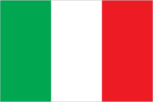
- three equal vertical bands of green (hoist side), white, and red; design inspired by the French flag brought to Italy by Napoleon in 1797; colors are those of Milan (red and white) combined with the green uniform color of the Milanese civic guard
- note
- note: similar to the flag of Mexico, which is longer, uses darker shades of green and red, and has its coat of arms centered on the white band; Ireland, which is longer and is green (hoist side), white, and orange; also similar to the flag of the Cote d'Ivoire, which has the colors reversed - orange (hoist side), white, and green
Government type
parliamentary republic
Independence
17 March 1861 (Kingdom of Italy proclaimed; Italy was not finally unified until 1871)
International law organization participation
accepts compulsory ICJ jurisdiction with reservations; accepts ICCt jurisdiction
International organization participation
ADB (nonregional member), AfDB (nonregional member), Arctic Council (observer), Australia Group, BIS, BSEC (observer), CBSS (observer), CD, CDB, CE, CEI, CERN, EAPC, EBRD, ECB, EIB, EITI (implementing country), EMU, ESA, EU, FAO, FATF, G-7, G-8, G-10, G-20, IADB, IAEA, IBRD, ICAO, ICC (national committees), ICCt, ICRM, IDA, IEA, IFAD, IFC, IFRCS, IGAD (partners), IHO, ILO, IMF, IMO, IMSO, Interpol, IOC, IOM, IPU, ISO, ITSO, ITU, ITUC (NGOs), LAIA (observer), MIGA, MINURSO, NATO, NEA, NSG, OAS (observer), OECD, OPCW, OSCE, Pacific Alliance (observer), Paris Club, PCA, PIF (partner), Schengen Convention, SELEC (observer), SICA (observer), UN, UNCTAD, UNESCO, UNHCR, UNIDO, UNIFIL, Union Latina, UNMOGIP, UNOOSA, UNRWA, UNTSO, UNWTO, UPU, Wassenaar Arrangement, WCO, WHO, WIPO, WMO, WTO, ZC
Judicial branch
- highest court(s)
- Supreme Court of Cassation or Corte Suprema di Cassazione (consists of the first president (chief justice), deputy president, 54 justices presiding over 6 civil and 7 criminal divisions, and 288 judges; an additional 30 judges of lower courts serve as supporting judges; cases normally heard by 5-judge panels; more complex cases heard by 9-judge panels); Constitutional Court or Corte Costituzionale (consists of the court president and 14 judges)
- judge selection and term of office
- Supreme Court judges appointed by the High Council of the Judiciary, headed by the president of the republic; judges may serve for life; Constitutional Court judges - 5 appointed by the president, 5 elected by Parliament, 5 elected by select higher courts; judges serve up to 9 years
- subordinate courts
- various lower civil and criminal courts (primary and secondary tribunals and courts of appeal)
Legal system
civil law system; judicial review of legislation under certain conditions in Constitutional Court
Legislative branch
- description
- bicameral Parliament or Parlamento consists of:Senate or Senato della Repubblica (200 elected seats; 122 members in multi-seat constituencies directly elected by proportional representation vote, 74 members in single-seat constituencies directly elected by plurality vote, and 4 members in multi-seat constituencies abroad directly elected by proportional representation vote; all members serve 5-year terms)Chamber of Deputies or Camera dei Deputati (400 seats; 245 members directly elected in multi-seat constituencies by proportional representation vote; 147 members directly elected in single-seat constituencies by plurality vote and 8 members in multi-seat constituencies abroad directly elected by proportional representation vote; members serve 5-year terms)
- election results
- Senate - percent of vote by party - NA; seats by party - center-right coalition (FdI 65, Lega 30, FI 18), center-left coalition (PD 40, AVS 3), M5S 28, Action-Italia Viva 9, SVP 2, MAIE 1, ScN 1; composition (as of September 2022) - men 131, women 69, percent of women 34.5%Chamber of Deputies - percent of vote by party - NA; seats by party - center-right coalition (FdI 119, Lega 66, FI 45), center-left coalition (PD 69, AVS 12, +EU 2), M5S 52, Action-Italia Viva 21, SVP 3, MAIE 1, ScN 1; composition (as of September 2022) - men 271, women 129, percent of women 32.3%; note - total Parliament percent of women 33%
- elections
- Senate - last held on 25 September 2022 (next to be held no later than December 2027)Chamber of Deputies - last held on 25 September 2022; note - snap elections were called when Prime Minister DRAGHI resigned, and the parliament was dissolved on 21 July 2022 (next to be held on 30 September 2027)
- note
- note: in October 2019, Italy's Parliament voted to reduce the number of Senate seats from 315 to 200 and the number of Chamber of Deputies seats from 630 to 400; a referendum to reduce the membership of Parliament held on 20-21 September 2020 was approved, effective for the September 2022 snap election
National anthem
- lyrics/music
- Goffredo MAMELI/Michele NOVARO
- name
- "Il Canto degli Italiani" (The Song of the Italians)
- note
- note: adopted 1946; the anthem, originally written in 1847, is also known as "L'Inno di Mameli" (Mameli's Hymn), and "Fratelli D'Italia" (Brothers of Italy)
National heritage
- selected World Heritage Site locales
- Historic Center of Rome (c); Archaeological Areas of Pompeii, Herculaneum, and Torre Annunziata (c); Venice and its Lagoon (c); Historic Center of Florence (c); Piazza del Duomo, Pisa (c); Historic Centre of Naples (c); Portovenere, Cinque Terre, and the Islands (c); Villa d'Este, Tivoli (c); Mount Etna (n); Rock Drawings in Valcamonica (c); Historic Siena (c)
- total World Heritage Sites
- 58 (53 cultural, 5 natural)
National holiday
Republic Day, 2 June (1946)
National symbol(s)
white, five-pointed star (Stella d'Italia); national colors: red, white, green
Political parties and leaders
Action-Italia Viva [Carlo CALENDA and Matteo RENZI]Associative Movement of Italians Abroad or MAIE [Ricardo Antonio MERIO]Brothers of Italy or FdI [Giorgia MELONI]Democratic Party or PD [Elly SCHLEIN]Five Star Movement or M5S [Giuseppe CONTE]Forza Italia or FI [Antonio TAJANI]Free and Equal (Liberi e Uguali) or LeU [Pietro GRASSO]Greens and Left Alliance or AVS [Angelo BONELLI]Italexit [Gianluigi PARAGONE]]League or Lega [Matteo SALVINI]More Europe or +EU [Emma BONINO]Popular Union or PU [Luigi DE MAGISTRIS]South calls North or ScN [Cateno DE LUCA] South Tyrolean Peoples Party or SVP [Philipp ACHAMMER]other minor parties
Suffrage
18 years of age; universal except in senatorial elections, where minimum age is 25
Economy
Agricultural products
milk, grapes, wheat, maize, tomatoes, apples, olives, sugar beets, oranges, rice
Average household expenditures
- on alcohol and tobacco
- 4.1% of household expenditures (2018 est.)
- on food
- 14.2% of household expenditures (2018 est.)
Budget
- expenditures
- $1.08 trillion (2020 est.)
- revenues
- $901.494 billion (2020 est.)
Budget surplus (+) or deficit (-)
-2.3% (of GDP) (2017 est.)
Credit ratings
- Fitch rating
- BBB- (2020)
- Moody's rating
- Baa3 (2018)
- note
- note: The year refers to the year in which the current credit rating was first obtained.
- Standard & Poors rating
- BBB (2017)
Current account balance
- Current account balance 2019
- $66.321 billion (2019 est.)
- Current account balance 2020
- $74.509 billion (2020 est.)
- Current account balance 2021
- $64.719 billion (2021 est.)
Debt - external
- Debt - external 2018
- $2,533,153,000,000 (2018 est.)
- Debt - external 2019
- $2,463,208,000,000 (2019 est.)
Economic overview
core EU economy; strong services, manufacturing, and tourism sectors; hard hit by COVID-19 disruptions but starting to recover; large EU exporter but data skews due to inflated port entry valuation; corruption somewhat stymies foreign direct investment
Exchange rates
- Currency
- euros (EUR) per US dollar -
- Exchange rates 2017
- 0.885 (2017 est.)
- Exchange rates 2018
- 0.847 (2018 est.)
- Exchange rates 2019
- 0.893 (2019 est.)
- Exchange rates 2020
- 0.876 (2020 est.)
- Exchange rates 2021
- 0.845 (2021 est.)
Exports
- Exports 2019
- $636.153 billion (2019 est.) note: data are in current year dollars
- Exports 2020
- $559.952 billion (2020 est.) note: data are in current year dollars
- Exports 2021
- $687.948 billion (2021 est.) note: data are in current year dollars
Exports - commodities
packaged medicines, cars and vehicle parts, refined petroleum, vaccines and cultures, jewelry, valves (2021)
Exports - partners
Germany 12%, France 11%, United States 10%, United Kingdom 5%, Spain 5%, Switzerland 5% (2019)
Fiscal year
calendar year
GDP - composition, by end use
- exports of goods and services
- 31.4% (2017 est.)
- government consumption
- 18.6% (2017 est.)
- household consumption
- 61% (2017 est.)
- imports of goods and services
- -28.3% (2017 est.)
- investment in fixed capital
- 17.5% (2017 est.)
- investment in inventories
- -0.2% (2017 est.)
GDP - composition, by sector of origin
- agriculture
- 2.1% (2017 est.)
- industry
- 23.9% (2017 est.)
- services
- 73.9% (2017 est.)
GDP (official exchange rate)
$2,002,763,000,000 (2019 est.)
Gini Index coefficient - distribution of family income
- Gini Index coefficient - distribution of family income 2018
- 35.2 (2018 est.)
Household income or consumption by percentage share
- highest 10%
- 26.8% (2000)
- lowest 10%
- 2.3%
Imports
- Imports 2019
- $568.796 billion (2019 est.) note: data are in current year dollars
- Imports 2020
- $490.684 billion (2020 est.) note: data are in current year dollars
- Imports 2021
- $637.934 billion (2021 est.) note: data are in current year dollars
Imports - commodities
crude petroleum, cars, packaged medicines, natural gas, refined petroleum (2019)
Imports - partners
Germany 16%, France 9%, China 7%, Spain 5%, Netherlands 5%, Belgium 5% (2019)
Industrial production growth rate
13.46% (2021 est.)
Industries
tourism, machinery, iron and steel, chemicals, food processing, textiles, motor vehicles, clothing, footwear, ceramics
Inflation rate (consumer prices)
- Inflation rate (consumer prices) 2019
- 0.61% (2019 est.)
- Inflation rate (consumer prices) 2020
- -0.14% (2020 est.)
- Inflation rate (consumer prices) 2021
- 1.87% (2021 est.)
Labor force
25.012 million (2021 est.)
Population below poverty line
20.1% (2018 est.)
Public debt
- note
- note: Italy reports its data on public debt according to guidelines set out in the Maastricht Treaty; general government gross debt is defined in the Maastricht Treaty as consolidated general government gross debt at nominal value, outstanding at the end of the year, in the following categories of government liabilities (as defined in ESA95): currency and deposits (AF.2), securities other than shares excluding financial derivatives (AF.3, excluding AF.34), and loans (AF.4); the general government sector comprises central, state, and local government and social security funds
- Public debt 2016
- 132% of GDP (2016 est.)
- Public debt 2017
- 131.8% of GDP (2017 est.)
Real GDP (purchasing power parity)
- note
- note: data are in 2017 dollars
- Real GDP (purchasing power parity) 2019
- $2.553 trillion (2019 est.)
- Real GDP (purchasing power parity) 2020
- $2.322 trillion (2020 est.)
- Real GDP (purchasing power parity) 2021
- $2.478 trillion (2021 est.)
Real GDP growth rate
- Real GDP growth rate 2019
- 0.48% (2019 est.)
- Real GDP growth rate 2020
- -9.04% (2020 est.)
- Real GDP growth rate 2021
- 6.74% (2021 est.)
Real GDP per capita
- note
- note: data are in 2017 dollars
- Real GDP per capita 2019
- $42,700 (2019 est.)
- Real GDP per capita 2020
- $39,100 (2020 est.)
- Real GDP per capita 2021
- $41,900 (2021 est.)
Reserves of foreign exchange and gold
- Reserves of foreign exchange and gold 31 December 2019
- $175.398 billion (31 December 2019 est.)
- Reserves of foreign exchange and gold 31 December 2020
- $210.687 billion (31 December 2020 est.)
- Reserves of foreign exchange and gold 31 December 2021
- $227.478 billion (31 December 2021 est.)
Taxes and other revenues
24.77% (of GDP) (2020 est.)
Unemployment rate
- Unemployment rate 2019
- 9.95% (2019 est.)
- Unemployment rate 2020
- 9.16% (2020 est.)
- Unemployment rate 2021
- 9.83% (2021 est.)
Youth unemployment rate (ages 15-24)
- female
- 33.8%
- male
- 29.1%
- total
- 30.9% (2021 est.)
Energy
Carbon dioxide emissions
- from coal and metallurgical coke
- 27.194 million metric tonnes of CO2 (2019 est.)
- from consumed natural gas
- 142.375 million metric tonnes of CO2 (2019 est.)
- from petroleum and other liquids
- 162.472 million metric tonnes of CO2 (2019 est.)
- total emissions
- 332.041 million metric tonnes of CO2 (2019 est.)
Coal
- consumption
- 9.335 million metric tons (2020 est.)
- exports
- 368,000 metric tons (2020 est.)
- imports
- 8.235 million metric tons (2020 est.)
- production
- 1.456 million metric tons (2020 est.)
- proven reserves
- 17 million metric tons (2019 est.)
Electricity
- consumption
- 286.375 billion kWh (2020 est.)
- exports
- 7.587 billion kWh (2020 est.)
- imports
- 39.787 billion kWh (2020 est.)
- installed generating capacity
- 121.442 million kW (2020 est.)
- transmission/distribution losses
- 17.702 billion kWh (2020 est.)
Electricity access
- electrification - total population
- 100% (2021)
Electricity generation sources
- biomass and waste
- 8.1% of total installed capacity (2020 est.)
- fossil fuels
- 55.9% of total installed capacity (2020 est.)
- geothermal
- 2.2% of total installed capacity (2020 est.)
- hydroelectricity
- 17.5% of total installed capacity (2020 est.)
- nuclear
- 0% of total installed capacity (2020 est.)
- solar
- 9.2% of total installed capacity (2020 est.)
- tide and wave
- 0.2% of total installed capacity (2020 est.)
- wind
- 6.9% of total installed capacity (2020 est.)
Energy consumption per capita
- Total energy consumption per capita 2019
- 112.606 million Btu/person (2019 est.)
Natural gas
- consumption
- 74,313,109,000 cubic meters (2019 est.)
- exports
- 314.656 million cubic meters (2020 est.)
- imports
- 70,908,014,000 cubic meters (2019 est.)
- production
- 3,888,491,000 cubic meters (2020 est.)
- proven reserves
- 45.76 billion cubic meters (2021 est.)
Nuclear energy
- Net capacity of operational nuclear reactors
- 0GW
- Number of nuclear reactors permanently shut down
- 4
- Percent of total electricity production
- 0%
- Percent of total energy produced
- 0%
Petroleum
- crude oil and lease condensate exports
- 10,100 bbl/day (2018 est.)
- crude oil and lease condensate imports
- 1.253 million bbl/day (2018 est.)
- crude oil estimated reserves
- 497.9 million barrels (2021 est.)
- refined petroleum consumption
- 1,255,100 bbl/day (2019 est.)
- total petroleum production
- 107,700 bbl/day (2021 est.)
Refined petroleum products - exports
615,900 bbl/day (2017 est.)
Refined petroleum products - imports
422,500 bbl/day (2017 est.)
Refined petroleum products - production
1.607 million bbl/day (2017 est.)
Communications
Broadband - fixed subscriptions
- subscriptions per 100 inhabitants
- 30 (2020 est.)
- total
- 18,128,787 (2020 est.)
Broadcast media
two Italian media giants dominate with 3 national terrestrial stations and privately owned companies with 3 national terrestrial stations; a large number of private stations, a satellite TV network; 3 AM/FM nationwide radio stations; about 1,300 commercial radio stations
Internet country code
.it
Internet users
- percent of population
- 75% (2021 est.)
- total
- 44.25 million (2021 est.)
Telecommunication systems
- domestic
- 34 per 100 for fixed-line and nearly 132 per 100 for mobile-cellular subscriptions (2021)
- general assessment
- Italy’s large telecom market has one of the most progressive fiber sectors in Europe, with regulatory measures encouraging network sharing; regulatory measures have also been introduced to facilitate access to next generation networks (NGNs), and a number of deals have been brokered which enable the main telcoms to provide bundled services to large numbers of the population; Italy’s vibrant mobile market has one of the highest subscription rates in Europe, though the number of subscribers has fallen in recent years as customers respond to attractive off-net pricing which has reduced the financial benefit of having SIM cards from different providers; network companies were among the first in Europe to trial services based on 5G; the high cost also encouraged the regulator in early 2021 to consider extending the licenses by an additional six years (2021)
- international
- country code - 39; landing points for Italy-Monaco, Italy-Libya, Italy-Malta, Italy-Greece-1, Italy-Croatia, BlueMed, Janna, FEA, SeaMeWe-3 & 4 & 5, Trapani-Kelibia, Columbus-III, Didon, GO-1, HANNIBAL System, MENA, Bridge International, Malta-Italy Interconnector, Melita1, IMEWE, VMSCS, AAE-1, and OTEGLOBE, submarine cables that provide links to Asia, the Middle East, Europe, North Africa, Southeast Asia, Australia and US; satellite earth stations - 3 Intelsat (with a total of 5 antennas - 3 for Atlantic Ocean and 2 for Indian Ocean) (2019)
Telephones - fixed lines
- subscriptions per 100 inhabitants
- 34 (2021 est.)
- total subscriptions
- 19,994,902 (2021 est.)
Telephones - mobile cellular
- subscriptions per 100 inhabitants
- 132 (2021 est.)
- total subscriptions
- 78,114,933 (2021 est.)
Transportation
Airports
129 (2021)
Airports - with paved runways
- civil airports
- 37
- joint use (civil-military) airports
- 10
- military airports
- 15
- note
- note: paved runways have a concrete or asphalt surface but not all have facilities for refueling, maintenance, or air traffic control; the length of a runway required for aircraft to safely operate depends on a number of factors including the type of aircraft, the takeoff weight (including passengers, cargo, and fuel), engine types, flap settings, landing speed, elevation of the airport, and average maximum daily air temperature; paved runways can reach a length of 5,000 m (16,000 ft.), but the “typical” length of a commercial airline runway is between 2,500-4,000 m (8,000-13,000 ft.)
- other airports
- 36
- total
- 98
Airports - with unpaved runways
- 31
- note
- note: unpaved runways have a surface composition such as grass or packed earth and are most suited to the operation of light aircraft; unpaved runways are usually short, often less than 1,000 m (3,280 ft.) in length; airports with unpaved runways often lack facilities for refueling, maintenance, or air traffic control
Civil aircraft registration country code prefix
I
Heliports
5 (2021)
Merchant marine
- by type
- bulk carrier 20, container ship 6, general cargo 107, oil tanker 102, other 1,031
- total
- 1,266 (2022)
National air transport system
- annual freight traffic on registered air carriers
- 1.418 billion (2018) mt-km
- annual passenger traffic on registered air carriers
- 27,630,435 (2018)
- inventory of registered aircraft operated by air carriers
- 180
- number of registered air carriers
- 9 (2020)
Pipelines
20,223 km gas, 1,393 km oil, 1,574 km refined products (2013)
Ports and terminals
- container port(s) (TEUs)
- Genoa (2,557,847), Gioia Tauro (3,146,553) (2021)
- LNG terminal(s) (import)
- Panigaglia (La Spezia), Adriatic (Porto Levante), Oristano (Sardinia), Ravenna, Toscana (Livorno)
- major seaport(s)
- Augusta, Cagliari, Genoa, Livorno, Taranto, Trieste, Venice
- oil terminal(s)
- Melilli (Santa Panagia) oil terminal, Sarroch oil terminal
Railways
- note
- 1289.3 0.950-mm gauge (151.3 km electrified)
- total
- 18,475 km (2020) 12,936 km electrified
Roadways
- paved
- 487,700 km (2007) (includes 6,700 km of expressways)
- total
- 487,700 km (2007)
Transportation - note
Italy operates one PC 5 or 6 class light icebreaker, it is based in the Mediterraneannote - PC indicates a Polar Class vessel: PC 5 - year-round operation in medium first-year ice which may include old ice inclusions (ice thickness up to 70-120 cm); PC 6 - summer/autumn operation in medium first-year ice which may include old ice inclusions (ice thickness up to 30-70 cm)
Waterways
2,400 km (2012) (used for commercial traffic; of limited overall value compared to road and rail)
Military and Security
Military - note
the Italian military is an all-volunteer and professional force responsible for Italy’s national defense and security and fulfilling the country’s commitments to the EU, NATO, and the UN; it also has some domestic security duties; for example, the Army has provided troops for guarding public buildings and for more than a decade several thousand Army and Carabinieri personnel have been deployed domestically to support the National Police as part of a government effort to curb crime in various Italian cities Italy has been an active member of NATO since its founding in 1948, and the Alliance is a cornerstone of Rome’s national security strategy; it is a strong supporter of European/EU defense cooperation and integration; Italy is an active participant in EU, NATO, UN, and other multinational military, security, and humanitarian operations; key areas of emphasis for Italy’s security policy and multinational cooperation are NATO/Europe’s eastern and southern flanks, including the Mediterranean Sea, East and North Africa, and the Middle East and its adjacent waters; Italy is one of NATO’s leading contributors of military forces and participates in such missions as NATO’s Air Policing in the Baltics, the Enhanced Forward Presence in Eastern Europe, and maritime patrols in the Mediterranean and beyond; it hosts NATO’s Joint Force Command in Naples and a NATO Rapid Deployable Corps headquarters in Milan, as well as the headquarters for the EU’s Mediterranean naval operations force in Rome; since 1960, Italy has committed more than 60,000 troops to UN missions, and it hosts a training center in Vicenza for police personnel destined for peacekeeping missions; in addition, Italy has close defense ties with the US and hosts several US military air, army, and naval bases and facilitiesthe Italian Army has participated in many colonial engagements, conflicts, major wars, and peacekeeping missions since its establishment in the 1850s and 1860s during Italian unification, from African colonization in the late 1800s to both World Wars and more recently, Afghanistan and Iraq; the current Italian Army is equipped largely with domestically manufactured weapons systems and organized into functional areas (operational, logistic, infrastructural, training, and territorial); the combat forces are under the operational commands, which include the Alpine Command (one divisional headquarters and two alpine/mountain brigades), the Southern Operational Forces Command (five mechanized brigades), the Northern Operational Forces Command (armored, cavalry, and airborne brigades), the Operational Land Forces Support Command (commands for artillery, air defense, engineers, etc), and the Operational Land Forces Command and Army Operational Command (two divisional headquarters, an aviation command with an air mobile brigade, and a special forces command)the Navy was officially established in 1860; as country with seas on three sides, naval power has long been a key component of Italy’s national security; today, it maintains one of the largest navies in NATO with several functional and regionally based commands and operates globally; in addition to maritime defense, the Navy’s missions include countering illegal trafficking, protecting the marine environment, and assisting with humanitarian and disaster assistance, as well as contributing to civil projects, such as scientific research; its principal warships include two aircraft carriers, four destroyers, 13 frigates, and eight attack submarines, as well as several large amphibious assault ships and a large inventory of patrol vessels; it also has a marine amphibious force, a special operations force, and operates a diverse array of naval fixed-wing, rotary-wing, and unmanned aircraft, including naval fighters and anti-submarine warfare helicopters; the Air Force was established in 1923, but the first air unit was established in 1884; today, it has nearly 500 total aircraft, including around 200 fighters and multirole fighter aircraft; to coordinate the different services, the military has several joint commands, including for operations, space, and special operations (2023)
Military and security forces
- Italian Armed Forces: Army (Esercito Italiano, EI), Navy (Marina Militare Italiana, MMI; includes aviation, marines), Italian Air Force (Aeronautica Militare Italiana, AMI); Carabinieri Corps (Arma dei Carabinieri, CC) (2023)
- note
- note 1: the National Police and Carabinieri (gendarmerie or military police) maintain internal security; the National Police reports to the Ministry of Interior while the Carabinieri reports to the Ministry of Defense but is also under the coordination of the Ministry of Interior; the Carabinieri is primarily a domestic police force organized along military lines, with some overseas responsibilitiesnote 2: the Financial Guard (Guardia di Finanza) under the Ministry of Economy and Finance is a force with military status and nationwide remit for financial crime investigations, including narcotics trafficking, smuggling, and illegal immigration
Military and security service personnel strengths
approximately 170,000 active personnel (100,000 Army; 30,000 Navy; 40,000 Air Force); approximately 108,000 Carabinieri (2023)
Military deployments
- 120 Djibouti; approximately 750 Bulgaria (NATO); approximately 1,000 Middle East (NATO, European Assistance Mission Iraq); 850 Kosovo (NATO/KFOR); 250 Latvia (NATO); 1,000 Lebanon (UNIFIL); 400 Libya; 350 Niger; 250 Romania (NATO); 150 Somalia (EUTM) (2023)
- note
- note: in response to Russia’s invasion of Ukraine, some NATO countries, including Italy, have sent additional troops and equipment to the battlegroups deployed in NATO territory in eastern Europe
Military equipment inventories and acquisitions
the military's inventory includes a mix of domestically manufactured, imported, and jointly produced weapons systems, mostly from Europe and the US; in recent years, the US has been the lead supplier of military hardware to Italy; the Italian defense industry is capable of producing equipment across all the military domains with particular strengths in aircraft, armored vehicles, and naval vessels; it also participates in joint development and production of advanced weapons systems with other European countries and the US (2023)
Military expenditures
- Military Expenditures 2019
- 1.2% of GDP (2019)
- Military Expenditures 2020
- 1.6% of GDP (2020)
- Military Expenditures 2021
- 1.6% of GDP (2021)
- Military Expenditures 2022
- 1.5% of GDP (2022 est.)
- Military Expenditures 2023
- 1.5% of GDP (2023 est.)
Military service age and obligation
- 17-25 years of age for voluntary military service for men and women (some variations on age depending on the military branch); voluntary service is a minimum of 12 months with the option to extend in the Armed Forces or compete for positions in the Military Corps of the Italian Red Cross, the State Police, the Carabinieri, the Guardia di Finanza, the Penitentiary Police, or the National Fire Brigade; recruits can also volunteer for 4 years military service; conscription abolished 2004 (2023)
- note
- note: women may serve in any military branch; as of 2020, women made up about 6% of the military's full-time personnel
Transnational Issues
Disputes - international
Italy-Austria-Switzerland: borders are shifting because glacier peaks that had served as a natural boundary are melting
Illicit drugs
important gateway for drug trafficking; organized crime groups allied with Colombian and Spanish groups trafficking cocaine to Europe
Refugees and internally displaced persons
- note
- note: 840,958 estimated refugee and migrant arrivals (January 2015-November 2023)
- refugees (country of origin)
- 21,441 (Nigeria), 17,706 (Afghanistan), 17,619 (Pakistan), 11,193 (Mali), 8,405 (Somalia), 6,324 (Gambia), 5,768 (Bangladesh), 5,463 (Iraq) (mid-year 2022); 168,725 (Ukraine) (as of 10 November 2023)
- stateless persons
- 3,000 (2022)
Space
Space agency/agencies
Italian Space Agency (ISA; established 1988); Joint Space Operations Command (Comando Interforze delle Operazioni Spaziali or COS; established 2020) (2023)
Space launch site(s)
the Broglio (aka San Marco, Malindi) Space Center, located near Malindi, Kenya, served from 1967 to 1988 as an Italian and international satellite launch facility; in 2020, Kenya concluded a new deal with Italy to conduct rocket launches from the site again in the future; in 2018, the Italian Government designated the Taranto-Grottaglie Airport as a future spaceport and signed framework agreements with commercial space companies that could lead to suborbital and orbital launches from what would be called the Grottaglie Spaceport (2023)
Space program overview
- has one of the largest space programs in Europe; is a key member of the European Space Agency (ESA) and one of its largest contributors; designs, builds, launches, and operates communications, remote sensing (RS), and scientific satellites; designs and manufacturers sounding (research) rockets and orbital satellite launch vehicles (SLVs); hosts the ESA Center for Earth Observation; has astronaut cadre in the ESA astronaut corps; researches, develops, and builds a range of other space-related technologies and participates in a wide array of international programs with astronauts, cargo containers, construction, expertise, modules, scientific experiments, and technology; outside of the ESA/EU and their individual member states, has cooperated with a variety of foreign space agencies and industries, including those of Argentina, Brazil, Canada, China, Israel, Japan, Kenya, Mexico, Russia, South Korea, Thailand, the UAE, and the US; participates in international space projects such as the International Space Station (ISS); has a considerable commercial space industrial sector with more than 200 companies encompassing a wide range of capabilities, including manufacturing satellites, satellite payloads, launch vehicles, propulsion systems, cargo containers, and their sub-components (2023)
- note
- note: further details about the key activities, programs, and milestones of the country’s space program, as well as government spending estimates on the space sector, appear in Appendix S
Terrorism
Terrorist group(s)
- Islamic State of Iraq and ash-Sham (ISIS)
- note
- note: details about the history, aims, leadership, organization, areas of operation, tactics, targets, weapons, size, and sources of support of the group(s) appear(s) in Appendix-T
Environment
Air pollutants
- methane emissions
- 41.3 megatons (2020 est.)
- particulate matter emissions
- 14.22 micrograms per cubic meter (2019 est.)
Climate
predominantly Mediterranean; alpine in far north; hot, dry in south
Environment - current issues
air pollution from industrial emissions such as sulfur dioxide; coastal and inland rivers polluted from industrial and agricultural effluents; acid rain damaging lakes; inadequate industrial waste treatment and disposal facilities
Environment - international agreements
- party to
- Air Pollution, Air Pollution-Nitrogen Oxides, Air Pollution-Persistent Organic Pollutants, Air Pollution-Sulphur 85, Air Pollution-Sulphur 94, Air Pollution-Volatile Organic Compounds, Antarctic-Environmental Protection, Antarctic-Marine Living Resources, Antarctic Seals, Antarctic Treaty, Biodiversity, Climate Change, Climate Change-Kyoto Protocol, Climate Change-Paris Agreement, Comprehensive Nuclear Test Ban, Desertification, Endangered Species, Environmental Modification, Hazardous Wastes, Law of the Sea, Marine Dumping-London Convention, Marine Dumping-London Protocol, Nuclear Test Ban, Ozone Layer Protection, Ship Pollution, Tropical Timber 2006, Wetlands, Whaling
- signed, but not ratified
- Air Pollution-Heavy Metals, Air Pollution-Multi-effect Protocol
Land use
- agricultural land
- 47.1% (2018 est.)
- agricultural land: arable land
- arable land: 22.8% (2018 est.)
- agricultural land: permanent crops
- permanent crops: 8.6% (2018 est.)
- agricultural land: permanent pasture
- permanent pasture: 15.7% (2018 est.)
- forest
- 31.4% (2018 est.)
- other
- 21.5% (2018 est.)
Major watersheds (area sq km)
Atlantic Ocean drainage: Rhine-Maas (198,735 sq km), (Black Sea) Danube (795,656 sq km), (Adriatic Sea) Po (76,997 sq km), (Mediterranean Sea) Rhone (100,543 sq km)
Revenue from coal
0% of GDP (2018 est.)
Revenue from forest resources
0.01% of GDP (2018 est.)
Total renewable water resources
191.3 billion cubic meters (2020 est.)
Total water withdrawal
- agricultural
- 17 billion cubic meters (2020 est.)
- industrial
- 7.7 billion cubic meters (2020 est.)
- municipal
- 9.19 billion cubic meters (2020 est.)
Urbanization
- rate of urbanization
- 0.27% annual rate of change (2020-25 est.)
- urban population
- 72% of total population (2023)
Waste and recycling
- municipal solid waste generated annually
- 29.524 million tons (2015 est.)
- municipal solid waste recycled annually
- 7,646,716 tons (2015 est.)
- percent of municipal solid waste recycled
- 25.9% (2015 est.)