2009 Edition
CIA World Factbook 2009 (Project Gutenberg)
Introduction
Background
Italy became a nation-state in 1861 when the regional states of the peninsula, along with Sardinia and Sicily, were united under King Victor EMMANUEL II. An era of parliamentary government came to a close in the early 1920s when Benito MUSSOLINI established a Fascist dictatorship. His alliance with Nazi Germany led to Italy's defeat in World War II. A democratic republic replaced the monarchy in 1946 and economic revival followed. Italy was a charter member of NATO and the European Economic Community (EEC). It has been at the forefront of European economic and political unification, joining the Economic and Monetary Union in 1999. Persistent problems include illegal immigration, organized crime, corruption, high unemployment, sluggish economic growth, and the low incomes and technical standards of southern Italy compared with the prosperous north.
Geography
Area
total: 301,340 sq km country comparison to the world: 71 land: 294,140 sq km water: 7,200 sq km note: includes Sardinia and Sicily
Area - comparative
slightly larger than Arizona
Climate
predominantly Mediterranean; Alpine in far north; hot, dry in south
Coastline
7,600 km
Elevation extremes
lowest point: Mediterranean Sea 0 m highest point: Mont Blanc (Monte Bianco) de Courmayeur 4,748 m (a secondary peak of Mont Blanc)
Environment - current issues
air pollution from industrial emissions such as sulfur dioxide; coastal and inland rivers polluted from industrial and agricultural effluents; acid rain damaging lakes; inadequate industrial waste treatment and disposal facilities
Environment - international agreements
party to: Air Pollution, Air Pollution-Nitrogen Oxides, Air Pollution-Persistent Organic Pollutants, Air Pollution-Sulfur 85, Air Pollution-Sulfur 94, Air Pollution-Volatile Organic Compounds, Antarctic-Environmental Protocol, Antarctic-Marine Living Resources, Antarctic Seals, Antarctic Treaty, Biodiversity, Climate Change, Climate Change-Kyoto Protocol, Desertification, Endangered Species, Environmental Modification, Hazardous Wastes, Law of the Sea, Marine Dumping, Ozone Layer Protection, Ship Pollution, Tropical Timber 83, Tropical Timber 94, Wetlands, Whaling signed, but not ratified: none of the selected agreements
Freshwater withdrawal (domestic/industrial/agricultural)
total: 41.98 cu km/yr (18%/37%/45%) per capita: 723 cu m/yr (1998)
Geographic coordinates
42 50 N, 12 50 E
Geography - note
strategic location dominating central Mediterranean as well as southern sea and air approaches to Western Europe
Irrigated land
27,500 sq km (2003)
Land boundaries
total: 1,899.2 km border countries: Austria 430 km, France 488 km, Holy See (Vatican City) 3.2 km, San Marino 39 km, Slovenia 199 km, Switzerland 740 km
Land use
arable land: 26.41% permanent crops: 9.09% other: 64.5% (2005)
Location
Southern Europe, a peninsula extending into the central Mediterranean Sea, northeast of Tunisia
Map references
Europe
Maritime claims
territorial sea: 12 nm continental shelf: 200-m depth or to the depth of exploitation
Natural hazards
regional risks include landslides, mudflows, avalanches, earthquakes, volcanic eruptions, flooding; land subsidence in Venice
Natural resources
coal, mercury, zinc, potash, marble, barite, asbestos, pumice, fluorspar, feldspar, pyrite (sulfur), natural gas and crude oil reserves, fish, arable land
Terrain
mostly rugged and mountainous; some plains, coastal lowlands
Total renewable water resources
175 cu km (2005)
People and Society
Age structure
0-14 years: 13.5% (male 4,056,156/female 3,814,070) 15-64 years: 66.3% (male 19,530,696/female 18,981,084) 65 years and over: 20.2% (male 4,903,762/female 6,840,444) (2009 est.)
Birth rate
8.18 births/1,000 population (2009 est.) country comparison to the world: 221
Death rate
10.72 deaths/1,000 population (July 2009 est.) country comparison to the world: 53
Education expenditures
4.5% of GDP (2005) country comparison to the world: 88
Ethnic groups
Italian (includes small clusters of German-, French-, and Slovene-Italians in the north and Albanian-Italians and Greek-Italians in the south)
HIV/AIDS - adult prevalence rate
0.4% (2007 est.) country comparison to the world: 82
HIV/AIDS - deaths
1,900 (2007 est.) country comparison to the world: 62
HIV/AIDS - people living with HIV/AIDS
150,000 (2007 est.) country comparison to the world: 36
Infant mortality rate
total: 5.51 deaths/1,000 live births country comparison to the world: 183 male: 6.07 deaths/1,000 live births female: 4.91 deaths/1,000 live births (2009 est.)
Languages
Italian (official), German (parts of Trentino-Alto Adige region are predominantly German speaking), French (small French-speaking minority in Valle d'Aosta region), Slovene (Slovene-speaking minority in the Trieste-Gorizia area)
Life expectancy at birth
total population: 80.2 years country comparison to the world: 19 male: 77.26 years female: 83.33 years (2009 est.)
Literacy
definition: age 15 and over can read and write total population: 98.4% male: 98.8% female: 98% (2001 census)
Median age
total: 43.3 years male: 41.8 years female: 44.8 years (2009 est.)
Nationality
noun: Italian(s) adjective: Italian
Net migration rate
2.06 migrant(s)/1,000 population (2009 est.) country comparison to the world: 43
Population
58,126,212 (July 2009 est.) country comparison to the world: 23
Population growth rate
-0.047% (2009 est.) country comparison to the world: 208
Religions
Roman Catholic 90% (approximately; about one-third practicing), other 10% (includes mature Protestant and Jewish communities and a growing Muslim immigrant community)
School life expectancy (primary to tertiary education)
total: 16 years male: 16 years female: 17 years (2006)
Sex ratio
at birth: 1.07 male(s)/female under 15 years: 1.06 male(s)/female 15-64 years: 1.03 male(s)/female 65 years and over: 0.72 male(s)/female total population: 0.96 male(s)/female (2009 est.)
Total fertility rate
1.31 children born/woman (2009 est.) country comparison to the world: 205
Urbanization
urban population: 68% of total population (2008) rate of urbanization: 0.4% annual rate of change (2005-10 est.)
Government
Administrative divisions
15 regions (regioni, singular - regione) and 5 autonomous regions (regioni autonome, singular - regione autonoma) regions: Abruzzo, Basilicata, Calabria, Campania, Emilia-Romagna, Lazio (Latium), Liguria, Lombardia, Marche, Molise, Piemonte (Piedmont), Puglia (Apulia), Toscana (Tuscany), Umbria, Veneto (Venetia) autonomous regions: Friuli-Venezia Giulia; Sardegna (Sardinia); Sicilia (Sicily); Trentino-South Tyrol, also known as Trentino-Alto Adige (Italian), Trentino-Suedtirol (German); Aosta Valley, also known as Valle d'Aosta (Italian), Vallee d'Aoste (French)
Capital
name: Rome geographic coordinates: 41 54 N, 12 29 E time difference: UTC+1 (6 hours ahead of Washington, DC during Standard Time) daylight saving time: +1hr, begins last Sunday in March; ends last Sunday in October
Constitution
passed 11 December 1947, effective 1 January 1948; amended many times
Country name
conventional long form: Italian Republic conventional short form: Italy local long form: Repubblica Italiana local short form: Italia former: Kingdom of Italy
Diplomatic representation from the US
chief of mission: Ambassador (vacant); Charge d'Affaires Elizabeth DIBBLE embassy: Via Vittorio Veneto 121, 00187-Rome mailing address: PSC 59, Box 100, APO AE 09624 telephone: [39] (06) 46741
Diplomatic representation in the US
chief of mission: Ambassador Giulio TERZI di Sant'Agata chancery: 3000 Whitehaven Street NW, Washington, DC 20008 telephone: [1] (202) 612-4400
Executive branch
chief of state: President Giorgio NAPOLITANO (since 15 May 2006) head of government: Prime Minister Silvio BERLUSCONI (since 8 May 2008) note - in Italy the prime minister is referred to as the president of the Council of Ministers cabinet: Council of Ministers nominated by the prime minister and approved by the president elections: president elected by an electoral college consisting of both houses of parliament and 58 regional representatives for a seven-year term (no term limits); election last held 10 May 2006 (next to be held in May 2013); prime minister appointed by the president and confirmed by parliament election results: Giorgio NAPOLITANO elected president on the fourth round of voting; electoral college vote - 543
FAX
- [1] (202) 518-2151 consulate(s) general: Boston, Chicago, Houston, Miami, New York, Los Angeles, Philadelphia, San Francisco consulate(s): Detroit
- [39] (06) 488-2672, 4674-2356 consulate(s) general: Florence, Milan, Naples
Flag description
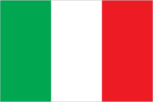
three equal vertical bands of green (hoist side), white, and red; similar to the flag of Ireland, which is longer and is green (hoist side), white, and orange; also similar to the flag of the Cote d'Ivoire, which has the colors reversed - orange (hoist side), white, and green; inspired by the French flag brought to Italy by Napoleon in 1797
Government type
republic
Independence
17 March 1861 (Kingdom of Italy proclaimed; Italy was not finally unified until 1870)
International organization participation
ADB (nonregional member), AfDB (nonregional member), Arctic Council (observer), Australia Group, BIS, BSEC (observer), CBSS (observer), CDB, CE, CEI, CERN, EAPC, EBRD, EIB, EMU, ESA, EU, FAO, G-20, G-7, G-8, G-10, IADB, IAEA, IBRD, ICAO, ICC, ICCt, ICRM, IDA, IEA, IFAD, IFC, IFRCS, IHO, ILO, IMF, IMO, IMSO, Interpol, IOC, IOM, IPU, ISO, ITSO, ITU, ITUC, LAIA (observer), MIGA, MINURSO, NAM (guest), NATO, NEA, NSG, OAS (observer), OECD, OPCW, OSCE, Paris Club, PCA, Schengen Convention, SECI (observer), SICA (observer), UN, UNCTAD, UNESCO, UNHCR, UNIDO, UNIFIL, Union Latina, UNMOGIP, UNRWA, UNTSO, UNWTO, UPU, WCL, WCO, WEU, WFTU, WHO, WIPO, WMO, WTO, ZC
Judicial branch
Constitutional Court or Corte Costituzionale (composed of 15 judges: one-third appointed by the president, one-third elected by parliament, one-third elected by the ordinary and administrative Supreme Courts)
Legal system
based on civil law system; appeals treated as new trials; judicial review under certain conditions in Constitutional Court; has not accepted compulsory ICJ jurisdiction
Legislative branch
bicameral Parliament or Parlamento consists of the Senate or Senato della Repubblica (315 seats; members elected by proportional vote with the winning coalition in each region receiving 55% of seats from that region; to serve five-year terms) and the Chamber of Deputies or Camera dei Deputati (630 seats; members elected by popular vote with the winning national coalition receiving 54% of chamber seats; to serve five-year terms) elections: Senate - last held 13-14 April 2008 (next to be held April 2013); Chamber of Deputies - last held 13-14 April 2008 (next to be held April 2013) election results: Senate - percent of vote by party - NA; seats by party - S. BERLUSCONI coalition 174 (PdL 147, LN 25, MpA 2), W. VELTRONI coalition 132 (PD 118, IdV 3), UdC 3, other 6; Chamber of Deputies - percent of vote by party - NA; seats by party - S. BERLUSCONI coalition 344 (PdL 276, LN 60, MpA 8), W. VELTRONI coalition 246 (PD 217, IdV 29), UdC 36, other 4
National holiday
Republic Day, 2 June (1946)
Political pressure groups and leaders
manufacturers and merchants associations - Confcommercio; Confindustria; organized farm groups - Confcoltivatori; Confagricoltura; Roman Catholic Church; three major trade union confederations - Confederazione Generale Italiana del Lavoro or CGIL [Guglielmo EPIFANI] which is left wing; Confederazione Italiana dei Sindacati Lavoratori or CISL [Raffaele BONANNO], which is Roman Catholic centrist; Unione Italiana del Lavoro or UIL [Luigi ANGELETTI] which is lay centrist)
Silvio BERLUSCONI coalition
People of Freedom or PdL [Silvio BERLUSCONI]; Lega Nord or LN [Umberto BOSSI]; Movement for Autonomy or MpA [Raffaele LOMBARDO]
Suffrage
18 years of age; universal (except in senatorial elections, where minimum age is 25)
Walter VELTRONI coalition
Democratic Party or PD [Walter VELTRONI]; Italy of Values or IdV [Antonio DI PIETRO] other non-allied parties: Union of the Center or UdC [Savino PEZZOTTA]
Economy
Agriculture - products
fruits, vegetables, grapes, potatoes, sugar beets, soybeans, grain, olives; beef, dairy products; fish
Budget
revenues: $1.068 trillion expenditures: $1.132 trillion (2008 est.)
Central bank discount rate
3% (31 December 2008) country comparison to the world: 108 5% (31 December 2007) note: this is the European Central Bank's rate on the marginal lending facility, which offers overnight credit to banks in the euro area
Commercial bank prime lending rate
11.34% (31 December 2008) country comparison to the world: 75 10.93% (31 December 2007)
Current account balance
-$78.03 billion (2008 est.) country comparison to the world: 188 -$51.03 billion (2007 est.)
Debt - external
$2.328 trillion (31 December 2008) country comparison to the world: 7 $2.5 trillion (31 December 2007)
Distribution of family income - Gini index
32 (2006) country comparison to the world: 104 27.3 (1995)
Economy - overview
Italy has a diversified industrial economy, which is divided into a developed industrial north, dominated by private companies, and a less-developed, welfare-dependent, agricultural south, with high unemployment. The Italian economy is driven in large part by the manufacture of high-quality consumer goods produced by small and medium-sized enterprises. Italy also has a sizable underground economy, which by some estimates accounts for as much as 15% of GDP. These activities are most common within the agriculture, construction, and service sectors. Italy has moved slowly on implementing needed structural reforms, such as lightening the high tax burden and overhauling Italy's rigid labor market and over-generous pension system and these conditions will be exacerbated by the recent global financial crisis. The Italian government is seeking to rein in government spending, but the leadership faces a severe economic constraint: Italy's official debt remains above 100% of GDP, and the fiscal deficit - 1.5% of GDP in 2007 - could approach 3% in 2009 as political pressure to stimulate the economy and the costs of servicing Italy's debt rise. The economy will continue to contract through 2009 as the global demand for exports drop.
Electricity - consumption
315 billion kWh (2007 est.) country comparison to the world: 13
Electricity - exports
3.431 billion kWh (2008 est.)
Electricity - imports
43 billion kWh (2008 est.)
Electricity - production
289.7 billion kWh (2007 est.) country comparison to the world: 13
Exchange rates
euros (EUR) per US dollar - 0.6827 (2008 est.), 0.7345 (2007), 0.7964 (2006), 0.8041 (2005), 0.8054 (2004)
Exports
$546.9 billion (2008 est.) country comparison to the world: 7 $502.4 billion (2007 est.)
Exports - commodities
engineering products, textiles and clothing, production machinery, motor vehicles, transport equipment, chemicals; food, beverages and tobacco; minerals, and nonferrous metals
Exports - partners
Germany 12.8%, France 11.2%, Spain 6.6%, US 6.3%, UK 5.3% (2008)
GDP - composition by sector
agriculture: 2% industry: 27% services: 71% (2008 est.)
GDP - per capita (PPP)
$31,400 (2008 est.) country comparison to the world: 41 $31,700 (2007 est.) $31,300 (2006 est.) note: data are in 2008 US dollars
GDP - real growth rate
-1% (2008 est.) country comparison to the world: 207 1.5% (2007 est.) 2.1% (2006 est.)
GDP (official exchange rate)
$2.314 trillion (2008 est.)
GDP (purchasing power parity)
$1.827 trillion (2008 est.) country comparison to the world: 11 $1.845 trillion (2007 est.) $1.818 trillion (2006 est.) note: data are in 2008 US dollars
Household income or consumption by percentage share
lowest 10%: 2.3% highest 10%: 26.8% (2000)
Imports
$546.9 billion (2008 est.) country comparison to the world: 8 $498.1 billion (2007 est.)
Imports - commodities
engineering products, chemicals, transport equipment, energy products, minerals and nonferrous metals, textiles and clothing; food, beverages, and tobacco
Imports - partners
Germany 16%, France 8.6%, China 6.2%, Netherlands 5.3%, Libya 4.6%, Russia 4.3% (2008)
Industrial production growth rate
-2.8% (2008 est.) country comparison to the world: 160
Industries
tourism, machinery, iron and steel, chemicals, food processing, textiles, motor vehicles, clothing, footwear, ceramics
Inflation rate (consumer prices)
3.4% (2008 est.) country comparison to the world: 45 1.8% (2007 est.)
Investment (gross fixed)
20.9% of GDP (2008 est.) country comparison to the world: 97
Labor force
25.11 million (2008 est.) country comparison to the world: 21
Labor force - by occupation
agriculture: 4.2% industry: 30.7% services: 65.1% (2005)
Market value of publicly traded shares
$NA (31 December 2008) country comparison to the world: 17 $1.073 trillion (31 December 2007) $1.027 trillion (31 December 2006)
Natural gas - consumption
84.88 billion cu m (2008 est.) country comparison to the world: 8
Natural gas - exports
210 million cu m (2008) country comparison to the world: 40
Natural gas - imports
76.86 billion cu m (2008 est.) country comparison to the world: 4
Natural gas - production
9.255 billion cu m (2008 est.) country comparison to the world: 43
Natural gas - proved reserves
94.15 billion cu m (1 January 2009 est.) country comparison to the world: 54
Oil - consumption
1.639 million bbl/day (2008 est.) country comparison to the world: 16
Oil - exports
667,100 bbl/day (2008 est.) country comparison to the world: 24
Oil - imports
2.205 million bbl/day (2008 est.) country comparison to the world: 10
Oil - production
162,200 bbl/day (2008 est.) country comparison to the world: 44
Oil - proved reserves
406.5 million bbl (1 January 2009 est.) country comparison to the world: 51
Population below poverty line
NA%
Public debt
105.8% of GDP (2008 est.) country comparison to the world: 5 105.6% of GDP (2004 est.)
Reserves of foreign exchange and gold
$105.3 billion (31 December 2008 est.) country comparison to the world: 13 $94.33 billion (31 December 2007 est.)
Stock of direct foreign investment - abroad
$565.3 billion (31 December 2008 est.) country comparison to the world: 11 $520.1 billion (31 December 2007 est.)
Stock of direct foreign investment - at home
$376.6 billion (31 December 2008 est.) country comparison to the world: 13 $364.8 billion (31 December 2007 est.)
Stock of domestic credit
$3.046 trillion (31 December 2008) country comparison to the world: 8 $2.932 trillion (31 December 2007)
Unemployment rate
6.8% (2008 est.) country comparison to the world: 85 6.2% (2007 est.)
Communications
Internet country code
.it
Internet hosts
22.152 million (2009) country comparison to the world: 4
Internet users
24.992 million (2008) country comparison to the world: 14
Radio broadcast stations
AM about 100, FM about 4,600, shortwave 9 (1998)
Telephone system
general assessment: modern, well developed, fast; fully automated telephone, telex, and data services domestic: high-capacity cable and microwave radio relay trunks international: country code - 39; a series of submarine cables provide links to Asia, Middle East, Europe, North Africa, and US; satellite earth stations - 3 Intelsat (with a total of 5 antennas - 3 for Atlantic Ocean and 2 for Indian Ocean), 1 Inmarsat (Atlantic Ocean region), and NA Eutelsat
Telephones - main lines in use
20.031 million (2008) country comparison to the world: 16
Telephones - mobile cellular
88.58 million (2008) country comparison to the world: 10
Television broadcast stations
358 (plus 4,728 repeaters) (1995)
Transportation
Airports
132 (2009) country comparison to the world: 43
Airports - with paved runways
total: 101 over 3,047 m: 9 2,438 to 3,047 m: 30 1,524 to 2,437 m: 17 914 to 1,523 m: 32 under 914 m: 13 (2009)
Airports - with unpaved runways
total: 31 1,524 to 2,437 m: 1 914 to 1,523 m: 11 under 914 m: 19 (2009)
Heliports
6 (2009)
Merchant marine
total: 609 country comparison to the world: 20 by type: bulk carrier 60, cargo 47, carrier 2, chemical tanker 159, combination ore/oil 1, container 25, liquefied gas 27, passenger 22, passenger/cargo 154, petroleum tanker 35, refrigerated cargo 4, roll on/roll off 33, specialized tanker 13, vehicle carrier 27 foreign-owned: 64 (Denmark 3, France 2, Greece 6, Japan 1, Lebanon 1, Nigeria 1, Norway 2, Portugal 1, Sweden 1, Switzerland 8, Taiwan 13, Turkey 1, UK 7, US 17) registered in other countries: 208 (Antigua and Barbuda 1, Bahamas 4, Belize 3, Cayman Islands 4, Cyprus 7, France 2, Liberia 41, Malta 50, Marshall Islands 3, Netherlands 1, Norway 4, Panama 28, Portugal 12, Russia 4, Saint Kitts and Nevis 1, Saint Vincent and the Grenadines 17, Singapore 5, Slovakia 2, Spain 2, Sweden 9, Turkey 3, UK 5) (2008)
Pipelines
gas 17,544 km; oil 1,241 km (2008)
Ports and terminals
Augusta, Genoa, Livorno, Ravenna, Sarroch, Taranto, Trieste, Venice
Railways
total: 19,729 km country comparison to the world: 15 standard gauge: 18,317 km 1.435-m gauge (12,458 km electrified) narrow gauge: 123 km 1.000-m gauge (123 km electrified); 1,058 km 0.950-m gauge (151 km electrified); 231 km 0.850-m gauge (2008)
Roadways
total: 487,700 km country comparison to the world: 12 paved: 487,700 km (includes 6,700 km of expressways) (2005)
Waterways
2,400 km country comparison to the world: 38 note: used for commercial traffic; of limited overall value compared to road and rail (2008)
Military and Security
Manpower available for military service
males age 16-49: 13,884,079 females age 16-49: 13,158,378 (2008 est.)
Manpower fit for military service
males age 16-49: 11,197,487 females age 16-49: 10,574,250 (2009 est.)
Manpower reaching militarily significant age annually
male: 287,845 female: 270,384 (2009 est.)
Military branches
Italian Army (Esercito Italiano, EI), Italian Navy (Marina Militare Italiana, MMI), Italian Air Force (Aeronautica Militare Italiana, AMI), Carabinieri Corps (Arma dei Carabinieri, CC) (2009)
Military expenditures
1.8% of GDP (2005 est.) country comparison to the world: 93
Military service age and obligation
18-27 year of age for voluntary military service; conscription abolished January 2005; women may serve in any military branch; 10-month service obligation, with a reserve obligation to age 45 (Army and Air Force) or 39 (Navy) (2006)
Transnational Issues
Disputes - international
Italy's long coastline and developed economy entices tens of thousands of illegal immigrants from southeastern Europe and northern Africa
Illicit drugs
important gateway for and consumer of Latin American cocaine and Southwest Asian heroin entering the European market; money laundering by organized crime and from smuggling page last updated on November 11, 2009