2000 Edition
CIA World Factbook 2000 (Project Gutenberg)
Introduction
Background
Italy became a nation-state belatedly - in 1861 when the city-states of the peninsula and Sicily were united under King Victor EMMANUEL. The Fascist dictatorship of Benito MUSSOLINI that took over after World War I led to a disastrous alliance with Nazi Germany and Italian defeat in World War II. Revival followed. Italy was a charter member of NATO and the European Economic Community (EEC) and joined the growing political and economic unification of Western Europe, including the introduction of the euro in 1999. Persistent problems include illegal immigration, the ravages of organized crime, corruption, high unemployment, and the low incomes and technical standards of southern Italy compared with the more prosperous north.
Geography
Area
- land
- 294,020 sq km
- note
- includes Sardinia and Sicily
- total
- 301,230 sq km
- water
- 7,210 sq km
Area - comparative
slightly larger than Arizona
Climate
predominantly Mediterranean; Alpine in far north; hot, dry in south
Coastline
7,600 km
Elevation extremes
- highest point
- Mont Blanc (Monte Bianco) 4,807 m
- lowest point
- Mediterranean Sea 0 m
Environment - current issues
air pollution from industrial emissions such as sulfur dioxide; coastal and inland rivers polluted from industrial and agricultural effluents; acid rain damaging lakes; inadequate industrial waste treatment and disposal facilities
Environment - international agreements
- party to
- Air Pollution, Air Pollution-Nitrogen Oxides, Air Pollution-Sulphur 85, Air Pollution-Sulphur 94, Air Pollution-Volatile Organic Compounds, Antarctic-Environmental Protocol, Antarctic Treaty, Biodiversity, Climate Change, Desertification, Endangered Species, Environmental Modification, Hazardous Wastes, Law of the Sea, Marine Dumping, Nuclear Test Ban, Ozone Layer Protection, Ship Pollution, Tropical Timber 83, Tropical Timber 94, Wetlands, Whaling signed, but not ratified: Air Pollution-Persistent Organic Pollutants, Climate Change-Kyoto Protocol
Geographic coordinates
42 50 N, 12 50 E
Geography - note
strategic location dominating central Mediterranean as well as southern sea and air approaches to Western Europe
Irrigated land
27,100 sq km (1993 est.)
Land boundaries
- border countries
- Austria 430 km, France 488 km, Holy See (Vatican City) 3.2 km, San Marino 39 km, Slovenia 232 km, Switzerland 740 km
- total
- 1,932.2 km
Land use
- arable land
- 31%
- forests and woodland
- 23%
- other
- 21% (1993 est.)
- permanent crops
- 10%
- permanent pastures
- 15%
Location
Southern Europe, a peninsula extending into the central Mediterranean Sea, northeast of Tunisia
Map references
Europe
Maritime claims
- continental shelf
- 200-m depth or to the depth of exploitation
- territorial sea
- 12 nm
Natural hazards
regional risks include landslides, mudflows, avalanches, earthquakes, volcanic eruptions, flooding; land subsidence in Venice
Natural resources
mercury, potash, marble, sulfur, dwindling natural gas and crude oil reserves, fish, coal, arable land
Terrain
mostly rugged and mountainous; some plains, coastal lowlands
People and Society
Age structure
0-14 years: 14% (male 4,220,973; female 3,977,962) 15-64 years: 68% (male 19,413,219; female 19,596,668) 65 years and over: 18% (male 4,297,962; female 6,127,543) (2000 est.)
Birth rate
9.13 births/1,000 population (2000 est.)
Death rate
9.99 deaths/1,000 population (2000 est.)
Ethnic groups
Italian (includes small clusters of German-, French-, and Slovene-Italians in the north and Albanian-Italians and Greek-Italians in the south)
Infant mortality rate
5.92 deaths/1,000 live births (2000 est.)
Languages
Italian (official), German (parts of Trentino-Alto Adige region are predominantly German speaking), French (small French-speaking minority in Valle d'Aosta region), Slovene (Slovene-speaking minority in the Trieste-Gorizia area)
Life expectancy at birth
- female
- 82.41 years (2000 est.)
- male
- 75.85 years
- total population
- 79.03 years
Literacy
- definition
- age 15 and over can read and write
- female
- NA%
- male
- NA%
- total population
- 98% (1998)
Nationality
- adjective
- Italian
- noun
- Italian(s)
Net migration rate
1.74 migrant(s)/1,000 population (2000 est.)
Population
57,634,327 (July 2000 est.)
Population growth rate
0.09% (2000 est.)
Religions
predominately Roman Catholic with mature Protestant and Jewish communities and a growing Muslim immigrant community
Sex ratio
- at birth
- 1.06 male(s)/female under 15 years: 1.06 male(s)/female 15-64 years: 0.99 male(s)/female 65 years and over: 0.7 male(s)/female
- total population
- 0.94 male(s)/female (2000 est.)
Total fertility rate
1.18 children born/woman (2000 est.)
Government
Administrative divisions
20 regions (regioni, singular - regione); Abruzzi, Basilicata, Calabria, Campania, Emilia-Romagna, Friuli-Venezia Giulia, Lazio, Liguria, Lombardia, Marche, Molise, Piemonte, Puglia, Sardegna, Sicilia, Toscana, Trentino-Alto Adige, Umbria, Valle d'Aosta, Veneto
Capital
Rome
Constitution
1 January 1948
Country name
- conventional long form
- Italian Republic
- conventional short form
- Italy
- former
- Kingdom of Italy
- local long form
- Repubblica Italiana
- local short form
- Italia
Data code
IT
Diplomatic representation from the US
- chief of mission
- Ambassador Thomas M. FOGLIETTA
- embassy
- Via Veneto 119/A, 00187-Rome
- mailing address
- PSC 59, Box 100, APO AE 09624
- telephone
- (06) 46741
Diplomatic representation in the US
- chancery
- 1601 Fuller Street NW, Washington, DC 20009 and 2700 16th Street NW, Washington, DC 20009
- chief of mission
- Ambassador Ferdinando SALLEO
- telephone
- (202) 328-5500
Executive branch
- cabinet
- Council of Ministers nominated by the prime minister and approved by the president
- chief of state
- President Carlo Azeglio CIAMPI (since 13 May 1999)
- election results
- Carlo Azeglio CIAMPI elected president; percent of electoral college vote - 70%
- elections
- president elected by an electoral college consisting of both houses of Parliament and 58 regional representatives for a seven-year term; election last held 13 May 1999 (next to be held NA May 2006); prime minister appointed by the president and confirmed by parliament
- head of government
- Prime Minister (referred to in Italy as the president of the Council of Ministers) Massimo D'ALEMA (since 21 October 1998)
FAX
- (202) 483-2187
- (06) 488-2672
- consulate(s)
- Detroit
- consulate(s) general
- Boston, Chicago, Houston, Miami, New York, Los Angeles, Philadelphia, and San Francisco
- consulate(s) general
- Florence, Milan, Naples
Flag description
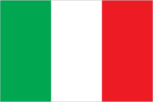
- three equal vertical bands of green (hoist side), white, and red; similar to the flag of Ireland, which is longer and is green (hoist side), white, and orange; also similar to the flag of the Cote d'Ivoire, which has the colors reversed - orange (hoist side), white, and green
- note
- inspired by the French flag brought to Italy by Napoleon in 1797
Government type
republic
Independence
17 March 1861 (Kingdom of Italy proclaimed; Italy was not finally unified until 1870)
International organization participation
AfDB, AsDB, Australia Group, BIS, BSEC (observer), CCC, CDB (non-regional), CE, CEI, CERN, EAPC, EBRD, ECE, ECLAC, EIB, EMU, ESA, EU, FAO, G- 7, G-10, IADB, IAEA, IBRD, ICAO, ICC, ICFTU, ICRM, IDA, IEA, IFAD, IFC, IFRCS, IHO, ILO, IMF, IMO, Inmarsat, Intelsat, Interpol, IOC, IOM, ISO, ITU, LAIA (observer), MINURSO, MONUC, NAM (guest), NATO, NEA, NSG, OAS (observer), OECD, OPCW, OSCE, PCA, UN, UNCTAD, UNESCO, UNHCR, UNIDO, UNIFIL, UNIKOM, UNITAR, UNMIBH, UNMIK, UNMOGIP, UNTSO, UPU, WCL, WEU, WHO, WIPO, WMO, WToO, WTrO, ZC
Judicial branch
Constitutional Court or Corte Costituzionale, composed of 15 judges (one-third appointed by the president, one-third elected by Parliament, one-third elected by the ordinary and administrative supreme courts)
Legal system
based on civil law system; appeals treated as new trials; judicial review under certain conditions in Constitutional Court; has not accepted compulsory ICJ jurisdiction
Legislative branch
- bicameral Parliament or Parlamento consists of the Senate or Senato della Repubblica (315 seats elected by popular vote of which 232 are directly elected and 83 are elected by regional proportional representation plus, in addition, there are a small number of senators-for-life including former presidents of the republic; members serve five-year terms) and the Chamber of Deputies or Camera dei Deputati (630 seats; 475 are directly elected, 155 by regional proportional representation; members serve five-year terms)
- election results
- Senate - percent of vote by party - NA; seats by party - Olive Tree 157, Freedom Alliance 116, Northern League-Padania 27, Communist Renewal 10, regional lists 3, Social Movement-Tricolored Flames 1, Panella Reformers 1; Chamber of Deputies - percent of vote by party - NA; seats by party - Olive Tree 284, Freedom Alliance 246, Northern League 59, Communist Renewal 35, Southern Tyrol People's Party 3, Autonomous List 2, other 1
- elections
- Senate - last held 21 April 1996 (next scheduled for NA April 2001); Chamber of Deputies - last held 21 April 1996 (next scheduled for NA April 2001)
National holiday
Anniversary of the Republic, 2 June (1946)
Political parties and leaders
Bonino List or LB (used to be the Autonomous List, a group of minor parties) ; Center-Left Coalition (used to be the Olive Tree) - Democrats, DS, FdV, PdCI, PPI, RI, UDEUR; Christian Democratic Center or CCD ; Christian Democratic Union or CDU [Rocco BUTTIGLIONE]; Communist Renewal or RC ; Democratic Party ; Democratic Party of the Left or DS [Walter VELTRONI]; Forza Italia or FI ; Freedom Alliance (a center-right coalition) - FI, AN, CCD; Green Federation or FdV ; Italian Communist Party or PdCI ; Italian Democratic Socialists or SDI ; Italian Popular Party or PPI [Pierluigi CASTAGNETTI]; Italian Renewal or RI ; Italian Social Movement-Tricolored Flame or MSI-FT ; National Alliance or AN ; Northern League-Padania or NL-Padania [Umberto BOSSI]; Radical Party (formerly Panella Reformers) ; Republican Party or PR ; Southern Tyrols People's Party or SVP (German speakers) ; Union of Democrats for Europe or UDEUR ; Union for the Republic or UPR
Political pressure groups and leaders
Italian manufacturers and merchants associations (Confindustria, Confcommercio); organized farm groups (Confcoltivatori, Confagricoltura); Roman Catholic Church; three major trade union confederations (Confederazione Generale Italiana del Lavoro or CGIL which is left wing, Confederazione Italiana dei Sindacati Lavoratori or CISL [Sergio D'ANTONI] which is Catholic centrist, and Unione Italiana del Lavoro or UIL which is lay centrist)
Suffrage
18 years of age; universal (except in senatorial elections, where minimum age is 25)
Economy
Agriculture - products
fruits, vegetables, grapes, potatoes, sugar beets, soybeans, grain, olives; beef, dairy products; fish
Budget
- expenditures
- $522 billion, including capital expenditures of $NA (1999 est.)
- revenues
- $530 billion
Currency
1 Italian lira (Lit) = 100 centesimi
Debt - external
$45 billion (1996 est.)
Economic aid - donor
ODA, $1.3 billion (1997)
Economy - overview
Italy has a diversified industrial economy with approximately the same total and per capita output as France and the UK. This capitalistic economy remains divided into a developed industrial north, dominated by private companies, and a less developed agricultural south, with more than 20% unemployment. Most raw materials needed by industry and more than 75% of energy requirements are imported. For several years Italy has adopted budgets compliant with the requirements of the European Monetary Union (EMU); representatives of government, labor, and employers also agreed to an update of the 1993 "social pact," which has been widely credited with having brought Italy's inflation into conformity with EMU requirements. Italy must work to stimulate employment, promote wage flexibility, hold down the growth in pensions, and tackle the informal economy. Growth was 1.3% in 1999 and should edge up to 2.6% in 2000, led by investment and exports.
Electricity - consumption
266.705 billion kWh (1998)
Electricity - exports
900 million kWh (1998)
Electricity - imports
41.59 billion kWh (1998)
Electricity - production
243.027 billion kWh (1998)
Electricity - production by source
- fossil fuel
- 80.22%
- hydro
- 17.3%
- nuclear
- 0%
- other
- 2.48% (1998)
Exchange rates
- euros per US$1 - 0.9867 (January 2000), 0.9386 (1999); Italian lire (Lit) per US$1 - 1,688.7 (January 1999), 1,736.2 (1998), 1,703.1 (1997), 1,542.9 (1996), 1,628.9 (1995)
- note
- on 1 January 1999, the EU introduced a common currency that is now being used for non-cash transactions in some member countries at a fixed rate of 1,936.27 lire per euro; the euro will replace the local currency in consenting countries for all transactions in 2002
Exports
$242.6 billion (f.o.b., 1998)
Exports - commodities
engineering products, textiles and clothing, production machinery, motor vehicles, transport equipment, chemicals; food, beverages and tobacco; minerals and nonferrous metals
Exports - partners
EU 56% (Germany 16.5%, France 12.7%, UK 7.2%, Spain 5.8%, Netherlands 2.9%), US 8.5% (1998)
Fiscal year
calendar year
GDP
purchasing power parity - $1.212 trillion (1999 est.)
GDP - composition by sector
- agriculture
- 2.6%
- industry
- 31.6%
- services
- 65.8% (1998)
GDP - per capita
purchasing power parity - $21,400 (1999 est.)
GDP - real growth rate
1.3% (1999 est.)
Household income or consumption by percentage share
lowest 10%: 2.9% highest 10%: 23.7% (1991)
Imports
$206.9 billion (f.o.b., 1998)
Imports - commodities
engineering products, chemicals, transport equipment, energy products, minerals and nonferrous metals, textiles and clothing; food, beverages and tobacco
Imports - partners
EU 61% (Germany 18.8%, France 13.12%, UK 6.47%, Netherlands 6.2%, Belgium-Luxembourg 4.7%), US 5.1% (1998)
Industrial production growth rate
1.9% (1998 est.)
Industries
tourism, machinery, iron and steel, chemicals, food processing, textiles, motor vehicles, clothing, footwear, ceramics
Inflation rate (consumer prices)
1.7% (1999 est.)
Labor force
23.193 million
Labor force - by occupation
services 61%, industry 32%, agriculture 7% (1996)
Population below poverty line
NA%
Unemployment rate
11.5% (1999 est.)
Communications
Internet Service Providers (ISPs)
219 (1999)
Radio broadcast stations
AM about 100, FM about 4,600, shortwave 9 (1998)
Radios
50.5 million (1997)
Telephone system
- modern, well-developed, fast; fully automated telephone, telex, and data services
- domestic
- high-capacity cable and microwave radio relay trunks
- international
- satellite earth stations - 3 Intelsat (with a total of 5 antennas - 3 for Atlantic Ocean and 2 for Indian Ocean), 1 Inmarsat (Atlantic Ocean region), and NA Eutelsat; 21 submarine cables
Telephones - main lines in use
25 million (1998)
Telephones - mobile cellular
17.7 million (1998)
Television broadcast stations
6,317 (of which only 117 have 2 kW or more of transmitter power) (1997)
Televisions
30.3 million (1997)
Transportation
Airports
136 (1999 est.)
Airports - with paved runways
- total
- 97 over 3,047 m: 5 2,438 to 3,047 m: 33 1,524 to 2,437 m: 16 914 to 1,523 m: 31 under 914 m: 12 (1999 est.)
Airports - with unpaved runways
- total
- 39 1,524 to 2,437 m: 2 914 to 1,523 m: 19 under 914 m: 18 (1999 est.)
Heliports
3 (1999 est.)
Highways
- paved
- 654,676 km (including 6,957 km of expressways)
- total
- 654,676 km
- unpaved
- 0 km (1998 est.)
Merchant marine
- ships by type
- bulk 41, cargo 45, chemical tanker 73, combination ore/oil 2, container 20, liquified gas 38, livestock carrier 1, multi-functional large load carrier 1, passenger 6, petroleum tanker 87, roll-on/roll-off 58, short-sea passenger 26, specialized tanker 13, vehicle carrier 16 (1999 est.)
- total
- 427 ships (1,000 GRT or over) totaling 6,971,578 GRT/9,635,770 DWT
Pipelines
crude oil 1,703 km; petroleum products 2,148 km; natural gas 19,400 km
Ports and harbors
Augusta (Sicily), Bagnoli, Bari, Brindisi, Gela, Genoa, La Spezia, Livorno, Milazzo, Naples, Porto Foxi, Porto Torres (Sardigna), Salerno, Savona, Taranto, Trieste, Venice
Railways
- narrow gauge
- 112 km 1.000-m gauge (112 km electrified); 1,211 km 0.950-m gauge (153 km electrified) (1998)
- standard gauge
- 18,071 km 1.435-m gauge; Italian Railways (FS) operates 16,014 km of the total standard gauge routes (11,322 km electrified)
- total
- 19,394 km
Waterways
2,400 km for various types of commercial traffic, although of limited overall value
Military and Security
Military branches
Army, Navy, Air Force, Carabinieri
Military expenditures - dollar figure
$23.294 billion (FY99)
Military expenditures - percent of GDP
1.7% (FY99)
Military manpower - availability
males age 15-49: 14,315,634 (2000 est.)
Military manpower - fit for military service
males age 15-49: 12,331,306 (2000 est.)
Military manpower - military age
18 years of age
Military manpower - reaching military age annually
- males
- 311,160 (2000 est.)
Transnational Issues
Disputes - international
Italy and Slovenia made progress in resolving bilateral issues; Croatia and Italy made progress toward resolving a bilateral issue dating from World War II over property and ethnic minority rights
Illicit drugs
- important gateway for and consumer of Latin American cocaine and Southwest Asian heroin entering the European market
- JAMAICA