1982 Edition
CIA World Factbook 1982 (Wikisource)
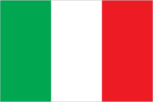
Geography
Area
301,217 km2; 50% cultivated, 17% meadow and pasture, 21% forest, 3% unused but potentially productive, 9% waste or urban
Coastline
4,996 km
Land boundaries
1,702 km WATER
Limits of territorial waters (claimed)
12 nm
People and Society
Ethnic divisions
primarily Italian but population includes small clusters of German-, French-, and Slovene-Italians in the north and of Albanian-Italians in the south
Labor force
22,372,000 (1980); 14.1% agriculture, 37.6% industry, 48.3% other (1980); 7.6% unemployment (1980); 1.5 million Italians employed in other West European countries
Language
Italian; parts of Trentino-Alto Adige region (for example, Bolzano) are predominantly German speaking; significant French-speaking minority in Valle d'Aosta region; Slovene-speaking minority in the Trieste-Gorizia area 'Literacy: 5%-7% of population illiterate (1972); illiteracy varies widely by region
Nationality
noun—Italian(s); adjective—Italian
Organized labor
50-55% (est.) of labor force
Population
57,353,000 (July 1982), average annual growth rate 0.3%
Religion
almost 100% nominally Roman Catholic (de facto state religion)
Government
Branches
executive—President empowered to dissolve Parliament and call national election; he is also Commander of the Armed Forces and presides over the Supreme Defense Council; otherwise, authority to govern invested in Council of Ministers; legislative power invested in bicameral, popularly elected Parliament; Italy has an independent judicial establishment
Capital
Rome
Communists
1,814,740 members (February 1978)
Elections
national elections for Parliament held every five years (most recent, June 1979); provincial and municipal elections held every five years with some out of phase; regional elections every five years (held June 1980) Political parties and leaders: Christian Democratic Party (DC), Flaminio Piccoli (secretary general); Communist Party (PCI), Enrico Berlinguer (secretary general); Socialist Party (PSI), Benedetto Craxi (secretary general); Social Democratic Party (PSDI), Pietro Longo (secretary general); Liberal Party (PLI), Valerio Zanone (party secretary); Italian Social Movement (MSI), Giorgio Almirante (party secretary); Republican Party (PRI), Giovanni Spadolini (party secretary) Voting strength (1979 election): 38.3% DC, 30.4% PCI, 9.8% PSI, 5.3% MSI, 3.8% PSDI, 3.0% PRI, 1.9% PLI, 3.4% other
Government leaders
President Alessandro PERTIN1; Premier Giovanni SPADOLINI
Legal system
based on civil law system, with ecclesiastical law influence; constitution came into effect 1 January 1948; judicial review under certain conditions in Constitutional Court; has not accepted compulsory ICJ jurisdiction
Member of
ADB, ASSIMER, Council of Europe, DAC, EC, ECOWAS, ECSC, EEC, EIB, ELDO, ESRO, EURATOM, FAO, GATT, IAEA, IBRD, ICAC, ICAO, IDA, IFAD, IEA, IFC, IHO, ILO, International Lead and Zinc Study Group, IMCO, IMF, IOOC, IPU, ITU, NATO, OAS (observer), OECD, UN, UNESCO, UPU, WEU, WHO, WIPO, WMO, WSG
National holiday
Anniversary of the Republic, 2 June
Official name
Italian Republic
Other political or pressure groups
the Vatican; three major trade union confederations (CGIL—Communist dominated, CISL—Christian Democratic, and UIL—Social Democratic, Socialist, and Republican); Italian manufacturers association (Confindustria); organized farm groups
Political subdivisions
constitution provides for establishment of 20 regions; five with special statute (Sicilia, Sardegna, Trentino-Alto Adige, Friuli-Venezia Giulia, and Valle d'Aosta) have been functioning for some time and the remaining 15 regions with regular statute were instituted on 1 April 1972; 95 provinces, 8,081 communes
Suffrage
universal over age 18 (except in senatorial elections where minimum age of voter is 25)
Type
republic
Economy
Agriculture
important producer of fruits and vegetables; main crops—cereals, potatoes, olives; 95% self-sufficient; food shortages—fats, meat, fish, and eggs; daily caloric intake, 3,172 calories per capita (1977)
Aid
donor—bilateral economic aid committed (ODA and OOF), $5.8 billion (1970-79)
Crude steel
26.5 million metric tons produced (1980), 465 kg per capita
Electric power
48,000,000 kW capacity (1981); 186.0 billion kWh produced (1981), 3,247 kWh per capita
Exports
$77.9 billion (f.o.b., 1980); principal items-machinery and transport equipment, textiles, foodstuffs, chemicals, footwear
Fiscal year
calendar year
Fishing
catch 401,958 metric tons (1978); exports $90 million (1979), imports $459 million (1979)
GDP
$394 billion (1980), $6,900 per capita; 63.1% private consumption, 20.0% gross fixed investment, 16.6% government, net foreign balance —0.5%; 1980 growth rate 4.0% (1975 constant prices)
Imports
$99.7 billion (c.i.f., 1980); principal items—machinery and transport equipment, foodstuffs, ferrous and nonferrous metals, wool, cotton, petroleum
Major industries
machinery and transportation equipment, iron and steel, chemicals, food processing, textiles
Major trade partners
(1980) 46% EC-nine (17% West Germany, 14% France, 5% UK, 4% Netherlands); 2% USSR and 3% other Communist countries of Eastern Europe
Monetary conversion rate
Smithsonian rate as of December 1973, 650.4 lire=US$1; average rate in 1980, 856 lire=US$1
Shortages
coal, fuels, minerals
Communications
Airfields
147 total, 142 usable; 84 with permanent-surface runways; 2 with runways over 3,659 m, 32 with runways 2,440-3,659 m, 43 with runways 1,220-2,439 m
Civil air
146 major transport aircraft, including 6 leased in
Highways
294,410 km total; autostrade 5,900 km, state highways 45,170 km, provincial highways 101,680 km, communal highways 141,660 km; 260,500 km concrete, bituminous, or stone block, 26,900 km gravel and crushed stone, 7,010 km earth
Inland waterways
2,500 km navigable routes
Pipelines
crude oil, 1,703 km; refined products, 2,148 km; natural gas, 13,749 km Ports: 16 major, 22 significant minor
Railroads
20,085 km total; 16,140 km government owned standard gauge (1.435 m), 8,585 km electrified; 3,945 km nongovernment owned—2,100 km standard gauge (1.435 m), 1,155 km electrified, and 1,845 km narrow gauge (0.950 m), 380 km electrified
Telecommunications
well engineered, well constructed, and efficiently operated; 18.1 million telephones (31.7 per 100 popl.); 135 AM, 1,830 FM, and 1,350 TV stations; 20 coaxial submarine cables; 2 communication satellite ground stations with a total of 5 antennas
Military and Security
Military budget
proposed for fiscal year ending 31 December 1982, $8.8 billion; about 4.4% of central government budget
Military manpower
males 15-49, 14,075,000; 11,862,000 fit for military service; 466,000 reach military age (18) annually