1991 Edition
CIA World Factbook 1991 (Project Gutenberg)
Geography
Climate
temperate; hot and dry in desert areas
Coastline
273 km
Comparative area
slightly larger than New Jersey
Disputes
separated from Lebanon, Syria, and the West Bank by the 1949 Armistice Line; differences with Jordan over the location of the 1949 Armistice Line which separates the two countries; West Bank and Gaza Strip are Israeli occupied with status to be determined; Golan Heights is Israeli occupied; Israeli troops in southern Lebanon since June 1982; water-sharing issues with Jordan
Environment
sandstorms may occur during spring and summer; limited arable land and natural water resources pose serious constraints; deforestation
Land boundaries
1,006 km total; Egypt 255 km, Jordan 238 km, Lebanon 79 km, Syria 76 km, West Bank 307, Gaza Strip 51 km
Land use
arable land 17%; permanent crops 5%; meadows and pastures 40%; forest and woodland 6%; other 32%; includes irrigated 11%
Maritime claims
Continental shelf: to depth of exploitation; Territorial sea: 6 nm
Natural resources
copper, phosphates, bromide, potash, clay, sand, sulfur, asphalt, manganese, small amounts of natural gas and crude oil
Note
there are 175 Jewish settlements in the West Bank, 38 in the Israeli-occupied Golan Heights, 18 in the Gaza Strip, and 14 Israeli-built Jewish neighborhoods in East Jerusalem
Terrain
Negev desert in the south; low coastal plain; central mountains; Jordan Rift Valley
Total area
20,770 km2; land area: 20,330 km2
People and Society
Birth rate
21 births/1,000 population (1991)
Death rate
6 deaths/1,000 population (1991)
Ethnic divisions
Jewish 83%, non-Jewish (mostly Arab) 17%
Infant mortality rate
9 deaths/1,000 live births (1991)
Labor force
1,400,000 (1984 est.); public services 29.3%; industry, mining, and manufacturing 22.8%; commerce 12.8%; finance and business 9.5%; transport, storage, and communications 6.8%; construction and public works 6.5%; personal and other services 5.8%; agriculture, forestry, and fishing 5.5%; electricity and water 1.0% (1983)
Language
Hebrew (official); Arabic used officially for Arab minority; English most commonly used foreign language
Life expectancy at birth
76 years male, 79 years female (1991)
Literacy
92% (male 95%, female 89%) age 15 and over can read and write (1983)
Nationality
noun--Israeli(s); adjective--Israeli
Net migration rate
0 migrants/1,000 population (1991)
Organized labor
90% of labor force
Population
4,477,105 (July 1991), growth rate 1.5% (1991); includes 90,000 Jewish settlers in the West Bank, 13,000 in the Israeli-occupied Golan Heights, 2,500 in the Gaza Strip, and 120,000 in East Jerusalem (1990 est.)
Religion
Judaism 82%, Islam (mostly Sunni Muslim) 14%, Christian 2%, Druze and other 2%
Total fertility rate
2.9 children born/woman (1991)
Government
Administrative divisions
6 districts (mehozot, singular--mehoz); Central, Haifa, Jerusalem, Northern, Southern, Tel Aviv
Capital
Israel proclaimed Jerusalem its capital in 1950, but the US, like nearly all other countries, maintains its Embassy in Tel Aviv
Communists
Hadash (predominantly Arab but with Jews in its leadership) has some 1,500 members
Constitution
no formal constitution; some of the functions of a constitution are filled by the Declaration of Establishment (1948), the basic laws of the parliament (Knesset), and the Israeli citizenship law
Diplomatic representation
Ambassador Zalman SHOVAL; Chancery at 3514 International Drive NW, Washington DC 20008; telephone (202) 364-5500; there are Israeli Consulates General in Atlanta, Boston, Chicago, Houston, Los Angeles, Miami, New York, Philadelphia, and San Francisco; US--Ambassador William A. BROWN; Embassy at 71 Hayarkon Street, Tel Aviv (mailing address is APO New York 09672); telephone [972] (3) 654338; there is a US Consulate General in Jerusalem
Elections
President--last held 23 February 1988 (next to be held February 1994); results--Chaim HERZOG reelected by Knesset; Knesset--last held 1 November 1988 (next to be held by November 1992); seats--(120 total) Labor Party 38, Likud bloc 37, SHAS 5, National Religious Party 5, Citizens' Rights Movement 5, Agudat Yisrael 4, PAZI 3, MAKI 3, Tehiya Party 3, MAPAM 3, Tzomet Party 2, Moledet Party 2, Degel HaTorah 2, Center Movement-Shinui 2, Progressive List for Peace 1, Arab Democratic Party 1; Black Panthers 1, Moriya 1, Ge'ulat Yisrael 1, Unity for Peace and Aliyah 1
Executive branch
president, prime minister, vice prime minister, Cabinet
Flag
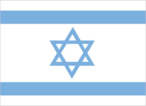
white with a blue hexagram (six-pointed linear star) known as the Magen David (Shield of David) centered between two equal horizontal blue bands near the top and bottom edges of the flag
Independence
14 May 1948 (from League of Nations mandate under British administration)
Judicial branch
Supreme Court
Leaders
Chief of State--President Chaim HERZOG (since 5 May 1983); Head of Government--Prime Minister Yitzhak SHAMIR (since 20 October 1986)
Legal system
mixture of English common law, British Mandate regulations, and, in personal matters, Jewish, Christian, and Muslim legal systems; in December 1985 Israel informed the UN Secretariat that it would no longer accept compulsory ICJ jurisdiction
Legislative branch
unicameral parliament (Knesset)
Long-form name
State of Israel
Member of
AG (observer), CCC, EBRD, FAO, GATT, IADB, IAEA, IBRD, ICAO, ICC, ICFTU, IDA, IFAD, IFC, ILO, IMF, IMO, INMARSAT, INTELSAT, INTERPOL, IOC, IOM, ISO, ITU, OAS (observer), PCA, UN, UNCTAD, UNESCO, UNHCR, UNIDO, UPU, WHO, WIPO, WMO, WTO
National holiday
Independence Day, 10 May 1989; Israel declared independence on 14 May 1948, but the Jewish calendar is lunar and the holiday may occur in April or May
Other political or pressure groups
Gush Emunim, Jewish nationalists advocating Jewish settlement on the West Bank and Gaza Strip; Peace Now, critical of government's West Bank/Gaza Strip and Lebanon policies
Political parties and leaders
Israel currently has a coalition government comprising eleven parties that hold 66 of the Knesset's 120 seats; Members of the government--Likud bloc, Prime Minister Yitzhak SHAMIR; Sephardic Torah Guardians (SHAS), Minister of Interior Arieh DER'I; National Religious Party, Minister of Education Zevulun HAMMER; Agudat Yisrael, Moshe Zeev FELDMAN; Degel HaTorah, Avraham RAVITZ; Moriya, Minister of Immigrant Absorption, Yitzhak PERETZ; Ge'vlat Yisrael, Elizer MIZRAHI; Party for the Advancement of Zionist Ideology (PAZI), Minister of Finance Yitzhak MODAI; Tehiya Party, Minister of Science, Technology, Energy, and Infrastructure Yuval NE'EMAN; Tzomet Party, Minister of Agriculture Rafael EITAN; Unity for Peace and Aliyah, Efrayim GUR; Moledet Party, Rehavam ZE'EVI; Opposition parties--Labor Party, Shimon PERES; Citizens' Rights Movement, Shulamit ALONI; United Workers' Party (MAPAM), Yair TZABAN; Center Movement-Shinui, Amnon RUBENSTEIN; New Israeli Communist Party (MAKI), Meir WILNER; Progressive List for Peace, Muhammad MI'ARI; Arab Democratic Party, Abd Al Wahab DARAWSHAH; Black Panthers, Charlie BITON
Suffrage
universal at age 18
Type
republic
Economy
Agriculture
accounts for 5% of GNP; largely self-sufficient in food production, except for bread grains; principal products--citrus and other fruits, vegetables, cotton; livestock products--beef, dairy, and poultry
Budget
revenues $28.7 billion; expenditures $33.0 billion, including capital expenditures of $NA (FY91)
Currency
new Israeli shekel (plural--shekels); 1 new Israeli shekel (NIS) = 100 new agorot
Economic aid
US commitments, including Ex-Im (FY70-90), $18.2 billion; Western (non-US) countries, ODA and OOF bilateral commitments (1970-88), $2.5 billion
Electricity
4,392,000 kW capacity; 17,500 million kWh produced, 4,000 kWh per capita (1989)
Exchange rates
new Israeli shekels (NIS) per US$1--2.35 (May 1991), 2.0162 (1990), 1.9164 (1989), 1.5989 (1988), 1.5946 (1987), 1.4878 (1986), 1.1788 (1985)
Exports
$10.7 billion (f.o.b., 1989); commodities--polished diamonds, citrus and other fruits, textiles and clothing, processed foods, fertilizer and chemical products, military hardware, electronics; partners--US, UK, FRG, France, Belgium, Luxembourg, Italy
External debt
$24.5 billion, of which government debt is $18 billion (December 1990)
Fiscal year
1 April-31 March; changing to calender year basis starting January 1992
GNP
$46.5 billion, per capita $10,500; real growth rate 3.5% (1990 est.)
Imports
$14.2 billion (c.i.f., 1989 est.); commodities--military equipment, rough diamonds, oil, chemicals, machinery, iron and steel, cereals, textiles, vehicles, ships, aircraft; partners--US, FRG, UK, Switzerland, Italy, Belgium, Luxembourg
Industrial production
growth rate - 1.5% (1989); accounts for about 40% of GDP
Industries
food processing, diamond cutting and polishing, textiles, clothing, chemicals, metal products, military equipment, transport equipment, electrical equipment, miscellaneous machinery, potash mining, high-technology electronics, tourism
Inflation rate (consumer prices)
18% (1990)
Overview
Israel has a market economy with substantial government participation. It depends on imports for crude oil, food, grains, raw materials, and military equipment. Despite limited natural resources, Israel has developed its agricultural and industrial sectors on an intensive scale over the past 20 years. Industry accounts for about 23% of the labor force, agriculture for 5%, and services for most of the balance. Diamonds, high-technology machinery, and agricultural products (fruits and vegetables) are the biggest export earners. The balance of payments has traditionally been negative, but is offset by large transfer payments and foreign loans. About half of Israel's $18 billion external government debt is owed to the US, which is its major source for economic and military aid. To earn needed foreign exchange, Israel must continue to exploit high-technology niches in the international market, such as medical scanning equipment. Iraq's invasion of Kuwait on 2 August dealt a blow to Israel's economy in 1990. Higher world oil prices added an estimated $300 million to Israel's 1990 oil import bill, and helped keep the inflation rate at 18% for the year. Regional tensions and continuing acts of the Palestinian uprising (intifadah)-related violence contributed to a sharp dropoff in tourism--a key source of foreign exchange--to the lowest level since the 1973 Arab-Israeli war. In 1991, the influx of up to 400,000 Soviet immigrants will increase unemployment, intensify the country's housing crisis, and contribute to a widening budget deficit.
Unemployment rate
9.8% (March 1991)
Communications
Airports
51 total, 44 usable; 26 with permanent-surface runways; none with runways over 3,659 m; 6 with runways 2,440-3,659 m; 12 with runways 1,220-2,439 m
Civil air
27 major transport aircraft
Highways
4,500 km; majority is bituminous surfaced
Merchant marine
30 ships (1,000 GRT or over) totaling 516,714 GRT/611,795 DWT; includes 7 cargo, 21 container, 2 refrigerated cargo; note--Israel also maintains a significant flag of convenience fleet, which is normally at least as large as the Israeli flag fleet; the Israeli flag of convenience fleet typically includes all of its POL tankers
Pipelines
crude oil, 708 km; refined products, 290 km; natural gas, 89 km
Ports
Ashdod, Haifa, Elat
Railroads
594 km 1.435-meter gauge, single track; diesel operated
Telecommunications
most highly developed in the Middle East though not the largest; good system of coaxial cable and radio relay; 1,800,000 telephones; stations--11 AM, 24 FM, 54 TV; 2 submarine cables; satellite earth stations--2 Atlantic Ocean INTELSAT and 1 Indian Ocean INTELSAT
Military and Security
Branches
Israel Defense Forces includes ground, naval, and air components; historically there have been no separate Israeli military services
Defense expenditures
$5.3 billion, 13.9% of GNP (1991); note--includes an estimated $1.8 billion in US military aid _%_
Manpower availability
eligible 15-49, 2,213,808; of the 1,117,733 males 15-49, 920,449 are fit for military service; of the 1,096,075 females 15-49, 899,022 are fit for military service; 44,429 males and 42,249 females reach military age (18) annually; both sexes are liable for military service; Nahal or Pioneer Fighting Youth, Frontier Guard, Chen