1982 Edition
CIA World Factbook 1982 (Wikisource)
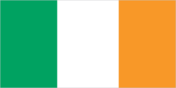
Geography
Area
68,894 km2 ; 17% arable, 51% meadows and pastures, 3% forested, 2% inland water, 27% waste and urban
Coastline
1,448 km
Land boundaries
360 km WATER
Limits of territorial waters (claimed)
3 nm (fishing 200 nm)
People and Society
Ethnic divisions
racially homogeneous Celts
Labor force
about 1,133,000 (1978); 26% agriculture, forestry, fishing; 19% manufacturing; 15% commerce; 7% construction; 5% transportation; 4% government; 24% other; 7.8% unemployment (August 1979)
Language
English and Gaelic official; English is generally spoken
Literacy
98%-99%
Nationality
noun—Irishman(men), Irish (collective pl.); adjective—Irish
Organized labor
36% of labor force
Population
3,533,000 (July 1982), average annual growth rate 1.5%
Religion
94% Roman Catholic, 4% Anglican, 2% other
Government
Branches
elected President; bicameral parliament reflecting proportional and vocational representation; judiciary appointed by President on advice of government
Capital
Dublin
Communists
approximately 600
Elections
Dail (lower house) elected every five years—last election February 1982; President elected for seven-year term—last election November 1976 Political parties and leaders: Fianna Fail, Charles Haughey; Labor Party, Michael O'Leary; Fine Gael, Garret Fitzgerald; Communist Party of Ireland, Michael O'Riordan; Sinn Fein the Workers' Party (SFWP), Tomas MacGiolla
Government leaders
President Patrick HILLERY; Prime Minister Charles HAUGHEY; Deputy Prime Minister Raymond MACSHARRY
Legal system
based on English common law, substantially modified by indigenous concepts; constitution adopted 1937; judicial review of legislative acts in Supreme Court; has not accepted compulsory ICJ jurisdiction
Member of
Council of Europe, EC, EEC, ESRO (observer), EURATOM, FAO, GATT, IAEA, IBRD, ICAO, ICES, IDA, IEA, IFAD, IFC, ILO, IMCO, IMF, IPU, ISO, ITC, ITU, IWC—International Wheat Council, OECD, UN, UNESCO, UPU, WHO, WIPO, WMO, WSG
National holiday
St. Patrick's Day, 17 March
Official name
Ireland, Eire (Gaelic)
Political subdivisions
26 counties
Suffrage
universal over age 18
Type
republic
Voting strength
(1982 election) Fianna Fail (81 seats), Fine Gael (63 seats), Labor Party (15 seats), Sinn Fein the Workers' Party (3 seats), independents (4 seats)
Economy
Agriculture
70% of agricultural area used for permanent hay and pasture; main products—livestock and dairy products, turnips, barley, potatoes, sugar beets, wheat; 85% self-sufficient; food shortages—grains, fruits, vegetables; caloric intake 3,510 calories per day per capita (1970)
Budget
(1980 actual) 3,702 million pounds expenditures, 3,155 million pounds revenues, 547 million pounds deficit, public sector borrowing requirement 1,316 million pounds; (1981 est.) 4,719 million pounds expenditures, 3,932 million pounds revenues, 787 million pounds deficit, public sector borrowing requirement 1,637 million pounds
Crude steel
66,000 metric tons produced in 1978
Electric power
3,117,000 kW capacity (1980); 10.889 million kWh produced (1980), 3,170 kWh per capita
Exports
$8,322.0 million (f.o.b., 1980); dairy products, live animals, textiles, chemicals, machinery, clothing
Fiscal year
calendar year
Fishing
catch 108,434 metric tons (1978); exports of fish and fish products $66.5 million (1979), imports of fish and fish products $26.0 million (1979)
GNP
$17.1 billion (1980), $5,000 per capita; 63.8% consumption, 30.1% investment, 22.2% government, —2.5% inventories and net factor income; —14.0% net foreign demand
Imports
$11,153.0 million (c.i.f., 1980); petroleum and petroleum products, machinery, chemicals, manufactured goods, cereals Major trade partners: 74.1% EC (42.7% UK); 8.0% US and Canada
Major industries
food products, brewing, textiles and clothing, chemicals and pharmaceuticals, machinery and transportation equipment
Monetary conversion rate
1 Irish pound=US$2.0580 (1980 average)
Shortages
coal, petroleum, timber and woodpulp, steel and nonferrous metals, fertilizers, cereals and animal feed, textile fibers and textiles
Communications
Airfields
38 total, 37 usable; 9 with permanent-surface runways; 1 with runways 2,440-3,659 m, 3 with runways 1,220-2,439 m
Civil air
36 major transport aircraft, including 2 leased in and 4 out
Highways
92,294 km total; 87,422 km surfaced, 4,872 km gravel or crushed stone
Inland waterways
approximately 1,000 km
Ports
6 major, 38 minor
Railroads
2,190 km 1.600-meter gauge, government owned
Telecommunications
small, modern system using cable and radio-relay circuits; 586,000 telephones (17.2 per 100 popl.); 15 AM, 14 FM, and 59 TV stations; 2 coaxial submarine cables; planned satellite station
Military and Security
Military budget
for fiscal year ending 31 December 1981, $222 million; about 4.0% of the central government budget
Military manpower
males 15-49, 807,000; 662,000 fit for military service; about 33,000 reach military age (17) annually