1988 Edition
CIA World Factbook 1988 (Internet Archive)
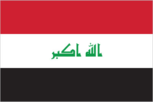
Geography
Boundary disputes
none; on 17 September 1980 Iraq abrogated 1975 treaty with Iraq which shifted the boundary in Shatt al Arab waterway from the low water mark on Iranian side of river to midpoint of deepest navigable channel (thalweg) — heavy fighting with Iran began on 22 September 1980; Kurdistan question with Iran; ownership of Warbah and Bubiy5n islands disputed with Kuwait; shares Neutral Zone with Saudi Arabia; periodic disputes with Syria over Euphrates water rights; potential dispute over water development plans by Turkey for the Tigris and Euphrates rivers
Climate
- desert; mild to cool winters with dry, hot, cloudless summers
- dry desert; intensely hot summers; short, cool winters
Coastline
58 km
Comparative area
larger than California
Continental shelf
not specific
Environment
- development of TigrisEuphrates river systems contingent upon agreements with upstream riparians (Syria, Turkey); air and water pollution; soil degradation and erosion; desertification
- some of world's largest and most sophisticated desalination facilities provide most of water; air and water pollution; desertification
Ethnic divisions
39% Kuwaiti, 39% other Arab, 9% South Asian, 4% Iranian, 9% other
Infant mortality rate
26.1/1,000 (1985)
Labor force
566,000 (1985); 45.0% services, 20.0% construction, 12.0% trade, 8.6% manufacturing, 2.6% finance and real estate, 1.9% agriculture, 1.7% power and water, 1.4% mining and quarrying; 70% of labor force is non-Kuwaiti
Land boundaries
3,668 km total
Land use
- 12% arable land; 1% permanent crops; 9% meadows and pastures; 3% forest and woodland; 75% other; includes 4% irrigated
- NEGL% arable land; 0% permanent crops; 8% meadows and pastures; NEGL% forest and woodland; 92% other; includes NEGL% irrigated
Language
Arabic (official); English widely spoken
Life expectancy
men 69, women 74
Literacy
about 71%
Nationality
noun — Kuwaiti(s); adjective — Kuwaiti
Organized labor
labor unions, first authorized in 1964, formed in oil industry and among government personnel
Population
1,863,615 (July 1987), average annual growth rate 4.13%
Religion
85% Muslim (30% Shi'a, 45% Sunni), 15% Christian, Hindu, Parsi, and other
Special notes
- none
- strategic location at head of Persian Gulf and close to Iran-Iraq war zone
Terrain
- mostly broad plains; reedy marshes in southeast; mountains along borders with Iran and Turkey
- flat to slightly undulating desert plain
Territorial sea
12 nm
Total area
434,920 km2; land area: 433,970 km2
People and Society
Ethnic divisions
75% Arab, 15-20% Kurdish, 5-10% Turkoman, Assyrian, and other
Infant mortality rate
76/1,000 (1980)
Labor force
3.5 million (1980); 44% agriculture, 26% industry, 31% services; severe labor shortage due to war; expatriate labor force about 1,000,000
Language
Arabic (official), Kurdish (official in Kurdish regions); Assyrian, Armenian
Life expectancy
56.1
Literacy
about 50%
Nationality
noun — Iraqi(s); adjective — Iraqi
Organized labor
11% of labor force
Population
16,970,948 (July 1987), average annual growth rate 3.56%; figures do not take into account the impact of the Iran-Iraq war
Religion
97% Muslim (60-65% Shi'a, 32-37% Sunni), 3% Christian or other
Government
Administrative divisions
- 18 provinces under centrally appointed officials
- 4 governorates (Kuwait City, Hawalli, Ahmadi, Johra), 25 voting constituencies
Branches
- Ba'th Party of Iraq has been in power since 1968 coup; unicameral legislature (National Assembly)
- Council of Ministers; legislature— National Assembly
Capital
- Baghdad
- Kuwait
Communists
- about 2,000 hardcore members
- insignificant
Elections
- National Assembly elections held October 1984; Legislative Council for the Autonomous Region held September
- National Assembly elected February 1985 (suspended July 1986) Political parties and leaders: political parties prohibited, some small clandestine groups are active
Government leader
Jabir al-Alnnail al-Jabir Al SABAH, Amir (since December 1977)
Government leaders
Saddam HUSAYN, President (since July 1979); Izzat IBRAHIM, Deputy Chairman of the Revolutionary Command Council (since July 1979); Taha Yasin RAMADAN, First Deputy Prime Minister (since July 1979)
Legal system
- based on Islamic law in special religious courts, civil law system elsewhere; provisional constitution adopted in 1968; judicial review was suspended; has not accepted compulsory ICJ jurisdiction
- civil law system with Islamic law significant in personal matters; constitution took effect in 1963; popularly elected 50-man National Assembly (the 15 cabinet members can also vote) reinstated in March 1981 after being suspended in 1976, but in July 1986 parliament dissolved by the Amir; judicial review of legislative acts not yet determined; has not accepted compulsory ICJ jurisdiction
Member of
- Arab League, FAO, G-77, IAEA, IBRD, ICAO, IDA, IDE— Islamic Development Bank, IFAD, IFC, ILO, IMF, IMO, INTELSAT, INTERPOL, ITU, NAM, OAPEC, OIC, OPEC, UN, UNESCO, UPU, WFTU, WHO, WIPO, WMO, WSG, WTO
- Arab League, FAO, G-77, GATT, GCC, IAEA, IBRD, ICAO, IDA, IDE— Islamic Development Bank, IFAD, IFC, ILO, IMF, IMO, INTELSAT, INTERPOL, IPU, ITU, NAM, OAPEC, QIC, OPEC, UN, UNESCO, UPU, WFTU, WHO, WMO, WTO
National holiday
National Day, 25 February
National holidays
anniversaries of the 1958 and 1968 revolutions are celebrated 14 July and 17 July; various religious holidays
Official name
- Republic of Iraq
- State of Kuwait
Other political or pressure groups
large (350,000) Palestinian community
Political or pressure groups
political parties and activity severely restricted; possibly some opposition to regime from disaffected members of the regime, army officers, and religious and ethnic dissidents
Suffrage
- universal adult
- adult males who resided in Kuwait before 1920 and their male descendents (eligible voters, 8.3% of citizenry)
Type
- republic
- nominal constitutional monarchy
Economy
Agriculture
- wheat, barley, rice, sugar beets, cotton, dates, raisins, tea, tobacco, sheep, goats; an illegal producer of opium poppy for the international drug trade
- dates, wheat, barley, rice, cotton, livestock
- virtually none; dependent on imports for food; about 75% of potable water must be distilled or imported
Budget
- proposed expenditures about $40 billion; actual expenditures were less as a result of slump in oil market (FY86)
- public revenues, $20.0 billion; current expenditures, $18.6 billion; development expenditures, $11.0 billion (1984 est.)
- revenues, $11.2 billion; current and capital expenditures, $11.1 billion (1985/86 est.)
Electric power
- 12,601,000 kW capacity; 33,120 million kWh produced, 710 kWh per capita (1986)
- 7,734,000 kW capacity; 22,560 million kWh produced, 1,410 kWh per capita (1986)
- 5,335,000 kW capacity; 16,360 million kWh produced, 9,240 kWh per capita (1986)
Exports
- $7.8 billion (1986 est); 90% petroleum; also carpets, fruits, nuts, cement
- $7.45 billion (f.o.b., 1986 est.); from nonoil receipts, $450 million
- $8.0 billion (f.o.b., 1986), of which crude petroleum accounted for about 78%
Fiscal year
- 21 March-20 March
- calendar year
- 1 July-30 June
GDP
$19.7 billion, $11,510 per capita GNP (1985); -4% annual growth rate (1986)
GNP
- $82.4 billion, $1,690 per capita, real GNP - 13.4% (1986)
- $35 billion (1986 est), $2,140 per capita
Imports
- $10.0 billion (1986 est.); machinery, military supplies, foodstuffs, pharmaceuticals, technical services, refined oil products
- $9.5 billion (f.o.b., 1986 est.); 5% from Communist countries (1985)
- $7.0 billion (f.o.b., 1986)
Major industries
- crude oil production (2.0 million b/d in 1986) and refining, textiles, cement and other building materials, food processing (particularly sugar refining and vegetable oil production), metal fabricating (steel and copper)
- crude petroleum production average for 1986, 1.4 million b/d; petroleum refining (capacity about 0.6 million b/d); other major industries include petrochemicals, retail trade, and manufacturing; water desalination capacity 618 million liters per day (1983 est.)
Major industry
crude petroleum 1.8 million b/d; petroleum revenues, $7.0 billion (1986 est.)
Major trade partners
- exports — Japan, Turkey, Syria, Italy, Netherlands, Spain, France, FRG; imports — FRG, Japan, Turkey, UK, Italy
- exports — France, Italy, Brazil, Japan, Turkey, UK, Spain, USSR, other Communist countries; imports—FRG, Japan, France, Italy, US, UK, Turkey, USSR, other Communist countries (1986)
Major trading partners
exports — Japan, US, FRG, Italy; imports— Japan, FRG, UK, US
Monetary conversion rate
- 73.36 rials=US$l (December 1986); unofficial exchange rate on black market up to ten times as many rials per $1
- .31 Iraqi dinar=US$l (January 1987)
- .29 Kuwaiti dinar=US$l (October 1986)
Natural resources
- petroleum, natural gas, coal, chromium, copper, iron, lead, manganese, zinc, barite, sulfur, coal, emeralds, turquoise
- oil, natural gas, phosphates, sulfur
- petroleum, fish, shrimp
Communications
Airfields
- 171 total, 144 usable; 78 with permanent-surface runways; 16 with runways over 3,659 m, 15 with runways 2,440-3,659 m, 66 with runways 1,220-2,439 m
- 107 total, 95 usable; 61 with permanent-surface runways; 7 with runways over 3,659 m, 50 with runways 2,440-3,659 m, 12 with runways 1, 220-2,439 m
Branches
- Islamic Ground Forces, Navy, Air Force, and Revolutionary Guard (includes Basij militia), Gendarmerie
- Army, Navy, Air Force, Border Guard Force, mobile police force
Civil air
- 43 major transport aircraft
- 15 major transport aircraft
Highways
- 85,000 km total; 36,000 km gravel and crushed stone, 15,000 km improved earth, 19,000 km bituminous and bituminous-treated surfaces, 15,000 km unimproved earth
- 20,800 km total; 6,490 km paved, 4,654 km improved earth, 9,656 km unimproved earth
Inland waterways
- 904 km, excluding the Caspian Sea, 104 km on the Shaft al Arab (closed since September 1980 because of Iran-Iraq conflict); 3 inland coastal ports on Caspian Sea
- 1,015 km; Shatt al Arab navigable by maritime traffic for about 104 km (closed since September 1980 because of Iran-Iraq war); Tigris and Euphrates navigable by shallow-draft steamers (of little importance); Shatt al Basrah canal navigable by shallow-draft vessels
Military manpower
- males 15-49, 11,490,000; 6,848,000 fit for military service; about 540,000 reach military age (21) annually Set rcfionil m«p VI Persian Gulf
- males 15-49, 3,795,000; 2,119,000 fit for military service; 177,000 reach military age (18) annually
Pipelines
- crude oil, 5,900 km; refined products, 3,900 km; natural gas, 3,300 km; some pumping stations have been damaged by Iraqi air attacks
- crude oil, 3,950 km; 725 km refined products; 1,360 km natural gas
Ports
- 6 major (Abadan and Khorramshahr are closed, Bandar-e 'Abbas, Bandar-e Khomeyni, Chah Bahar, Bushehr), 12 minor
- 3 major but closed because of war (Al Ba$rah, Umm Qa$r, Al Faw)
Railroads
- 4,601 km total; 4,509 km 1.432meter gauge, 92 km 1.676-meter gauge
- 2,200 km total; 1,680 km 1.435meter standard gauge, 520 km 1.000-meter gauge
Telecommunications
- 62 AM, 27 FM, 28 TV stations; 2,048,000 TV sets; 5,500,000 receiver sets; 1 satellite ground station Defense Forces
- good network consists of coaxial cables, radio-relay links, and radiocommunication stations; about 632,000 telephones (4.0 per 100 popl.); 9 AM, no FM, 81 TV stations; 1 Atlantic Ocean, 1 Indian Ocean, and 1 Intersputnik satellite station; coaxial cable and radiorelay to Kuwait, Jordan, Syria, and Turkey Defense Forces