1987 Edition
CIA World Factbook 1987 (Internet Archive)
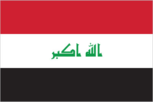
Geography
Climate
dry desert; intensely hot summers; short, cool winters
Environment
- development of TigrisEuphrates river systems contingent upon agreements with upstream riparians (Syria, Turkey); air and water pollution; soil degradation and erosion; desertification
- some of world’s largest and most sophisticated desalination facilities provide most of water; air and water pollution; desertification
Land use
NEGL% arable land; 0% permanent crops; 8% meadows and pastures; NEGL% forest and woodland; 92% other; includes NEGL% irrigated
Special notes
- none
- strategic location at head of Persian Gulf and close to Iran-Iraq war zone
Terrain
flat to slightly undulating desert plain
People and Society
Ethnic divisions
- 75% Arab, 15-20% Kurdish, 5-10% Turkoman, Assyrian, and other
- 39% Kuwaiti, 39% other Arab, 9% South Asian, 4% Iranian, 9% other
Infant mortality rate
- 76/1,000 (1980)
- 26.1/1,000 (1985)
Labor force
- 3.5 million (1980); 44% agriculture, 26% industry, 31% services; severe labor shortage due to war; expatriate labor force about 1,000,000
- 566,000 (1985); 45.0% services, 20.0% construction, 12.0% trade, 8.6% manufacturing, 2.6% finance and real estate, 1.9% agriculture, 1.7% power and water, 1.4% mining and quarrying; 70% of labor force is non-Kuwaiti
Language
- Arabic (official), Kurdish (official in Kurdish regions); Assyrian, Armenian
- Arabic (official); English widely spoken
Life expectancy
- 56.1
- men 69, women 74
Literacy
- about 50%
- about 71%
Nationality
- noun—lIraaqi(s); adjective— Iraqi
- noun—Kuwaiti(s); adjective— Kuwaiti
Organized labor
- 11% of labor force
- labor unions, first authorized in 1964, formed in oil industry and among government personnel
Population
- 16,970,948 (July 1987), average annual growth rate 3.56%; figures do not take into account the impact of the Iran-lraq war
- 1,863,615 (July 1987), average annual growth rate 4.18%
Religion
- 97% Muslim (60-65% Shi'a, 82-37% Sunni), 3% Christian or other
- 85% Muslim (80% Shi'a, 45% Sunni), 15% Christian, Hindu, Parsi, and other
Government
Administrative divisions
- 18 provinces under centrally appointed officials
- 4 governorates (Kuwait City, Hawalli, Ahmadi, Johra), 25 voting constituencies
Branches
- Ba‘th Party of Iraq has been in power since 1968 coup; unicameral legislature (National Assembly)
- Council of Ministers; legislature—National Assembly
Capital
- Baghdad
- Kuwait
Communists
- about 2,000 hardcore members
- insignificant
Elections
- National Assembly elections held October 1984; Legislative Council for the Autonomous Region held September
- National Assembly elected February 1985 (suspended July 1986) Political parties and leaders: political parties prohibited, some small clandestine groups are active
Government leader
Jabir al-Ahmad al-Jabir Al SABAH, Amir (since December 1977)
Government leaders
Saddam HUSAYN, President (since July 1979); Izzat IBRAHIM, Deputy Chairman of the Revolutionary Command Council (since July 1979); Taha Yasin RAMADAN, First Deputy Prime Minister (since July 1979)
Legal system
- based on Islamic law in special religious courts, civil law system elsewhere; provisional constitution adopted in 1968; judicial review was suspended; tion
- civil law system with Islamic law significant in personal matters; constitution took effect in 1963; popularly elected 50-man National Assembly (the 15 cabinet members can also vote) reinstated in March 1981] after being suspended in 1976, but in July 1986 parliament dissolved by the Amir; judicial review of legislative acts not yet determined; has not accepted compulsory ICJ jurisdiction
Member of
- Arab League, FAO, G-77, IAEA, IBRD, ICAO, IDA, IDB—Islamic Development Bank, IFAD, IFC, ILO, IMF, IMO, INTELSAT, INTERPOL, ITU, NAM, OAPEC, OIC, OPEC, UN, UNESCO, UPU, WFTU, WHO, WIPO, WMO, WSG, WTO
- Arab League, FAO, G-77, GATT, GCC, IAEA, IBRD, ICAO, IDA, IDB—Islamic Development Bank, IFAD, IFC, ILO, IMF, IMO, INTELSAT, INTERPOL, [PU, ITU, NAM, OAPEC, OIC, OPEC, UN, UNESCO, UPU, WFTU, WHO, WMO, WTO
National holiday
National Day, 25 February
National holidays
anniversaries of the 1958 and 1968 revolutions are celebrated 14 July and 17 July; various religious holidays has not accepted compulsory 1CJ jurisdic-
Official name
- Republic of Iraq
- State of Kuwait
Other political or pressure groups
large (850,000) Palestinian community
Political or pressure groups
political parties and activity severely restricted; possibly some opposition to regime from disaffected members of the regime, army officers, and religious and ethnic dissidents
Suffrage
- universal adult
- adult males who resided in Kuwait before 1920 and their male descendents (eligible voters, 8.3% of citizenry)
Type
- republic
- nominal constitutional monarchy
Economy
Agriculture
- dates, wheat, barley, rice, cotton, livestock
- virtually none; dependent on imports for food; about 75% of potable water must be distilled or imported
Budget
- public revenues, $20.0 billion; current expenditures, $18.6 billion; development expenditures, $11.0 billion (1984 est.)
- revenues, $11.2 billion; current and capital expenditures, $11.1 billion (1985/86 est.)
Electric power
- 7,734,000 kW capacity; 22,560 million kWh produced, 1,410 kWh per capita (1986)
- 5,335,000 kW capacity; 16,360 million kWh produced, 9,240 kWh per capita (1986)
Exports
- $7.45 billion (f.0.b., 1986 est.); from nonoil receipts, $450 million
- $8.0 billion (f.0.b., 1986), of which crude petroleum accounted for about 78%
Fiscal year
1 July-30 June
Fiseal year
calendar year
GDP
$19.7 billion, $11,510 per capita GNP (1985); ~4% annual growth rate (1986)
GNP
$35 billion (1986 est.), $2,140 per capita
Imports
- $9.5 billion (f.0.b., 1986 est.); 5% from Communist countries (1985)
- $7.0 billion (f.0.b., 1986)
Major industries
crude petroleum production average for 1986, 1.4 million b/d; petroleum refining (capacity about 0.6 million b/d); other major industries include petrochemicals, retail trade, and manufacturing; water desalination capacity 618 million liters per day (1983 est.)
Major industry
crude petroleum 1.8 million b/d; petroleum revenues, $7.0 billion (1986 est.)
Major trade partners
exports—France, Italy, Brazil, Japan, Turkey, UK, Spain, USSR, other Communist countries; imports—FRG, Japan, France, Italy, US, UK, Turkey, USSR, other Communist countries (1986)
Major trading partners
exports—Japan, US, FRG, Italy; imports—Japan, FRG, UK, US
Monetary conversion rate
- .31 Iraqi dinar=US$1 (January 1987)
- .29 Kuwaiti dinar=US$1 (October 1986)
Natural resources
- oil, natural gas, phosphates, sulfur
- petroleum, fish, shrimp
Communications
Airfields
- 107 total, 95 usable; 61 with permanent-surface runways; 7 with runways over 3,659 m, 50 with runways 2,440-3,659 m, 12 with runways 1,220-2,489 m
- 9 total, 4 usable; 4 with permanent-surface runways; 4 with runways 2,440-3,659 m
Civil air
- 15 major transport aircraft
- 26 major transport aircraft
Highways
- 20,800 km total; 6,490 km paved, 4,654 km improved earth, 9,656 km unimproved earth
- 2,600 km total; 2,300 km bituminous; 300 km earth, sand, light gravel
Inland waterways
1,015 km; Shatt al Arab navigable by maritime traffic for about 104 km (closed since September 1980 because of Iran-Iraq war); Tigris and Euphrates navigable by shallow-draft steamers (of little importance); Shatt al Basrah canal navigable by shallow-draft vessels
Pipelines
- crude oil, 3,950 km; 725 km refined products; 1,360 km natural gas
- crude oil, 877 km; refined products, 40 km; natural gas, 140 km
Ports
- 3 major but closed because of war (Al Basrah, Umm Qasr, Al Faw)
- 3 major (Ash Shuwaykh, Ash Shu‘aybah, Mina’ al Ahmadi), 6 minor
Railroads
- 2,200 km total; 1,680 km 1.435meter standard gauge, 520 km 1.000-meter gauge
- none
Telecommunications
- good network consists of coaxial cables, radio-relay links, and radiocommunication stations; about 632,000 telephones (4.0 per 100 popl.); 9 AM, no FM, 81 TV stations; 1 Atlantic Ocean, 1 Indian Ocean, and 1 Intersputnik satellite station; coaxial cable and radiorelay to Kuwait, Jordan, Syria, and Turkey
- excellent international, adequate domestic facilities; 258,000 telephones (14.6 per 100 popl.); 2 AM, 2 FM, 8 TV stations; I Indian Ocean and 2 Atlantic Ocean INTELSAT stations, 1] INMARSAT satellite station; 1 ARABSAT station; coaxial cable and radiorelay to Iraq and Saudi Arabia
Military and Security
Branches
- Army, Navy, Air Force, Border Guard Force, mobile police force
- Army, Navy, Air Force, National Police Force, National Guard
Military budget
operating expenditures for fiscal year ending 30 June 1986, $876 million; 7.5% of central government budget
Military manpower
- males 15-49, 3,795,000; 2,119,000 fit for military service; 177,000 reach military age (18) annually
- males 15-49, about 626,000; about 376,000 fit for military service