1996 Edition
CIA World Factbook 1996 (Project Gutenberg)
Introduction
Description
- the flag of France is used
- three equal horizontal bands of orange (top), white, and green with a blue chakra (24-spoked wheel) centered in the white band; similar to the flag of Niger, which has a small orange disk centered in the white band
Location
- 21 30 S, 39 50 E -- Southern Africa, islands in the southern Mozambique Channel, about one-half of the way from Madagascar to Mozambique Flag ----
- 20 00 N, 77 00 E -- Southern Asia, bordering the Arabian Sea and the Bay of Bengal, between Burma and Pakistan Flag ----
Geography
Area
- comparative area
- about one-third the size of The Mall in Washington, DC
- comparative area
- slightly more than one-third the size of the US
- land area
- 0.2 sq km
- land area
- 2,973,190 sq km
- total area
- 0.2 sq km
- total area
- 3,287,590 sq km
Climate
- tropical
- varies from tropical monsoon in south to temperate in north
Coastline
- 35.2 km
- 7,000 km
Environment
- current issues
- NA
- current issues
- deforestation; soil erosion; overgrazing; desertification; air pollution from industrial effluents and vehicle emissions; water pollution from raw sewage and runoff of agricultural pesticides; tap water is not potable throughout the country; huge and rapidly growing population is overstraining natural resources
- international agreements
- NA
- international agreements
- party to - Antarctic Treaty, Biodiversity, Climate Change, Endangered Species, Environmental Modification, Hazardous Wastes, Law of the Sea, Nuclear Test Ban, Ozone Layer Protection, Ship Pollution, Tropical Timber, Wetlands; signed, but not ratified - Antarctic-Environmental Protocol, Desertification
- natural hazards
- maritime hazard since it is usually under water during high tide and surrounded by reefs; subject to periodic cyclones
- natural hazards
- droughts, flash floods, severe thunderstorms common; earthquakes
Geographic coordinates
- 21 30 S, 39 50 E
- 20 00 N, 77 00 E
Geographic note
dominates South Asian subcontinent; near important Indian Ocean trade routes
International disputes
- claimed by Madagascar
- boundaries with Bangladesh and China in dispute; status of Kashmir with Pakistan; water-sharing problems with downstream riparians, Bangladesh over the Ganges and Pakistan over the Indus (Wular Barrage)
Irrigated land
- 0 sq km
- 430,390 sq km (1989)
Land boundaries
- 0 km
- border countries
- Bangladesh 4,053 km, Bhutan 605 km, Burma 1,463 km, China 3,380 km, Nepal 1,690 km, Pakistan 2,912 km
- total
- 14,103 km
Land use
- arable land
- 0%
- arable land
- 55%
- forest and woodland
- 0%
- forest and woodland
- 23%
- meadows and pastures
- 0%
- meadows and pastures
- 4%
- other
- 100% (all rock)
- other
- 17%
- permanent crops
- 0%
- permanent crops
- 1%
Location
- Southern Africa, islands in the southern Mozambique Channel, about one-half of the way from Madagascar to Mozambique
- Southern Asia, bordering the Arabian Sea and the Bay of Bengal, between Burma and Pakistan
Map references
- Africa
- Asia
Maritime claims
- contiguous zone
- 24 nm
- continental shelf
- 200 nm or to the edge of the continental margin
- exclusive economic zone
- 200 nm
- exclusive economic zone
- 200 nm
- territorial sea
- 12 nm
- territorial sea
- 12 nm
Natural resources
- none
- coal (fourth-largest reserves in the world), iron ore, manganese, mica, bauxite, titanium ore, chromite, natural gas, diamonds, petroleum, limestone
Terrain
- a volcanic rock 2.4 meters high
- upland plain (Deccan Plateau) in south, flat to rolling plain along the Ganges, deserts in west, Himalayas in north
- highest point
- unnamed location 3 m
- highest point
- Kanchenjunga 8,598 m
- lowest point
- Indian Ocean 0 m
- lowest point
- Indian Ocean 0 m
People and Society
Age structure
0-14 years: 34% (male 168,030,766; female 159,283,151) 15-64 years: 62% (male 304,805,787; female 281,311,834) 65 years and over: 4% (male 19,148,385; female 19,527,771) (July 1996 est.)
Birth rate
25.94 births/1,000 population (1996 est.)
Death rate
9.61 deaths/1,000 population (1996 est.)
Ethnic divisions
Indo-Aryan 72%, Dravidian 25%, Mongoloid and other 3%
Infant mortality rate
71.1 deaths/1,000 live births (1996 est.)
Languages
- English enjoys associate status but is the most important language for national, political, and commercial communication, Hindi the national language and primary tongue of 30% of the people, Bengali (official), Telugu (official), Marathi (official), Tamil (official), Urdu (official), Gujarati (official), Malayalam (official), Kannada (official), Oriya (official), Punjabi (official), Assamese (official), Kashmiri (official), Sindhi (official), Sanskrit (official), Hindustani a popular variant of Hindu/Urdu, is spoken widely throughout northern India
- note
- 24 languages each spoken by a million or more persons; numerous other languages and dialects, for the most part mutually unintelligible
Life expectancy at birth
- female
- 60.32 years (1996 est.)
- male
- 59.12 years
- total population
- 59.71 years
Literacy
- age 15 and over can read and write (1995 est.)
- female
- 37.7%
- male
- 65.5%
- total population
- 52%
Nationality
- adjective
- Indian
- noun
- Indian(s)
Net migration rate
0.04 migrant(s)/1,000 population (1996 est.)
Population
- uninhabited
- 952,107,694 (July 1996 est.)
Population growth rate
1.64% (1996 est.)
Religions
Hindu 80%, Muslim 14%, Christian 2.4%, Sikh 2%, Buddhist 0.7%, Jains 0.5%, other 0.4%
Sex ratio
- all ages
- 1.07 male(s)/female (1996 est.)
- at birth
- 1.05 male(s)/female
- under 15 years
- 1.06 male(s)/female 15-64 years: 1.08 male(s)/female 65 years and over: 0.98 male(s)/female
Total fertility rate
3.2 children born/woman (1996 est.)
Government
Administrative divisions
25 states and 7 union territories*; Andaman and Nicobar Islands*, Andhra Pradesh, Arunachal Pradesh, Assam, Bihar, Chandigarh*, Dadra and Nagar Haveli*, Daman and Diu*, Delhi*, Goa, Gujarat, Haryana, Himachel Pradesh, Jammu and Kashmir, Karnataka, Kerala, Lakshadweep*, Madhya Pradesh, Maharashtra, Manipur, Meghalaya, Mizoram, Nagaland, Orissa, Pondicherry*, Punjab, Rajasthan, Sikkim, Tamil Nadu, Tripura, Uttar Pradesh, West Bengal
Capital
- none; administered by France from Reunion
- New Delhi
Constitution
26 January 1950
Council of States (Rajya Sabha)
body consisting of not more than 250 members, up to 12 appointed by the president, the remainder chosen by the elected members of the state and territorial assemblies
Data code
- BS
- IN
Diplomatic representation in US
- chancery
- 2107 Massachusetts Avenue NW, Washington, DC 20008; note - Embassy located at 2536 Massachusetts Avenue NW, Washington, DC 20008
- chief of mission
- Ambassador Naresh CHANDRA
- consulate(s) general
- Chicago, New York, and San Francisco
- telephone
- [1] (202) 939-7000
Executive branch
- cabinet
- Council of Ministers was appointed by the president on recommendation of the prime minister
- chief of state
- President Shankar Dayal SHARMA (since 25 July 1992) was elected for a five-year term by an electoral college consisting of elected members of both houses of Parliament and the legislatures of the states; Vice President Kicheril Raman NARAYANAN (since 21 August 1992) was elected by both houses of Parliament
- head of government
- Prime Minister P. V. Narasimha RAO (since 21 June 1991) was appointed by the president
FAX
- [91] (11) 6872028
- consulate(s) general
- Calcutta, Madras, Mumbai (Bombay)
Flag
- the flag of France is used
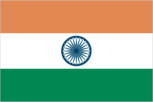
- three equal horizontal bands of orange (top), white, and green with a blue chakra (24-spoked wheel) centered in the white band; similar to the flag of Niger, which has a small orange disk centered in the white band
Independence
- none (possession of France)
- 15 August 1947 (from UK)
International organization participation
AfDB, AG (observer), AsDB, C, CCC, CP, ESCAP, FAO, G- 6, G-15, G-19, G-24, G-77, IAEA, IBRD, ICAO, ICC, ICFTU, ICRM, IDA, IFAD, IFC, IFRCS, ILO, IMF, IMO, Inmarsat, Intelsat, Interpol, IOC, IOM (observer), ISO, ITU, NAM, OAS (observer), PCA, SAARC, UN, UNAMIR, UNAVEM III, UNCTAD, UNESCO, UNHCR, UNIDO, UNIKOM, UNITAR, UNMIH, UNOMIL, UNU, UPU, WFTU, WHO, WIPO, WMO, WToO, WTrO
Judicial branch
Supreme Court, judges are appointed by the president
Legal system
based on English common law; limited judicial review of legislative acts; accepts compulsory ICJ jurisdiction, with reservations
Legislative branch
bicameral Parliament (Sansad)
Name of country
- conventional long form
- none
- conventional long form
- Republic of India
- conventional short form
- Bassas da India
- conventional short form
- India
National holiday
Anniversary of the Proclamation of the Republic, 26 January (1950)
Other political or pressure groups
various separatist groups seeking greater communal and/or regional autonomy; numerous religious or militant/chauvinistic organizations, including Adam Sena, Ananda Marg, Vishwa Hindu Parishad, and Rashtriya Swayamsevak Sangh
People's Assembly (Lok Sabha)
- elections last held 21 May, 12 and 15 June 1991 (next to be held 27 April through May 1996); results - percent of vote by party NA; seats - (545 total, 543 elected, 2 appointed) Congress (I) Party 245, BJP 119, Janata Dal Party 39, Janata Dal (Ajit Singh) 20, CPI/M 35, CPI 14, Telugu Desam 13, AIADMK 11, Samajwadi Janata Party 5, Shiv Sena 4, RSP 4, BSP 1, Congress (S) Party 1, other 23, vacant 9; note - the distribution of
- seats as of 18 January 1995 is as follows
- Congress (I) Party 260, BJP 117, CPI/M 36, Janata Dal Party 24, Samata Party 14, CPI 14, AIADMK 12, Janata Dal (Ajit) 7, Telugu Desam 7, RSP 4, Janata Dal (Ex-Ajit) 3, Samajwadi Party 3, BSP 3, AIFB 3, Shiv Sena 2, Congress (S) Party 1, Kerala Congress (Mani faction) 1, Bihar Peoples Party 1, India National League 1, other 14, vacant 16
Political parties and leaders
Congress (I) Party, P. V. Narasimha RAO, president; Bharatiya Janata Party (BJP), L.K. ADVANI; Janata Dal Party, Laloo Prasad YADAV; Janata Dal (Ajit), Ajit SINGH; Janata Dal (Ex-Ajit), leader NA; Communist Party of India/Marxist (CPI/M), Harkishan Singh SURJEET; Communist Party of India (CPI), Indrajit GUPTA; Telugu Desam (Naidu) (a regional party in Andhra Pradesh), Chandrababu NAIDU; All-India Anna Dravida Munnetra Kazagham (AIADMK; a regional party in Tamil Nadu), Jayaram JAYALALITHA; Samajwadi Party (SP), Mulayam Singh YADAV (president), Om Prakash CHAUTALA, Devi LAL; Shiv Sena, Bal THACKERAY; Revolutionary Socialist Party (RSP), Tridip CHOWDHURY; Bahujan Samaj Party (BSP), Kanshi RAM; Congress (S) Party, leader NA; Communist Party of India/Marxist-Leninist (CPI/ML), Vinod MISHRA; Dravida Munnetra Kazagham (a regional party in Tamil Nadu), M. KARUNANIDHI; Akali Dal factions representing Sikh religious community in the Punjab; National Conference (NC; a regional party in Jammu and Kashmir), Farooq ABDULLAH; Bihar Peoples Party, Lovely ANAND; Samata Party (formerly Janata Dal members), George FERNANDES; Indian National League, Suliaman SAIT; Kerala Congress (Mani faction), K.M. MANI; All India Forward Bloc (AIFB), Prem Dutta PALIWAL (chairman), Chitta BASU (general secretary); Congress (Tiwari), Arjun SINGH and N.D. TIWARI
Suffrage
18 years of age; universal
Type of government
- French possession administered by a Commissioner of the Republic, resident in Reunion
- federal republic
US diplomatic representation
- chief of mission
- Ambassador Frank G. WISNER
- embassy
- Shanti Path, Chanakyapuri 110021, New Delhi
- mailing address
- use embassy street address
- telephone
- [91] (11) 600651
Economy
Agriculture
rice, wheat, oilseed, cotton, jute, tea, sugarcane, potatoes; cattle, water buffalo, sheep, goats, poultry; fish catch of about 3 million metric tons ranks India among the world's top 10 fishing nations
Budget
- expenditures
- $54.9 billion, including capital expenditures of $11.4 billion (FY94/95)
- revenues
- $36.5 billion
Currency
1 Indian rupee (Re) = 100 paise
Economic aid
- recipient
- ODA, $1.237 billion (1993); US ODA bilateral commitments $171 million; US Ex-Im bilateral commitments $680 million; Western (non-US) countries, ODA bilateral commitments $2.48 billion; OPEC bilateral aid $200 million; World Bank (IBRD) multilateral commitments $2.8 billion; Asian Development Bank (AsDB) multilateral commitments $760 million; International Finance Corporation (IFC) multilateral commitments $200 million; other multilateral commitments $554 million (1995-96)
Economic overview
- no economic activity
- India's economy is a mixture of traditional village farming, modern agriculture, handicrafts, a wide range of modern industries, and a multitude of support services. Faster economic growth in the 1980s permitted a significant increase in real per capita private consumption. A large share of the population, perhaps as much as 40%, remains too poor to afford an adequate diet. Financial strains in 1990 and 1991 prompted government austerity measures that slowed industrial growth but permitted India to meet its international payment obligations without rescheduling its debt. Production, trade, and investment reforms since 1991 have provided new opportunities for Indian businessmen and an estimated 200 million plus middle class consumers. New Delhi has always paid its foreign debts on schedule and has stimulated exports, attracted foreign investment, and revived confidence in India's economic prospects. GDP growth in 1992-95 has averaged nearly 5%. Most of the country's external fundamentals - including the current account balance and reserves (now nearly $17 billion) are healthy. Party politics is increasingly shaping the debate over economic reforms. In addition, the 25 Indian states and several union territories, which are playing a more active role in determining economic policy, are further complicating the economic climate. The Indian Government will also have to watch closely rising government expenditures and higher debt servicing which could create a debt trap by the turn of the century. Nevertheless, India should achieve economic growth of 5.5%-6.5% annually through the next several years. Even if a weak coalition government comes to power in 1996 and is unable to push reforms aggressively, parts of the economy that have already benefited from deregulation will continue to grow. Moreover, the country can build on other strengths, including its diverse industrial base, large scientific and technical pool, well-developed legal system, and its large middle class to achieve higher growth.
Electricity
- capacity
- 81,200,000 kW (March 1995)
- consumption per capita
- 324 kWh (1993)
- production
- 314 billion kWh (1993)
Exchange rates
Indian rupees (Rs) per US$1 - 35.766 (January 1996), 32.427 (1995), 31.374 (1994), 30.493 (1993), 25.918 (1992), 22.742 (1991)
Exports
- $29.96 billion (f.o.b., 1995)
- commodities
- clothing, gems and jewelry, engineering goods, chemicals, leather manufactures, cotton yarn, and fabric
- partners
- US, Japan, Germany, UK, Hong Kong
External debt
$97.9 billion (March 1995)
Fiscal year
1 April - 31 March
GDP
purchasing power parity - $1.4087 trillion (1995 est.)
GDP composition by sector
- agriculture
- NA%
- industry
- NA%
- services
- NA%
GDP per capita
$1,500 (1995 est.)
GDP real growth rate
5.5% (1995 est.)
Illicit drugs
licit producer of opium for the pharmaceutical trade, but an undetermined quantity of opium is diverted to illicit international drug markets; major transit country for illicit narcotics produced in neighboring countries; illicit producer of hashish and methaqualone; produced 70 metric tons of illicit opium in 1995
Imports
- $33.5 billion (c.i.f., 1995)
- commodities
- crude oil and petroleum products, machinery, gems, fertilizer, chemicals
- partners
- US, Germany, Saudi Arabia, UK, Belgium, Japan
Industrial production growth rate
10% (1995 est.)
Industries
textiles, chemicals, food processing, steel, transportation equipment, cement, mining, petroleum, machinery
Inflation rate (consumer prices)
9% (1995)
Labor force
- 314.751 million (1990)
- by occupation
- agriculture 65% (1993 est.)
Unemployment rate
NA%
Communications
Branches
Army, Navy, Air Force, various security or paramilitary forces (includes Border Security Force, Assam Rifles, and Coast Guard)
Defense expenditures
exchange rate conversion - $8.0 billion, 2.7% of GDP (FY95/96)
Manpower availability
- males age 15-49
- 260,624,007
- males fit for military service
- 153,176,413
- males reach military age (17) annually
- 9,770,331 (1996 est.)
Radio broadcast stations
AM 96, FM 4, shortwave 0
Radios
70 million (1992 est.)
Telephone system
- probably the least adequate telephone system of any of the industrializing countries; three of every four villages have no telephone service; only 5% of India's villages have long-distance service; poor telephone service significantly impedes commercial and industrial growth and penalizes India in global markets; slow improvement is taking place with the recent admission of private and private-public investors, but demand for communication services is also growing rapidly
- domestic
- local service is provided mostly by open wire and obsolete electromechanical and manual switchboard systems; within the last 10 years a substantial amount of digital switch gear has been introduced for local service; long-distance traffic is carried mostly by open wire, coaxial cable, and low-capacity microwave radio relay; since 1985, however, significant trunk capacity has been added in the form of fiber-optic cable and a domestic satellite system with over 100 earth stations
- international
- satellite earth stations - 8 Intelsat (Indian Ocean) and 1 Inmarsat (Indian Ocean Region); submarine cables to Malaysia and UAE
Telephones
9.8 million (1995)
Television broadcast stations
274 (government controlled)
Televisions
33 million (1992 est.) Defense
Transportation
Airports
- total
- 288
- with paved runways 1 524 to 2 437 m
- 59
- with paved runways 2 438 to 3 047 m
- 48
- with paved runways 914 to 1 523 m
- 68
- with paved runways over 3 047 m
- 11
- with paved runways under 914 m
- 62
- with unpaved runways 1 524 to 2 437 m
- 2
- with unpaved runways 2 438 to 3 047 m
- 2
- with unpaved runways 914 to 1 523 m
- 36 (1995 est.)
Defense note
defense is the responsibility of France
Heliports
15 (1995 est.)
Highways
- paved
- 981,834 km
- total
- 2.037 million km
- unpaved
- 1,055,166 km (1995 est.)
Merchant marine
- ships by type
- bulk 133, cargo 65, chemical tanker 10, combination bulk 2, combination ore/oil 3, container 11, liquefied gas tanker 6, oil tanker 73, passenger-cargo 5, roll-on/roll-off cargo 1, short-sea passenger 1 (1995 est.)
- total
- 310 ships (1,000 GRT or over) totaling 6,787,834 GRT/11,296,222 DWT
Pipelines
crude oil 3,005 km; petroleum products 2,687 km; natural gas 1,700 km (1995)
Ports
- none; offshore anchorage only Defense
- Calcutta, Cochin, Jawaharal Nehru, Kandla, Madras, Mumbai (Bombay), Vishakhapatnam
Railways
- broad gauge
- 37,824 km 1.676-m gauge
- narrow gauge
- 20,653 km 1.000-m gauge; 3,985 km 0.762-m and 0.610-m gauge (1995 est.)
- total
- 62,462 km (11,793 km electrified; 12,617 km double track)
Waterways
16,180 km; 3,631 km navigable by large vessels