1985 Edition
CIA World Factbook 1985 (Internet Archive)
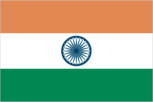
Geography
Agriculture
main crops — rice, other cereals, pulses, oilseed, cotton, jute, sugarcane, tobacco, tea, coffee
Airfields
- 101 total, 92 usable; 3 with permanent-surface runways; 1 with runways 2,4403,659 m, 12 with runways 1,220-2,439 m
- 345 total, 296 usable; 186 with permanent-surface runways; 2 with runways over 3,659 m, 54 with runways 2,440-3,659 m, 96 with runways 1,220-2,439 m
Branches
- Police, Coast Guard
- bicameral parliament — Council of States, House of the People; relatively independent judiciary
- Army, Navy, Air Force, Coast Guard, Paramilitary Forces
Budget
(FY83/84) central government revenue and capital receipts, $35.8 billion; disbursements, $37.8 billion
Capital
New Delhi
Civil air
- 20 major transport aircraft
- 93 major transport aircraft
CNP
$150 billion (FY82/83 at current prices), $210 per capita; real growth 1.8%est. in FY82/83
Coastline
7,000 km (includes offshore islands) People
Communists
466,000 members claimed by CPI, 270,000 members claimed by CPI/M; Communist extremist groups, about 15,000 members
Crudesteel
lO.Omillion metric tons of ingots (1983)
Elections
national and state elections ordinarily held every five years; may be postponed in emergency and may be held more frequently if government loses confidence vote; last general election in December 1984; state elections staggered India (continued) Political parties and leaders: Indian National Congress, controlled national government from independence to March 1977; split in January 1978 and 1979; party currently headed by Prime Minister Rajiv Gandhi; the Dalit Mazdoor Kisan Party (DMKP), formed in late 1984 by Charan Singh of the Lok Dal Party, also absorbed the Democratic Socialist Party, a breakaway faction of the Janata Party, and Sharad Pawar's Congress (S) Party; Janata Party led by Chandra Shekhar; Bharatiya Janata Party, A. B. Vajpayee; Communist Party of India (CPI), C. Rajeswara Rao; Communist Party of India/Marxist (CPI/M), E. M. S. Namboodiripad; Communist Party of India/Marxist-Leninist (CPI/ML), Satyanarayan Singh; All-India Anna Dravida Munnetra Kazagham (AIADMK), a regional party in Tamil Nadu, led by M. G. Ramachandran; Akali Dal representing Sikh religious community in the Punjab; Telugu Desam, a regional party in Andhra Pradesh led by N. T. Rama Rao; National Sanjay Front (SVM), led by Maneka Gandhi; National Conference (NC), a regional party in Kashmir, split into factions led by Farooq Abdullah and G. M. Shah
Electric power
40,000,000 kW capacity (1984); 144 billion kWh produced (1984), 194 kWh per capita
Ethnic divisions
72% IndoAryan, 25% Dravidian, 3% Mongoloid and other
Exports
$9.4 billion (f.o.b., FY83/84); engineering goods, textiles and clothing, tea
Fiscal year
- calendar year Communications
- 1 April-31 March Communications
Fishing
catch 2.526 million metric tons (1983); exports $337 million (1982)
Government leader
Rajiv GANDHI, Prime Minister (since October 1984); Zail SINGH, President
Highways
- 12,343 km total; 166 km bitumen and concrete; 1,284 km bituminous treated and gravel; 10,893 km earth
- 1,633,400 km total (1979); 515,300 km mainly secondary and about 1,118,000 km gravel, crushed stone, or earth
Imports
$15.0 billion (c.i.f., FY83/84); machinery and transport equipment, petroleum, edible oils, fertilizers
Inland waterways
16,000 km; 2,575 km navigable by river steamers
Labor force
(1981) about 232 million; 67% agriculture; more than 10% unemployed and underemployed
Land boundaries
12,700 km Water
Language
Hindi, English, and 14 other official languages; 24 languages spoken by a million or more persons each; numerous other languages and dialects, for the most part mutually unintelligible; Hindi is the national language and primary tongue of 30 percent of the people; English enjoys "associate" status but is the most important language for national, political, and commercial communication; Hindustani, a popular variant of Hindi/Urdu, is spoken widely throughout northern India
Legal system
based on English common law; constitution adopted 1950; limited judicial review of legislative acts; accepts compulsory ICJ jurisdiction, with reservations
Limits of territorial waters (claimed)
12 nm (fishing 200 nm; additional 100 nm is fisheries conservation zone, December 1968; archipelago concept baselines); 200 nm exclusive economic zone
Literacy
36%
Major industries
textiles, food processing, steel, machinery, transportation equipment, cement, jute manufactures
Major trade partners
US, UK, USSR, Japan
Member of
ADB, AIOEC, ANRPC, Colombo Plan, Commonwealth, FAO, G-77, GATT, IAEA, IBRD, ICAC, ICAO, ICO, IDA, IFAD, IFC, IHO, ILO, International Lead and Zinc Study Group, IMF, IMO, INTELSAT, INTERPOL, IPU, IRC, ITC, ITU, IWC— International Wheat Council, NAM, UN, UNESCO, UPU, WFTU, WHO, WIPO, WMO, WSG, WTO Economy .
Military budget
for fiscal year ending 31 March 1985; est. budget $7.3 billion; 17.5% of central government budget
Military manpower
- males 15-49, 63,000; 54,000 fit for military service (Iceland has no conscription or compulsory military service) 800km Chinese line of control Laccadive Sea See region*! mip VIM Land 3,287,590 km2 (includes Jammu and Kashmir, the Indian-annexed part of the former state of Jammu and Kashmir); one-third the size of the US; 50% arable; 22% forest; 20% desert, waste, or urban; 5% permanent meadow and pasture; 3% inland water
- males 15-49, 198,429,000; 121,075,000 fit for military service; about 8,858,000 reach military age (17) annually
Monetary conversion rate
- 36.36 kronur=US$l (November 1984 average)
- 12.092 rupees=US$l (October 1984)
National holiday
Republic Day, 26 January
Nationality
noun — Indian(s); adjective — Indian
Official name
Republic of India
Organized labor
less than 5% of total labor force Government
Other political or pressure groups
various separatist groups seeking reorganization of states; numerous "senas" or militant/ chauvinistic organizations, including Shiv Sena (in Bombay), Anand Marg, and Rashtriya Swatamsevak Sangh
Pipelines
crude oil, 3,497 km; refined products, 1,828 km; natural gas, 260 km
Political subdivisions
22 states, 9 union territories
Population
762,507,000, including Sikkim and the Indian-held part of disputed Jammu and Kashmir (July 1985); average annual growth rate 2.1%
Ports
- 1 major (Reykjavik), 3 secondary (Akureyri, Hafnarfjordhur, Seydhisfjordhur), and about 50 minor
- 9 major, 79 minor
Railroads
- none
- 61,950 km total (1981); 31,750 km 1.676-meter broad gauge, 25,550 km 1.000meter gauge, 4,650 km narrow gauge (0.762meter and 0.610-meter); 12,617 km double track; 5,345 km electrified
Religion
83.5% Hindu, 11% Muslim, 2.6% Christian, 2.0-2.5% Sikh, 0.7% Buddhist, 0.2% other
Suffrage
universal over age 21
Telecommunications
- adequate domestic service, wire and radio communication system; 1 16,900 telephones (49.7 per 100 popl.); 4 AM, 33 FM, and 96 TV stations; 2 submarine cables; 1 satellite station with Atlantic Ocean antenna Defense Forces
- fair domestic telephone service where available, good internal microwave links; telegraph facilities widespread; AM broadcast adequate; international radio communications adequate; 2.6 million telephones (0.4 per 100 popl.); about 174 AM stations at 80 locations, 17 TV stations; domestic satellite system for communications and TV; submarine cable extends to Sri Lanka Defense Forces
Type
federal republic
Voting strength
India Congress, 74%; Telugu Desam Party, 5%; CPM, 4%; Janata, 1.8%; CPI, 1.1%; DMKP, 0.5%; BJP, 0.4%; others, 6.6%; 34 seats vacant as of January