1990 Edition
CIA World Factbook 1990 (Project Gutenberg)
Geography
Climate
temperate; cold, cloudy, humid winters; warm summers
Coastline
none--landlocked
Comparative area
slightly smaller than Indiana
Disputes
Transylvania question with Romania; Nagymaros Dam dispute with Czechoslovakia
Environment
levees are common along many streams, but flooding occurs almost every year
Land boundaries
2,251 km total; Austria 366 km, Czechoslovakia 676 km, Romania 443 km, USSR 135 km, Yugoslavia 631 km
Land use
54% arable land; 3% permanent crops; 14% meadows and pastures; 18% forest and woodland; 11% other; includes 2% irrigated
Maritime claims
none--landlocked
Natural resources
bauxite, coal, natural gas, fertile soils
Note
landlocked; strategic location astride main land routes between Western Europe and Balkan Peninsula as well as between USSR and Mediterranean basin
Terrain
mostly flat to rolling plains
Total area
93,030 km2; land area: 92,340 km2
People and Society
Birth rate
12 births/1,000 population (1990)
Death rate
13 deaths/1,000 population (1990)
Ethnic divisions
96.6% Hungarian, 1.6% German, 1.1% Slovak, 0.3% Southern Slav, 0.2% Romanian
Infant mortality rate
15 deaths/1,000 live births (1990)
Labor force
4,860,000; 43.2% services, trade, government, and other, 30.9% industry, 18.8% agriculture, 7.1% construction (1988)
Language
98.2% Hungarian, 1.8% other
Life expectancy at birth
67 years male, 75 years female (1990)
Literacy
99%
Nationality
noun--Hungarian(s); adjective--Hungarian
Net migration rate
0 migrants/1,000 population (1990)
Organized labor
96.5% of labor force; Central Council of Hungarian Trade Unions (SZOT) includes 19 affiliated unions, all controlled by the government; independent unions legal; may be as many as 12 small independent unions in operation
Population
10,568,686 (July 1990), growth rate - 0.1% (1990)
Religion
67.5% Roman Catholic, 20.0% Calvinist, 5.0% Lutheran, 7.5% atheist and other
Total fertility rate
1.8 children born/woman (1990)
Government
Administrative divisions
19 counties (megyek, singular--megye) and 1 capital city* (fovaros); Bacs-Kiskun, Baranya, Bekes, Borsod-Abauj-Zemplen, Budapest*, Csongrad, Fejer, Gyor-Sopron, Hajdu-Bihar, Heves, Komarom, Nograd, Pest, Somogy, Szabolcs-Szatmar, Szolnok, Tolna, Vas, Veszprem, Zala
Capital
Budapest
Communists
fewer than 100,000 (December 1989)
Constitution
18 August 1949, effective 20 August 1949, revised 19 April 1972 and 18 October 1989
Diplomatic representation
Ambassador Dr. Peter VARKONYI; Chancery at 3910 Shoemaker Street NW, Washington DC 20008; telephone (202) 362-6730; there is a Hungarian Consulate General in New York; US--Ambassador-designate Charles THOMAS; Embassy at V. Szabadsag Ter 12, Budapest (mailing address is APO New York 09213); telephone [36] (1) 126-450
Elections
National Assembly--last held on 25 March 1990 (first round, with the second round held 8 April 1990); results--percent of vote by party NA; seats--(394 total) Democratic Forum 165, Free Democrats 92, Independent Smallholders 43, Hungarian Socialist Party (MSP) 33, Young Democrats 21, Christian Democrats 21, independent candidates or jointly sponsored candidates 19; an additional 8 seats will be given to representatives of minority nationalities
Executive branch
president, premier, Council of Ministers
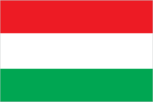
Flag
three equal horizontal bands of red (top), white, and green
Independence
1001, unification by King Stephen I
Judicial branch
Supreme Court
Leaders
Chief of State--President-designate Arpad GONCZ (since 2 May 1990); Head of Government--Prime Minister Jozsef ANTALL
Legal system
based on Communist legal theory, with both civil law system (civil code of 1960) and common law elements; Supreme Court renders decisions of principle that sometimes have the effect of declaring legislative acts unconstitutional; has not accepted compulsory ICJ jurisdiction
Legislative branch
unicameral National Assembly (Orszaggyules)
Long-form name
Republic of Hungary
Member of
CCC, CEMA, FAO, GATT, IAEA, IBRD, IBEC, ICAC, ICAO, ILO, ILZSG, IMF, IMO, IPU, ISO, ITC, ITU, UN, UNESCO, UPU, Warsaw Pact, WFTU, WHO, WIPO, WMO
National holiday
Anniversary of the Liberation, 4 April (1945)
Political parties and leaders
Democratic Forum, Jozsef Antall, chairman; Free Democrats, Janos Kis, chairman; Independent Smallholders, Istvan Prepeliczay, president; Hungarian Socialist Party (MSP), Rezso Nyers, chairman; Young Democrats; Christian Democrats, Sandor Keresztes, president; note--the Hungarian Socialist (Communist) Workers' Party (MSZMP) renounced Communism and became the Hungarian Socialist Party (MSP) in October 1989
Suffrage
universal at age 18
Type
republic
Economy
Agriculture
including forestry, accounts for about 15% of GNP and 19% of employment; highly diversified crop-livestock farming; principal crops--wheat, corn, sunflowers, potatoes, sugar beets; livestock--hogs, cattle, poultry, dairy products; self-sufficient in food output
Aid
donor--$1.8 billion in bilateral aid to non-Communist less developed countries (1962-88)
Budget
revenues $14.0 billion; expenditures $14.2 billion, including capital expenditures of $944 million (1988)
Currency
forint (plural--forints); 1 forint (Ft) = 100 filler
Electricity
7,250,000 kW capacity; 30,300 million kWh produced, 2,870 kWh per capita (1989)
Exchange rates
forints (Ft) per US$1--62.5 (January 1990), 59.2 (1989), 50.413 (1988), 46.971 (1987), 45.832 (1986), 50.119 (1985)
Exports
$19.1 billion (f.o.b. 1988); commodities--capital goods 36%, foods 24%, consumer goods 18%, fuels and minerals 11%, other 11%; partners USSR 48%, Eastern Europe 25%, developed countries 16%, less developed countries 8% (1987)
External debt
$19.6 billion (1989)
Fiscal year
calendar year
GNP
$64.6 billion, per capita $6,108; real growth rate - 1.3%
Imports
$18.3 billion (c.i.f., 1988); commodities--machinery and transport 28%, fuels 20%, chemical products 14%, manufactured consumer goods 16%, agriculture 6%, other 16%; partners--USSR 43%, Eastern Europe 28%, less developed countries 23%, US 3% (1987)
Industrial production
growth rate 0.6% (1988)
Industries
mining, metallurgy, engineering industries, processed foods, textiles, chemicals (especially pharmaceuticals)
Inflation rate (consumer prices)
18% (1989 est.)
Overview
Hungary's postwar Communist government spurred the movement from a predominantly agricultural to an industrialized economy. The share of the labor force in agriculture dropped from over 50% in 1950 to under 20% in 1989. Agriculture nevertheless remains an important sector, providing sizable export earnings and meeting domestic food needs. Industry accounts for about 40% of GNP and 30% of employment. Nearly three-fourths of foreign trade is with the USSR and Eastern Europe. Low rates of growth reflect the inability of the Soviet-style economy to modernize capital plant and motivate workers. GNP grew about 1% in 1988 and declined by 1% in 1989. Since 1985 external debt has more than doubled, to nearly $20 billion. In recent years Hungary has moved further than any other East European country in experimenting with decentralized and market-oriented enterprises. These experiments have failed to jump-start the economy because of: limitations on funds for privatization; continued subsidization of insolvent state enterprises; and the leadership's reluctance to implement sweeping market reforms that would cause additional social dislocations in the short term.
Unemployment rate
0.4% (1989)
Communications
Airports
90 total, 90 usable; 20 with permanent-surface runways; 2 with runways over 3,659 m; 10 with runways 2,440-3,659 m; 15 with runways 1,220-2,439 m
Civil air
22 major transport aircraft
Highways
130,000 km total; 29,701 km national highway system--26,727 km asphalt and bitumen, 146 km concrete, 55 km stone and road brick, 2,345 km macadam, 428 km unpaved; 58,495 km country roads
Inland waterways
1,622 km (1986)
Merchant marine
16 cargo ships (1,000 GRT or over) totaling 77,141 GRT/103,189 DWT
Pipelines
crude oil, 1,204 km; refined products, 600 km; natural gas, 3,800 km (1986)
Ports
Budapest and Dunaujvaros are river ports on the Danube; maritime outlets are Rostock (GDR), Gdansk (Poland), Gdynia (Poland), Szczecin (Poland), Galati (Romania), and Braila (Romania)
Railroads
7,770 km total; 7,513 km 1.435-meter standard gauge, 222 km narrow gauge (mostly 0.760-meter), 35 km 1.524-meter broad gauge; 1,138 km double track, 2,088 km electrified; all government owned (1987)
Telecommunications
stations--13 AM, 11 FM, 21 TV; 8 Soviet TV relays; 3,500,000 TV sets; 5,500,000 receiver sets; at least 1 satellite earth station
Military and Security
Branches
Hungarian People's Army, Frontier Guard, Air and Air Defense Command
Defense expenditures
43.7 billion forints, NA% of total budget (1989); note--conversion of the military budget into US dollars using the official administratively set exchange rate would produce misleading results
Military manpower
males 15-49, 2,645,016; 2,112,651 fit for military service; 86,481 reach military age (18) annually