1986 Edition
CIA World Factbook 1986 (Internet Archive)
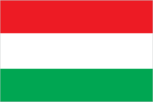
Geography
Airfields
2 total; 2 usable; 2 with permanent-surface runways; 1 with runways 2,440-3,659 m
Branches
- Headquarters of British Forces, Gurkha Field Forces, Royal Navy, Royal Air Force, Royal Hong Kong Auxiliary Air Force, Royal Hong Kong Police Force
- executive — Presidential Council (elected by parliament); unicameral legislature— National Assembly (elected by direct suffrage); judicial — Supreme Court (elected by parliament)
Capital
Budapest
Civil air
16 major transport aircraft
Communists
about 870,992 party members (January 1985)
Elections
every five years (last election June 1985); national and local elections are held separately Political parties and leaders: Hungarian Socialist (Communist) Workers' Party (MSZMP), sole party; Janos Kadar, General Secretary (since November 1956; his title was changed from First Secretary to General Secretary in March 1985)
Ethnic divisions
96.6% Hungarian, 1.6% German, 1.1% Slovak, 0.3% Southern Slav, 0.2% Romanian, 1.2% other
Government leaders
Pal LOSONCZI, President, Presidential Council (since April 1967); Gyorgy LAzAR, Premier, Council of Ministers (since May 1975)
Highways
1,160 km total; 794 km paved, 306 km gravel, crushed stone, or earth
Infant mortality rate
19/1,000(1983)
Labor force
4,940,000 (1984); 31% industry; 22% agriculture; 7% construction; 40% services, trade, government, and other Government
Land boundaries
2,242 km People
Language
98.2% Hungarian, 1.8% other
Legal system
based on Communist legal theory, with both civil law system (civil code of 1960) and common law elements; constitution adopted 1949 amended 1972; Supreme Court renders decisions of principle that sometimes have the effect of declaring legislative acts unconstitutional; legal education at Lorand Eotvos University Faculty of Law in Budapest and two other schools of law; has not accepted compulsory ICJ jurisdiction
Life expectancy
men 65.6, women 73.5
Literacy
98%
Military budget
est. for fiscal year ending 30 June 1984, $195.3 million; about 4.3% of central government budget and 1% of GDP Sec regional mip V Land 93,030 km2; slightly smaller than Indiana; 70.5% agricultural and pastureland, 17.6% forest, 11. 9% other
Military manpower
males 15-49, 1,620,000; 1,274,000 fit for military service; about 53,000 reach military age (18) annually
National holiday
Liberation Day, 4 April
Nationality
noun — Hungarian(s); adjective— Hungarian
Official name
Hungarian People's Republic
Political subdivisions
19 megyes (counties), 5 autonomous cities in county status
Population
10,624,000 (July 1986), average annual growth rate —0.2%
Ports
1 major (Hong Kong)
Railroads
35 km 1.435-meter standard gauge, government owned
Religion
67.5% Roman Catholic, 20.0% Calvinist, 5.0% Lutheran, 7.5% atheist and other
Suffrage
universal over age 18
Telecommunications
modern facilities provide excellent domestic and international services; 62 telephone exchanges, 1.5 million telephones; 5 AM and 9 FM radiobroadcast stations with 1 1 transmitters; 5 TV stations; 2.5 million radio and 1.1 million TV receivers; 10,100 Telex subscriber lines with direct connections to 47 countries; 2 INTELSAT ground stations with access to Pacific and Indian Ocean satellites; coaxial cable to Guangzhou (Canton), China; 3 international submarine cables; troposcatter to Taiwan available but inactive Defense Forces Defense is the responsibility of United Kingdom
Type
Communist state
Voting strength
(1985 election) 7,700,000 (94%) turnout for multiple-candidate election, with only some leading figures running without opposition