2011 Edition
CIA World Factbook 2011 Archive (HTML)
Introduction
Background
Occupied by the UK in 1841, Hong Kong was formally ceded by China the following year; various adjacent lands were added later in the 19th century. Pursuant to an agreement signed by China and the UK on 19 December 1984, Hong Kong became the Hong Kong Special Administrative Region (SAR) of the People's Republic of China on 1 July 1997. In this agreement, China promised that, under its "one country, two systems" formula, China's socialist economic system would not be imposed on Hong Kong and that Hong Kong would enjoy a high degree of autonomy in all matters except foreign and defense affairs for the next 50 years.
Geography
Area
- 1,104 sq km 1,054 sq km 50 sq km
- total
- 1,104 sq km
- water
- 50 sq km
Area - comparative
six times the size of Washington, DC
Climate
subtropical monsoon; cool and humid in winter, hot and rainy from spring through summer, warm and sunny in fall
Coastline
733 km
Elevation extremes
- South China Sea 0 m Tai Mo Shan 958 m
- highest point
- Tai Mo Shan 958 m
- lowest point
- South China Sea 0 m
Environment - current issues
air and water pollution from rapid urbanization
Environment - international agreements
- Marine Dumping (associate member), Ship Pollution (associate member)
- party to
- Marine Dumping (associate member), Ship Pollution (associate member)
Geographic coordinates
22 15 N, 114 10 E
Geography - note
composed of more than 200 islands
Irrigated land
NA; note - included in the total for China (2008)
Land boundaries
- 30 km China 30 km
- regional border
- China 30 km
- total
- 30 km
Land use
- 5.05% 1.01% 93.94% (2001)
- arable land
- 5.05%
- other
- 93.94% (2001)
- permanent crops
- 1.01%
Location
Eastern Asia, bordering the South China Sea and China
Map references
Southeast Asia
Maritime claims
- 3 nm
- territorial sea
- 3 nm
Natural hazards
occasional typhoons
Natural resources
outstanding deepwater harbor, feldspar
Terrain
hilly to mountainous with steep slopes; lowlands in north
People and Society
Age structure
- 11.6% (male 431,728/female 394,898) 74.8% (male 2,573,929/female 2,757,095) 13.5% (male 452,278/female 512,580) (2011 est.)
- 0-14 years
- 11.6% (male 431,728/female 394,898)
- 15-64 years
- 74.8% (male 2,573,929/female 2,757,095)
- 65 years and over
- 13.5% (male 452,278/female 512,580) (2011 est.)
Birth rate
7.49 births/1,000 population (2011 est.)
Death rate
7.07 deaths/1,000 population (July 2011 est.)
Education expenditures
4.5% of GDP (2009)
Ethnic groups
Chinese 95%, Filipino 1.6%, Indonesian 1.3%, other 2.1% (2006 census)
HIV/AIDS - adult prevalence rate
0.1% (2003 est.)
HIV/AIDS - deaths
fewer than 200 (2003 est.)
HIV/AIDS - people living with HIV/AIDS
2,600 (2003 est.)
Infant mortality rate
- 2.9 deaths/1,000 live births 3.08 deaths/1,000 live births 2.71 deaths/1,000 live births (2011 est.)
- female
- 2.71 deaths/1,000 live births (2011 est.)
- total
- 2.9 deaths/1,000 live births
Languages
Cantonese (official) 90.8%, English (official) 2.8%, Putonghua (Mandarin) 0.9%, other Chinese dialects 4.4%, other 1.1% (2006 census)
Life expectancy at birth
- 82.04 years 79.32 years 84.97 years (2011 est.)
- female
- 84.97 years (2011 est.)
- total population
- 82.04 years
Literacy
- age 15 and over has ever attended school 93.5% 96.9% 89.6% (2002)
- definition
- age 15 and over has ever attended school
- female
- 89.6% (2002)
- male
- 96.9%
- total population
- 93.5%
Median age
- 43.4 years 42.8 years 43.8 years (2011 est.)
- female
- 43.8 years (2011 est.)
- male
- 42.8 years
- total
- 43.4 years
Nationality
- Chinese/Hong Konger Chinese/Hong Kong
- adjective
- Chinese/Hong Kong
- noun
- Chinese/Hong Konger
Net migration rate
4.06 migrant(s)/1,000 population (2011 est.)
Population
7,122,508 (July 2011 est.)
Population growth rate
0.448% (2011 est.)
Religions
eclectic mixture of local religions 90%, Christian 10%
School life expectancy (primary to tertiary education)
- 16 years 15 years 16 years (2009)
- female
- 16 years (2009)
- male
- 15 years
- total
- 16 years
Sex ratio
- 1.075 male(s)/female 1.09 male(s)/female 0.94 male(s)/female 0.88 male(s)/female 0.95 male(s)/female (2011 est.)
- 15-64 years
- 0.94 male(s)/female
- 65 years and over
- 0.88 male(s)/female
- at birth
- 1.075 male(s)/female
- total population
- 0.95 male(s)/female (2011 est.)
- under 15 years
- 1.09 male(s)/female
Total fertility rate
1.07 children born/woman (2011 est.)
Unemployment, youth ages 15-24
- 12.6% 15.1% 10.3% (2009)
- female
- 10.3% (2009)
- total
- 12.6%
Urbanization
- 100% of total population (2010) 0.9% annual rate of change (2010-15 est.)
- rate of urbanization
- 0.9% annual rate of change (2010-15 est.)
- urban population
- 100% of total population (2010)
Government
Administrative divisions
none (special administrative region of China)
Constitution
The Basic Law, approved March 1990 by China's National People's Congress, is Hong Kong's charter
Country name
- Hong Kong Special Administrative Region Hong Kong Xianggang Tebie Xingzhengqu Xianggang HK
- abbreviation
- HK
- conventional long form
- Hong Kong Special Administrative Region
- conventional short form
- Hong Kong
- official long form
- Xianggang Tebie Xingzhengqu
- official short form
- Xianggang
Dependency status
special administrative region of China
Diplomatic representation from the US
- Consul General Stephen M. YOUNG 26 Garden Road, Hong Kong PSC 461, Box 1, FPO AP 96521-0006 [852] 2523-9011 [852] 2845-1598
- chief of mission
- Consul General Stephen M. YOUNG
- consulate(s) general
- 26 Garden Road, Hong Kong
- FAX
- [852] 2845-1598
- mailing address
- PSC 461, Box 1, FPO AP 96521-0006
- telephone
- [852] 2523-9011
Diplomatic representation in the US
- none (special administrative region of China); Hong Kong Economic and Trade Office (HKETO) carries out normal liaison and communication with the US Government and other US entities Donald TONG 1520 18th Street NW, Washington, DC 20036 [1] 202 331-8947 [1] 202 331-0318 New York, San Francisco
- FAX
- [1] 202 331-0318
- HKETO offices
- New York, San Francisco
- office
- 1520 18th Street NW, Washington, DC 20036
- representative
- Donald TONG
- telephone
- [1] 202 331-8947
Executive branch
- President of China HU Jintao (since 15 March 2003) Chief Executive Donald TSANG Yam-kuen (since 24 June 2005) Executive Council or ExCo consists of 15 official members and 14 non-official members chief executive elected for five-year term by a 800-member electoral committee; election last held on 25 March 2007 (next to be held in March 2012) the Legislative Council voted in June 2010 to expand the electoral committee to 1,200 seats for the 2012 election Donald TSANG elected chief executive in 2007 receiving 84.1% of the vote of the election committee; Alan LEONG Kah-kit received 15.9%
- cabinet
- Executive Council or ExCo consists of 15 official members and 14 non-official members
- chief of state
- President of China HU Jintao (since 15 March 2003)
- election results
- Donald TSANG elected chief executive in 2007 receiving 84.1% of the vote of the election committee; Alan LEONG Kah-kit received 15.9%
- elections
- chief executive elected for five-year term by a 800-member electoral committee; election last held on 25 March 2007 (next to be held in March 2012)
- head of government
- Chief Executive Donald TSANG Yam-kuen (since 24 June 2005)
Flag description
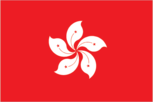
red with a stylized, white, five-petal Bauhinia flower in the center; each petal contains a small, red, five-pointed star in its middle; the red color is the same as that on the Chinese flag and represents the motherland; the fragrant Bauhinia - developed in Hong Kong the late 19th century - has come to symbolize the region; the five stars echo those on the flag of China
Government type
limited democracy
Independence
none (special administrative region of China)
International organization participation
ADB, APEC, BIS, FATF, ICC, IHO, IMF, IMO (associate), Interpol (subbureau), IOC, ISO (correspondent), ITUC, UNWTO (associate), UPU, WCO, WTO
Judicial branch
Court of Final Appeal, High Court (Court of Appeal and the Court of the First Instance), district courts, magistrates' courts, and other special courts
Legal system
mixed legal system of common law based on the English model and Chinese customary law (in matters of family and land tenure)
Legislative branch
- unicameral Legislative Council or LegCo (60 seats; 30 members indirectly elected by functional constituencies, 30 elected by popular vote; members serve four-year terms) the LegCo voted in June 2010 to expand to 70 seats for the 2012 election; the measure was approved by the National People's Congress Standing Committee in August 2010; the 10 new seats will be elected by popular vote last held on 7 September 2008 (next to be held in September 2012) percent of vote by block - pro-democracy 57%; pro-Beijing 40%, independent 3%; seats by parties - (pro-Beijing 35) DAB 13, Liberal Party 7, FTU 1, others 14; (pro-democracy 23) Democratic Party 8, Civic Party 5, CTU 3, League of Social Democrats 3, ADPL 2, The Frontier 1, NWSC 1; others 11; independents 2
- election results
- percent of vote by block - pro-democracy 57%; pro-Beijing 40%, independent 3%; seats by parties - (pro-Beijing 35) DAB 13, Liberal Party 7, FTU 1, others 14; (pro-democracy 23) Democratic Party 8, Civic Party 5, CTU 3, League of Social Democrats 3, ADPL 2, The Frontier 1, NWSC 1; others 11; independents 2
- elections
- last held on 7 September 2008 (next to be held in September 2012)
National anthem
- as a Special Administrative Region of China, "Yiyonggjun Jinxingqu" is the official anthem (see China)
- note
- as a Special Administrative Region of China, "Yiyonggjun Jinxingqu" is the official anthem (see China)
National holiday
National Day (Anniversary of the Founding of the People's Republic of China), 1 October (1949); note - 1 July 1997 is celebrated as Hong Kong Special Administrative Region Establishment Day
National symbol(s)
orchid tree flower
Political parties and leaders
- Association for Democracy and People's Livelihood or ADPL [LIU Sung Lee]; Civic Party [LEONG Ka-kit]; Democratic Alliance for the Betterment and Progress of Hong Kong or DAB [TAM Yiu Cheng]; Democratic Party [Albert HO Chun-yan]; League of Social Democrats or LSD; Liberal Party [Miriam LAU Kin-yee]; New People's Party [Regina IP Lau Su-yee]; People Power [Raymond WONG Yuk-man]; The Frontier (disbanded) Confederation of Trade Unions or CTU; Federation of Trade Unions or FTU; Neighborhood and Workers Service Center or NWSC political blocs include: pro-democracy - ADPL, Civic Party, Democratic Party, League of Social Democrats, People Power; pro-Beijing - DAB, Liberal Party, New People's Party, The Professional Forum (an informal group of three generally pro-government and pro-business LegCo members from functional constituencies and one independent elected from a geographic constituency), and Economic Synergy; there is no political party ordinance, so there are no registered political parties; politically active groups register as societies or companies
- others
- Confederation of Trade Unions or CTU; Federation of Trade Unions or FTU; Neighborhood and Workers Service Center or NWSC
- parties
- Association for Democracy and People's Livelihood or ADPL [LIU Sung Lee]; Civic Party [LEONG Ka-kit]; Democratic Alliance for the Betterment and Progress of Hong Kong or DAB [TAM Yiu Cheng]; Democratic Party [Albert HO Chun-yan]; League of Social Democrats or LSD; Liberal Party [Miriam LAU Kin-yee]; New People's Party [Regina IP Lau Su-yee]; People Power [Raymond WONG Yuk-man]; The Frontier (disbanded)
- political blocs include
- pro-democracy - ADPL, Civic Party, Democratic Party, League of Social Democrats, People Power; pro-Beijing - DAB, Liberal Party, New People's Party, The Professional Forum (an informal group of three generally pro-government and pro-business LegCo members from functional constituencies and one independent elected from a geographic constituency), and Economic Synergy; there is no political party ordinance, so there are no registered political parties; politically active groups register as societies or companies
Political pressure groups and leaders
Chinese General Chamber of Commerce (pro-China); Chinese Manufacturers' Association of Hong Kong; Confederation of Trade Unions or CTU (pro-democracy) [LEE Cheuk-yan, general secretary]; Federation of Hong Kong Industries; Federation of Trade Unions or FTU (pro-China) [CHENG Yiu-tong, executive councilor]; Hong Kong Alliance in Support of the Patriotic Democratic Movement in China [LEE Cheuk-yan, chairman]; Hong Kong and Kowloon Trade Union Council (pro-Taiwan); Hong Kong General Chamber of Commerce; Hong Kong Professional Teachers' Union [FUNG Wai-wah, president]; Neighborhood and Workers' Service Center or NWSC [LEUNG Yiu-chung, LegCo member] (pro-democracy); Civic Act-up [Cyd HO Sau-lan, LegCo member] (pro-democracy)
Suffrage
direct election - 18 years of age for half the legislature and a majority of seats in 18 district councils; universal for permanent residents living in the territory of Hong Kong for the past seven years indirect election - limited to about 220,000 members of functional constituencies for the other half of the legislature and an 1,200-member election committee for the chief executive drawn from broad sectoral groupings, central government bodies, municipal organizations, and elected Hong Kong officials
Economy
Agriculture - products
fresh vegetables; poultry, pork; fish
Budget
- $45.4 billion $38.94 billion (2010 est.)
- expenditures
- $38.94 billion (2010 est.)
- revenues
- $45.4 billion
Budget surplus (+) or deficit (-)
2.9% of GDP (2010 est.)
Central bank discount rate
0.5% (31 December 2010 est.) 0.5% (31 December 2009 est.)
Commercial bank prime lending rate
5% (31 December 2010 est.) 5% (31 December 2009 est.)
Current account balance
$14.8 billion (2010 est.) $17.96 billion (2009 est.)
Debt - external
$903.2 billion (30 June 2011 est.) $750.8 billion (31 December 2010 est.)
Distribution of family income - Gini index
53.3 (2007)
Economy - overview
Hong Kong has a free market economy highly dependent on international trade and finance - the value of goods and services trade, including the sizable share of re-exports, is about four times GDP. Hong Kong's open economy left it exposed to the global economic slowdown, but its increasing integration with China, through trade, tourism, and financial links, helped it recover more quickly than many observers anticipated. The Hong Kong government is promoting the Special Administrative Region (SAR) as the site for Chinese renminbi (RMB) internationalization. Hong Kong residents are allowed to establish RMB-denominated savings accounts; RMB-denominated corporate and Chinese government bonds have been issued in Hong Kong; and RMB trade settlement is allowed. The territory far exceeded the RMB conversion quota set by Beijing for trade settlements in 2010 due to the growth of earnings from exports to the mainland. RMB deposits grew to roughly 4.6% of total system deposits in Hong Kong by the end of 2010, an increase of over 392% since the beginning of the year. The government is pursuing efforts to introduce additional use of RMB in Hong Kong financial markets and is seeking to expand the RMB quota for 2011. The mainland has long been Hong Kong's largest trading partner, accounting for about half of Hong Kong's exports by value. Hong Kong's natural resources are limited, and food and raw materials must be imported. As a result of China's easing of travel restrictions, the number of mainland tourists to the territory has surged from 4.5 million in 2001 to 22.5 million in 2010, outnumbering visitors from all other countries combined. Hong Kong has also established itself as the premier stock market for Chinese firms seeking to list abroad. In 2010 mainland Chinese companies constituted about 19% of the firms listed on the Hong Kong Stock Exchange and accounted for 62% of the Exchange's market capitalization. During the past decade, as Hong Kong's manufacturing industry moved to the mainland, its service industry has grown rapidly and in 2009 accounted for more than 90% of the territory's GDP. GDP growth averaged a strong 3.8% from 1989 to 2010. Hong Kong's GDP fell in 2009 as a result of the global financial crisis, but a recovery began in third quarter 2009, and the economy grew nearly 6.8% in 2010. The Hong Kong government adopted several temporary fiscal policy support measures in response to the crisis that it may discontinue if strong growth is sustained. Credit expansion and tight housing supply conditions caused Hong Kong property prices to rise rapidly in 2010, and some lower income segments of the population are increasingly unable to afford adequate housing. Hong Kong continues to link its currency closely to the US dollar, maintaining an arrangement established in 1983.
Electricity - consumption
42.64 billion kWh (2010 est.)
Electricity - exports
2.23 billion kWh (2010 est.)
Electricity - imports
12.26 billion kWh (2010 est.)
Electricity - production
38.23 billion kWh (2010 est.)
Exchange rates
Hong Kong dollars (HKD) per US dollar - 7.78 (2010) 7.75 (2009) 7.751 (2008) 7.802 (2007) 7.7678 (2006)
Exports
$394 billion (2010 est.) $321.8 billion (2009)
Exports - commodities
electrical machinery and appliances, textiles, apparel, footwear, watches and clocks, toys, plastics, precious stones, printed material
Exports - partners
China 52.7%, US 11%, Japan 4.2% (2010 est.)
GDP - composition by sector
- 0% 7.4% 92.5% (2010 est.)
- agriculture
- 0%
- industry
- 7.4%
- services
- 92.5% (2010 est.)
GDP - per capita (PPP)
$45,900 (2010 est.) $43,200 (2009 est.) $44,600 (2008 est.) data are in 2010 US dollars
GDP - real growth rate
6.8% (2010 est.) -2.7% (2009 est.) 2.3% (2008 est.)
GDP (official exchange rate)
$225 billion (2010 est.)
GDP (purchasing power parity)
$325.8 billion (2010 est.) $305 billion (2009 est.) $313.3 billion (2008 est.) data are in 2010 US dollars
Household income or consumption by percentage share
- NA% NA%
- highest 10%
- NA%
- lowest 10%
- NA%
Imports
$437 billion (2010 est.) $348.7 billion (2009 est.)
Imports - commodities
raw materials and semi-manufactures, consumer goods, capital goods, foodstuffs, fuel (most is reexported)
Imports - partners
China 45.1%, Japan 9.6%, Taiwan 7.6%, Singapore 4.8%, US 4.7% (2010)
Industrial production growth rate
3.5% (2010 est.)
Industries
textiles, clothing, tourism, banking, shipping, electronics, plastics, toys, watches, clocks
Inflation rate (consumer prices)
2.3% (2010 est.) 0.6% (2009 est.)
Investment (gross fixed)
21.5% of GDP (2010 est.)
Labor force
3.676 million (2010 est.)
Labor force - by occupation
- 4.7% 2.2% 41.7% 12% 6.3% 17% above data exclude public sector (2010 est.)
- community and social services
- 17%
- construction
- 2.2%
- financing, insurance, and real estate
- 12%
- manufacturing
- 4.7%
- transport and communications
- 6.3%
- wholesale and retail trade, restaurants, and hotels
- 41.7%
Market value of publicly traded shares
$2.711 trillion (31 December 2010) $2.292 trillion (31 December 2009) $1.329 trillion (31 December 2008 est.)
Natural gas - consumption
4.02 billion cu m (2010 est.)
Natural gas - exports
0 cu m (2010 est.)
Natural gas - imports
4.02 billion cu m (2010 est.)
Natural gas - production
0 cu m (2010 est.)
Natural gas - proved reserves
0 cu m (1 January 2011 est.)
Oil - consumption
333,000 bbl/day (2010 est.)
Oil - exports
22,670 bbl/day (2009 est.)
Oil - imports
428,200 bbl/day (2010)
Oil - production
0 bbl/day (2010 est.)
Oil - proved reserves
0 bbl (1 January 2011 est.)
Population below poverty line
NA%
Public debt
17.8% of GDP (2010 est.) 37.6% of GDP (2009 est.)
Reserves of foreign exchange and gold
$268.7 billion (31 December 2010 est.) $255.8 billion (31 December 2009 est.)
Stock of broad money
$914.9 billion (31 December 2009) $846.5 billion (31 December 2008)
Stock of direct foreign investment - abroad
$948.5 billion (31 December 2010 est.) $832.1 billion (31 December 2009 est.)
Stock of direct foreign investment - at home
$1.098 trillion (31 December 2010 est.) $936.4 billion (31 December 2009 est.)
Stock of domestic credit
$445.8 billion (31 December 2010 est.) $351 billion (31 December 2009 est.)
Stock of narrow money
$82.18 billion (31 December 2010 est.) $75.45 billion (31 December 2009 est.)
Taxes and other revenues
20.2% of GDP (2010 est.)
Unemployment rate
4.3% (2010 est.) 5.2% (2009 est.)
Communications
Broadcast media
2 commercial terrestrial television networks each with multiple stations; multi-channel satellite and cable TV systems are available; 3 radio networks, one of which is government-funded, operate about 15 radio stations (2010)
Internet country code
.hk
Internet hosts
817,701 (2010)
Internet users
4.873 million (2009)
Telephone system
- modern facilities provide excellent domestic and international services microwave radio relay links and extensive fiber-optic network country code - 852; multiple international submarine cables provide connections to Asia, US, Australia, the Middle East, and Western Europe; satellite earth stations - 3 Intelsat (1 Pacific Ocean and 2 Indian Ocean); coaxial cable to Guangzhou, China
- domestic
- microwave radio relay links and extensive fiber-optic network
- general assessment
- modern facilities provide excellent domestic and international services
- international
- country code - 852; multiple international submarine cables provide connections to Asia, US, Australia, the Middle East, and Western Europe; satellite earth stations - 3 Intelsat (1 Pacific Ocean and 2 Indian Ocean); coaxial cable to Guangzhou, China
Telephones - main lines in use
4.345 million (2010)
Telephones - mobile cellular
13.416 million (2010)
Transportation
Airports
2 (2010)
Airports - with paved runways
- 1 (2010)
- 1,524 to 2,437 m
- 1 (2010)
- over 3,047 m
- 1
- total
- 2
Heliports
9 (2010)
Merchant marine
- 1,429 barge carrier 2, bulk carrier 629, cargo 177, carrier 11, chemical tanker 134, container 274, liquefied gas 37, passenger 4, passenger/cargo 9, petroleum tanker 139, roll on/roll off 5, vehicle carrier 8 855 (Belgium 16, Bermuda 12, Canada 70, China 432, Cyprus 3, Denmark 41, France 3, Germany 10, Greece 22, Indonesia 8, Iran 1, Japan 84, Libya 1, Norway 49, Russia 1, Singapore 13, South Korea 3, Taiwan 26, UAE 2, UK 27, US 31) this country allows large numbers of ships owned by foreign entities to be registered in its national shipping registry and to fly its flag; these ships operate under the laws of the flag state 297 (Bahamas 2, Bermuda 5, Cambodia 11, China 15, Cyprus 2, Georgia 4, Honduras 1, India 1, Kiribati 1, Liberia 47, Malaysia 8, Malta 2, Marshall Islands 3, former Netherlands Antilles 1, NZ 1, Panama 125, Saint Vincent and the Grenadines 4, Seychelles 1, Sierra Leone 4, Singapore 38, Thailand 1, Tuvalu 1, UK 8, unknown 11) (2010)
- foreign-owned
- 855 (Belgium 16, Bermuda 12, Canada 70, China 432, Cyprus 3, Denmark 41, France 3, Germany 10, Greece 22, Indonesia 8, Iran 1, Japan 84, Libya 1, Norway 49, Russia 1, Singapore 13, South Korea 3, Taiwan 26, UAE 2, UK 27, US 31)
- registered in other countries
- 297 (Bahamas 2, Bermuda 5, Cambodia 11, China 15, Cyprus 2, Georgia 4, Honduras 1, India 1, Kiribati 1, Liberia 47, Malaysia 8, Malta 2, Marshall Islands 3, former Netherlands Antilles 1, NZ 1, Panama 125, Saint Vincent and the Grenadines 4, Seychelles 1, Sierra Leone 4, Singapore 38, Thailand 1, Tuvalu 1, UK 8, unknown 11) (2010)
- total
- 1,429
Ports and terminals
Hong Kong
Roadways
- 2,067 km 2,067 km (2010)
- total
- 2,067 km
Military and Security
Manpower available for military service
- 1,704,090 1,873,175 (2010 est.)
- females age 16-49
- 1,873,175 (2010 est.)
- males age 16-49
- 1,704,090
Manpower fit for military service
- 1,387,213 1,505,875 (2010 est.)
- females age 16-49
- 1,505,875 (2010 est.)
- males age 16-49
- 1,387,213
Manpower reaching militarily significant age annually
- 39,579 36,554 (2010 est.)
- female
- 36,554 (2010 est.)
- male
- 39,579
Military - note
defense is the responsibility of China
Military branches
no regular indigenous military forces; Hong Kong garrison of China's People's Liberation Army (PLA) includes elements of the PLA Ground Forces, PLA Navy, and PLA Air Force; these forces are under the direct leadership of the Central Military Commission in Beijing and under administrative control of the adjacent Guangzhou Military Region (2009)
Military expenditures
NA
Transnational Issues
Disputes - international
none
Illicit drugs
despite strenuous law enforcement efforts, faces difficult challenges in controlling transit of heroin and methamphetamine to regional and world markets; modern banking system provides conduit for money laundering; rising indigenous use of synthetic drugs, especially among young people