1999 Edition
CIA World Factbook 1999 (Internet Archive)
Introduction
Background
Pursuant to the agreement signed by China and the UK on 19 December 1984, Hong Kong became the Hong Kong Special Administrative Region (SAR) of China on 1 July 1997. Under the terms of this agreement, China has promised that under its "one country, two systems" formula its socialist economic system will not be practiced in Hong Kong, and that Hong Kong shall enjoy a high degree of autonomy in all matters except foreign and defense affairs.
Geography
Area
total: 1,092 sq km land: 1,042 sq km water: 50 sq km
Area--comparative
six times the size of Washington, DC
Climate
tropical monsoon; cool and humid in winter, hot and rainy from spring through summer, warm and sunny in fall
Coastline
733 km
Elevation extremes
lowest point: South China Sea 0 m highest point: Tai Mo Shan 958 m
Environment--current issues
air and water pollution from rapid urbanization
Environment--international agreements
party to: NA signed, but not ratified: NA
Geographic coordinates
22 15 N, 114 10 E
Geography--note
more than 200 islands
Irrigated land
20 sq km (1997 est.)
Land boundaries
total: 30 km border countries: China 30 km
Land use
arable land: 6% permanent crops: 1% permanent pastures: 1% forests and woodland: 20% other: 72% (1997 est.)
Location
Eastern Asia, bordering the South China Sea and China
Map references
Southeast Asia
Maritime claims
territorial sea: 3 nm
Natural hazards
occasional typhoons
Natural resources
outstanding deepwater harbor, feldspar
Terrain
hilly to mountainous with steep slopes; lowlands in north
People and Society
Age structure
0-14 years: 18% (male 644,982; female 598,188) 15-64 years: 71% (male 2,397,277; female 2,490,745) 65 years and over: 11% (male 323,949; female 391,984) (1999 est.)
Birth rate
12.9 births/1,000 population (1999 est.)
Death rate
5.96 deaths/1,000 population (1999 est.)
Ethnic groups
Chinese 95%, other 5%
Infant mortality rate
5.2 deaths/1,000 live births (1999 est.)
Languages
Chinese (Cantonese), English
Life expectancy at birth
total population: 78.91 years male: 76.15 years female: 81.85 years (1999 est.)
Literacy
definition: age 15 and over has ever attended school total population: 92.2% male: 96% female: 88.2% (1996 est.)
Nationality
noun: Chinese adjective: Chinese
Net migration rate
12.07 migrant(s)/1,000 population (1999 est.)
Population
6,847,125 (July 1999 est.)
Population growth rate
1.9% (1999 est.)
Religions
eclectic mixture of local religions 90%, Christian 10%
Sex ratio
at birth: 1.07 male(s)/female under 15 years: 1.08 male(s)/female 15-64 years: 0.96 male(s)/female 65 years and over: 0.83 male(s)/female total population: 0.97 male(s)/female (1999 est.)
Total fertility rate
1.39 children born/woman (1999 est.)
Government
Administrative divisions
none (special administrative region of China)
Capital
Victoria
Constitution
Basic Law approved in March 1990 by China's National People's Congress is Hong Kong's "mini-constitution"
Country name
conventional long form: Hong Kong Special Administrative Region conventional short form: Hong Kong local long form: Xianggang Tebie Xingzhengqu local short form: Xianggang abbreviation: HK
Data code
HK
Dependency status
special administrative region of China
Executive branch
chief of state: President of China JIANG Zemin (since 27 March 1993) head of government: Chief Executive TUNG Chee-hwa (since 1 July 1997) cabinet: Executive Council consists of three ex-officio members and 10 appointed members; ex-officio members are: Chief Secretary Anson CHAN (since 29 November 1993), Financial Secretary Donald TSANG (since 7 March 1995), and Secretary of Justice Elsie LEUNG (since 1 July 1997) elections: NA
Flag description
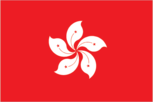
red with a stylized, white, five-petal bauhinia flower in the center
Government type
NA
Independence
none (special administrative region of China)
International organization participation
APEC, AsDB, BIS, CCC, ESCAP (associate), ICFTU, IMO (associate), Interpol (subbureau), IOC, ISO (correspondent), WCL, WMO, WTrO Diplomatic representation in the US: none (special administrative region of China) Diplomatic representation from the US: chief of mission: Consul General Richard A. BOUCHER consulate(s) general: 26 Garden Road, Hong Kong mailing address: PSC 464, Box 30, FPO AP 96522-0002
Judicial branch
The Court of Final Appeal in the Hong Kong Special Administrative Region Political parties and leaders: Democratic Party [Martin LEE, Political pressure groups and leaders: Association for Democracy Kowloon Trade Union Council (pro-Taiwan); Confederation of Trade Chamber of Commerce; Chinese General Chamber of Commerce (pro-China); Federation of Hong Kong Industries; Chinese Manufacturers' Association of Hong Kong; Hong Kong Professional chairman]
Legal system
based on English common law
Legislative branch
unicameral Legislative Council or LEGCO (60 seats; 30 indirectly elected by functional constituencies, 20 elected by popular vote, and 10 elected by an 800-member election committee; members serve four-year terms) elections: last held 25 May 1998 (next to be held NA 2002) election results: percent of vote by party--NA; seats by party--Democratic Party 13, Liberal Party 9, Democratic Alliance for the Betterment of Hong Kong 9, Hong Kong Progressive Alliance 5, Frontier Party 3, Citizens Party 1, independents 20
National holiday
National Day, 1-2 October; note--1 July 1997 is celebrated as Hong Kong Special Administrative Region Establishment Day
Suffrage
direct election 18 years of age; universal for permanent residents living in the territory of Hong Kong for the past seven years; indirect election limited to about 100,000 members of functional constituencies and an 800-member Election Commission drawn from broad regional groupings and other central government bodies
Economy
Agriculture--products
fresh vegetables; poultry
Budget
revenues: $30.1 billion expenditures: $26 billion, including capital expenditures of $289 million (FY97/98)
Currency
1 Hong Kong dollar (HK$) = 100 cents
Debt--external
none (1996)
Economic aid--recipient
none
Economy--overview
Hong Kong has a bustling free market economy highly dependent on international trade. Natural resources are limited, and food and raw materials must be imported. Indeed, imports and exports, including reexports, each exceed GDP in dollar value. Even before Hong Kong reverted to Chinese administration on 1 July 1997 it had extensive trade and investment ties with China. Real GDP growth averaged a remarkable 8% in 1987-88 and a still strong 5% in 1989-97. The widespread Asian economic difficulties in 1998 hit this trade-dependent economy quite hard, with GDP down 5%.
Electricity--consumption
28.598 billion kWh (1997)
Electricity--exports
1.483 billion kWh (1996)
Electricity--imports
5.875 billion kWh (1996)
Electricity--production
27 billion kWh (1996)
Electricity--production by source
fossil fuel: 100% hydro: 0% nuclear: 0% other: 0% (1996)
Exchange rates
Hong Kong dollars (HK$) per US$--7.74 (1997-99), 7.730 (1996), 7.800 (1995), 7.800 (1994); note--linked to the US dollar at the rate of about 7.8 HK$ per 1 US$
Exports
$188.08 billion (including reexports; f.o.b., 1997)
Exports--commodities
clothing, textiles, yarn and fabric, footwear, electrical appliances, watches and clocks, toys
Exports--partners
China 35%, US 22%, Japan 6%, Germany 4%, UK 4% (1997)
Fiscal year
1 April--31 March
GDP
purchasing power parity--$168.1 billion (1998 est.)
GDP--composition by sector
agriculture: 0.1% industry: 15.9% services: 84% (1997 est.)
GDP--per capita
purchasing power parity?$25,100 (1998 est.)
GDP--real growth rate
-5% (1998 est.)
Household income or consumption by percentage share
lowest 10%: NA% highest 10%: NA%
Imports
$208.63 billion (c.i.f., 1997)
Imports--commodities
foodstuffs, transport equipment, raw materials, semimanufactures, petroleum; a large share is reexported
Imports--partners
China 38%, Japan 14%, Taiwan 8%, US 8%, Singapore 5% (1997)
Industrial production growth rate
-3.7% (1998)
Industries
textiles, clothing, tourism, electronics, plastics, toys, watches, clocks
Inflation rate (consumer prices)
2.9% (1998 est.)
Labor force
3.216 million (1998 est.)
Labor force--by occupation
wholesale and retail trade, restaurants, and hotels 31.9%, social services 9.9%, manufacturing 9.2%, financing, insurance, and real estate 13.1%, transport and communications 5.7%, construction 2.6%, other 27.6% (October 1998)
Population below poverty line
NA%
Unemployment rate
5.5% (1998 est.)
Communications
Radio broadcast stations
AM 6, FM 6, shortwave 0
Radios
3 million (1992 est.)
Telephone system
modern facilities provide excellent domestic and international services domestic: microwave radio relay links and extensive fiber-optic network international: satellite earth stations--3 Intelsat (1 Pacific Ocean and 2 Indian Ocean); coaxial cable to Guangzhou, China; access to 5 international submarine cables providing connections to ASEAN member nations, Japan, Taiwan, Australia, Middle East, and Western Europe
Telephones
4.47 million (1998)
Television broadcast stations
4 (in addition, there are two repeaters) (1997)
Televisions
1.75 million (1992 est.)
Transportation
Airports
3 (1998 est.) Airports--with paved runways: total: 3 over 3,047 m: 2 1,524 to 2,437 m: 1 (1998 est.)
Heliports
2 (1998 est.)
Highways
total: 1,831 km paved: 1,831 km unpaved: 0 km (1997) Ports and harbors: Hong Kong
Merchant marine
total: 195 ships (1,000 GRT or over) totaling 6,075,304 GRT/10,133,186 DWT ships by type: barge carrier 1, bulk 117, cargo 18, chemical tanker 2, combination bulk 2, container 40, liquefied gas tanker 1, multifunction large-load carrier 2, oil tanker 6, refrigerated cargo 1, roll-on/roll-off cargo 1, short-sea passenger 1, vehicle carrier 3 note: a flag of convenience registry; includes ships from 13 countries among which are UK 16, South Africa 3, China 9, Japan 6, Bermuda 2, Germany 3, Canada 2, Cyprus 1, Belgium 1, and Norway 1 (1998 est.)
Railways
total: 34 km standard gauge: 34 km 1.435-m gauge (all electrified) (1996 est.)
Military and Security
Military branches
Hong Kong garrison of the PLA including elements of the PLA Army, the PLA Navy and PLA Air Force; these forces are under the direct leadership of the Central Military Commission in Beijing and under administrative control of the adjacent Guangzhou Military Region
Military expenditures--dollar figure
$NA
Military expenditures--percent of GDP
NA%
Military manpower--availability
males age 15-49: 1,924,304 (1999 est.) Military manpower--fit for military service: males age 15-49: 1,452,110 (1999 est.)
Military manpower--military age
18 years of age
Military manpower--reaching military age annually
males: 45,656 (1999 est.)
Military--note
defense is the responsibility of China
Transnational Issues
Disputes--international
none
Illicit drugs
a hub for Southeast Asian heroin trade; transshipment and money-laundering center; increasing indigenous amphetamine abuse