2021 Edition
CIA World Factbook 2021 (factbook.json @ e0d5604b9e27)
Introduction
Background
The native Taino - who inhabited the island of Hispaniola when Christopher COLUMBUS first landed on it in 1492 - were virtually wiped out by Spanish settlers within 25 years. In the early 17th century, the French established a presence on Hispaniola. In 1697, Spain ceded to the French the western third of the island, which later became Haiti. The French colony, based on forestry and sugar-related industries, became one of the wealthiest in the Caribbean but relied heavily on the forced labor of enslaved Africans and environmentally degrading practices. In the late 18th century, Toussaint L'OUVERTURE led a revolution of Haiti's nearly half a million slaves that ended France's rule on the island. After a prolonged struggle, and under the leadership of Jean-Jacques DESSALINES, Haiti became the first country in the world led by former slaves after declaring its independence in 1804, but it was forced to pay an indemnity to France for more than a century and was shunned by other countries for nearly 40 years. After the US occupied Haiti from 1915-1934, Francois "Papa Doc" DUVALIER and then his son Jean-Claude “Baby Doc” DUVALIER led repressive and corrupt regimes that ruled Haiti from 1957-1971 and 1971-1986, respectively. A massive magnitude 7.0 earthquake struck Haiti in January 2010 with an epicenter about 25 km (15 mi) west of the capital, Port-au-Prince. Estimates are that over 300,000 people were killed and some 1.5 million left homeless. The earthquake was assessed as the worst in this region over the last 200 years. On 4 October 2016, Hurricane Matthew made landfall in Haiti, resulting in over 500 deaths and causing extensive damage to crops, houses, livestock, and infrastructure. Currently the poorest country in the Western Hemisphere, Haiti continues to experience bouts of political instability.
Geography
Area
- land
- 27,560 sq km
- total
- 27,750 sq km
- water
- 190 sq km
Area - comparative
slightly smaller than Maryland
Climate
tropical; semiarid where mountains in east cut off trade winds
Coastline
1,771 km
Elevation
- highest point
- Pic la Selle 2,674 m
- lowest point
- Caribbean Sea 0 m
- mean elevation
- 470 m
Geographic coordinates
19 00 N, 72 25 W
Geography - note
shares island of Hispaniola with Dominican Republic (western one-third is Haiti, eastern two-thirds is the Dominican Republic); it is the most mountainous nation in the Caribbean
Irrigated land
970 sq km (2012)
Land boundaries
- border countries
- Dominican Republic 376 km
- total
- 376 km
Land use
- agricultural land
- 66.4% (2018 est.)
- agricultural land: arable land
- arable land: 38.5% (2018 est.)
- agricultural land: permanent crops
- permanent crops: 10.2% (2018 est.)
- agricultural land: permanent pasture
- permanent pasture: 17.7% (2018 est.)
- forest
- 3.6% (2018 est.)
- other
- 30% (2018 est.)
Location
Caribbean, western one-third of the island of Hispaniola, between the Caribbean Sea and the North Atlantic Ocean, west of the Dominican Republic
Map references
Central America and the Caribbean
Maritime claims
- contiguous zone
- 24 nm
- continental shelf
- to depth of exploitation
- exclusive economic zone
- 200 nm
- territorial sea
- 12 nm
Natural hazards
lies in the middle of the hurricane belt and subject to severe storms from June to October; occasional flooding and earthquakes; periodic droughts
Natural resources
bauxite, copper, calcium carbonate, gold, marble, hydropower, arable land
Population distribution
fairly even distribution; largest concentrations located near coastal areas
Terrain
mostly rough and mountainous
People and Society
Age structure
- 0-14 years
- 31.21% (male 1,719,961/female 1,734,566)
- 15-24 years
- 20.71% (male 1,145,113/female 1,146,741)
- 25-54 years
- 38.45% (male 2,110,294/female 2,145,209)
- 55-64 years
- 5.3% (male 280,630/female 305,584)
- 65 years and over
- 4.33% (male 210,451/female 269,228) (2020 est.)
Birth rate
21.4 births/1,000 population (2021 est.)
Children under the age of 5 years underweight
9.5% (2016/17)
Contraceptive prevalence rate
34.3% (2016/17)
Current Health Expenditure
7.7% (2018)
Death rate
7.29 deaths/1,000 population (2021 est.)
Dependency ratios
- elderly dependency ratio
- 8.3
- potential support ratio
- 13.3 (2020 est.)
- total dependency ratio
- 60.4
- youth dependency ratio
- 52.1
Drinking water source
- improved: rural
- rural: 55.4% of population
- improved: total
- total: 75% of population
- improved: urban
- urban: 91.5% of population
- unimproved: rural
- rural: 44.6% of population
- unimproved: total
- total: 25% of population (2017 est.)
- unimproved: urban
- urban: 8.5% of population
Education expenditures
1.7% of GDP (2018)
Ethnic groups
Black 95%, mixed and White 5%
HIV/AIDS - adult prevalence rate
1.9% (2020 est.)
HIV/AIDS - deaths
2,200 (2020 est.)
HIV/AIDS - people living with HIV/AIDS
150,000 (2020 est.)
Hospital bed density
0.7 beds/1,000 population (2013)
Infant mortality rate
- female
- 35.42 deaths/1,000 live births (2021 est.)
- male
- 47.1 deaths/1,000 live births
- total
- 41.29 deaths/1,000 live births
Languages
- Languages
- French (official), Creole (official)
- major-language sample(s)
- The World Factbook, une source indispensable d'informations de base. (French)The World Factbook, the indispensable source for basic information.
Life expectancy at birth
- female
- 68.31 years (2021 est.)
- male
- 62.94 years
- total population
- 65.61 years
Literacy
- definition
- age 15 and over can read and write
- female
- 58.3% (2016)
- male
- 65.3%
- total population
- 61.7%
Major infectious diseases
- degree of risk
- very high (2020)
- food or waterborne diseases
- bacterial and protozoal diarrhea, hepatitis A and E, and typhoid fever
- vectorborne diseases
- dengue fever and malaria
Major urban areas - population
2.844 million PORT-AU-PRINCE (capital) (2021)
Maternal mortality ratio
480 deaths/100,000 live births (2017 est.)
Median age
- female
- 24.3 years (2020 est.)
- male
- 23.8 years
- total
- 24.1 years
Mother's mean age at first birth
- 22.4 years (2016/7 est.)
- note
- note: median age at first birth among women 25-49
Nationality
- adjective
- Haitian
- noun
- Haitian(s)
Net migration rate
-1.9 migrant(s)/1,000 population (2021 est.)
Obesity - adult prevalence rate
22.7% (2016)
Physicians density
0.23 physicians/1,000 population (2018)
Population
- 11,198,240 (July 2021 est.)
- note
- note: estimates for this country explicitly take into account the effects of excess mortality due to AIDS; this can result in lower life expectancy, higher infant mortality, higher death rates, lower population growth rates, and changes in the distribution of population by age and sex than would otherwise be expected
Population distribution
fairly even distribution; largest concentrations located near coastal areas
Population growth rate
1.22% (2021 est.)
Religions
- Protestant/Methodist/Adventist/Jehovah's Witness 51.8%, Roman Catholic 35.4%, Vodou 1.7%, none 11% (2016-17 est.)
- note
- note: many Haitians practice elements of Vodou in addition to another religion, most often Roman Catholicism; Vodou was recognized as an official religion in 2003
Sanitation facility access
- improved: rural
- rural: 40% of population
- improved: total
- total: 62.1% of population
- improved: urban
- urban: 80.6% of population
- unimproved: rural
- rural: 60% of population
- unimproved: total
- total: 37.9% of population (2017 est.)
- unimproved: urban
- urban: 19.4% of population
Sex ratio
- 0-14 years
- 0.99 male(s)/female
- 15-24 years
- 1 male(s)/female
- 25-54 years
- 0.98 male(s)/female
- 55-64 years
- 0.92 male(s)/female
- 65 years and over
- 0.78 male(s)/female
- at birth
- 1.01 male(s)/female
- total population
- 0.98 male(s)/female (2020 est.)
Total fertility rate
2.48 children born/woman (2021 est.)
Urbanization
- rate of urbanization
- 2.47% annual rate of change (2020-25 est.)
- urban population
- 58% of total population (2021)
Government
Administrative divisions
10 departments (departements, singular - departement); Artibonite, Centre, Grand'Anse, Nippes, Nord, Nord-Est, Nord-Ouest, Ouest, Sud, Sud-Est
Capital
- daylight saving time
- +1hr, begins second Sunday in March; ends first Sunday in November
- etymology
- according to tradition, in 1706, a Captain de Saint-Andre named the bay and its surrounding area after his ship Le Prince; the name of the town that grew there means, "the Port of The Prince"
- geographic coordinates
- 18 32 N, 72 20 W
- name
- Port-au-Prince
- time difference
- UTC-5 (same time as Washington, DC, during Standard Time)
Citizenship
- citizenship by birth
- no
- citizenship by descent only
- at least one parent must be a native-born citizen of Haiti
- dual citizenship recognized
- no
- residency requirement for naturalization
- 5 years
Constitution
- amendments
- proposed by the executive branch or by either the Senate or the Chamber of Deputies; consideration of proposed amendments requires support by at least two-thirds majority of both houses; passage requires at least two-thirds majority of the membership present and at least two-thirds majority of the votes cast; approved amendments enter into force after installation of the next president of the republic; constitutional articles on the democratic and republican form of government cannot be amended; amended many times, last in 2012
- history
- many previous; latest adopted 10 March 1987
Country name
- conventional long form
- Republic of Haiti
- conventional short form
- Haiti
- etymology
- the native Taino name means "Land of High Mountains" and was originally applied to the entire island of Hispaniola
- local long form
- Republique d'Haiti/Repiblik d Ayiti
- local short form
- Haiti/Ayiti
Diplomatic representation from the US
- chief of mission
- Ambassador Michele SISON (since 21 February 2018)
- email address and website
- acspap@state.govhttps://ht.usembassy.gov/
- embassy
- Tabarre 41, Route de Tabarre, Port-au-Prince
- FAX
- [011] (529) 2229-8027
- mailing address
- 3400 Port-au-Prince Place, Washington, DC 20521-3400
- telephone
- [011] (509) 2229-8000
Diplomatic representation in the US
- chancery
- 2311 Massachusetts Avenue NW, Washington, DC 20008
- chief of mission
- Ambassador Bocchit EDMOND (since 23 December 2020)
- consulate(s) general
- Atlanta, Boston, Chicago, Miami, Orlando (FL), New York, San Juan (Puerto Rico)
- email address and website
- amb.washington@diplomatie.hthttps://www.haiti.org/
- FAX
- [1] (202) 745-7215
- telephone
- [1] (202) 332-4090
Executive branch
- cabinet
- Cabinet chosen by the prime minister in consultation with the president; parliament must ratify the Cabinet and Prime Minister's governing policy
- chief of state
- Acting President Ariel HENRY (since 20 July 2021); note - Prime Minister Ariel HENRY has assumed the responsibilities of president following the assassination of President Jovenel MOISE on 7 July 2021; an election is expected to be held on 7 November 2021; MOISE had been president since 7 February 2017
- election results
- 2016: Jovenel MOISE elected president in first round; percent of vote - Jovenel MOISE (PHTK) 55.6%, Jude CELESTIN (LAPEH) 19.6%, Jean-Charles MOISE (PPD) 11%, Maryse NARCISSE (FL) 9%; other 4.8%2011: Michel MARTELLY elected president in runoff; percent of vote - Michel MARTELLY (Peasant's Response) 68%, Mirlande MANIGAT (RDNP) 32%
- elections/appointments
- president directly elected by absolute majority popular vote in 2 rounds if needed for a 5-year term (eligible for a single non-consecutive term); last election originally scheduled for 9 October 2016 but postponed until 20 November 2016 due to Hurricane Matthew
- head of government
- Prime Minister Ariel HENRY (since 20 July 2021)
Flag description
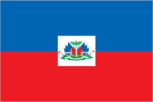
two equal horizontal bands of blue (top) and red with a centered white rectangle bearing the coat of arms, which contains a palm tree flanked by flags and two cannons above a scroll bearing the motto L'UNION FAIT LA FORCE (Union Makes Strength); the colors are taken from the French Tricolor and represent the union of blacks and mulattoes
Government type
semi-presidential republic
Independence
1 January 1804 (from France)
International law organization participation
accepts compulsory ICJ jurisdiction; non-party state to the ICCt
International organization participation
ACP, AOSIS, Caricom, CD, CDB, CELAC, FAO, G-77, IADB, IAEA, IBRD, ICAO, ICC (NGOs), ICRM, IDA, IFAD, IFC, IFRCS, ILO, IMF, IMO, Interpol, IOC, IOM, IPU, ITSO, ITU, ITUC (NGOs), LAES, MIGA, NAM, OAS, OIF, OPANAL, OPCW, PCA, Petrocaribe, UN, UNCTAD, UNESCO, UNIDO, Union Latina, UNWTO, UPU, WCO, WFTU (NGOs), WHO, WIPO, WMO, WTO
Judicial branch
- highest courts
- Supreme Court or Cour de cassation (consists of a chief judge and other judges); note - Haiti is a member of the Caribbean Court of Justice
- judge selection and term of office
- judges appointed by the president from candidate lists submitted by the Senate of the National Assembly; note - Article 174 of Haiti's constitution states that judges of the Supreme Court are appointed for 10 years, whereas Article 177 states that judges of the Supreme Court are appointed for life
- note
- note: the Superior Council of the Judiciary or Conseil Superieur du Pouvoir Judiciaire is a 9-member body charged with the administration and oversight of the judicial branch of government
- subordinate courts
- Courts of Appeal; Courts of First Instance; magistrate's courts; land, labor, and children's courts
Legal system
civil law system strongly influenced by Napoleonic Code
Legislative branch
- description
- bicameral legislature or le Corps l'egislatif ou le Parlement consists of:le S'enat or Senate (30 seats; 10 filled as of July 2021; members directly elected in multi-seat constituencies by absolute majority vote in 2 rounds if needed; members serve 6-year terms (2-term limit) with one-third of the membership renewed every 2 years)la Chambre de deput'es or Chamber of Deputies (119 seats; 116 filled as of June 2019; members directly elected in single-seat constituencies by absolute majority vote in 2 rounds if needed; members serve 4-year terms; no term limits); note - when the 2 chambers meet collectively it is known as L'Assembl'ee nationale or the National Assembly and is convened for specific purposes spelled out in the constitution
- election results
- Senate - percent of vote by party - NA; seats by party - NA; composition - men 27, women 1, percent of women 3.6%Chamber of Deputies - percent of vote by party - NA; seats by party - NA; composition - men 115, women 3, percent of women 2.5%; note - total legislature percent of women 2.7%
- elections
- Senate - last held on 20 November 2016 with runoff on 29 January 2017 (next originally scheduled for 27 October 2019, but postponed to 26 September 2021) Chamber of Deputies - last held on 9 August 2015 with runoff on 25 October 2015 and 20 November 2016 (next originally scheduled for 27 October 2019, but postponed to 26 September 2021)
National anthem
- lyrics/music
- Justin LHERISSON/Nicolas GEFFRARD
- name
- "La Dessalinienne" (The Dessalines Song)
- note
- note: adopted 1904; named for Jean-Jacques DESSALINES, a leader in the Haitian Revolution and first ruler of an independent Haiti
National holiday
Independence Day, 1 January (1804)
National symbol(s)
Hispaniolan trogon (bird), hibiscus flower; national colors: blue, red
Political parties and leaders
Alternative League for Haitian Progress and Empowerment or LAPEH [Jude CELESTIN]Christian Movement for a New Haiti or MCNH [Luc MESADIEU]Christian National Movement for the Reconstruction of Haiti or UNCRH [Chavannes JEUNE]Convention for Democratic Unity or KID [Evans PAUL]Cooperative Action to Rebuild Haiti or KONBA [Jean William JEANTY]December 16 Platform or Platfom 16 Desanm [Dr. Gerard BLOT]Democratic Alliance Party or ALYANS [Evans PAUL] (coalition includes KID and PPRH)Democratic Centers' National Council or CONACED [Osner FEVRY]Dessalinian Patriotic and Popular Movement or MOPOD [Jean Andre VICTOR]Effort and Solidarity to Create an Alternative for the People or ESKAMP [Joseph JASME]Fanmi Lavalas or FL [Jean-Bertrand ARISTIDE]For Us All or PONT [Jean-Marie CHERESTAL]Fusion of Haitian Social Democrats or FHSD [Edmonde Supplice BEAUZILE]Grouping of Citizens for Hope or RESPE [Charles-Henri BAKER]Haitians for Haiti [Yvon NEPTUNE]Haitian Tet Kale Party or PHTK [Ann Valerie Timothee MILFORT]Haiti in Action or AAA [Youri LATORTUE]Independent Movement for National Reconstruction or MIRN [Luc FLEURINORD]Konbit Pou refe Ayiti or KONBITLavni Organization or LAVNI [Yves CRISTALIN]Liberal Party of Haiti or PLH [Jean Andre VICTOR]Love Haiti or Renmen Ayiti [Jean-Henry CEANT, Camille LEBLANC]Mobilization for National Development or MDN [Hubert de RONCERAY]New Christian Movement for a New Haiti or MOCHRENA [Luc MESADIEU]Organization for the Advancement of Haiti and Haitians or OLAHHParty for the Integral Advancement of the Haitian People or PAIPHPatriotic Unity or IP [Marie Denise CLAUDE]Peasant's Response or Repons Peyizan [Michel MARTELLY]Platform Alternative for Progress and Democracy or ALTENATIV [Victor BENOIT and Evans PAUL]Platform of Haitian Patriots or PLAPH [Dejean BELISAIRE, Himmler REBU]Platform Pitit Desaline or PPD [Jean-Charles MOISE]PontPopular Party for the Renewal of Haiti or PPRH [Claude ROMAIN]PPG18Rally of Progressive National Democrats or RDNP [Mirlande MANIGAT]Renmen Ayiti or RA [Jean-Henry CEANT]Reseau National Bouclier or BouclierRespect or RESPEStrength in Unity or Ansanm Nou Fo [Leslie VOLTAIRE]Struggling People's Organization or OPL [Jacques-Edouard ALEXIS]Truth (Verite)Union [Chavannes JEUNE]Unity or Inite [Levaillant LOUIS-JEUNE]Vigilance or Veye Yo [Lavarice GAUDIN]
Suffrage
18 years of age; universal
Economy
Agricultural products
sugar cane, cassava, mangoes/guavas, plantains, bananas, yams, avocados, maize, rice, vegetables
Budget
- expenditures
- 1.65 billion (2017 est.)
- revenues
- 1.567 billion (2017 est.)
Budget surplus (+) or deficit (-)
-1% (of GDP) (2017 est.)
Current account balance
- Current account balance 2016
- -$83 million (2016 est.)
- Current account balance 2017
- -$348 million (2017 est.)
Debt - external
- Debt - external 31 December 2016
- $2.17 billion (31 December 2016 est.)
- Debt - external 31 December 2017
- $2.762 billion (31 December 2017 est.)
Economic overview
Haiti is a free market economy with low labor costs and tariff-free access to the US for many of its exports. Two-fifths of all Haitians depend on the agricultural sector, mainly small-scale subsistence farming, which remains vulnerable to damage from frequent natural disasters. Poverty, corruption, vulnerability to natural disasters, and low levels of education for much of the population represent some of the most serious impediments to Haiti’s economic growth. Remittances are the primary source of foreign exchange, equivalent to more than a quarter of GDP, and nearly double the combined value of Haitian exports and foreign direct investment.Currently the poorest country in the Western Hemisphere, with close to 60% of the population living under the national poverty line, Haiti’s GDP growth rose to 5.5% in 2011 as the Haitian economy began recovering from the devastating January 2010 earthquake that destroyed much of its capital city, Port-au-Prince, and neighboring areas. However, growth slowed to below 2% in 2015 and 2016 as political uncertainty, drought conditions, decreasing foreign aid, and the depreciation of the national currency took a toll on investment and economic growth. Hurricane Matthew, the fiercest Caribbean storm in nearly a decade, made landfall in Haiti on 4 October 2016, with 140 mile-per-hour winds, creating a new humanitarian emergency. An estimated 2.1 million people were affected by the category 4 storm, which caused extensive damage to crops, houses, livestock, and infrastructure across Haiti’s southern peninsula.US economic engagement under the Caribbean Basin Trade Partnership Act (CBTPA) and the 2008 Haitian Hemispheric Opportunity through Partnership Encouragement Act (HOPE II) have contributed to an increase in apparel exports and investment by providing duty-free access to the US. The Haiti Economic Lift Program (HELP) Act of 2010 extended the CBTPA and HOPE II until 2020, while the Trade Preferences Extension Act of 2015 extended trade benefits provided to Haiti in the HOPE and HELP Acts through September 2025. Apparel sector exports in 2016 reached approximately $850 million and account for over 90% of Haitian exports and more than 10% of the GDP.Investment in Haiti is hampered by the difficulty of doing business and weak infrastructure, including access to electricity. Haiti's outstanding external debt was cancelled by donor countries following the 2010 earthquake, but has since risen to $2.6 billion as of December 2017, the majority of which is owed to Venezuela under the PetroCaribe program. Although the government has increased its revenue collection, it continues to rely on formal international economic assistance for fiscal sustainability, with over 20% of its annual budget coming from foreign aid or direct budget support.
Exchange rates
- currency
- gourdes (HTG) per US dollar -
- Exchange rates 2013
- 45.22 (2013 est.)
- Exchange rates 2014
- 50.71 (2014 est.)
- Exchange rates 2015
- 63.34 (2015 est.)
- Exchange rates 2016
- 63.34 (2016 est.)
- Exchange rates 2017
- 65.21 (2017 est.)
Exports
- Exports 2018
- $1.78 billion note: data are in current year dollars (2018 est.)
- Exports 2019
- $1.73 billion note: data are in current year dollars (2019 est.)
Exports - commodities
clothing and apparel, eels, essential oils, perfumes, mangoes, cocoa beans (2019)
Exports - partners
United States 81%, Canada 7% (2019)
Fiscal year
1 October - 30 September
GDP - composition, by end use
- exports of goods and services
- 20% (2017 est.)
- government consumption
- 10% (2016 est.)
- household consumption
- 99.1% (2017 est.)
- imports of goods and services
- -60.3% (2017 est.)
- investment in fixed capital
- 32.6% (2016 est.)
- investment in inventories
- -1.4% (2017 est.)
- note
- note: figure for household consumption also includes government consumption
GDP - composition, by sector of origin
- agriculture
- 22.1% (2017 est.)
- industry
- 20.3% (2017 est.)
- services
- 57.6% (2017 est.)
GDP (official exchange rate)
$8.608 billion (2017 est.)
Gini Index coefficient - distribution of family income
- Gini Index coefficient - distribution of family income 2001
- 59.2 (2001)
- Gini Index coefficient - distribution of family income 2012
- 41.1 (2012 est.)
Household income or consumption by percentage share
- highest 10%
- 47.7% (2001)
- lowest 10%
- 0.7%
Imports
- Imports 2018
- $5.67 billion note: data are in current year dollars (2018 est.)
- Imports 2019
- $5.21 billion note: data are in current year dollars (2019 est.)
Imports - commodities
refined petroleum, rice, clothing and apparel, palm oil, poultry meats (2019)
Imports - partners
United States 39%, China 22%, Turkey 5% (2019)
Industrial production growth rate
0.9% (2017 est.)
Industries
textiles, sugar refining, flour milling, cement, light assembly using imported parts
Inflation rate (consumer prices)
- Inflation rate (consumer prices) 2016
- 13.4% (2016 est.)
- Inflation rate (consumer prices) 2017
- 14.7% (2017 est.)
Labor force
- 4.594 million (2014 est.)
- note
- note: shortage of skilled labor; unskilled labor abundant
Labor force - by occupation
- agriculture
- 38.1%
- industry
- 11.5%
- services
- 50.4% (2010)
Population below poverty line
58.5% (2012 est.)
Public debt
- Public debt 2016
- 33.9% of GDP (2016 est.)
- Public debt 2017
- 31.1% of GDP (2017 est.)
Real GDP (purchasing power parity)
- note
- note: data are in 2017 dollars
- Real GDP (purchasing power parity) 2018
- $33.28 billion note: data are in 2017 dollars (2018 est.)
- Real GDP (purchasing power parity) 2019
- $32.72 billion note: data are in 2017 dollars (2019 est.)
- Real GDP (purchasing power parity) 2020
- $31.62 billion note: data are in 2017 dollars (2020 est.)
Real GDP growth rate
- Real GDP growth rate 2015
- 1.2% (2015 est.)
- Real GDP growth rate 2016
- 1.5% (2016 est.)
- Real GDP growth rate 2017
- 1.2% (2017 est.)
Real GDP per capita
- note
- note: data are in 2017 dollars
- Real GDP per capita 2018
- $3,000 note: data are in 2017 dollars (2018 est.)
- Real GDP per capita 2019
- $2,900 note: data are in 2017 dollars (2019 est.)
- Real GDP per capita 2020
- $2,800 note: data are in 2017 dollars (2020 est.)
Reserves of foreign exchange and gold
- Reserves of foreign exchange and gold 31 December 2016
- $2.11 billion (31 December 2016 est.)
- Reserves of foreign exchange and gold 31 December 2017
- $2.361 billion (31 December 2017 est.)
Taxes and other revenues
18.2% (of GDP) (2017 est.)
Unemployment rate
- note
- note: widespread unemployment and underemployment; more than two-thirds of the labor force do not have formal jobs
- Unemployment rate 2010
- 40.6% (2010 est.)
Energy
Crude oil - exports
0 bbl/day (2015 est.)
Crude oil - imports
0 bbl/day (2015 est.)
Crude oil - production
0 bbl/day (2018 est.)
Crude oil - proved reserves
0 bbl (1 January 2018 est.)
Electricity - consumption
406.2 million kWh (2016 est.)
Electricity - exports
0 kWh (2016 est.)
Electricity - from fossil fuels
82% of total installed capacity (2016 est.)
Electricity - from hydroelectric plants
18% of total installed capacity (2017 est.)
Electricity - from nuclear fuels
0% of total installed capacity (2017 est.)
Electricity - from other renewable sources
0% of total installed capacity (2017 est.)
Electricity - imports
0 kWh (2016 est.)
Electricity - installed generating capacity
332,000 kW (2016 est.)
Electricity - production
1.023 billion kWh (2016 est.)
Electricity access
- electrification - rural areas
- 12% (2019)
- electrification - total population
- 39% (2019)
- electrification - urban areas
- 60% (2019)
Natural gas - consumption
0 cu m (2017 est.)
Natural gas - exports
0 cu m (2017 est.)
Natural gas - imports
0 cu m (2017 est.)
Natural gas - production
0 cu m (2017 est.)
Natural gas - proved reserves
0 cu m (1 January 2014 est.)
Refined petroleum products - consumption
21,000 bbl/day (2016 est.)
Refined petroleum products - exports
0 bbl/day (2015 est.)
Refined petroleum products - imports
20,030 bbl/day (2015 est.)
Refined petroleum products - production
0 bbl/day (2015 est.)
Communications
Broadband - fixed subscriptions
- subscriptions per 100 inhabitants
- less than 1 (2019 est.)
- total
- 31,100 (2019)
Broadcast media
98 television stations throughout the country, including 1 government-owned; cable TV subscription service available; 850 radio stations (of them, only 346 are licensed), including 1 government-owned; more than 100 community radio stations; over 64 FM stations in Port-au-Prince alone; VOA Creole Service broadcasts daily on 30 affiliate stations (2016)
Internet country code
.ht
Internet users
- percent of population
- 12.33% (2019 est.)
- total
- 4.28 million (2021 est.)
Telecommunication systems
- domestic
- fixed-line is less than 1 per 100; mobile-cellular telephone services have expanded greatly in the last decade due to low-cost GSM (Global Systems for Mobile) phones and pay-as-you-go plans; mobile-cellular teledensity is 58 per 100 persons (2019)
- general assessment
- plagued by political and economic turmoil complicated by natural disasters, Haiti’s telecommunications infrastructure is among the least-developed in the world; reliance on satellite and wireless mobile technology due to poor fixed-line infrastructure; investment boosted broadband availability though customer base is poor and theft of equipment remains problematic; promotion of LTE will enable access to remote areas and e-money services; World Bank grant to provide digital preparation and response for any future crises (2020)
- international
- country code - 509; landing points for the BDSNi and Fibralink submarine cables to 14 points in the Bahamas and Dominican Republic; satellite earth station - 1 Intelsat (Atlantic Ocean) (2019)
- note
- note: the COVID-19 pandemic continues to have a significant impact on production and supply chains globally; since 2020, some aspects of the telecom sector have experienced downturn, particularly in mobile device production; many network operators delayed upgrades to infrastructure; progress towards 5G implementation was postponed or slowed in some countries; consumer spending on telecom services and devices was affected by large-scale job losses and the consequent restriction on disposable incomes; the crucial nature of telecom services as a tool for work and school from home became evident, and received some support from governments
Telephones - fixed lines
- subscriptions per 100 inhabitants
- less than 1 (2019 est.)
- total subscriptions
- 5,952 (2019)
Telephones - mobile cellular
- subscriptions per 100 inhabitants
- 60.76 (2019 est.)
- total subscriptions
- 6,843,380 (2019)
Transportation
Airports
- total
- 14 (2013)
Airports - with paved runways
- 2,438 to 3,047 m
- 2
- 914 to 1,523 m
- 2 (2019)
- total
- 4
Airports - with unpaved runways
- 914 to 1,523 m
- 2
- total
- 10
- under 914 m
- 8 (2013)
Civil aircraft registration country code prefix
HH
Merchant marine
- by type
- general cargo 3, other 1 (2021)
- total
- 4
National air transport system
- inventory of registered aircraft operated by air carriers
- 1
- number of registered air carriers
- 1 (2020)
Ports and terminals
- major seaport(s)
- Cap-Haitien, Gonaives, Jacmel, Port-au-Prince
Roadways
- paved
- 768 km (2009)
- total
- 4,266 km (2009)
- unpaved
- 3,498 km (2009)
Military and Security
Military - note
according to the Haitian Government, the mission of the reconstituted armed forces will focus on patrolling the border with the Dominican Republic, combating smuggling, and executing recovery efforts after natural disasters the UN Stabilization Mission in Haiti (MINUSTAH) operated in Haiti from 2004 until 2017; its mission was to help restore stability after President Bertrand ARISTIDE fled the country, including assisting with the political process, strengthening government institutions, and promoting and protecting human rights; following the completion of MINUSTAH’s mandate in 2017, a smaller peacekeeping mission, the UN Mission for Justice Support in Haiti (MINUJUSTH), operated until 2019; its mission was to assist with the further development and strengthening of the national police, as well as Haiti’s justice and prison systems, and to promote and protect human rights; in 2019, the UN established the UN Integrated Office in Haiti (BINUH) with the political mission of advising the Haiti Government in elections, governance, and security; as of 2021, BINUH continued to operate
Military and security forces
- the Haitian Armed Forces (FAdH), disbanded in 1995, began to be reconstituted in 2017 to assist with natural disaster relief, border security, and combating transnational crime; it established an Army command in 2018; the small Coast Guard is not part of the military, but rather the Haitian National Police (2021)
- note
- note - the National Police has a paramilitary, rapid-response unit known as the Motorized Intervention Unit or BIM
Military and security service personnel strengths
the FAdH has approximately 500 troops (the force is planned to eventually have around 5,000 personnel); approximately 16,000 National Police (2021)
Military equipment inventories and acquisitions
not available
Transnational Issues
Disputes - international
since 2004, peacekeepers from the UN Stabilization Mission in Haiti have assisted in maintaining civil order in Haiti; the mission currently includes 6,685 military, 2,607 police, and 443 civilian personnel; despite efforts to control illegal migration, Haitians cross into the Dominican Republic and sail to neighboring countries; Haiti claims US-administered Navassa Island
Illicit drugs
a transit point for cocaine from South America and marijuana from Jamaica en route to the United States; not a producer or large consumer of illicit drugs; some cultivation of cannabis for local consumption
Refugees and internally displaced persons
- IDPs
- 17,105 (violence among armed gangs in the metropolitan area os Port-au-Prince) (2021)
- stateless persons
- 2,992 (2018); note - individuals without a nationality who were born in the Dominican Republic prior to January 2010
Environment
Air pollutants
- carbon dioxide emissions
- 2.98 megatons (2016 est.)
- methane emissions
- 6.12 megatons (2020 est.)
- particulate matter emissions
- 14.63 micrograms per cubic meter (2016 est.)
Climate
tropical; semiarid where mountains in east cut off trade winds
Environment - current issues
extensive deforestation (much of the remaining forested land is being cleared for agriculture and used as fuel); soil erosion; overpopulation leads to inadequate supplies of potable water and and a lack of sanitation; natural disasters
Environment - international agreements
- party to
- Biodiversity, Climate Change, Climate Change-Kyoto Protocol, Climate Change-Paris Agreement, Desertification, Hazardous Wastes, Law of the Sea, Marine Dumping-London Convention, Marine Life Conservation, Ozone Layer Protection
- signed, but not ratified
- Nuclear Test Ban
Food insecurity
- severe localized food insecurity
- due to reduced agricultural production and socio political turmoil - about 4.4 million people are forecast to be facing severe acute food insecurity or to be in need of urgent food assistance in the March-June 2021 time period; the high levels of food insecurity reflect the worsening household access to food, which was constrained by the negative effects of the COVID‑19 pandemic, primarily through income and job losses; the low availability of locally produced staple crops and high prices of food items exacerbated the situation; the ongoing socio‑political unrest has disrupted market activities, especially in urban areas, and reduced mobility due to road blockage has further affected the access to food (2021)
Land use
- agricultural land
- 66.4% (2018 est.)
- agricultural land: arable land
- arable land: 38.5% (2018 est.)
- agricultural land: permanent crops
- permanent crops: 10.2% (2018 est.)
- agricultural land: permanent pasture
- permanent pasture: 17.7% (2018 est.)
- forest
- 3.6% (2018 est.)
- other
- 30% (2018 est.)
Major infectious diseases
- degree of risk
- very high (2020)
- food or waterborne diseases
- bacterial and protozoal diarrhea, hepatitis A and E, and typhoid fever
- vectorborne diseases
- dengue fever and malaria
Revenue from coal
- coal revenues
- 0% of GDP (2018 est.)
Revenue from forest resources
- forest revenues
- 0.68% of GDP (2018 est.)
Total renewable water resources
14.022 billion cubic meters (2017 est.)
Total water withdrawal
- agricultural
- 1.209 billion cubic meters (2017 est.)
- industrial
- 51 million cubic meters (2017 est.)
- municipal
- 190 million cubic meters (2017 est.)
Urbanization
- rate of urbanization
- 2.47% annual rate of change (2020-25 est.)
- urban population
- 58% of total population (2021)
Waste and recycling
- municipal solid waste generated annually
- 2,309,852 tons (2015 est.)