1985 Edition
CIA World Factbook 1985 (Internet Archive)
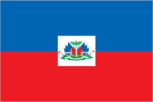
Geography
Agriculture
main crops — coffee, sugarcane, rice, corn, sorghum
Aid
economic — bilateral commitments, including Ex-Im (FY70-83), from US, $317 million; ODA and OOF from other Western countries (1970-82), $296 million; military US (FY70-83), $3 million
Airfields
- 86 total, 85 usable; 6 with permanent-surface runways; 11 with runways 1, 220-2,439 m
- 15 total, 12 usable; 3 with permanent-surface runways; 1 with runways 2,4403,659 m, 5 with runways 1,220-2,439 m
Branches
- Guyana Defense Force (including Maritime Corps and Air Corps), Guyana Police Force, Guyana People's Milita, Guyana National Service
- lifetime President; unicameral legislature (59-member National Assembly) has very limited powers; judiciary appointed by President
- Army, Navy, Air Corps, Volunteers for National Security
Budget
(1982) revenues, $176 million; expenditures, $366 million
Capital
Port-au-Prince
Civil air
- 5 major transport aircraft
- 4 major transport aircraft
Coastline
- 1,771 km People
- 820 km People
Communists
United Haitian Communist Party (PUCH), illegal and in exile; domestic strength unknown; party leaders in exile
Elections
constitution as amended in 1983 named Duvalier President for Life and granted him authority to name his successor; most recent legislative election held February 1984 Political parties and leaders: National Unity Party, inactive government party; Haitian Christian Democratic Party, Sylvio Claude (inactive); Haitian Christian Socialist Party, Gregoire Eugene (inactive)
Electric power
184,000 kW capacity (1984); 314 million kWh produced (1984), 54 kWh per capita
Ethnic divisions
- 95% black, 5% mulatto and European
- 90% mestizo (mixed Indian and European), 7% Indian, 2% black, 1% white
Exports
$167.6 million (f.o.b., 1983); coffee, light industrial products, bauxite, essential oils, sisal
Fiscal year
- calendar year Communications
- 1 October-30 September Communications
Government leader
Jean-Claude DUVALIER, President for Life (since 1971)
Highways
- 7,650 km total; 550 km paved, 5,000 km gravel, 1,525 km earth, 575 km unimproved
- 3,975 km total; 950 km paved, 900 km otherwise improved, 2,125 km unimproved
Imports
$284 million (f.o.b., 1982); consumer durables, foodstuffs, industrial equipment, petroleum products, construction materials
Inland waterways
- 6,000 km total of navigable waterways; Berbice, Demerara, and Essequibo Rivers are navigable by oceangoing vessels for 150 km, 100 km, and 80 km, respectively
- negligible; less than 100 km navigable
Labor force
- 2.3 million (est. 1975); 79% agriculture, 14% services, 7% industry; significant unemployment; shortage of skilled labor; unskilled labor abundant
- 1.2 million (1984); 54% agriculture, 28% services, 13% manufacturing, 4% construction, 1% other; 30% unemployed; 60% underemployed
Land boundaries
1,530 km Water
Language
- French (official) spoken by only 10% of population; all speak Creole
- Spanish, Indian dialects
Legal system
based on Roman civil law system; constitution adopted 1964 and amended 1971 and 1983; legal education at State University in Port-au-Prince and private law colleges in Cap-Haitien, Les Cayes, Gonai'ves, and Jeremie; accepts compulsory ICJ jurisdiction
Limits of territorial waters (claimed)
- 12 nm (economic, including fishing, 200 nm)
- 12 nm (economic, including fishing, 200 nm)
Literacy
- 23%
- 56%
Major industries
sugar refining, textiles, flour milling, cement manufacturing, bauxite mining, tourism, light assembly industries
Major trade partners
exports — 59% US; imports—45% US (1978)
Member of
FAO, G-77, GATT, IADB, IAEA, IBA, IBRD, ICAO, ICO, IDA, IDE— Inter-American Development Bank, IFAD, IFC, ILO, IMF, IMO, INTELSAT, INTERPOL, IRC, ITU, OAS, PAHO, SELA, UN, UNESCO, UPU, WHO, WMO, WTO Economy CNP:$1.5billion(1982), $300 per capita; real growth rate 1982, -1%
Military manpower
- males 15-49, 206,000; 164,000 fit for military service 70 tm North Atlantic Ocean Caribbean Sea See region*! map HI Land 27,749 km2; the size of Maryland; 44% unproductive, 31% cultivated, 18% rough pasture, 7% forest Land boundary '.-361 km Water
- males 15-49, 1,293,000; 720,000 fit for military service; about 62,000 reach military age (18) annually Caribbean Sea Puerto Cones Boundary not necessarily authoritative Sec riflonil imp III Land 112,088 km2; slightly larger than Tennessee; 36% waste and built on; 30% pasture; 27% forest; 7% crop
Monetary conversion rate
4.94 gourdes=US$l (November 1984)
National holiday
Independence Day, 1 January
Nationality
- noun — Haitian(s); adjective — Haitian
- noun — Honduran(s); adjective— Honduran
Official name
Republic of Haiti
Organized labor
- less than 1% of labor force Government
- 40% of urban labor force, 20% of rural work force (1981)
Other political or pressure groups
none Honduras
Political subdivisions
five departments despite constitutional provision for nine)
Population
- 5,762,000 (July 1985), average annual growth rate 1.9%
- 4,394,000 (July 1985), average annual growth rate 3.4%
Ports
- 1 major (Georgetown), 6 minor
- 2 major (Port-au-Prince, Cap Haitien), 12 minor
Railroads
- 185km total, allsingle track 1.435meter gauge
- 80 km 0.760-meter narrow gauge, single-track, privately owned industrial line
Religion
- 75-80% Roman Catholic (of which an overwhelming majority also practice Voodoo), 10% Protestant
- about 97% Roman Catholic; small Protestant minority
Suffrage
universal over age 18
Telecommunications
- fair telecom system with radio-relay network and over 27,000 telephones (3.3 per 100 popl.); tropospheric scatter link to Trinidad; 3 AM, 3 FM, no TV stations; 1 Atlantic Ocean satellite station Defense Forces
- domestic facilities barely adequate, international facilities slightly better; 40,000 telephones (0.8 per 100 popl.); 34 AM, 1 1 FM, 2 TV stations; 1 Atlantic Ocean satellite station Defense Forces
Type
republic
Voting strength
(1984 legislative elections) Assembly comprised of regime loyalists