1982 Edition
CIA World Factbook 1982 (Wikisource)
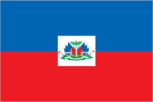
Geography
Area
27,713 km2; 31% cultivated, 18% rough pastures, 7% forested, 44% unproductive
Coastline
1,771 km
Land boundary
361 km WATER
Limits of territorial waters (claimed)
12 nm (fishing 200 nm; 200 nm exclusive economic zone)
People and Society
Ethnic divisions
over 90% Negro, nearly 10% mulatto, few whites
Labor force
2.3 million (est. 1975); 79% agriculture, 14% services, 7% industry, 5% unemployed; shortage of skilled labor; unskilled labor abundant
Language
French (official) spoken by only 10% of population; all speak Creole
Literacy
10% to 12%
Nationality
noun—Haitian(s); adjective—Haitian
Organized labor
less than 1% of labor force
Population
6,054,000 (July 1982), average annual growth rate 2.2%
Religion
10% Protestant, 75% to 80% Roman Catholic (of which an overwhelming majority also practice Voodoo)
Government
Branches
lifetime President, unicameral 58-member legislature of very limited powers, judiciary appointed by President
Capital
Port-au-Prince
Communists
United Haitian Communist Party (PUCH), illegal and in exile; domestic strength unknown; party leaders in exile
Elections
constitution as amended in 1971 provides for lifetime president to be designated by his predecessor and ratified by electorate in plebiscite; legislative elections, which are held every six years, last held February 1979 Political parties and leaders: National Unity Party, inactive government party; Haitian Christian Democratic Party, Sylvio Claude; Haitian Christian Social Party, Grégoire Eugène Voting strength (1979 legislative elections): 99% regime loyalists; 1 independent elected
Government leader
President-for-Life Jean-Claude DUVALIER
Legal system
based on Roman civil law system; constitution adopted 1964 and amended 1971; legal education at State University in Port-au-Prince and private law colleges in Cap-Haitien, Les Cayes, Gonaives, and Jeremie; accepts compulsory ICJ jurisdiction
Member of
FAO, G-77, GATT, IADB, IAEA, IBA, IBRD, ICAO, ICO, IDA, IDB, IFAD, IFC, ILO, IMCO, IMF, ITU, OAS, SELA, UN, UNESCO, UPU, WHO, WMO, WTO
National holiday
Independence Day, 1 January
Official name
Republic of Haiti
Other political or pressure groups
none
Political subdivisions
five departments (despite constitutional provision for nine)
Suffrage
universal over age 18
Type
republic under the 14-year dictatorship of Francois Duvalier who was succeeded upon his death on 21 April 1971 by his son, Jean-Claude
Economy
Agriculture
main crops—coffee, sugarcane, rice, corn, sorghum, pulses; caloric intake, 1,850 calories per day per capita
Aid
economic—bilateral commitments including Ex-Im (FY70-80) from US, $200.0 million; (1970-79) ODA and OOF from other Western countries, $130.8 million; military—US (FY70-80), $1.9 million
Budget
(1979/80 est.) revenue, $142 million; expenditure, $274 million
Electric power
150,000 kW capacity (1981); 300 million kWh produced (1981), 51 kWh per capita
Exports
$138 million (f.o.b., 1979); coffee, light industrial products, bauxite, sugar, essential oils, sisal
Fiscal year
1 October-30 September
GNP
$1.3 billion (1979), $258 per capita; real growth rate 1980, 7%
Imports
$227 million (f.o.b., 1979); consumer durables, foodstuffs, industrial equipment, petroleum products, construction materials
Major industries
sugar refining, textiles, flour milling, cement manufacturing, bauxite mining, tourism, light assembly industries
Major trade partners
exports—77% US; imports—51% US (1977)
Monetary conversion rate
5 gourdes=US$1
Communications
Airfields
15 total, 13 usable; 3 with permanent-surface runways; 1 with runways 2,440-3,659 m, 5 with runways 1,220-2,439 m
Civil air
7 major transport aircraft, including 2 leased in
Highways
3,200 km total; 600 km paved, 950 km otherwise improved, 1,650 km unimproved
Inland waterways
negligible; about 100 km navigable
Ports
2 major (Port-au-Prince, Cap Haitien), 12 minor
Railroads
80 km narrow gauge (0.760 m), single-track, privately owned industrial line; 8 km dual-gauge 0.760- to 1.065-meter gauge, government line, dismantled
Telecommunications
all domestic facilities inadequate, international facilities slightly better; telephone expansion program underway; 18,000 telephones (0.3 per 100 popl.); 40 AM and 5 FM stations; 1 TV station; 1 Atlantic Ocean satellite station
Military and Security
Military manpower
males 15-49, 1,334,000; 774,000 fit for military service; about 65,000 reach military age (18) annually