1985 Edition
CIA World Factbook 1985 (Internet Archive)
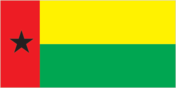
Geography
Agriculture
- cash crops — coffee, bananas, palm products, peanuts, citrus fruits, pineapples; staple food crops — cassava, rice, millet, corn, sweet potatoes; livestock raised in some areas
- main crops — rice, palm products, root crops, coconuts, peanuts, wood
Airfields
56 total, 50 usable; 5 with permanent-surface runways; 1 with runways 2,4403,659 m, 7 with runways 1,220-2,439 m
Branches
- president and cabinet; 150-member National Popular Assembly, overseen by 15-member Council of State
- People's Revolutionary Armed Force (FARP); Army, Navy, and Air Force are separate components
Budget
(1983 est.) revenues, $12.2 million; current expenditures, $27.4 million; investment expenditures, $27.9 million
Capital
Bissau
Civil air
2 major transport aircraft
Communists
a few Communists, some sympathizers
Elections
legislative elections held March Political parties and leaders: African Party for the Independence of Guinea-Bissau and Cape Verde (PAIGC), led by President Vieira, only legal party; Guinea-Bissau decided to retain the binational party title despite its formal break with Cape Verde
Electric power
- 100,000 kW capacity (1984); 264 million kWh produced (1984), 47 kWh per capita
- 20,000 kW capacity (1984); 26 million kWh produced (1984), 30 kWh per capita
Exports
- $537 million (f.o.b., 1984 est.); bauxite, alumina, diamonds, coffee, pineapples, bananas, palm kernels
- $8.6 million (1983); principally peanuts; also palm kernels, shrimp, fish, lumber
Fiscal year
calendar year Communications
Fishing
catch 6,000 metric tons (1983)
GDP
- $1.51 billion (1983 est), $278 per capita; real growth rate 1.3% (1984 est.)
- $154 million (FY83), $182 per capita, real growth rate -5.1% (1983)
Government leaders
Brig. Gen. Joao Bernardo VIEIRA, President, Council of State (since November 1980); Paulo CORREIA, First Vice President, Council of State (since May 1984); lafai CAMARA, Second Vice President, Council of State (since May 1984)
Highways
approx. 3,218 km (418 km bituminous, remainder earth)
Imports
- $403 million (f.o.b., 1984 est.); petroleum products, metals, machinery and transport equipment, foodstuffs, textiles
- $57.1 million (1983); foodstuffs, manufactured goods, fuels, transport equipment
Inland waterways
scattered stretches are important to coastal commerce
Legal system
new constitution approved May 1984
Major industries
- bauxite mining, alumina, diamond mining, light manufacturing and processing industries
- agricultural processing, beer, soft drinks
Major trade partners
- imports — France, USSR, US; exports— US, USSR, France,
- mostly Portugal, Spain, and other European countries
Member of
- AfDB, EGA, ECOWAS, FAO, G-77, GATT, IBA, IBRD, ICAO, ICO, IDA, IDE— Islamic Development Bank, IFAD, ILO, IMF, IMO, INTELSAT, INTERPOL, ITU, Mano River Union, Niger River Commission, NAM, OAU, OATUU, QIC, UN, UNESCO, UPU, WHO, WMO Economy
- Af DB, CEAO, FAO, G-77, GATT (de facto), IBRD, ICAO, ICO, IDA, IDB— Islamic Development Bank, IFAD, IFC, ILO, IMF, IMO, ISCON, ITU, NAM, OAU, QIC, UN, UNESCO, UPU, WFTU, WHO, WMO Economy
Military manpower
males 15-49, 197,000; 1 15,000 fit for military service
Monetary conversion rate
83.528 Guinea Bissauan pesos=US$l (November 1984)
National holiday
Independence Day, 24 September
Official name
Republic of Guinea-Bissau
Political subdivisions
9 municipalities, 3 circumscriptions (predominantly indigenous population)
Ports
1 major (Bissau)
Railroads
none
Ships
no combat ships
Suffrage
universal over age 15
Telecommunications
limited system of open-wire lines, radio-relay links, and radiocommunication stations; 3,000 telephones(0.5per lOOpopl.); 1 AM station, 1 FM station, no TV stations Defense Forces
Type
republic; highly centralized one party regime since September 1974