1983 Edition
CIA World Factbook 1983 (Internet Archive)
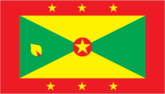
Geography
Agriculture
- arable areas largely in hay; sheep grazing; garden produce
- main crops — cocoa, nutmeg, mace, and bananas
Airfields
- 9 total, 6 usable; 4 with permanentsurface runways; 2 with runways 2,4403,659 m, 2 with runways 1,220-2,439 m
- 3 total, 3 usable; 2 with permanentsurface runways, 1 with runways 2,4403,659 m, 1 with runways 1,220-2,439 m
Branches
- legislative authority rests jointly with the elected 26-seat Landsting and Danish parliament; executive power vested in Premier and four-person council; 19 lower courts
- following the end of the Maurice Bishop regime in October 1983, the 1973 Grenadian Constitution was reinstated; Governor General Sir Paul Scoon assumed authority and on 9 November 1983 appointed a nine-member Interim Advisory Council to govern until elections can be held
- Royal Grenada Police Force
Budget
(prelim. 1982) revenues, $27 million; expenditures, $62 million
Capital
- Godthab (Nuuk)
- St. Georges
Civil air
- 2 major transport aircraft
- no major transport aircraft
Coastline
121 km People
Communists
the New Jewel Movement, which is currently in disarray
Elections
- held every four years
- planned for late 1984; last general election 7 December 1976 Political parties and leaders: still in the process of formation in preparation for elections; the Grenada National Democratic Party is organizing; Grenada Democratic Movement, a former exile organization, is in the process of reorganizing; some old parties are reemerging (Grenada National Party, [GNP], Grenada United Labor Party[GULP]); New Jewel Movement (NJM) in disarray, but discussions by former members of the Bishop government are under way to revive the party
Electric power
- 80,000 kW capacity (1983); 168 million kWh produced (1983), 3,235 kWh per capita
- 9,000 kW capacity (1983); 25 million kWh produced (1983), 225 kWh per capita
Ethnic divisions
mainly of African Negro descent
Exports
- $168.4 million (f.o.b., 1980); fish and fish products, metallic ores and concentrates
- $18.6 million (f.o.b., 1982 prelim.); cocoa beans, nutmeg, bananas, mace
Fiscal year
- calendar year Communications
- calendar year Communications
Fishing
catch 89,576 tons (1980); exports $108.6 million (1980)
GDP
$119 million (1983), $870 per capita; real growth rate 2.6% (1983 est.)
GNP
included in that of Denmark
Government leaders
- MARGRETHE II, Queen; Jonathan MOTZFELDT, Premier
- Sir Paul SCOON, Governor General; Nicholas BRATHWAITE, Chairman, Interim Advisory Council
Highways
- 80 km
- 1,000 km total; 600 km paved, 300 km otherwise improved; 100 km unimproved
Imports
- $259.4 million (c.i.f., 1980); petroleum and petroleum products, machinery and transport equipment, food products
- $71.3 million (c.i.f., 1982 prelim.); food, machinery and transport equipment, oil, building materials
Labor force
38,000 (1980 est); 38% services, 20% agriculture, 11% construction, 4% manufacturing; 27% unemployment
Language
English (official); some French patois
Legal system
based on English common law
Legal system
Danish law; transformed from colony to province in 1953; limited home rule began in spring 1979
Limits of territorial waters (claimed)
12 nm (economic, including fishing, 200 nm)
Literacy
unknown
Major industries
mining, fishing, sealing
Major trade partners
- (1980) Denmark 49.4%, Finland 9.5%, FRG 8.1%, US 6.3%, UK 2.9%
- exports — 32% UK, 10% FRG, 10% Netherlands (1982); imports—20% US, 19% Trinidad and Tobago, 15% UK (1982)
Member of
CARICOM, FAO, G-77, GATT (de facto), IBRD, ICAO, IDA, IFAD, IFC, ILO, IMF, NAM, OAS, PAHO, SELA, UN, UNESCO, UPU, WHO Economy
Military manpower
included with Denmark Land 344 km2 (Grenada and southern Grenadines); 44% cultivated; 17% unused but potentially productive; 12% forest; 4% pasture; 23% built on, waste, and other Water
Monetary conversion rate
- 9.670 Danish Kroner=US$l (November 1983)
- 2.70 East Caribbean dollars= US$1 (February 1984)
National holiday
Independence Day, 7 February
Nationality
noun — Grenadian(s); adjective — Grenadian
Official name
Grenada
Organized labor
80% of labor force
Political parties
Siumut, 12 seats (moderate socialist, advocating more distinct Greenland identity and greater autonomy from Denmark); the Atassut Party, 12 seats (more conservative, favors continuing close relations with Denmark); Inuit Atagatigik, 2 seats (Marxist-Leninist party favoring complete independence from Denmark rather than home rule) Economy
Political subdivisions
- 3 counties, 19 com-
- 6 parishes
Population
113,000 (July 1984), average annual growth rate 1.3%
Ports
- 7 major, 16 minor
- 1 major (St. Georges), 1 minor
Railroads
- none
- none
Religion
largely Roman Catholic; Anglican; other Protestant sects
Suffrage
- universal, but not compulsory, over age 21
- universal adult
Telecommunications
- adequate domestic and international service provided by cables and radio relay; 15,300 telephones (30.9 per 100 popl.); 9 AM, 13 FM, and 4 TV stations; 2 coaxial submarine cables; 1 Atlantic Ocean satellite station Defense Forces Defense is responsibility of Denmark
- automatic, islandwide telephone system with 5,650 telephones (5.4 per 100 popl.); new SHF links to Trinidad and St. Vincent; VHF and UHF links to Trinidad and Carriacou; 2 AM stations, 1 TV station Defense Forces
Type
independent state; recognizes Elizabeth II as Chief of State
Voting strength
(1976 election) GULP 51.7%, Peoples' Alliance Party, 48.3%; Legislative Council seats— GULP, 9; Peoples' Alliance Party, 6 (NJM 3, United People's Party 1, GNP 1, unaffiliated 1)