1982 Edition
CIA World Factbook 1982 (Wikisource)
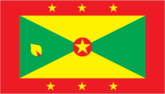
Geography
Area
344 km2 (Grenada and southern Grenadines); 44% cultivated, 4% pastures, 12% forests, 17% unused but potentially productive, 23% built on, wasteland, other WATER
Coastline
121 km
Limits of territorial waters (claimed)
12 nm (economic including fishing 200 nm)
People and Society
Ethnic divisions
mainly of African-Negro descent
Labor force
36,000 (1978, est.); 40% agriculture
Language
English; some French patois
Literacy
unknown
Nationality
noun—Grenadian(s); adjective—Grenadian
Organized labor
33% of labor force
Population
109,000 (July 1982), average annual growth rate 1.0%
Religion
Church of England; other Protestant sects; Roman Catholic
Government
Branches
following the 13 March 1979 coup, led by New Jewel Movement leader Maurice Bishop, constitution suspended on 25 March 1979 and replaced by People's Laws; three-man electoral commission appointed; elections unscheduled
Capital
St. Georges
Communists
negligible
Elections
formerly every five years; most recent general election 7 December 1976 Political parties and leaders: New Jewel Movement (NJM), Maurice Bishop; United People's Party (UPP), Winston Whyte; Grenada National Party (GNP), Herbert A. Blaize; Grenada United Labor Party (GULP) Voting strength (1976 election): GULP 51.7%, Opposition Coalition, 48.3%; Legislative Council seats, GULP 9, Opposition Coalition, 6 (NJM 3, UPP 1, GNP 1, unaffiliated 1)
Government leaders
Prime Minister Maurice BISHOP; UK Governor General Paul SCOON Suffrage: universal adult
Legal system
based on English common law
Member of
CARICOM, G-77, GATT (de facto), IBRD, IDA, IFAD, IFS, ILO, IMF, NAM, OAS, SELA, UN, UNESCO, UPU, WHO
National holiday
Independence Day, 7 February
Official name
Grenada
Political subdivisions
6 parishes
Type
independent state since February 1974, recognizes Elizabeth 11 as Chief of State
Economy
Agriculture
main crops—spices, cocoa, bananas
Budget
(prelim. 1980) revenues, $39 million; expenditures, $40 million
Electric power
7,000 kW capacity (1981); 25 million kWh produced (1981), 231 kWh per capita
Exports
$16 million (f.o.b., 1980 prelim.); cocoa beans, nutmeg, bananas, mace
Fiscal year
calendar year
GDP
$88 million (1980 est.), $800 per capita; real growth rate 1980 est., -1%
Imports
$55 million (c.i.f., 1980 prelim.); food, machinery, building materials
Major trade partners
exports—39% UK, 17% West Germany, 12% Netherlands (1979); imports—27% West Indies, 27% UK, 9% US (1976)
Monetary conversion rate
2.70 East Caribbean dollars=US$1
Communications
Airfields
2 total, 2 usable; 1 with permanent-surface runways, 1 with runways 1,220-2,439 m
Civil air
no major transport aircraft
Highways
1,000 km total; 600 km paved, 300 km otherwise improved; 100 km unimproved
Ports
1 major (St. Georges), 1 minor
Railroads
none
Telecommunications
automatic, islandwide telephone system with 5,200 telephones (4.9 per 100 popl.); VHF and UHF links to Trinidad and Carriacou; 3 AM stations