1987 Edition
CIA World Factbook 1987 (Internet Archive)
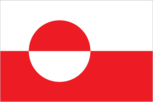
Geography
Infant mortality rate
37/1,000 (1976-80)
Labor force
21,378; largely engaged in fishing, hunting, and sheep breeding
Language
Danish, Eskimo dialects
Life expectancy
men 59.7, women 67.3
Literacy
99%
Religion
Evangelical Lutheran
Government
Administrative divisions
3 counties, 18 communes
Branches
legislative authority rests jointly with the elected 25-seat Landsting and Danish parliament; executive power vested in Premier and four-person council; 19 lower courts
Capital
Godthab (Nuuk)
Elections
held every four years; most recent, 6 June 1984
Government leaders
MARGRETHE II, Queen (since January 1972); Jonathan MOTZFELDT, Prime Minister (since May 1979)
Legal system
Danish law; transformed from colony to province in 1953; limited home rule began in spring 1979
Official name
Greenland
Political parties
Siumut, 1] seats (moderate socialist, advocating more distinct Greenland identity and greater autonomy from Denmark); Atassut Party, 11 seats (more conservative, favors continuing close relations with Denmark); Inuit Ataqatigiit, 8 seats (Marxist-Leninist party favoring complete independence from Denmark rather than home rule)
Suffrage
universal, but not compulsory, over age 21
Type
self-governing province of Kingdom of Denmark; two representatives in Danish parliament; separate Minister for Greenland in the Danish Cabinet (Ministry to be phased out during 1986-87)
Economy
Agriculture
arable areas largely in hay; sheep grazing; garden produce
Electric power
84,000 kW capacity; 170 million kWh produced, 3,150 kWh per capita (1986)
Exports
$168.4 million (f.0.b., 1980); fish and fish products, metallic ores and concentrates
Fiscal year
calendar year
Fishing
catch 107,725 tons (1983); exports $108.6 million (1980)
GNP
included in that of Denmark
Imports
$259.4 million (c.i.f., 1980); petroleum and petroleum products, machinery and transport equipment, food products
Major industries
mining, fishing, sealing
Major trade partners
(1980) Denmark 49.4%, Finland 9.5%, FRG 8.1%, US 6.3%, UK 2.9%
Monetary conversion rate
7.37 Danish kroner=US$1 (December 1986)
Natural resources
zinc, lead, iron ore, coal, molybdenum, cryolite, uranium, fish
Communications
Airfields
10 total, 7 usable; 5 with permanent-surface runways; 2 with runways 2,440-3,659 m, 2 with runways 1,220-2,439 m
Civil air
2 major transport aircraft
Highways
80 km
Ports
1 major, 7 secondary, 9 minor
Railroads
none
Telecommunications
adequate domestic and international service provided by cables and radio-relay; 17,900 telephones (31.0 per 100 popl.); 6 AM, 35 FM, 9 TV stations; 2 coaxial submarine cables; 1 Atlantic Ocean satellite station
Military and Security
Military manpower
included with Denmark