2024 Edition
CIA World Factbook 2024 (factbook.json @ b8538d78e87c)
Introduction
Background
As Europe's largest economy and second most-populous nation (after Russia), Germany is a key member of the continent's economic, political, and defense organizations. European power struggles immersed Germany in two devastating world wars in the first half of the 20th century and left the country occupied by the victorious Allied powers of the US, UK, France, and the Soviet Union in 1945. With the advent of the Cold War, two German states were formed in 1949: the western Federal Republic of Germany (FRG) and the eastern German Democratic Republic (GDR). The democratic FRG embedded itself in key western economic and security organizations, including the EC (now the EU) and NATO, while the communist GDR was on the front line of the Soviet-led Warsaw Pact. The decline of the Soviet Union and the end of the Cold War allowed German reunification to occur in 1990. Since then, Germany has expended considerable funds to bring eastern productivity and wages up to western standards. In January 1999, Germany and 10 other EU countries introduced a common European exchange currency, the euro.
Geography
Area
- land
- 348,672 sq km
- total
- 357,022 sq km
- water
- 8,350 sq km
Area - comparative
three times the size of Pennsylvania; slightly smaller than Montana
Climate
temperate and marine; cool, cloudy, wet winters and summers; occasional warm mountain (foehn) wind
Coastline
2,389 km
Elevation
- highest point
- Zugspitze 2,963 m
- lowest point
- Neuendorf bei Wilster -3.5 m
- mean elevation
- 263 m
Geographic coordinates
51 00 N, 9 00 E
Geography - note
strategic location on North European Plain and along the entrance to the Baltic Sea; most major rivers in Germany -- the Rhine, Weser, Oder, Elbe -- flow northward; the Danube, which originates in the Black Forest, flows eastward
Irrigated land
5,056 sq km (2020)
Land boundaries
- border countries
- Austria 801 km; Belgium 133 km; Czechia 704 km; Denmark 140 km; France 418 km; Luxembourg 128 km; Netherlands 575 km; Poland 447 km; Switzerland 348 km
- total
- 3,694 km
Land use
- agricultural land
- 48% (2018 est.)
- agricultural land: arable land
- arable land: 34.1% (2018 est.)
- agricultural land: permanent crops
- permanent crops: 0.6% (2018 est.)
- agricultural land: permanent pasture
- permanent pasture: 13.3% (2018 est.)
- forest
- 31.8% (2018 est.)
- other
- 20.2% (2018 est.)
Location
Central Europe, bordering the Baltic Sea and the North Sea, between the Netherlands and Poland, south of Denmark
Major lakes (area sq km)
- fresh water lake(s)
- Lake Constance (shared with Switzerland and Austria) - 540 sq km
- salt water lake(s)
- Stettiner Haff/Zalew Szczecinski (shared with Poland) - 900 sq km
Major rivers (by length in km)
Donau (Danube) river source (shared with Austria, Slovakia, Hungary, Croatia, Serbia, Bulgaria, Ukraine, Moldova, and Romania [m]) - 2,888 km; Elbe river mouth (shared with Czechia [s]) - 1,252 km; Rhein (Rhine) (shared with Switzerland [s], France, and Netherlands [m]) - 1,233 kmnote – [s] after country name indicates river source; [m] after country name indicates river mouth
Major watersheds (area sq km)
Atlantic Ocean drainage: Rhine-Maas (198,735 sq km), (Black Sea) Danube (795,656 sq km)
Map references
Europe
Maritime claims
- continental shelf
- 200-m depth or to the depth of exploitation
- exclusive economic zone
- 200 nm
- territorial sea
- 12 nm
Natural hazards
flooding
Natural resources
coal, lignite, natural gas, iron ore, copper, nickel, uranium, potash, salt, construction materials, timber, arable land
Population distribution
second most populous country in Europe; a fairly even distribution throughout most of the country, with urban areas attracting larger and denser populations, particularly in the far western part of the industrial state of North Rhine-Westphalia
Terrain
lowlands in north, uplands in center, Bavarian Alps in south
People and Society
Age structure
- 0-14 years
- 13.8% (male 5,925,800/female 5,688,603)
- 15-64 years
- 62.5% (male 26,705,657/female 25,875,865)
- 65 years and over
- 23.7% (2024 est.) (male 8,941,245/female 10,981,930)
Alcohol consumption per capita
- beer
- 5.57 liters of pure alcohol (2019 est.)
- other alcohols
- 0 liters of pure alcohol (2019 est.)
- spirits
- 1.97 liters of pure alcohol (2019 est.)
- total
- 10.56 liters of pure alcohol (2019 est.)
- wine
- 3.02 liters of pure alcohol (2019 est.)
Birth rate
8.9 births/1,000 population (2024 est.)
Children under the age of 5 years underweight
0.5% (2014/17)
Contraceptive prevalence rate
- 67% (2018)
- note
- note: percent of women aged 18-49
Current health expenditure
12.8% of GDP (2020)
Currently married women (ages 15-49)
54.4% (2023 est.)
Death rate
12 deaths/1,000 population (2024 est.)
Dependency ratios
- elderly dependency ratio
- 34.7
- potential support ratio
- 2.9 (2021 est.)
- total dependency ratio
- 56.4
- youth dependency ratio
- 21.7
Drinking water source
- improved: rural
- rural: 100% of population
- improved: total
- total: 100% of population
- improved: urban
- urban: 100% of population
- unimproved: rural
- rural: 0% of population
- unimproved: total
- total: 0% of population (2020 est.)
- unimproved: urban
- urban: 0% of population
Education expenditures
4.7% of GDP (2020 est.)
Ethnic groups
- German 85.4%, Turkish 1.8%, Ukrainian 1.4%, Syrian 1.1%, Romanian 1%, Poland 1%, other/stateless/unspecified 8.3% (2022 est.)
- note
- note: data represent population by nationality
Gross reproduction rate
0.77 (2024 est.)
Hospital bed density
8 beds/1,000 population (2017)
Infant mortality rate
- female
- 2.7 deaths/1,000 live births
- male
- 3.5 deaths/1,000 live births
- total
- 3.1 deaths/1,000 live births (2024 est.)
Languages
- Languages
- German (official); note - Danish, Frisian, Sorbian, and Romani are official minority languages; Low German, Danish, North Frisian, Sater Frisian, Lower Sorbian, Upper Sorbian, and Romani are recognized as regional languages
- major-language sample(s)
- Das World Factbook, die unverzichtbare Quelle für grundlegende Informationen. (German)The World Factbook, the indispensable source for basic information.
Life expectancy at birth
- female
- 84.4 years
- male
- 79.6 years
- total population
- 81.9 years (2024 est.)
Literacy
- female
- NA
- male
- NA
- total population
- NA
Major urban areas - population
3.574 million BERLIN (capital), 1.788 million Hamburg, 1.576 million Munich, 1.144 million Cologne, 796,000 Frankfurt (2023)
Maternal mortality ratio
4 deaths/100,000 live births (2020 est.)
Median age
- female
- 48.3 years
- male
- 45.5 years
- total
- 46.8 years (2024 est.)
Mother's mean age at first birth
29.9 years (2020 est.)
Nationality
- adjective
- German
- noun
- German(s)
Net migration rate
1.8 migrant(s)/1,000 population (2024 est.)
Obesity - adult prevalence rate
22.3% (2016)
Physician density
4.44 physicians/1,000 population (2020)
Population
- female
- 42,546,398 (2024 est.)
- male
- 41,572,702
- total
- 84,119,100
Population distribution
second most populous country in Europe; a fairly even distribution throughout most of the country, with urban areas attracting larger and denser populations, particularly in the far western part of the industrial state of North Rhine-Westphalia
Population growth rate
-0.12% (2024 est.)
Religions
Roman Catholic 24.8%, Protestant 22.6%, Muslim 3.7%, other 5.1%, none 43.8% (2022 est.)
Sanitation facility access
- improved: rural
- rural: 100% of population
- improved: total
- total: 100% of population
- improved: urban
- urban: 100% of population
- unimproved: rural
- rural: 0% of population
- unimproved: total
- total: 0% of population (2020 est.)
- unimproved: urban
- urban: 0% of population
School life expectancy (primary to tertiary education)
- female
- 17 years (2020)
- male
- 17 years
- total
- 17 years
Sex ratio
- 0-14 years
- 1.04 male(s)/female
- 15-64 years
- 1.03 male(s)/female
- 65 years and over
- 0.81 male(s)/female
- at birth
- 1.05 male(s)/female
- total population
- 0.98 male(s)/female (2024 est.)
Tobacco use
- female
- 19.9% (2020 est.)
- male
- 24.1% (2020 est.)
- total
- 22% (2020 est.)
Total fertility rate
1.58 children born/woman (2024 est.)
Urbanization
- rate of urbanization
- 0.13% annual rate of change (2020-25 est.)
- urban population
- 77.8% of total population (2023)
Government
Administrative divisions
16 states (Laender, singular - Land); Baden-Wuerttemberg, Bayern (Bavaria), Berlin, Brandenburg, Bremen, Hamburg, Hessen (Hesse), Mecklenburg-Vorpommern (Mecklenburg-Western Pomerania), Niedersachsen (Lower Saxony), Nordrhein-Westfalen (North Rhine-Westphalia), Rheinland-Pfalz (Rhineland-Palatinate), Saarland, Sachsen (Saxony), Sachsen-Anhalt (Saxony-Anhalt), Schleswig-Holstein, Thueringen (Thuringia); note - Bayern, Sachsen, and Thueringen refer to themselves as free states (Freistaaten, singular - Freistaat), while Bremen calls itself a Free Hanseatic City (Freie Hansestadt) and Hamburg considers itself a Free and Hanseatic City (Freie und Hansestadt)
Capital
- daylight saving time
- +1hr, begins last Sunday in March; ends last Sunday in October
- etymology
- the origin of the name is unclear but may be related to the old West Slavic (Polabian) word "berl" or "birl," meaning "swamp"
- geographic coordinates
- 52 31 N, 13 24 E
- name
- Berlin
- time difference
- UTC+1 (6 hours ahead of Washington, DC, during Standard Time)
Citizenship
- citizenship by birth
- no
- citizenship by descent only
- at least one parent must be a German citizen or a resident alien who has lived in Germany at least 8 years
- dual citizenship recognized
- yes, but requires prior permission from government
- residency requirement for naturalization
- 8 years
Constitution
- amendments
- proposed by Parliament; passage and enactment into law require two-thirds majority vote by both the Bundesrat (upper house) and the Bundestag (lower house) of Parliament; articles including those on basic human rights and freedoms cannot be amended; amended many times, last in 2020; note - in early 2021, the German federal government introduced a bill to incorporate children’s rights into the constitution
- history
- previous 1919 (Weimar Constitution); latest drafted 10-23 August 1948, approved 12 May 1949, promulgated 23 May 1949, entered into force 24 May 1949
Country name
- conventional long form
- Federal Republic of Germany
- conventional short form
- Germany
- etymology
- the Gauls (Celts) of Western Europe may have referred to the newly arriving Germanic tribes who settled in neighboring areas east of the Rhine during the first centuries B.C. as "Germani," a term the Romans adopted as "Germania"; the native designation "Deutsch" comes from the Old High German "diutisc" meaning "of the people"
- former
- German Reich
- local long form
- Bundesrepublik Deutschland
- local short form
- Deutschland
Diplomatic representation from the US
- chief of mission
- Ambassador (vacant); Chargé d’Affaires Alan MELTZER (since July 2024)
- consulate(s) general
- Dusseldorf, Frankfurt am Main, Hamburg, Leipzig, Munich
- email address and website
- BerlinPCO@state.govhttps://de.usembassy.gov/
- embassy
- Pariser Platz 2, 10117 BerlinClayallee 170, 14191 Berlin (administrative services)
- FAX
- [49] (30) 8305-1215
- mailing address
- 5090 Berlin Place, Washington DC 20521-5090
- telephone
- [49] (30) 8305-0
Diplomatic representation in the US
- chancery
- 4645 Reservoir Road NW, Washington, DC 20007
- chief of mission
- Ambassador Andreas MICHAELIS (since 15 September 2023)
- consulate(s) general
- Atlanta, Boston, Chicago, Houston, Los Angeles, Miami, New York, San Francisco
- email address and website
- info@washington.diplo.dehttps://www.germany.info/us-en
- FAX
- [1] (202) 298-4261
- telephone
- [1] (202) 298-4000
Executive branch
- cabinet
- Cabinet or Bundesminister (Federal Ministers) recommended by the chancellor, appointed by the president
- chief of state
- President Frank-Walter STEINMEIER (since 19 March 2017)
- election results
- 2022: Frank-Walter STEINMEIER reelected president; Federal Convention vote count - Frank-Walter STEINMEIER (SPD) 1,045, Max OTTE (CDU) 140, Gerhard TRABERT (The Left) 96, Stefanie GEBAUER (Free Voters) 58, abstentions 862021: Olaf SCHOLZ (SPD) elected chancellor; Federal Parliament vote - 395 to 3032017: Frank-Walter STEINMEIER elected president; Federal Convention vote count - Frank-Walter STEINMEIER (SPD) 931, Christopher Butterwegge (independent) 128, abstentions 103
- elections/appointments
- president indirectly elected by a Federal Convention consisting of all members of the Federal Parliament (Bundestag) and an equivalent number of delegates indirectly elected by the state parliaments; president serves a 5-year term (eligible for a second term); election last held on 13 February 2022 (next to be held in February 2027); following the most recent Federal Parliament election, the party or coalition with the most representatives usually elects the chancellor who is appointed by the president to serve a renewable 4-year term; Federal Parliament vote for chancellor last held on 8 December 2021 (next to be held after the Bundestag election on 23 February 2025)
- head of government
- Chancellor Olaf SCHOLZ (since 8 December 2021)
Flag description
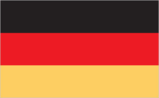
three equal horizontal bands of black (top), red, and gold; these colors have played an important role in German history and can be traced back to the medieval banner of the Holy Roman Emperor - a black eagle with red claws and beak on a gold field
Government type
federal parliamentary republic
Independence
18 January 1871 (establishment of the German Empire); divided into four zones of occupation (UK, US, USSR, and France) in 1945 following World War II; Federal Republic of Germany (FRG or West Germany) proclaimed on 23 May 1949 and included the former UK, US, and French zones; German Democratic Republic (GDR or East Germany) proclaimed on 7 October 1949 and included the former USSR zone; West Germany and East Germany unified on 3 October 1990; all four powers formally relinquished rights on 15 March 1991; notable earlier dates: 10 August 843 (Eastern Francia established from the division of the Carolingian Empire); 2 February 962 (crowning of OTTO I, recognized as the first Holy Roman Emperor)
International law organization participation
accepts compulsory ICJ jurisdiction with reservations; accepts ICCt jurisdiction
International organization participation
ADB (nonregional member), AfDB (nonregional member), Arctic Council (observer), Australia Group, BIS, BSEC (observer), CBSS, CD, CDB, CE, CERN, EAPC, EBRD, ECB, EIB, EITI (implementing country), EMU, ESA, EU, FAO, FATF, G-5, G-7, G-8, G-10, G-20, IADB, IAEA, IBRD, ICAO, ICC (national committees), ICCt, ICRM, IDA, IEA, IFAD, IFC, IFRCS, IGAD (partners), IHO, ILO, IMF, IMO, IMSO, Interpol, IOC, IOM, IPU, ISO, ITSO, ITU, ITUC (NGOs), MIGA, MINURSO, NATO, NEA, NSG, OAS (observer), OECD, OPCW, OSCE, Pacific Alliance (observer), Paris Club, PCA, Schengen Convention, SELEC (observer), SICA (observer), UN, UNAMID, UNCTAD, UNESCO, UNHCR, UNHRC, UNIDO, UNIFIL, UNMISS, UNOOSA, UNRWA, UNSOM, UNWTO, UPU, Wassenaar Arrangement, WCO, WHO, WIPO, WMO, WTO, ZC
Judicial branch
- highest court(s)
- Federal Court of Justice (court consists of 127 judges, including the court president, vice presidents, presiding judges, other judges and organized into 25 Senates subdivided into 12 civil panels, 5 criminal panels, and 8 special panels); Federal Constitutional Court or Bundesverfassungsgericht (consists of 2 Senates each subdivided into 3 chambers, each with a chairman and 8 members)
- judge selection and term of office
- Federal Court of Justice judges selected by the Judges Election Committee, which consists of the Secretaries of Justice from each of the 16 federated states and 16 members appointed by the Federal Parliament; judges appointed by the president; judges serve until mandatory retirement at age 65; Federal Constitutional Court judges - one-half elected by the House of Representatives and one-half by the Senate; judges appointed for 12-year terms with mandatory retirement at age 68
- subordinate courts
- Federal Administrative Court; Federal Finance Court; Federal Labor Court; Federal Social Court; each of the 16 federated states or Land has its own constitutional court and a hierarchy of ordinary (civil, criminal, family) and specialized (administrative, finance, labor, social) courts; two English-speaking commercial courts opened in late 2020 in the state of Baden-Wuerttemberg - English-speaking Stuttgart Commercial Court and English-speaking Mannheim Commercial Court
Legal system
civil law system
Legislative branch
- description
- bicameral Parliament or Parlament consists of:Federal Council or Bundesrat (69 seats statutory, 71 current; members appointed by each of the 16 state governments)Federal Diet or Bundestag (736 seats statutory, 736 for the 2021-25 term; approximately one-half of members directly elected in multi-seat constituencies by proportional representation vote and approximately one-half directly elected in single-seat constituencies by simple majority vote; members' terms depend upon the states they represent)
- election results
- Bundesrat - composition - men 43, women 26, percentage women 37.7%Bundestag - percent of vote by party - SPD 28%, CDU/CSU 26.8%, Alliance '90/Greens 16%, FDP 12.5%, AfD 11%, The Left 5.3%, other .04%; seats by party - SPD 206, CDU/CSU 197, Alliance '90/Greens 118, FDP 92, AfD 81, The Left 39, other 3; composition - men 476, women 260, percentage women 34.9%; note - total Parliament percentage women 35.5%
- elections
- Bundesrat - none; determined by the composition of the state-level governments; the composition of the Bundesrat has the potential to change any time one of the 16 states holds an electionBundestag - last held on 26 September 2021 (next to be held on 23 February 2025); almost all postwar German governments have been coalitions
- note
- note: due to Germany's recognition of the concepts of "overhang" (when a party's share of the nationwide votes would entitle it to fewer seats than the number of individual constituency seats won in an election under Germany's mixed member proportional system) and "leveling" (whereby additional seats are elected to supplement the members directly elected by each constituency in order to ensure that each party's share of the total seats is roughly proportional to the party's overall shares of votes at the national level), the 20th Bundestag is the largest to date
National anthem
- lyrics/music
- August Heinrich HOFFMANN VON FALLERSLEBEN/Franz Joseph HAYDN
- name
- "Das Lied der Deutschen" (Song of the Germans)
- note
- note: adopted 1922; the anthem, also known as "Deutschlandlied" (Song of Germany), was originally adopted for its connection to the March 1848 liberal revolution; following appropriation by the Nazis of the first verse, specifically the phrase, "Deutschland, Deutschland ueber alles" (Germany, Germany above all) to promote nationalism, it was banned after 1945; in 1952, its third verse was adopted by West Germany as its national anthem; in 1990, it became the national anthem for the reunited Germany
National heritage
- selected World Heritage Site locales
- Museumsinsel (Museum Island), Berlin (c); Palaces and Parks of Potsdam and Berlin (c); Speyer Cathedral (c); Upper Middle Rhine Valley (c); Aachen Cathedral (c); Bauhaus and its Sites in Weimar, Dessau, and Bernau (c); Caves and Ice Age Art in the Swabian Jura (c); Mines of Rammelsberg, Historic Town of Goslar, and Upper Harz Water Management System (c); Roman Monuments, Cathedral of St. Peter, and Church of Our Lady in Trier (c); Hanseatic City of Lübeck (c); Old Town of Regensburg with Stadtamhof (c); Messel Pit Fossil Site (n); Würzburg Residence with the Court Gardens and Residence Square (c); Pilgrimage Church of Wies (c);Castles of Augustusburg and Falkenlust at Brühl (c); St Mary's Cathedral and St Michael's Church at Hildesheim (c); Frontiers of the Roman Empire (c); Abbey and Altenmünster of Lorsch (c); Maulbronn Monastery Complex (c); Town of Bamberg (c); Collegiate Church, Castle and Old Town of Quedlinburg (c); Völklingen Ironworks (c); Cologne Cathedral (c); Luther Memorials in Eisleben and Wittenberg (c); Classical Weimar (c); Wartburg Castle (c); Garden Kingdom of Dessau-Wörlitz (c); Monastic Island of Reichenau (c); Zollverein Coal Mine Industrial Complex in Essen (c); Historic Centres of Stralsund and Wismar (c); Muskauer Park / Park Mużakowski (c); Town Hall and Roland on the Marketplace of Bremen (c); Old town of Regensburg with Stadtamhof (c); Ancient and Primeval Beech Forests of the Carpathians and Other Regions of Europe (n); Berlin Modernism Housing Estates (c); Wadden Sea (n); Fagus Factory in Alfeld (c); Prehistoric Pile Dwellings around the Alps (c); Margravial Opera House Bayreuth (c); Bergpark Wilhelmshöhe (c); Carolingian Westwork and Civitas Corvey (c); Moravian Church Settlements (c); Speicherstadt and Kontorhaus District with Chilehaus (c); The Architectural Work of Le Corbusier, an Outstanding Contribution to the Modern Movement (c); Archaeological Border complex of Hedeby and the Danevirke (c); Naumburg Cathedral (c); Erzgebirge/Krušnohoří Mining Region (c); Water Management System of Augsburg (c); Frontiers of the Roman Empire – The Danube Limes (Western Segment) (c); Frontiers of the Roman Empire – The Lower German Limes (c); Mathildenhöhe Darmstadt (c); ShUM Sites of Speyer, Worms and Mainz (c); The Great Spa Towns of Europe (c); Jewish-Medieval Heritage of Erfurt (c); Schwerin Residence Ensemble (c)
- total World Heritage Sites
- 54 (52 cultural, 2 natural)
National holiday
German Unity Day, 3 October (1990)
National symbol(s)
eagle; national colors: black, red, yellow
Political parties
Alliance '90/Greens Alternative for Germany or AfD Christian Democratic Union or CDU Christian Social Union or CSU Free Democratic Party or FDP Free Voters The Left or Die Linke Social Democratic Party or SPD
Suffrage
18 years of age; universal; age 16 for some state and municipal elections
Economy
Agricultural products
- milk, sugar beets, wheat, barley, potatoes, pork, rapeseed, maize, rye, triticale (2022)
- note
- note: top ten agricultural products based on tonnage
Average household expenditures
- on alcohol and tobacco
- 3.5% of household expenditures (2022 est.)
- on food
- 11.8% of household expenditures (2022 est.)
Budget
- expenditures
- $1.31 trillion (2022 est.)
- note
- note: central government revenues (excluding grants) and expenses converted to US dollars at average official exchange rate for year indicated
- revenues
- $1.19 trillion (2022 est.)
Credit ratings
- Fitch rating
- AAA (1994)
- Moody's rating
- Aaa (1986)
- note
- note: The year refers to the year in which the current credit rating was first obtained. Credit ratings prior to 1989 refer to West Germany.
- Standard & Poors rating
- AAA (1983)
Current account balance
- Current account balance 2021
- $312.08 billion (2021 est.)
- Current account balance 2022
- $174.831 billion (2022 est.)
- Current account balance 2023
- $262.723 billion (2023 est.)
- note
- note: balance of payments - net trade and primary/secondary income in current dollars
Economic overview
leading diversified, export-driven, core EU and eurozone economy; key automotive, chemical, engineering, finance, and green energy industries; growth stalled by energy crisis; tight labor market with falling working-age population; fiscal rebalancing with phaseout of energy price supports
Exchange rates
- Currency
- euros (EUR) per US dollar -
- Exchange rates 2019
- 0.893 (2019 est.)
- Exchange rates 2020
- 0.876 (2020 est.)
- Exchange rates 2021
- 0.845 (2021 est.)
- Exchange rates 2022
- 0.95 (2022 est.)
- Exchange rates 2023
- 0.925 (2023 est.)
Exports
- Exports 2021
- $2.034 trillion (2021 est.)
- Exports 2022
- $2.092 trillion (2022 est.)
- Exports 2023
- $2.104 trillion (2023 est.)
- note
- note: balance of payments - exports of goods and services in current dollars
Exports - commodities
- cars, packaged medicine, vehicle parts/accessories, vaccines, plastic products (2022)
- note
- note: top five export commodities based on value in dollars
Exports - partners
- US 10%, France 7%, China 7%, Netherlands 7%, Italy 6% (2022)
- note
- note: top five export partners based on percentage share of exports
GDP - composition, by end use
- exports of goods and services
- 47.1% (2023 est.)
- government consumption
- 21.6% (2023 est.)
- household consumption
- 50.7% (2023 est.)
- imports of goods and services
- -43% (2023 est.)
- investment in fixed capital
- 21.9% (2023 est.)
- investment in inventories
- 1.6% (2023 est.)
- note
- note: figures may not total 100% due to rounding or gaps in data collection
GDP - composition, by sector of origin
- agriculture
- 0.7% (2023 est.)
- industry
- 28.1% (2023 est.)
- note
- note: figures may not total 100% due to non-allocated consumption not captured in sector-reported data
- services
- 62.6% (2023 est.)
GDP (official exchange rate)
- $4.456 trillion (2023 est.)
- note
- note: data in current dollars at official exchange rate
Gini Index coefficient - distribution of family income
- Gini Index coefficient - distribution of family income 2019
- 31.7 (2019 est.)
- note
- note: index (0-100) of income distribution; higher values represent greater inequality
Household income or consumption by percentage share
- highest 10%
- 25.2% (2019 est.)
- lowest 10%
- 3.1% (2019 est.)
- note
- note: % share of income accruing to lowest and highest 10% of population
Imports
- Imports 2021
- $1.798 trillion (2021 est.)
- Imports 2022
- $1.997 trillion (2022 est.)
- Imports 2023
- $1.927 trillion (2023 est.)
- note
- note: balance of payments - imports of goods and services in current dollars
Imports - commodities
- natural gas, cars, garments, vehicle parts/accessories, crude petroleum (2022)
- note
- note: top five import commodities based on value in dollars
Imports - partners
- China 10%, Netherlands 9%, Poland 6%, Belgium 6%, Italy 5% (2022)
- note
- note: top five import partners based on percentage share of imports
Industrial production growth rate
- -1.59% (2023 est.)
- note
- note: annual % change in industrial value added based on constant local currency
Industries
iron, steel, coal, cement, chemicals, machinery, vehicles, machine tools, electronics, automobiles, food and beverages, shipbuilding, textiles
Inflation rate (consumer prices)
- Inflation rate (consumer prices) 2021
- 3.07% (2021 est.)
- Inflation rate (consumer prices) 2022
- 6.87% (2022 est.)
- Inflation rate (consumer prices) 2023
- 5.95% (2023 est.)
- note
- note: annual % change based on consumer prices
Labor force
- 44.784 million (2023 est.)
- note
- note: number of people ages 15 or older who are employed or seeking work
Population below poverty line
- 14.8% (2021 est.)
- note
- note: % of population with income below national poverty line
Public debt
- note
- note: general government gross debt is defined in the Maastricht Treaty as consolidated general government gross debt at nominal value, outstanding at the end of the year in the following categories of government liabilities (as defined in ESA95): currency and deposits (AF.2), securities other than shares excluding financial derivatives (AF.3, excluding AF.34), and loans (AF.4); the general government sector comprises the sub-sectors of central government, state government, local government and social security funds; the series are presented as a percentage of GDP and in millions of euros; GDP used as a denominator is the gross domestic product at current market prices; data expressed in national currency are converted into euro using end-of-year exchange rates provided by the European Central Bank
- Public debt 2017
- 63.9% of GDP (2017 est.)
Real GDP (purchasing power parity)
- note
- note: data in 2021 dollars
- Real GDP (purchasing power parity) 2021
- $5.153 trillion (2021 est.)
- Real GDP (purchasing power parity) 2022
- $5.246 trillion (2022 est.)
- Real GDP (purchasing power parity) 2023
- $5.23 trillion (2023 est.)
Real GDP growth rate
- note
- note: annual GDP % growth based on constant local currency
- Real GDP growth rate 2021
- 3.16% (2021 est.)
- Real GDP growth rate 2022
- 1.81% (2022 est.)
- Real GDP growth rate 2023
- -0.3% (2023 est.)
Real GDP per capita
- note
- note: data in 2021 dollars
- Real GDP per capita 2021
- $61,900 (2021 est.)
- Real GDP per capita 2022
- $62,600 (2022 est.)
- Real GDP per capita 2023
- $61,900 (2023 est.)
Remittances
- note
- note: personal transfers and compensation between resident and non-resident individuals/households/entities
- Remittances 2021
- 0.46% of GDP (2021 est.)
- Remittances 2022
- 0.47% of GDP (2022 est.)
- Remittances 2023
- 0.46% of GDP (2023 est.)
Reserves of foreign exchange and gold
- note
- note: holdings of gold (year-end prices)/foreign exchange/special drawing rights in current dollars
- Reserves of foreign exchange and gold 2021
- $295.736 billion (2021 est.)
- Reserves of foreign exchange and gold 2022
- $293.914 billion (2022 est.)
- Reserves of foreign exchange and gold 2023
- $322.7 billion (2023 est.)
Taxes and other revenues
- 11.23% (of GDP) (2022 est.)
- note
- note: central government tax revenue as a % of GDP
Unemployment rate
- note
- note: % of labor force seeking employment
- Unemployment rate 2021
- 3.64% (2021 est.)
- Unemployment rate 2022
- 3.14% (2022 est.)
- Unemployment rate 2023
- 3.05% (2023 est.)
Youth unemployment rate (ages 15-24)
- female
- 5.1% (2023 est.)
- male
- 6.7% (2023 est.)
- note
- note: % of labor force ages 15-24 seeking employment
- total
- 6% (2023 est.)
Energy
Carbon dioxide emissions
- from coal and metallurgical coke
- 227.546 million metric tonnes of CO2 (2022 est.)
- from consumed natural gas
- 149.719 million metric tonnes of CO2 (2022 est.)
- from petroleum and other liquids
- 291.027 million metric tonnes of CO2 (2022 est.)
- total emissions
- 668.292 million metric tonnes of CO2 (2022 est.)
Coal
- consumption
- 186.725 million metric tons (2022 est.)
- exports
- 2.248 million metric tons (2022 est.)
- imports
- 44.851 million metric tons (2022 est.)
- production
- 138.981 million metric tons (2022 est.)
- proven reserves
- 35.9 billion metric tons (2022 est.)
Electricity
- consumption
- 507.248 billion kWh (2022 est.)
- exports
- 76.291 billion kWh (2022 est.)
- imports
- 49.269 billion kWh (2022 est.)
- installed generating capacity
- 261.086 million kW (2022 est.)
- transmission/distribution losses
- 26.49 billion kWh (2022 est.)
Electricity access
- electrification - total population
- 100% (2022 est.)
Electricity generation sources
- biomass and waste
- 10.5% of total installed capacity (2022 est.)
- fossil fuels
- 48.9% of total installed capacity (2022 est.)
- hydroelectricity
- 2.5% of total installed capacity (2022 est.)
- nuclear
- 5.7% of total installed capacity (2022 est.)
- solar
- 10.3% of total installed capacity (2022 est.)
- wind
- 22.1% of total installed capacity (2022 est.)
Energy consumption per capita
- Total energy consumption per capita 2022
- 132.263 million Btu/person (2022 est.)
Natural gas
- consumption
- 77.516 billion cubic meters (2022 est.)
- imports
- 83.926 billion cubic meters (2022 est.)
- production
- 4.824 billion cubic meters (2022 est.)
- proven reserves
- 23.39 billion cubic meters (2021 est.)
Nuclear energy
- Number of nuclear reactors permanently shut down
- 33 (2023)
- Percent of total electricity production
- 1.4% (2023 est.)
Petroleum
- crude oil estimated reserves
- 115.2 million barrels (2021 est.)
- refined petroleum consumption
- 2.052 million bbl/day (2023 est.)
- total petroleum production
- 131,000 bbl/day (2023 est.)
Communications
Broadband - fixed subscriptions
- subscriptions per 100 inhabitants
- 43 (2020 est.)
- total
- 36,215,303 (2020 est.)
Broadcast media
a mixture of publicly operated and privately owned TV and radio stations; 70 national and regional public broadcasters compete with nearly 400 privately owned national and regional TV stations; more than 90% of households have cable or satellite TV; hundreds of radio stations including multiple national radio networks, regional radio networks, and a large number of local radio stations
Internet country code
.de
Internet users
- percent of population
- 91% (2021 est.)
- total
- 75.53 million (2021 est.)
Telecommunication systems
- domestic
- 46 per 100 for fixed-line and 128 per 100 for mobile-cellular subscriptions (2021)
- general assessment
- with one of Europe’s largest telecom markets, Germany hosts a number of significant operators which offer effective competition in the mobile and broadband sectors; the German mobile market is driven by mobile data, with the number of mobile broadband subscribers having increased rapidly in recent years; with LTE now effectively universally available, considerable progress has recently been made in building out 5G networks (2022)
- international
- country code - 49; landing points for SeaMeWe-3, TAT-14, AC-1, CONTACT-3, Fehmarn Balt, C-Lion1, GC1, GlobalConnect-KPN, and Germany-Denmark 2 & 3 - submarine cables to Europe, Africa, the Middle East, Asia, Southeast Asia and Australia; as well as earth stations in the Inmarsat, Intelsat, Eutelsat, and Intersputnik satellite systems (2019)
Telephones - fixed lines
- subscriptions per 100 inhabitants
- 46 (2022 est.)
- total subscriptions
- 38.58 million (2022 est.)
Telephones - mobile cellular
- subscriptions per 100 inhabitants
- 125 (2022 est.)
- total subscriptions
- 104.4 million (2022 est.)
Transportation
Airports
838 (2024)
Civil aircraft registration country code prefix
D
Heliports
388 (2024)
Merchant marine
- by type
- bulk carrier 1, container ship 69, general cargo 82, oil tanker 32, other 411
- total
- 595 (2023)
National air transport system
- annual freight traffic on registered air carriers
- 7,969,860,000 (2018) mt-km
- annual passenger traffic on registered air carriers
- 109,796,202 (2018)
- inventory of registered aircraft operated by air carriers
- 1,113
- number of registered air carriers
- 20 (2020)
Pipelines
37 km condensate, 26,985 km gas, 2,400 km oil, 4,479 km refined products, 8 km water (2013)
Ports
- key ports
- Brake, Bremen, Bremerhaven, Cuxhaven, Emden, Hamburg, Kiel, Lubeck, Rostock
- large
- 5
- medium
- 4
- ports with oil terminals
- 12
- small
- 11
- total ports
- 35 (2024)
- very small
- 15
Railways
- note
- 15 km 0.900-mm gauge, 24 km 0.750-mm gauge (2015)
- total
- 39,379 km (2020) 20,942 km electrified
Roadways
- note
- note: includes local roads
- paved
- 830,000 km (2022) (includes 13,155 km of expressways)
- total
- 830,000 km 830,000 km
Waterways
7,300 km (2022) (Rhine River carries most goods; Main-Danube Canal links North Sea and Black Sea)
Military and Security
Military - note
the Bundeswehr’s core mission is the defense of Germany and its NATO partners; it has a wide range of peacetime duties, including crisis management, cyber security, deterrence, homeland security, humanitarian and disaster relief, and international peacekeeping and stability operations; as a key member of NATO and the EU, the Bundeswehr typically operates in a coalition environment, and its capabilities are largely based on NATO and EU planning goals and needs; it has participated in a range of NATO and EU missions in Europe, Africa, and Asia, as well as global maritime operations; the Bundeswehr has close bilateral defense ties with a number of EU countries, including the Czechia, France, the Netherlands, and Romania, as well as the UK and the US; it also contributes forces to UN peacekeeping missionsthe Bundeswehr was established in 1955; at the height of the Cold War in the 1980s, it had nearly 600,000 personnel, over 7,000 tanks, and 1,000 combat aircraft; in addition, over 400,000 soldiers from other NATO countries—including about 200,000 US military personnel—were stationed in West Germany; in the years following the collapse of the Soviet Union and the end of the Cold War, the Bundeswehr shrank by more than 60% in size (over 90% in tanks and about 80% in aircraft), while funding fell from nearly 3% of GDP and over 4% of government spending in the mid-1980s to 1.2% and 1.6% respectively; by the 2010s, the Bundeswehr’s ability to fulfill its regional security commitments had deteriorated; the Russian annexation of Crimea in 2014 and full-scale assault on Ukraine in 2022 led to renewed emphasis on Germany’s leadership role in European defense and NATO and efforts to boost funding for the Bundeswehr to improve readiness, modernize, and expand (2024)
Military and security forces
- Federal Armed Forces (Bundeswehr): Army (Heer), Navy (Deutsche Marine, includes naval air arm), Air Force (Luftwaffe, includes air defense), Joint Support and Enabling Service (Streitkraeftebasis, SKB), Central Medical Service (Zentraler Sanitaetsdienst, ZSanDstBw), Cyber and Information Space Command (Kommando Cyber und Informationsraum, Kdo CIR) (2024)
- note
- note: responsibility for internal and border security is shared by the police forces of the 16 states, the Federal Criminal Police Office, and the Federal Police; the states’ police forces report to their respective interior ministries while the Federal Police forces report to the Federal Ministry of the Interior
Military and security service personnel strengths
approximately 185,000 active-duty armed forces personnel (62,000 Army; 16,000 Navy; 27,000 Air Force; 20,000 Medical Service, 14,000 Cyber and Information Space Command; 45,000 other, including central staff, support, logistics, etc.) (2024)
Military deployments
- 100 Estonia; up to 500 Iraq (NATO); Lebanon 170 (UNIFIL); up to 1,700 Lithuania (NATO); 100 Romania (NATO); 280 Slovakia (NATO) (2024)
- note
- note: the German military has over 2,000 ground forces, plus air and naval contingents deployed on some 18 foreign missions
Military equipment inventories and acquisitions
the inventory of Federal Armed Forces is comprised of weapons systems produced domestically or jointly with other European countries and Western imports, particularly from the US; Germany's defense industry is capable of manufacturing the full spectrum of air, land, and naval military weapons systems, and Germany is one of the world's leading arms exporters; it also participates in joint defense production projects with the US and European partners (2024)
Military expenditures
- Military Expenditures 2020
- 1.5% of GDP (2020)
- Military Expenditures 2021
- 1.5% of GDP (2021)
- Military Expenditures 2022
- 1.5% of GDP (2022)
- Military Expenditures 2023
- 1.7% of GDP (2023)
- Military Expenditures 2024
- 2.1% of GDP (2024 est.)
Military service age and obligation
- 17-23 years of age for voluntary military service for men and women (must have completed compulsory full-time education and have German citizenship); conscription ended July 2011; service obligation 7-23 months or 12 years; in July 2020, the government launched a new voluntary conscript initiative focused on homeland security tasks; volunteers serve for 7 months plus 5 months as reservists over a 6 year period (2024)
- note
- note: women have been eligible for voluntary service in all military branches and positions since 2001 and accounted for about 12% of the active-duty German military in 2023
Transnational Issues
Illicit drugs
maritime transshipment point for cocaine heading for European drug; a major source of precursor or essential chemicals used in the production of illicit narcotics
Refugees and internally displaced persons
- refugees (country of origin)
- 664,238 (Syria), 183,631 (Afghanistan), 151,254 (Iraq), 64,496 (Eritrea), 47,658 (Iran), 38,755 (Turkey), 32,155 (Somalia), 13,334 (Russia), 12,155 (Nigeria), 9,250 (Pakistan), 6,257 (Serbia and Kosovo), 6,912 (Ethiopia), 5,532 (Azerbaijan) (mid-year 2022); 1,139,690 (Ukraine) (as of 3 February 2024)
- stateless persons
- 28,941 (2022)
Space
Space agency/agencies
German Aerospace Center (Deutsches Zentrum für Luft- und Raumfahrt, DLR; established 1997); predecessor organization, German Test and Research Institute for Aviation and Space Flight, was established in 1969; note – the Federal Republic of Germany was allowed to research space flight after gaining sovereignty in 1955 (2024)
Space launch site(s)
establishing a commercial ship-based launch pad 350 kms (217 miles) off the German coast in the remotest corner of its exclusive economic zone; each launch is to be supervised by a control ship and a multifunctional mission control center in Bremen, Germany; the launch ship will be based out of Bremerhaven (2024)
Space program overview
- has one of Europe’s largest space programs; is a key member of the European Space Agency (ESA) and one of its largest contributors; builds and operates satellites, satellite/space launch vehicles (SLVs), space probes, unmanned orbiters, and reusable space planes; conducts research and develops a range of other space-related capabilities technologies, including satellite payloads (cameras, remote sensing, communications, optics, sensors, etc.), rockets and rocket propulsion, propulsion assisted landing technologies, and aeronautics; participates in ESA’s astronaut training program and human space flight operations and hosts the European Astronaut Center; participates in other international space programs, such as the International Space Station (ISS); hosts the mission control centers for the ISS and the ESA, as well as the European Organization for the Exploitation of Meteorological Satellites (EUMETSAT); in addition to ESA/EU and their member states, has ties to a range of foreign space programs, including those of China, Japan, Russia, and the US; has a robust commercial space industry sector that develops a broad range of space capabilities, including satellite launchers, and cooperates closely with DLR, ESA, and other international commercial entities and government agencies (2024)
- note
- note: further details about the key activities, programs, and milestones of the country’s space program, as well as government spending estimates on the space sector, appear in the Space Programs reference guide
Terrorism
Terrorist group(s)
- Islamic Revolutionary Guard Corps/Qods Force; Islamic State of Iraq and ash-Sham (ISIS); al-Qa'ida
- note
- note: details about the history, aims, leadership, organization, areas of operation, tactics, targets, weapons, size, and sources of support of the group(s) appear(s) in the Terrorism reference guide
Environment
Air pollutants
- carbon dioxide emissions
- 727.97 megatons (2016 est.)
- methane emissions
- 49.92 megatons (2020 est.)
- particulate matter emissions
- 10.73 micrograms per cubic meter (2019 est.)
Climate
temperate and marine; cool, cloudy, wet winters and summers; occasional warm mountain (foehn) wind
Environment - current issues
emissions from coal-burning utilities and industries contribute to air pollution; acid rain, resulting from sulfur dioxide emissions, is damaging forests; pollution in the Baltic Sea from raw sewage and industrial effluents from rivers in eastern Germany; hazardous waste disposal; government established a mechanism for ending the use of nuclear power by 2022; government working to meet EU commitment to identify nature preservation areas in line with the EU's Flora, Fauna, and Habitat directive
Environment - international agreements
- party to
- Air Pollution, Air Pollution-Heavy Metals, Air Pollution-Multi-effect Protocol, Air Pollution-Nitrogen Oxides, Air Pollution-Persistent Organic Pollutants, Air Pollution-Sulphur 85, Air Pollution-Sulphur 94, Air Pollution-Volatile Organic Compounds, Antarctic-Environmental Protection, Antarctic-Marine Living Resources, Antarctic Seals, Antarctic Treaty, Biodiversity, Climate Change, Climate Change-Kyoto Protocol, Climate Change-Paris Agreement, Comprehensive Nuclear Test Ban, Desertification, Endangered Species, Environmental Modification, Hazardous Wastes, Law of the Sea, Marine Dumping-London Convention, Marine Dumping-London Protocol, Nuclear Test Ban, Ozone Layer Protection, Ship Pollution, Tropical Timber 2006, Wetlands, Whaling
- signed, but not ratified
- none of the selected agreements
Geoparks
- global geoparks and regional networks
- Bergstraße-Odenwald ; Harz, Braunschweiger Land; Swabian Alb; TERRA.vita; Vulkaneifel; Thuringia Inselsberg -Drei Gleichen; Muskauer Faltenbogen / Łuk Mużakowa (includes Poland); Ries (2023)
- total global geoparks and regional networks
- 8
Land use
- agricultural land
- 48% (2018 est.)
- agricultural land: arable land
- arable land: 34.1% (2018 est.)
- agricultural land: permanent crops
- permanent crops: 0.6% (2018 est.)
- agricultural land: permanent pasture
- permanent pasture: 13.3% (2018 est.)
- forest
- 31.8% (2018 est.)
- other
- 20.2% (2018 est.)
Major lakes (area sq km)
- fresh water lake(s)
- Lake Constance (shared with Switzerland and Austria) - 540 sq km
- salt water lake(s)
- Stettiner Haff/Zalew Szczecinski (shared with Poland) - 900 sq km
Major rivers (by length in km)
Donau (Danube) river source (shared with Austria, Slovakia, Hungary, Croatia, Serbia, Bulgaria, Ukraine, Moldova, and Romania [m]) - 2,888 km; Elbe river mouth (shared with Czechia [s]) - 1,252 km; Rhein (Rhine) (shared with Switzerland [s], France, and Netherlands [m]) - 1,233 kmnote – [s] after country name indicates river source; [m] after country name indicates river mouth
Major watersheds (area sq km)
Atlantic Ocean drainage: Rhine-Maas (198,735 sq km), (Black Sea) Danube (795,656 sq km)
Revenue from coal
0.02% of GDP (2018 est.)
Revenue from forest resources
0.03% of GDP (2018 est.)
Total renewable water resources
154 billion cubic meters (2020 est.)
Total water withdrawal
- agricultural
- 400 million cubic meters (2020 est.)
- industrial
- 17.68 billion cubic meters (2020 est.)
- municipal
- 10.4 billion cubic meters (2020 est.)
Urbanization
- rate of urbanization
- 0.13% annual rate of change (2020-25 est.)
- urban population
- 77.8% of total population (2023)
Waste and recycling
- municipal solid waste generated annually
- 51.046 million tons (2015 est.)
- municipal solid waste recycled annually
- 24,415,302 tons (2015 est.)
- percent of municipal solid waste recycled
- 47.8% (2015 est.)