2013 Edition
CIA World Factbook 2013 Archive (HTML)
Introduction
Background
- As Europe's largest economy and second most populous nation (after Russia), Germany is a key member of the continent's economic, political, and defense organizations. European power struggles immersed Germany in two devastating World Wars in the first half of the 20th century and left the country occupied by the victorious Allied powers of the US, UK, France, and the Soviet Union in 1945. With the advent of the Cold War, two German states were formed in 1949: the western Federal Republic of Germany (FRG) and the eastern German Democratic Republic (GDR). The democratic FRG embedded itself in key Western economic and security organizations, the EC, which became the EU, and NATO, while the communist GDR was on the front line of the Soviet-led Warsaw Pact. The decline of the USSR and the end of the Cold War allowed for German unification in 1990. Since then, Germany has expended considerable funds to bring Eastern productivity and wages up to Western standards. In January 1999, Germany and 10 other EU countries introduced a common European exchange currency, the euro.
- As Europe's largest economy and second most populous nation (after Russia), Germany is a key member of the continent's economic, political, and defense organizations. European power struggles immersed Germany in two devastating World Wars in the first hal
- the western Federal Republic of Germany (FRG) and the eastern German Democratic Republic (GDR). The democratic FRG embedded itself in key Western economic and security organizations, the EC, which became the EU, and NATO, while the communist GDR was on the front line of the Soviet-led Warsaw Pact. The decline of the USSR and the end of the Cold War allowed for German unification in 1990. Since then, Germany has expended considerable funds to bring Eastern productivity and wages up to Western standards. In January 1999, Germany and 10 other EU countries introduced a common European exchange currency, the euro.
Geography
Area
- 357,022 sq km 348,672 sq km 8,350 sq km
- total
- 357,022 sq km
- water
- 8,350 sq km
Area - comparative
slightly smaller than Montana
Climate
temperate and marine; cool, cloudy, wet winters and summers; occasional warm mountain (foehn) wind
Coastline
2,389 km
Elevation extremes
- Neuendorf bei Wilster -3.54 m Zugspitze 2,963 m
- highest point
- Zugspitze 2,963 m
- lowest point
- Neuendorf bei Wilster -3.54 m
Environment - current issues
emissions from coal-burning utilities and industries contribute to air pollution; acid rain, resulting from sulfur dioxide emissions, is damaging forests; pollution in the Baltic Sea from raw sewage and industrial effluents from rivers in eastern Germany; hazardous waste disposal; government established a mechanism for ending the use of nuclear power over the next 15 years; government working to meet EU commitment to identify nature preservation areas in line with the EU's Flora, Fauna, and Habitat directive
Environment - international agreements
- Air Pollution, Air Pollution-Nitrogen Oxides, Air Pollution-Persistent Organic Pollutants, Air Pollution-Sulfur 85, Air Pollution-Sulfur 94, Air Pollution-Volatile Organic Compounds, Antarctic-Environmental Protocol, Antarctic-Marine Living Resources, Antarctic Seals, Antarctic Treaty, Biodiversity, Climate Change, Climate Change-Kyoto Protocol, Desertification, Endangered Species, Environmental Modification, Hazardous Wastes, Law of the Sea, Marine Dumping, Ozone Layer Protection, Ship Pollution, Tropical Timber 83, Tropical Timber 94, Wetlands, Whaling none of the selected agreements
- party to
- Air Pollution, Air Pollution-Nitrogen Oxides, Air Pollution-Persistent Organic Pollutants, Air Pollution-Sulfur 85, Air Pollution-Sulfur 94, Air Pollution-Volatile Organic Compounds, Antarctic-Environmental Protocol, Antarctic-Marine Living Resources, Antarctic Seals, Antarctic Treaty, Biodiversity, Climate Change, Climate Change-Kyoto Protocol, Desertification, Endangered Species, Environmental Modification, Hazardous Wastes, Law of the Sea, Marine Dumping, Ozone Layer Protection, Ship Pollution, Tropical Timber 83, Tropical Timber 94, Wetlands, Whaling
- signed, but not ratified
- none of the selected agreements
Freshwater withdrawal (domestic/industrial/agricultural)
- 32.3 cu km/yr (16%/84%/0%) 391.4 cu m/yr (2007)
- per capita
- 391.4 cu m/yr (2007)
- total
- 32.3 cu km/yr (16%/84%/0%)
Geographic coordinates
51 00 N, 9 00 E
Geography - note
strategic location on North European Plain and along the entrance to the Baltic Sea
Irrigated land
5,157 sq km (2006)
Land boundaries
- 3,790 km Austria 784 km, Belgium 167 km, Czech Republic 815 km, Denmark 68 km, France 451 km, Luxembourg 138 km, Netherlands 577 km, Poland 456 km, Switzerland 334 km
- border countries
- Austria 784 km, Belgium 167 km, Czech Republic 815 km, Denmark 68 km, France 451 km, Luxembourg 138 km, Netherlands 577 km, Poland 456 km, Switzerland 334 km
- total
- 3,790 km
Land use
- 33.25% 0.56% 66.19% (2011)
- arable land
- 33.25%
- other
- 66.19% (2011)
- permanent crops
- 0.56%
Location
Central Europe, bordering the Baltic Sea and the North Sea, between the Netherlands and Poland, south of Denmark
Map references
Europe
Maritime claims
- 12 nm 200 nm 200 m depth or to the depth of exploitation
- continental shelf
- 200 m depth or to the depth of exploitation
- exclusive economic zone
- 200 nm
- territorial sea
- 12 nm
Natural hazards
flooding
Natural resources
coal, lignite, natural gas, iron ore, copper, nickel, uranium, potash, salt, construction materials, timber, arable land
Terrain
lowlands in north, uplands in center, Bavarian Alps in south
Total renewable water resources
154 cu km (2011)
People and Society
Age structure
- 13.1% (male 5,435,658/female 5,155,065) 10.8% (male 4,457,412/female 4,267,366) 42% (male 17,268,604/female 16,786,146) 13.3% (male 5,354,690/female 5,469,884) 20.9% (male 7,360,711/female 9,591,729) (2013 est.)
- 0-14 years
- 13.1% (male 5,435,658/female 5,155,065)
- 15-24 years
- 10.8% (male 4,457,412/female 4,267,366)
- 25-54 years
- 42% (male 17,268,604/female 16,786,146)
- 55-64 years
- 13.3% (male 5,354,690/female 5,469,884)
- 65 years and over
- 20.9% (male 7,360,711/female 9,591,729) (2013 est.)
Birth rate
8.37 births/1,000 population (2013 est.)
Children under the age of 5 years underweight
1.1% (2006)
Contraceptive prevalence rate
66.2% percent of women aged 18-49 (2005)
Death rate
11.17 deaths/1,000 population (2013 est.)
Dependency ratios
- 52 % 19.9 % 32.1 % 3.1 (2013)
- elderly dependency ratio
- 32.1 %
- potential support ratio
- 3.1 (2013)
- total dependency ratio
- 52 %
- youth dependency ratio
- 19.9 %
Drinking water source
- urban: 100% of population rural: 100% of population total: 100% of population (2010 est.)
- rural
- 100% of population
- total
- 100% of population (2010 est.)
- urban
- 100% of population
Education expenditures
5.1% of GDP (2009)
Ethnic groups
German 91.5%, Turkish 2.4%, other 6.1% (made up largely of Greek, Italian, Polish, Russian, Serbo-Croatian, Spanish)
Health expenditures
11.1% of GDP (2011)
HIV/AIDS - adult prevalence rate
0.1% (2009 est.)
HIV/AIDS - deaths
fewer than 1,000 (2009 est.)
HIV/AIDS - people living with HIV/AIDS
67,000 (2009 est.)
Hospital bed density
8.3 beds/1,000 population (2010)
Infant mortality rate
- 3.48 deaths/1,000 live births 3.78 deaths/1,000 live births 3.17 deaths/1,000 live births (2013 est.)
- female
- 3.17 deaths/1,000 live births (2013 est.)
- total
- 3.48 deaths/1,000 live births
Languages
German
Life expectancy at birth
- 80.32 years 78.04 years 82.72 years (2013 est.)
- female
- 82.72 years (2013 est.)
- total population
- 80.32 years
Literacy
- age 15 and over can read and write 99% 99% 99% (2003 est.)
- definition
- age 15 and over can read and write
- female
- 99% (2003 est.)
- male
- 99%
- total population
- 99%
Major urban areas - population
BERLIN (capital) 3.438 million; Hamburg 1.786 million; Munich 1.349 million; Cologne 1.001 million (2009)
Maternal mortality rate
7 deaths/100,000 live births (2010)
Median age
- 45.7 years 44.7 years 46.8 years (2013 est.)
- female
- 46.8 years (2013 est.)
- male
- 44.7 years
- total
- 45.7 years
Mother's mean age at first birth
28.9 Data are based on events and not on fertility rates; data refer to first birth within current marriage (2010 est.)
Nationality
- German(s) German
- adjective
- German
- noun
- German(s)
Net migration rate
0.89 migrant(s)/1,000 population (2013 est.)
Obesity - adult prevalence rate
25.1% (2008)
Physicians density
3.69 physicians/1,000 population (2010)
Population
81,147,265 (July 2013 est.)
Population growth rate
-0.19% (2013 est.)
Religions
Protestant 34%, Roman Catholic 34%, Muslim 3.7%, unaffiliated or other 28.3%
Sanitation facility access
- urban: 100% of population rural: 100% of population total: 100% of population (2010 est.)
- rural
- 100% of population
- total
- 100% of population (2010 est.)
- urban
- 100% of population
School life expectancy (primary to tertiary education)
- 16 years 16 years 16 years (2006)
- female
- 16 years (2006)
- male
- 16 years
- total
- 16 years
Sex ratio
- 1.06 male(s)/female 1.05 male(s)/female 1.05 male(s)/female 1.03 male(s)/female 0.98 male(s)/female 0.76 male(s)/female 0.97 male(s)/female (2013 est.)
- 0-14 years
- 1.05 male(s)/female
- 15-24 years
- 1.05 male(s)/female
- 25-54 years
- 1.03 male(s)/female
- 55-64 years
- 0.98 male(s)/female
- 65 years and over
- 0.76 male(s)/female
- at birth
- 1.06 male(s)/female
- total population
- 0.97 male(s)/female (2013 est.)
Total fertility rate
1.42 children born/woman (2013 est.)
Unemployment, youth ages 15-24
- 8.5% 9.1% 7.8% (2011)
- female
- 7.8% (2011)
- total
- 8.5%
Urbanization
- 74% of total population (2010) 0% annual rate of change (2010-15 est.)
- rate of urbanization
- 0% annual rate of change (2010-15 est.)
- urban population
- 74% of total population (2010)
Government
Administrative divisions
16 states (Laender, singular - Land); Baden-Wuerttemberg, Bayern (Bavaria), Berlin, Brandenburg, Bremen, Hamburg, Hessen (Hesse), Mecklenburg-Vorpommern (Mecklenburg-Western Pomerania), Niedersachsen (Lower Saxony), Nordrhein-Westfalen (North Rhine-Westphalia), Rheinland-Pfalz (Rhineland-Palatinate), Saarland, Sachsen (Saxony), Sachsen-Anhalt (Saxony-Anhalt), Schleswig-Holstein, Thueringen (Thuringia); note - Bayern, Sachsen, and Thueringen refer to themselves as free states (Freistaaten, singular - Freistaat)
Capital
- Berlin 52 31 N, 13 24 E UTC+1 (6 hours ahead of Washington, DC during Standard Time) +1hr, begins last Sunday in March; ends last Sunday in October
- daylight saving time
- +1hr, begins last Sunday in March; ends last Sunday in October
- geographic coordinates
- 52 31 N, 13 24 E
- name
- Berlin
- time difference
- UTC+1 (6 hours ahead of Washington, DC during Standard Time)
Constitution
previous 1919 (Weimar Constitution); latest drafted 10 to 23 August 1948, approved 12 May 1949, promulgated 23 May 1949, entered into force 24 May 1949; amended many times, last in 2012 (2012)
Country name
- Federal Republic of Germany Germany Bundesrepublik Deutschland Deutschland German Empire, German Republic, German Reich
- conventional long form
- Federal Republic of Germany
- conventional short form
- Germany
- former
- German Empire, German Republic, German Reich
- local long form
- Bundesrepublik Deutschland
- local short form
- Deutschland
Diplomatic representation from the US
- Ambassador John B. EMERSON (since 7 August 2013) Clayallee 170, 14191 Berlin Unit 5090, Box 1000, DPO AE09265 [49] (30) 48305-0 [49] (30) 8305-1215 Duesseldorf, Frankfurt am Main, Hamburg, Leipzig, Munich
- chief of mission
- Ambassador John B. EMERSON (since 7 August 2013)
- consulate(s) general
- Duesseldorf, Frankfurt am Main, Hamburg, Leipzig, Munich
- embassy
- Clayallee 170, 14191 Berlin
- FAX
- [49] (30) 8305-1215
- mailing address
- Unit 5090, Box 1000, DPO AE09265
- telephone
- [49] (30) 48305-0
Diplomatic representation in the US
- Ambassador Niels Peter Georg AMMON (since 9 August 2011) 2300 M Street NW, Washington, DC 20037 [1] (202) 298-4000 [1] (202) 298-4261 Atlanta, Boston, Chicago, Houston, Los Angeles, Miami, New York, San Francisco
- chancery
- 2300 M Street NW, Washington, DC 20037
- chief of mission
- Ambassador Niels Peter Georg AMMON (since 9 August 2011)
- consulate(s) general
- Atlanta, Boston, Chicago, Houston, Los Angeles, Miami, New York, San Francisco
- FAX
- [1] (202) 298-4261
- telephone
- [1] (202) 298-4000
Executive branch
- President Joachim GAUCK (since 23 March 2012) Chancellor Angela MERKEL (since 22 November 2005) Cabinet or Bundesminister (Federal Ministers) appointed by the president on the recommendation of the chancellor president elected for a five-year term (eligible for a second term) by a Federal Convention, including all members of the Federal Parliament (Bundestag) and an equal number of delegates elected by the state parliaments; election last held on 19 February 2012 (next to be held by June 2017); chancellor elected by an absolute majority of the Federal Parliament for a four-year term; Federal Parliament vote for Chancellor last held after 22 September 2013 (next to be held September 2017) Joachim GAUCK elected president; received 991 votes of the Federal Convention against 126 for Beate KLARSFELD and 3 for Olaf ROSE; Angela MERKEL reelected chancellor; vote by Federal Parliament 323 to 285 with four abstentions
- cabinet
- Cabinet or Bundesminister (Federal Ministers) appointed by the president on the recommendation of the chancellor
- chief of state
- President Joachim GAUCK (since 23 March 2012)
- election results
- Joachim GAUCK elected president; received 991 votes of the Federal Convention against 126 for Beate KLARSFELD and 3 for Olaf ROSE; Angela MERKEL reelected chancellor; vote by Federal Parliament 323 to 285 with four abstentions
- elections
- president elected for a five-year term (eligible for a second term) by a Federal Convention, including all members of the Federal Parliament (Bundestag) and an equal number of delegates elected by the state parliaments; election last held on 19 February 2012 (next to be held by June 2017); chancellor elected by an absolute majority of the Federal Parliament for a four-year term; Federal Parliament vote for Chancellor last held after 22 September 2013 (next to be held September 2017)
- head of government
- Chancellor Angela MERKEL (since 22 November 2005)
Flag description
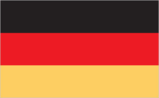
three equal horizontal bands of black (top), red, and gold; these colors have played an important role in German history and can be traced back to the medieval banner of the Holy Roman Emperor - a black eagle with red claws and beak on a gold field
Government type
federal republic
Independence
- 18 January 1871 (establishment of the German Empire); divided into four zones of occupation (UK, US, USSR, and France) in 1945 following World War II; Federal Republic of Germany (FRG or West Germany) proclaimed on 23 May 1949 and included the former UK, US, and French zones; German Democratic Republic (GDR or East Germany) proclaimed on 7 October 1949 and included the former USSR zone; West Germany and East Germany unified on 3 October 1990; all four powers formally relinquished rights on 15 March 1991; notable earlier dates: 10 August 843 (Eastern Francia established from the division of the Carolingian Empire); 2 February 962 (crowning of OTTO I, recognized as the first Holy Roman Emperor)
- 18 January 1871 (establishment of the German Empire); divided into four zones of occupation (UK, US, USSR, and France) in 1945 following World War II; Federal Republic of Germany (FRG or West Germany) proclaimed on 23 May 1949 and included the former UK,
- 10 August 843 (Eastern Francia established from the division of the Carolingian Empire); 2 February 962 (crowning of OTTO I, recognized as the first Holy Roman Emperor)
International law organization participation
accepts compulsory ICJ jurisdiction with reservations; accepts ICCt jurisdiction
International organization participation
ADB (nonregional member), AfDB (nonregional member), Arctic Council (observer), Australia Group, BIS, BSEC (observer), CBSS, CD, CDB, CE, CERN, EAPC, EBRD, ECB, EIB, EITI (implementing country), EMU, ESA, EU, FAO, FATF, G-20, G-5, G-7, G-8, G-10, IADB, IAEA, IBRD, ICAO, ICC (national committees), ICRM, IDA, IEA, IFAD, IFC, IFRCS, IGAD (partners), IHO, ILO, IMF, IMO, IMSO, Interpol, IOC, IOM, IPU, ISO, ITSO, ITU, ITUC (NGOs), MIGA, NATO, NEA, NSG, OAS (observer), OECD, OPCW, OSCE, Paris Club, PCA, Schengen Convention, SELEC (observer), SICA (observer), UN, UNAMID, UNCTAD, UNESCO, UNHCR, UNIDO, UNIFIL, UNMIL, UNMISS, UNRWA, UNWTO, UPU, WCO, WHO, WIPO, WMO, WTO, ZC
Judicial branch
- Federal Court of Justice (court consists of 127 judges including the court president, vice-presidents, presiding judges, and other judges, and organized into 25 Senates subdivided into 12 civil panels, 5 criminal panels, and 8 special panels; Federal Constitutional Court or Bundesverfassungsgericht (consists of 2 Senates each subdivided into 3 chambers, each with a chairman and 8 members) Federal Court of Justice judges selected by the Judges Election Committee, which consists of the Secretaries of Justice from each of the 16 federated States and 16 members appointed by the Federal Parliament; judges appointed by the president of Germany; judges serve until mandatory retirement at age 65; Federal Constitutional Court judges - one-half elected by the House of Representatives and one-half by the Senate; judges appointed for 12-year terms with mandatory retirement at age 68 Federal Administrative Court; Federal Finance Court; Federal Labor Court; Federal Social Court; each of the 16 German states or Land has its own constitutional court and a hierarchy of ordinary (civil, criminal, family) and specialized (administrative, finance, labor, social) courts
- highest court(s)
- Federal Court of Justice (court consists of 127 judges including the court president, vice-presidents, presiding judges, and other judges, and organized into 25 Senates subdivided into 12 civil panels, 5 criminal panels, and 8 special panels; Federal Constitutional Court or Bundesverfassungsgericht (consists of 2 Senates each subdivided into 3 chambers, each with a chairman and 8 members)
- judge selection and term of office
- Federal Court of Justice judges selected by the Judges Election Committee, which consists of the Secretaries of Justice from each of the 16 federated States and 16 members appointed by the Federal Parliament; judges appointed by the president of Germany; judges serve until mandatory retirement at age 65; Federal Constitutional Court judges - one-half elected by the House of Representatives and one-half by the Senate; judges appointed for 12-year terms with mandatory retirement at age 68
- subordinate courts
- Federal Administrative Court; Federal Finance Court; Federal Labor Court; Federal Social Court; each of the 16 German states or Land has its own constitutional court and a hierarchy of ordinary (civil, criminal, family) and specialized (administrative, finance, labor, social) courts
Legal system
civil law system
Legislative branch
- bicameral legislature consists of the Federal Council or Bundesrat (69 votes; state governments sit in the Council; each has three to six votes in proportion to population and is required to vote as a block) and the Federal Parliament or Bundestag (630 seats; members elected by popular vote for a four-year term under a system of personalized proportional representation; a party must win 5% of the national vote or three direct mandates to gain proportional representation and caucus recognition) Bundestag - last held on 22 September 2013 (next to be held no later than autumn 2017); most all postwar German governments have been coalitions; note - there are no elections for the Bundesrat; composition is determined by the composition of the state-level governments; the composition of the Bundesrat has the potential to change any time one of the 16 states holds an election Bundestag - percent of vote by party - CDU/CSU 41.5%, SPD 25.7%, Left 8.6%, Greens 8.4%, FDP 4.8%, other 11%; seats by party - CDU/CSU 311, SPD 192, Left 64, Greens 63
- election results
- Bundestag - percent of vote by party - CDU/CSU 41.5%, SPD 25.7%, Left 8.6%, Greens 8.4%, FDP 4.8%, other 11%; seats by party - CDU/CSU 311, SPD 192, Left 64, Greens 63
- elections
- Bundestag - last held on 22 September 2013 (next to be held no later than autumn 2017); most all postwar German governments have been coalitions; note - there are no elections for the Bundesrat; composition is determined by the composition of the state-level governments; the composition of the Bundesrat has the potential to change any time one of the 16 states holds an election
National anthem
- "Das Lied der Deutschen" (Song of the Germans) August Heinrich HOFFMANN VON FALLERSLEBEN/Franz Joseph HAYDN adopted 1922; the anthem, also known as "Deutschlandlied" (Song of Germany), was originally adopted for its connection to the March 1848 liberal revolution; following appropriation by the Nazis of the first verse, specifically the phrase, "Deutschland, Deutschland ueber alles" (Germany, Germany above all) to promote nationalism, it was banned after 1945; in 1952, its third verse was adopted by West Germany as its national anthem; in 1990, it became the national anthem for the reunited Germany
- lyrics/music
- August Heinrich HOFFMANN VON FALLERSLEBEN/Franz Joseph HAYDN
- name
- "Das Lied der Deutschen" (Song of the Germans)
National holiday
Unity Day, 3 October (1990)
National symbol(s)
golden eagle
Political parties and leaders
Alliance '90/Greens [Cem OEZDEMIR] Christian Democratic Union or CDU [Angela MERKEL] Christian Social Union or CSU [Horst SEEHOFER] Free Democratic Party or FDP [Philipp ROESLER] Left Party or Die Linke [Katia KIPPING and Bernd RIEXINGER] Social Democratic Party or SPD [Sigmar GABRIEL]
Political pressure groups and leaders
business associations and employers' organizations trade unions; religious, immigrant, expellee, and veterans groups
Suffrage
18 years of age; universal
Economy
Agriculture - products
potatoes, wheat, barley, sugar beets, fruit, cabbages; cattle, pigs, poultry
Budget
- $1.535 trillion $1.532 trillion (2012 est.)
- expenditures
- $1.532 trillion (2012 est.)
- revenues
- $1.535 trillion
Budget surplus (+) or deficit (-)
0.1% of GDP (2012 est.)
Central bank discount rate
1.5% (31 December 2012) 1.75% (31 December 2010) this is the European Central Bank's rate on the marginal lending facility, which offers overnight credit to banks in the euro area
Commercial bank prime lending rate
3.07% (31 December 2012 est.) 3.94% (31 December 2011 est.)
Current account balance
$238.5 billion (2012 est.) $223.3 billion (2011 est.)
Debt - external
$5.719 trillion (31 December 2012) $5.338 trillion (31 December 2011)
Distribution of family income - Gini index
27 (2006) 30 (1994)
Economy - overview
The German economy - the fifth largest economy in the world in PPP terms and Europe's largest - is a leading exporter of machinery, vehicles, chemicals, and household equipment and benefits from a highly skilled labor force. Like its Western European neighbors, Germany faces significant demographic challenges to sustained long-term growth. Low fertility rates and declining net immigration are increasing pressure on the country's social welfare system and necessitate structural reforms. Reforms launched by the government of Chancellor Gerhard SCHROEDER (1998-2005), deemed necessary to address chronically high unemployment and low average growth, contributed to strong growth in 2006 and 2007 and falling unemployment. These advances, as well as a government subsidized, reduced working hour scheme, help explain the relatively modest increase in unemployment during the 2008-09 recession - the deepest since World War II - and its decrease to 6.5% in 2012. GDP contracted 5.1% in 2009 but grew by 4.2% in 2010, and 3.0% in 2011, before dipping to 0.7% in 2012 - a reflection of low investment spending due to crisis-induced uncertainty and the decreased demand for German exports from recession-stricken periphery countries. Stimulus and stabilization efforts initiated in 2008 and 2009 and tax cuts introduced in Chancellor Angela MERKEL's second term increased Germany's total budget deficit - including federal, state, and municipal - to 4.1% in 2010, but slower spending and higher tax revenues reduced the deficit to 0.8% in 2011. In 2012 Germany reached a budget surplus of 0.1%. A constitutional amendment approved in 2009 limits the federal government to structural deficits of no more than 0.35% of GDP per annum as of 2016 though the target was already reached in 2012. By 2014, the federal government wants to balance its budget. Following the March 2011 Fukushima nuclear disaster, Chancellor Angela Merkel announced in May 2011 that eight of the country's 17 nuclear reactors would be shut down immediately and the remaining plants would close by 2022. Germany hopes to replace nuclear power with renewable energy. Before the shutdown of the eight reactors, Germany relied on nuclear power for 23% of its electricity generating capacity and 46% of its base-load electricity production.
Exchange rates
euros (EUR) per US dollar - 0.78 (2012 est.) 0.72 (2011 est.) 0.76 (2010 est.) 0.72 (2009 est.) 0.68 (2008 est.)
Exports
$1.46 trillion (2012 est.) $1.516 trillion (2011 est.)
Exports - commodities
motor vehicles, machinery, chemicals, computer and electronic products, electrical equipment, pharmaceuticals, metals, transport equipment, foodstuffs, textiles, rubber and plastic products
Exports - partners
France 10.1%, UK 7.1%, Netherlands 6.9%, US 6.3%, Austria 5.6%, Italy 5.4%, China 5.1%, Switzerland 4.7%, Belgium 4.3%, Poland 4.1% (2012)
Fiscal year
calendar year
GDP - composition, by end use
- 57.4% 19.3% 17.7% -0.4% 51.9% -45.9% (2012 est.)
- exports of goods and services
- 51.9%
- government consumption
- 19.3%
- household consumption
- 57.4%
- imports of goods and services
- -45.9%
- investment in fixed capital
- 17.7%
- investment in inventories
- -0.4%
GDP - composition, by sector of origin
- 0.8% 30.5% 68.6% (2012 est.)
- agriculture
- 0.8%
- industry
- 30.5%
- services
- 68.6%
GDP - per capita (PPP)
$38,700 (2012 est.) $38,400 (2011 est.) $37,100 (2010 est.) data are in 2012 US dollars
GDP - real growth rate
0.9% (2012 est.) 3.4% (2011 est.) 3.9% (2010 est.)
GDP (official exchange rate)
$3.383 trillion (2012 est.)
GDP (purchasing power parity)
$3.167 trillion (2012 est.) $3.139 trillion (2011 est.) $3.036 trillion (2010 est.) data are in 2012 US dollars
Gross national saving
24.3% of GDP (2012 est.) 24.4% of GDP (2011 est.) 23.6% of GDP (2010 est.)
Household income or consumption by percentage share
- 3.6% 24% (2000)
- highest 10%
- 24% (2000)
- lowest 10%
- 3.6%
Imports
$1.222 trillion (2012 est.) $1.295 trillion (2011 est.)
Imports - commodities
machinery, data processing equipment, vehicles, chemicals, oil and gas, metals, electric equipment, pharmaceuticals, foodstuffs, agricultural products
Imports - partners
Netherlands 14.1%, France 7.5%, China 6.7%, Belgium 6.4%, Italy 5.5%, UK 4.9%, Austria 4.4%, Russia 4.4%, Czech Republic 4.1% (2012)
Industrial production growth rate
-0.2% (2012 est.)
Industries
among the world's largest and most technologically advanced producers of iron, steel, coal, cement, chemicals, machinery, vehicles, machine tools, electronics, food and beverages, shipbuilding, textiles
Inflation rate (consumer prices)
2.1% (2012 est.) 2.5% (2011 est.)
Labor force
43.92 million (2012 est.)
Labor force - by occupation
- 1.6% 24.6% 73.8% (2011)
- agriculture
- 1.6%
- industry
- 24.6%
- services
- 73.8%
Market value of publicly traded shares
$1.184 trillion (31 December 2011) $1.43 trillion (31 December 2010) $1.298 trillion (31 December 2009)
Population below poverty line
15.5% (2010 est.)
Public debt
- 81% of GDP (2012 est.) 80.1% of GDP (2011 est.) general government gross debt is defined in the Maastricht Treaty as consolidated general government gross debt at nominal value, outstanding at the end of the year in the following categories of government liabilities (as defined in ESA95): currency and deposits (AF.2), securities other than shares excluding financial derivatives (AF.3, excluding AF.34), and loans (AF.4); the general government sector comprises the sub-sectors of central government, state government, local government and social security funds; the series are presented as a percentage of GDP and in millions of euro; GDP used as a denominator is the gross domestic product at current market prices; data expressed in national currency are converted into euro using end-of-year exchange rates provided by the European Central Bank
- general government gross debt is defined in the Maastricht Treaty as consolidated general government gross debt at nominal value, outstanding at the end of the year in the following categories of government liabilities (as defined in ESA95)
- currency and deposits (AF.2), securities other than shares excluding financial derivatives (AF.3, excluding AF.34), and loans (AF.4); the general government sector comprises the sub-sectors of central government, state government, local government and social security funds; the series are presented as a percentage of GDP and in millions of euro; GDP used as a denominator is the gross domestic product at current market prices; data expressed in national currency are converted into euro using end-of-year exchange rates provided by the European Central Bank
Reserves of foreign exchange and gold
$248.9 billion (31 December 2012 est.) $238.9 billion (31 December 2011 est.)
Stock of broad money
$4.281 trillion (31 December 2012 est.) $4.197 trillion (31 December 2011 est.)
Stock of direct foreign investment - abroad
$1.788 trillion (31 December 2012 est.) $1.651 trillion (31 December 2011 est.)
Stock of direct foreign investment - at home
$1.307 trillion (31 December 2012 est.) $1.222 trillion (31 December 2011 est.)
Stock of domestic credit
$4.277 trillion (31 December 2012 est.) $4.188 trillion (31 December 2011 est.)
Stock of narrow money
$2.025 trillion (31 December 2012 est.) $1.777 trillion (31 December 2011 est.) see entry for the European Union for money supply in the euro area; the European Central Bank (ECB) controls monetary policy for the 17 members of the Economic and Monetary Union (EMU); individual members of the EMU do not control the quantity of money circulating within their own borders
Taxes and other revenues
45.4% of GDP (2012 est.)
Unemployment rate
5.5% (2012 est.) 6% (2011 est.)
Energy
Carbon dioxide emissions from consumption of energy
748.5 million Mt (2011 est.)
Crude oil - exports
14,260 bbl/day (2010 est.)
Crude oil - imports
1.876 million bbl/day (2010 est.)
Crude oil - production
169,500 bbl/day (2012 est.)
Crude oil - proved reserves
254.2 million bbl (1 January 2013 es)
Electricity - consumption
549.1 billion kWh (2010 est.)
Electricity - exports
66.81 billion kWh (2012 est.)
Electricity - from fossil fuels
55% of total installed capacity (2011 est.)
Electricity - from hydroelectric plants
3% of total installed capacity (2011 est.)
Electricity - from nuclear fuels
23% of total installed capacity (2011 est.)
Electricity - from other renewable sources
13% of total installed capacity (2011 est.)
Electricity - imports
46.27 billion kWh (2012 est.)
Electricity - installed generating capacity
153.2 million kW (2010 est.)
Electricity - production
575.6 billion kWh (2011 est.)
Natural gas - consumption
90.07 billion cu m (2010 est.)
Natural gas - exports
18.17 billion cu m (2012 est.)
Natural gas - imports
87.96 billion cu m (2012 est.)
Natural gas - production
12.3 billion cu m (2012 est.)
Natural gas - proved reserves
125 billion cu m (1 January 2013 es)
Refined petroleum products - consumption
2.4 million bbl/day (2011 est.)
Refined petroleum products - exports
376,600 bbl/day (2010 est.)
Refined petroleum products - imports
758,100 bbl/day (2010 est.)
Refined petroleum products - production
2.198 million bbl/day (2010 est.)
Communications
Broadcast media
a mixture of publicly operated and privately owned TV and radio stations; national and regional public broadcasters compete with nearly 400 privately owned national and regional TV stations; more than 90% of households have cable or satellite TV; hundreds of radio stations including multiple national radio networks, regional radio networks, and a large number of local radio stations (2008)
Internet country code
.de
Internet hosts
20.043 million (2012)
Internet users
65.125 million (2009)
Telephone system
- Germany has one of the world's most technologically advanced telecommunications systems; as a result of intensive capital expenditures since reunification, the formerly backward system of the eastern part of the country, dating back to World War II, has been modernized and integrated with that of the western part Germany is served by an extensive system of automatic telephone exchanges connected by modern networks of fiber-optic cable, coaxial cable, microwave radio relay, and a domestic satellite system; cellular telephone service is widely available, expanding rapidly, and includes roaming service to many foreign countries country code - 49; Germany's international service is excellent worldwide, consisting of extensive land and undersea cable facilities as well as earth stations in the Inmarsat, Intelsat, Eutelsat, and Intersputnik satellite systems (2011)
- domestic
- Germany is served by an extensive system of automatic telephone exchanges connected by modern networks of fiber-optic cable, coaxial cable, microwave radio relay, and a domestic satellite system; cellular telephone service is widely available, expanding rapidly, and includes roaming service to many foreign countries
- general assessment
- Germany has one of the world's most technologically advanced telecommunications systems; as a result of intensive capital expenditures since reunification, the formerly backward system of the eastern part of the country, dating back to World War II, has been modernized and integrated with that of the western part
- international
- country code - 49; Germany's international service is excellent worldwide, consisting of extensive land and undersea cable facilities as well as earth stations in the Inmarsat, Intelsat, Eutelsat, and Intersputnik satellite systems (2011)
Telephones - main lines in use
50.7 million (2012)
Telephones - mobile cellular
107.7 million (2012)
Transportation
Airports
539 (2013)
Airports - with paved runways
- 125 (2013)
- 1,524 to 2,437 m
- 60
- 2,438 to 3,047 m
- 49
- 914 to 1,523 m
- 70
- over 3,047 m
- 14
- total
- 318
- under 914 m
- 125 (2013)
Airports - with unpaved runways
- 185 (2013)
- 1,524 to 2,437 m
- 1
- 914 to 1,523 m
- 35
- total
- 221
Heliports
23 (2013)
Merchant marine
- barge carrier 2, bulk carrier 6, cargo 51, carrier 1, chemical tanker 15, container 298, liquefied gas 6, passenger 4, passenger/cargo 24, petroleum tanker 10, refrigerated cargo 3, roll on/roll off 6, vehicle carrier 1 6 (Finland 3, Netherlands 1, Switzerland 2) 3,420 (Antigua and Barbuda 1094, Australia 2, Bahamas 30, Bermuda 14, Brazil 6, Bulgaria 12, Burma 1, Cayman Islands 3, Cook Islands 1, Curacao 25, Cyprus 192, Denmark 9, Dominica 5, Estonia 1, France 1, Gibraltar 123, Hong Kong 10, Isle of Man 56, Jamaica 10, Liberia 1185, Luxembourg 9, Malta 135, Marshall Islands 248, Morocco 1, Netherlands 86, NZ 2, Panama 24, Papua New Guinea 1, Philippines 2, Portugal 14, Saint Vincent and the Grenadines 3, Singapore 32, Slovakia 3, Spain 4, Sri Lanka 8, Sweden 3, UK 59, US 5, Venezuela 1) (2010)
- foreign-owned
- 6 (Finland 3, Netherlands 1, Switzerland 2)
- registered in other countries
- 3,420 (Antigua and Barbuda 1094, Australia 2, Bahamas 30, Bermuda 14, Brazil 6, Bulgaria 12, Burma 1, Cayman Islands 3, Cook Islands 1, Curacao 25, Cyprus 192, Denmark 9, Dominica 5, Estonia 1, France 1, Gibraltar 123, Hong Kong 10, Isle of Man 56, Jamaica 10, Liberia 1185, Luxembourg 9, Malta 135, Marshall Islands 248, Morocco 1, Netherlands 86, NZ 2, Panama 24, Papua New Guinea 1, Philippines 2, Portugal 14, Saint Vincent and the Grenadines 3, Singapore 32, Slovakia 3, Spain 4, Sri Lanka 8, Sweden 3, UK 59, US 5, Venezuela 1) (2010)
- total
- 427
Pipelines
condensate 37 km; gas 26,985 km; oil 2,826 km; refined products 4,479 km; water 8 km (2013)
Ports and terminals
- Baltic Sea - Rostock; North Sea - Wilhemshaven Bremen (Weser); Bremerhaven (Geeste); Duisburg, Karlsruhe, Neuss-Dusseldorf (Rhine); Brunsbuttel, Hamburg (Elbe); Lubeck (Wakenitz) Brunsbuttel Canal terminals Bremen/Bremerhaven (5,915,487), Hamburg (9,014,165)(2011)
- container port(s)
- Bremen/Bremerhaven (5,915,487), Hamburg (9,014,165)(2011)
- major seaport(s)
- Baltic Sea - Rostock; North Sea - Wilhemshaven
- oil/gas terminal(s)
- Brunsbuttel Canal terminals
- river port(s)
- Bremen (Weser); Bremerhaven (Geeste); Duisburg, Karlsruhe, Neuss-Dusseldorf (Rhine); Brunsbuttel, Hamburg (Elbe); Lubeck (Wakenitz)
Railways
- 41,981 km 41,722 km 1.435-m gauge (20,053 km electrified) 220 km 1.000-m gauge (75 km electrified); 39 km 0.750-m gauge (24 km electrified) (2008)
- narrow gauge
- 220 km 1.000-m gauge (75 km electrified); 39 km 0.750-m gauge (24 km electrified) (2008)
- total
- 41,981 km
Roadways
- 645,000 km 645,000 km (includes 12,800 km of expressways) includes local roads (2010)
- total
- 645,000 km
Waterways
7,467 km (Rhine River carries most goods; Main-Danube Canal links North Sea and Black Sea) (2012)
Military and Security
Manpower available for military service
- 18,529,299 17,888,543 (2010 est.)
- females age 16-49
- 17,888,543 (2010 est.)
- males age 16-49
- 18,529,299
Manpower fit for military service
- 15,027,886 14,510,527 (2010 est.)
- females age 16-49
- 14,510,527 (2010 est.)
- males age 16-49
- 15,027,886
Manpower reaching militarily significant age annually
- 405,438 384,930 (2010 est.)
- female
- 384,930 (2010 est.)
- male
- 405,438
Military branches
- Federal Armed Forces (Bundeswehr): Army (Heer), Navy (Deutsche Marine, includes naval air arm), Air Force (Luftwaffe), Joint Support Services (Streitkraeftbasis, SKB), Central Medical Service (Zentraler Sanitaetsdienst, ZSanDstBw) (2013)
- Federal Armed Forces (Bundeswehr)
- Army (Heer), Navy (Deutsche Marine, includes naval air arm), Air Force (Luftwaffe), Joint Support Services (Streitkraeftbasis, SKB), Central Medical Service (Zentraler Sanitaetsdienst, ZSanDstBw) (2013)
Military expenditures
1.5% of GDP (2005 est.)
Military service age and obligation
17-23 years of age for male and female voluntary military service; conscription ended 1 July 2011; service obligation 8-23 months or 12 years; women have been eligible for voluntary service in all military branches and positions since 2001 (2013)
Transnational Issues
Disputes - international
none
Illicit drugs
source of precursor chemicals for South American cocaine processors; transshipment point for and consumer of Southwest Asian heroin, Latin American cocaine, and European-produced synthetic drugs; major financial center
Refugees and internally displaced persons
- 113,809 (Serbia); 90,773 (Turkey); 49,829 (Iraq); 40,204 (Russia); 31,746 (Afghanistan); 23,799 (Vietnam); 23,460 (Bosnia and Herzegovina); 21,629 (Iran); 20,059 (Ukraine); 18,165 (Syria); 11,819 (Lebanon); 11,672 (Sri Lanka); 6,575 (Azerbaijan); 6,175 (Macedonia); 5,206 (Democratic Republic of the Congo) (2012) 5,683 (2012)
- refugees (country of origin)
- 113,809 (Serbia); 90,773 (Turkey); 49,829 (Iraq); 40,204 (Russia); 31,746 (Afghanistan); 23,799 (Vietnam); 23,460 (Bosnia and Herzegovina); 21,629 (Iran); 20,059 (Ukraine); 18,165 (Syria); 11,819 (Lebanon); 11,672 (Sri Lanka); 6,575 (Azerbaijan); 6,175 (Macedonia); 5,206 (Democratic Republic of the Congo) (2012)
- stateless persons
- 5,683 (2012)