1999 Edition
CIA World Factbook 1999 (Internet Archive)
Introduction
Background
Germany--first united in 1871?suffered defeats in successive world wars and was occupied by the victorious Allied powers of the US, UK, France, and the Soviet Union in 1945. With the beginning of the Cold War and increasing tension between the US and Soviet Union, two German states were formed in 1949: the western Federal Republic of Germany (FRG) and the eastern German Democratic Republic (GDR). The newly democratic FRG embedded itself in key Western economic and security organizations, the EU and NATO, while the Communist GDR was on the front line of the Soviet-led Warsaw Pact. The decline of the Soviet Union and end of the Cold War cleared the path for the fall of the Berlin Wall in 1989 and German re-unification in 1990. Germany has expended considerable funds--roughly $100 billion a year--in subsequent years working to bring eastern productivity and wages up to western standards, with mixed results. Unemployment--which in the east is nearly double that in the west--has grown over the last several years, primarily as a result of structural problems like an inflexible labor market. In January 1999, Germany and 10 other members of the EU formed a common European currency, the euro, and the German government is now looking toward reform of the EU budget and enlargement of the Union into Central Europe.
Geography
Area
total: 356,910 sq km land: 349,520 sq km water: 7,390 sq km note: includes the formerly separate Federal Republic of Germany, the German Democratic Republic, and Berlin, following formal unification on 3 October 1990
Area--comparative
slightly smaller than Montana
Climate
temperate and marine; cool, cloudy, wet winters and summers; occasional warm, tropical foehn wind; high relative humidity
Coastline
2,389 km
Elevation extremes
lowest point: Freepsum Lake -2 m highest point: Zugspitze 2,962 m
Environment--current issues
emissions from coal-burning utilities and industries and lead emissions from vehicle exhausts (the result of continued use of leaded fuels) contribute to air pollution; acid rain, resulting from sulfur dioxide emissions, is damaging forests; pollution in the Baltic Sea from raw sewage and industrial effluents from rivers in eastern Germany; hazardous waste disposal
Environment--international agreements
party to: Air Pollution, Air Pollution-Nitrogen Oxides, Air Pollution-Sulphur 85, Air Pollution-Sulphur 94, Air Pollution-Volatile Organic Compounds, Antarctic-Environmental Protocol, Antarctic Treaty, Biodiversity, Climate Change, Desertification, Endangered Species, Environmental Modification, Hazardous Wastes, Law of the Sea, Marine Dumping, Nuclear Test Ban, Ozone Layer Protection, Ship Pollution, Tropical Timber 83, Tropical Timber 94, Wetlands, Whaling signed, but not ratified: Air Pollution-Persistent Organic Pollutants, Climate Change-Kyoto Protocol
Geographic coordinates
51 00 N, 9 00 E
Geography--note
strategic location on North European Plain and along the entrance to the Baltic Sea
Irrigated land
4,750 sq km (1993 est.)
Land boundaries
total: 3,621 km border countries: Austria 784 km, Belgium 167 km, Czech Republic 646 km, Denmark 68 km, France 451 km, Luxembourg 138 km, Netherlands 577 km, Poland 456 km, Switzerland 334 km
Land use
arable land: 33% permanent crops: 1% permanent pastures: 15% forests and woodland: 31% other: 20% (1993 est.)
Location
Central Europe, bordering the Baltic Sea and the North Sea, between the Netherlands and Poland, south of Denmark
Map references
Europe
Maritime claims
continental shelf: 200-m depth or to the depth of exploitation exclusive economic zone: 200 nm territorial sea: 12 nm
Natural hazards
flooding
Natural resources
iron ore, coal, potash, timber, lignite, uranium, copper, natural gas, salt, nickel
Terrain
lowlands in north, uplands in center, Bavarian Alps in south
People and Society
Age structure
0-14 years: 15% (male 6,495,882; female 6,172,359) 15-64 years: 69% (male 28,687,267; female 27,526,698) 65 years and over: 16% (male 4,990,090; female 8,215,065) (1999 est.)
Birth rate
8.68 births/1,000 population (1999 est.)
Death rate
10.76 deaths/1,000 population (1999 est.)
Ethnic groups
German 91.5%, Turkish 2.4%, Italians 0.7%, Greeks 0.4%, Poles 0.4%, other 4.6% (made up largely of people fleeing the war in the former Yugoslavia)
Infant mortality rate
5.14 deaths/1,000 live births (1999 est.)
Languages
German
Life expectancy at birth
total population: 77.17 years male: 74.01 years female: 80.5 years (1999 est.)
Literacy
definition: age 15 and over can read and write total population: 99% (1977 est.) male: NA% female: NA%
Nationality
noun: German(s) adjective: German
Net migration rate
2.12 migrant(s)/1,000 population (1999 est.)
Population
82,087,361 (July 1999 est.)
Population growth rate
0.01% (1999 est.)
Religions
Protestant 38%, Roman Catholic 34%, Muslim 1.7%, unaffiliated or other 26.3%
Sex ratio
at birth: 1.06 male(s)/female under 15 years: 1.05 male(s)/female 15-64 years: 1.04 male(s)/female 65 years and over: 0.61 male(s)/female total population: 0.96 male(s)/female (1999 est.)
Total fertility rate
1.26 children born/woman (1999 est.)
Government
Administrative divisions
16 states (Laender, singular--Land); Baden-Wuerttemberg, Bayern, Berlin, Brandenburg, Bremen, Hamburg, Hessen, Mecklenburg-Vorpommern, Niedersachsen, Nordrhein-Westfalen, Rheinland-Pfalz, Saarland, Sachsen, Sachsen-Anhalt, Schleswig-Holstein, Thueringen
Capital
Berlin note: the shift from Bonn to Berlin will take place over a period of years, with Bonn retaining many administrative functions and several ministries even after parliament moves in 1999
Constitution
23 May 1949, known as Basic Law; became constitution of the united German people 3 October 1990
Country name
conventional long form: Federal Republic of Germany conventional short form: Germany local long form: Bundesrepublik Deutschland local short form: Deutschland
Data code
GM
Executive branch
chief of state: President Roman HERZOG (since 1 July 1994) head of government: Chancellor Gerhard SCHROEDER (since 27 October 1998) cabinet: Cabinet appointed by the president upon the proposal of the chancellor elections: president elected for a five-year term by a Federal Convention including all members of the Federal Assembly and an equal number of delegates elected by the Land Parliaments; election last held 23 May 1994 (next to be held 23 May 1999); chancellor elected by an absolute majority of the Federal Assembly for a four-year term; election last held 27 September 1998 (next to be held in the fall of 2002) election results: Roman HERZOG elected president; percent of Federal Convention vote--52.6%; Gerhard SCHROEDER elected chancellor; percent of Federal Assembly--52.8%
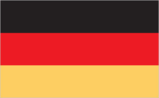
Flag description
three equal horizontal bands of black (top), red, and gold
Government type
federal republic
Independence
18 January 1871 (German Empire unification); divided into four zones of occupation (UK, US, USSR, and later, France) in 1945 following World War II; Federal Republic of Germany (FRG or West Germany) proclaimed 23 May 1949 and included the former UK, US, and French zones; German Democratic Republic (GDR or East Germany) proclaimed 7 October 1949 and included the former USSR zone; unification of West Germany and East Germany took place 3 October 1990; all four powers formally relinquished rights 15 March 1991
International organization participation
AfDB, AsDB, Australia Group, BDEAC, BIS, CBSS, CCC, CDB (non-regional), CE, CERN, EAPC, EBRD, ECE, EIB, EMU, ESA, EU, FAO, G5, G7, G-10, IADB, IAEA, IBRD, ICAO, ICC, ICFTU, ICRM, IDA, IEA, IFAD, IFC, IFRCS, IHO, ILO, IMF, IMO, Inmarsat, Intelsat, Interpol, IOC, IOM, ISO, ITU, MTCR, NAM (guest), NATO, NEA, NSG, OAS (observer), OECD, OPCW, OSCE, PCA, UN, UNCTAD, UNESCO, UNHCR, UNIDO, UNIKOM, UNMIBH, UNOMIG, UPU, WEU, WHO, WIPO, WMO, WToO, WTrO, ZC Diplomatic representation in the US: chief of mission: Ambassador Juergen CHROBOG chancery: 4645 Reservoir Road NW, Washington, DC 20007 consulate(s) general: Atlanta, Boston, Chicago, Detroit, Houston, Los Angeles, Miami, New York, San Francisco, Seattle Diplomatic representation from the US: chief of mission: Ambassador John C. KORNBLUM embassy: Deichmanns Aue 29, 53170 Bonn mailing address: PSC 117, APO AE 09080 branch office: Berlin; mailing address: Neustaedtische Kirchstrasse consulate(s) general: Dusseldorf, Frankfurt am Main, Hamburg, Leipzig, Munich
Judicial branch
Federal Constitutional Court or Bundesverfassungsgericht, half the judges are elected by the Bundestag and half by the Bundesrat Political parties and leaders: Christian Democratic Union or CDU Political pressure groups and leaders: employers' organizations, expellee, refugee, trade unions, and veterans groups
Legal system
civil law system with indigenous concepts; judicial review of legislative acts in the Federal Constitutional Court; has not accepted compulsory ICJ jurisdiction
Legislative branch
bicameral chamber (no official name for the two chambers as a whole) consists of the Federal Assembly or Bundestag (656 seats usually, but 669 for the 1998 term; elected by popular vote under a system combining direct and proportional representation; a party must win 5% of the national vote or three direct mandates to gain representation; members serve four-year terms) and the Federal Council or Bundesrat (69 votes; state governments are directly represented by votes; each has 3 to 6 votes depending on population and are required to vote as a block) elections: Federal Assembly--last held 27 September 1998 (next to be held by the fall of 2002); note--there are no elections for the Bundesrat; composition is determined by the composition of the state-level governments; the composition of the Bundesrat has the potential to change any time one of the 16 states holds an election election results: Federal Assembly--percent of vote by party--SPD 40.9%, Alliance 90/Greens 6.7%, CDU/CSU 35.1%, FDP 6.2%, PDS 5.1%; seats by party--SPD 298, Alliance 90/Greens 47, CDU/CSU 245, FDP 43, PDS 36; Federal Council--current composition--votes by party--SPD-led states 45, CDU-led states 24
National holiday
German Unity Day (Day of Unity), 3 October (1990)
Suffrage
18 years of age; universal
Economy
Agriculture--products
western?potatoes, wheat, barley, sugar beets, fruit, cabbages; cattle, pigs, poultry; eastern--wheat, rye, barley, potatoes, sugar beets, fruit; pork, beef, chickens, milk, hides
Budget
revenues: $977 billion expenditures: $1.024 trillion, including capital expenditures of $NA (1998 est.)
Currency
1 deutsche mark (DM) = 100 pfennige
Debt--external
$NA
Economic aid--donor
ODA, $7.5 billion (1995)
Economy--overview
Germany possesses the world's third most powerful economy, with its capitalist market system tempered by generous welfare benefits. On 1 January 1999, Germany and 10 other European Union countries launched the European Monetary Union (EMU) by permanently fixing their bilateral exchange rates and giving the new European Central Bank control over the zone's monetary policy. Germans expect to have the new European currency, the euro, in pocket by 2002. Domestic demand contributed to a moderate economic upswing in early 1998, although unemployment remains high. Job-creation measures have helped superficially, but structural rigidities--like high wages and costly benefits--make unemployment a long-term, not just a cyclical, problem. Although minimally affected by the Asian crisis in 1998, Germany revised its 1999 forecast downward at the beginning of the year to reflect anticipated effects from the global economic slowdown. Over the long term, Germany faces budgetary problems--lower tax revenues and higher pension outlays--as its population ages. Meanwhile, the German nation continues to wrestle with the integration of eastern Germany, whose adjustment may take decades to complete despite annual transfers from the west of roughly $100 billion a year.
Electricity--consumption
509.458 billion kWh (1996)
Electricity--exports
42.5 billion kWh (1996)
Electricity--imports
36.9 billion kWh (1996)
Electricity--production
515.058 billion kWh (1996)
Electricity--production by source
fossil fuel: 66.23% hydro: 3.5% nuclear: 29.81% other: 0.46% (1996)
Exchange rates
deutsche marks (DM) per US$1--1.69 (January 1999), 1.7597 (1998), 1.7341 (1997), 1.5048 (1996), 1.4331 (1995), 1.6228 (1994) note: on 1 January 1999, the European Union introduced a common currency that is now being used by financial institutions in some member countries at the rate of 0.8597 euros per US$ and a fixed rate of 1.95583 deutsche marks per euro; the euro will replace the local currency in consenting countries for all transactions in 2002
Exports
$510 billion (f.o.b., 1998 est.)
Exports--commodities
machinery 31%, vehicles 17%, chemicals 13%, metals and manufactures, foodstuffs, textiles (1997)
Exports--partners
EU 55.5% (France 10.7%, UK 8.5%, Italy 7.4%, Netherlands 7.0%, Belgium-Luxembourg 5.8%), US 8.6%, Japan 2.3% (1997 est.)
Fiscal year
calendar year
GDP
purchasing power parity--$1.813 trillion (1998 est.)
GDP--composition by sector
agriculture: 1.1% industry: 33.1% services: 65.8% (1998)
GDP--per capita
purchasing power parity?$22,100 (1998 est.)
GDP--real growth rate
2.7% (1998 est.)
Imports
$426 billion (f.o.b., 1998 est.)
Imports--commodities
machinery 22%, vehicles 10%, chemicals 9%, foodstuffs 8%, textiles, metals (1997)
Imports--partners
EU 54.3% (France 10.5%, Netherlands 8.5%, Italy 7.8%, UK 7.0%, Belgium-Luxembourg 6.2%), US 7.7%, Japan 4.9% (1997)
Industrial production growth rate
5% (1998)
Industries
western: among world's largest and technologically advanced producers of iron, steel, coal, cement, chemicals, machinery, vehicles, machine tools, electronics, food and beverages; eastern: metal fabrication, chemicals, brown coal, shipbuilding, machine building, food and beverages, textiles, petroleum refining
Inflation rate (consumer prices)
0.9% (1998 est.)
Labor force
38.2 million (1998)
Labor force--by occupation
industry 33.7%, agriculture 2.7%, services 63.6% (1998)
Population below poverty line
NA%
Unemployment rate
10.6% (1998 est.)
Communications
Radio broadcast stations
AM 77, FM 1,621, shortwave 37, digital audio broadcasting 130
Radios
47.1 million (1998 est.)
Telephone system
Germany has one of the world's most technologically advanced telecommunications systems; as a result of intensive capital expenditures since reunification, the formerly backward system of the eastern part of the country has been modernized and integrated with that of the western part domestic: the region which was formerly West Germany is served by an extensive system of automatic telephone exchanges connected by modern networks of fiber-optic cable, coaxial cable, microwave radio relay, and a domestic satellite system; cellular telephone service is widely available and includes roaming service to many foreign countries; since the reunification of Germany, the telephone system of the eastern region has been upgraded and enjoys all of the advantages of the national system international: satellite earth stations--14 Intelsat (12 Atlantic Ocean and 2 Indian Ocean), 1 Eutelsat, 1 Inmarsat (Atlantic Ocean region), 2 Intersputnik (1 Atlantic Ocean region and 1 Indian Ocean region); 7 submarine cable connections; 2 HF radiotelephone communication centers; tropospheric scatter links
Telephones
44 million
Television broadcast stations
9,513 (including repeaters)
Televisions
51.4 million (1998 est.)
Transportation
Airports
618 (1998 est.) Airports--with paved runways: total: 319 over 3,047 m: 14 2,438 to 3,047 m: 62 1,524 to 2,437 m: 68 914 to 1,523 m: 54 under 914 m: 121 (1998 est.) Airports--with unpaved runways: total: 299 over 3,047 m: 2 2,438 to 3,047 m: 6 1,524 to 2,437 m: 6 914 to 1,523 m: 58 under 914 m: 227 (1998 est.)
Heliports
61 (1998 est.)
Highways
total: 656,074 km paved: 650,169 km (including 11,309 km of expressways) unpaved: 5,905 km all-weather (1997 est.)
Merchant marine
total: 594 ships (1,000 GRT or over) totaling 7,699,596 GRT/9,629,163 DWT ships by type: cargo 227, chemical tanker 15, combination bulk 1, container 306, liquefied gas tanker 5, multifunction large-load carrier 5, oil tanker 7, passenger 3, railcar carrier 2, refrigerated cargo 2, roll-on/roll-off cargo 14, short-sea passenger 7 (1998 est.)
Pipelines
crude oil 2,460 km (1997) Ports and harbors: Berlin, Bonn, Brake, Bremen, Bremerhaven, Cologne, Dresden, Duisburg, Emden, Hamburg, Karlsruhe, Kiel, Lubeck, Magdeburg, Mannheim, Rostock, Stuttgart
Railways
total: 46,300 km including 18,866 km electrified and 14,768 km doubleor multiple-tracked (1996) note: since privatization in 1994, Deutsche Bahn AG (DBAG) no longer publishes details of the tracks it owns; in addition to the DBAG system there are 102 privately owned railway companies which own an approximate 3,000 km to 4,000 km of the total tracks
Waterways
7,467 km (1997); major rivers include the Rhine and Elbe; Kiel Canal is an important connection between the Baltic Sea and North Sea
Military and Security
Military branches
Army, Navy (includes Naval Air Arm), Air Force, Medical Corps, Border Police, Coast Guard
Military expenditures--dollar figure
$32.8 billion (1998)
Military expenditures--percent of GDP
1.5% (1998)
Military manpower--availability
males age 15-49: 20,860,710 (1999 est.) Military manpower--fit for military service: males age 15-49: 17,799,070 (1999 est.)
Military manpower--military age
18 years of age
Military manpower--reaching military age annually
males: 472,708 (1999 est.)
Transnational Issues
Disputes--international
individual Sudeten German claims for restitution of property confiscated in connection with their expulsion after World War II
Illicit drugs
source of precursor chemicals for South American cocaine processors; transshipment point for and consumer of Southwest Asian heroin and hashish, Latin American cocaine, and European-produced synthetic drugs